Photo via The Straits Times

Iranians cut essentials and put dreams on hold as war-hit economy bites

Read the original at The Straits Times ↗
Cite

The Straits Times. (2026, October 28). Iranians cut essentials and put dreams on hold as war-hit economy bites. The Straits Times. https://www.straitstimes.com/world/middle-east/iranians-cut-essentials-and-put-dreams-on-hold-as-war-hit-economy-bites

Dated from the outlet's own feed. Check the original for its byline.

The Straits Times · collected 2026-10-28 · by The Straits Times

Quick Summary

Iranians are cutting back on basic needs like food and housing due to severe inflation caused by an eight-month conflict with the United States, which began in February when US and Israeli strikes hit Iran. This economic strain has led to rising costs for families who now struggle to afford essentials, with consumer prices being nearly 90% higher than a year ago and food prices up 121.8%. The economy minister apologized for the pressure on Iranians' finances, noting that pensioners, workers, and civil servants are particularly affected by soaring inflation rates of 73.6% annually.
Written by AI on 2026-10-28, from this article's own text only (the story summary below draws on all the coverage).

AI analysis

Story summary

As of October 28, Iranian families are cutting back on essential items like food, housing, and education due to an eight-month-old war with the United States. This conflict has caused severe inflation, eroding incomes and pushing households close to financial ruin. The strain extends beyond major cities, affecting workers who struggle as wages fall short of covering basic needs while businesses face rising costs and reduced demand. The war started on February 28 when US and Israeli strikes hit Iran, leading to Tehran closing the Strait of Hormuz and a US blockade of Iranian ports in the Gulf, severely disrupting oil exports and trade. Reuters spoke with over two dozen people from various backgrounds who report worsening conditions leaving them unable to afford basic necessities like food, housing, healthcare, and education.

Written for “Iranian Economy Crisis” on 2026-11-02, grounded in this article and the 0 other(s) covering the same event.

Story

📰 Iranian Economy Crisis
Economy/Business · 1 article(s) covering the same event.

Compared with similar articles

This article reads leans left and hedges 18% of its claims. Each row says how that neighbour differs.
The Sydney Morning Herald
⚖️ Leans right further right than this Hedges 6 of 36 claims Outlet record 61/100
“The articles discuss different aspects of the Iran-US conflict: one focuses on the economic impact on Iranian families, while the other discusses the future outlook and potential scenarios for the oil market.”
The Straits Times
Hedges 4 of 19 claims Outlet record 66/100
“The articles describe different aspects of a prolonged conflict between Iran and the United States, but they do not refer to the exact same incident or time frame.”
The Guardian
Hedges 2 of 15 claims Outlet record 66/100
“The articles discuss different aspects of the US-Iran war: one focuses on the economic impact in Iran, while the other discusses Gulf states' defense strategies and military engagements.”
The Guardian
⚖️ Leans strongly left further left than this Hedges 3 of 41 claims Outlet record 66/100
“The articles discuss different aspects of the economic impact of the war; one focuses on Iran's economy and families cutting back on essentials, while the other discusses the US energy crisis and its effect on American households.”
Washington Examiner
⚖️ Leans right further right than this Hedges 0 of 3 claims Outlet record 70/100
“The articles discuss different aspects of the war's impact: one on the economic hardships for Iranian civilians, the other on the financial costs to the US.”
The Hindu
Hedges 1 of 13 claims Outlet record 77/100
“The articles describe similar economic conditions in Iran due to war pressure but refer to different dates and details.”
How this article was measured signals, leaning charts, publisher record, byline, topics and claims

Signals How these are calculated →

Claims extracted
44
sentences that state something as happening or true
Uncertain
18%
8 of 44 hedged ("reportedly", "may", "according to")
Leaning
Leans left
of the writing, not the subject · beta estimate
Publisher signals
66/100
The Straits Times's corrections and hedging, across everything collected from it. Not a measure of accuracy.
Outlets on this story
1
Economy/Business
Same framing elsewhere
1
articles that frame the event the way this one does
Analyzed 2026-10-28 · how these are computed

How this is being covered How these are calculated →

Article leaning vs. publisher reliability
Source leaning vs. consistency

Publisher

The Straits Times · 4130 article(s) · 5 correction(s) detected
Running correction rate · 5 correction(s)

Who wrote this

The Straits Times
2668 article(s) here · 1 carrying a prediction
🔮 UN peacekeeping mission in Western Sahara ends after 35 years, UN chief says Nov 1 - The 35-year-old UN peacekeeping mission in the Western Sahara region will come to an end after the Security Council failed to renew its mandate, the UN chief said on Sunday.
🔮 The pope said he hoped cooperation between Russia and Ukraine in implementing a ceasefire in Oleshky would pave the way for broader peace efforts.
🔮 If not for the “economic funk” engulfing most voters, the National Party would have a much easier route back to office, said political commentator Grant Duncan.
🔮 Explainer-How Trump’s noncitizen voter lists could affect the midterms
🔮 “It’s been a hell of a year – analogue astronauts living in captivity of our own free will,” Ellen Ellis, the medical officer on the Crew Health and Performance Exploration Analog, or CHAPEA, mission, said in remarks at Johnson Space Center after emerging with her three crewmates on Oct 31. The four entered the 1,700-square-foot (158sq m) 3D-printed habitat on Oct 19, 2025, and performed tasks such as growing crops in simulated Martian soil and interfacing with NASA officials with delays recreating those inherent in interplanetary communications.
🔮 Races in some areas are so tight, that turnout from the Indian community may change the outcomes, rally organisers say.
🔮 Initial complaints were expected to be filed on Nov 1.
🔮 Final results are due in coming days and not expected to change the outcome.
🔮 The head of a student group said a campaign of high school blockades would restart from Nov 2, adding the government’s proposals did not go far enough.
🔮 “Evidence is being reviewed and further action will be taken as appropriate.”
Also by The Straits Times
Nothing else under this byline is closely related to this article, so these are simply their most recent.
All 2668 articles by The Straits Times →

Topics

DUBAI Iran Iranian Iranians the United States

Subjects

Iran GPE · 4× Iranians NORP · 4× Iranian NORP · 2× DUBAI GPE · 1× Israeli NORP · 1× Mashhad GPE · 1× Mohammadali PERSON · 1× Reuters ORG · 1× Tehran GPE · 1× the United States GPE · 1×

Narrative

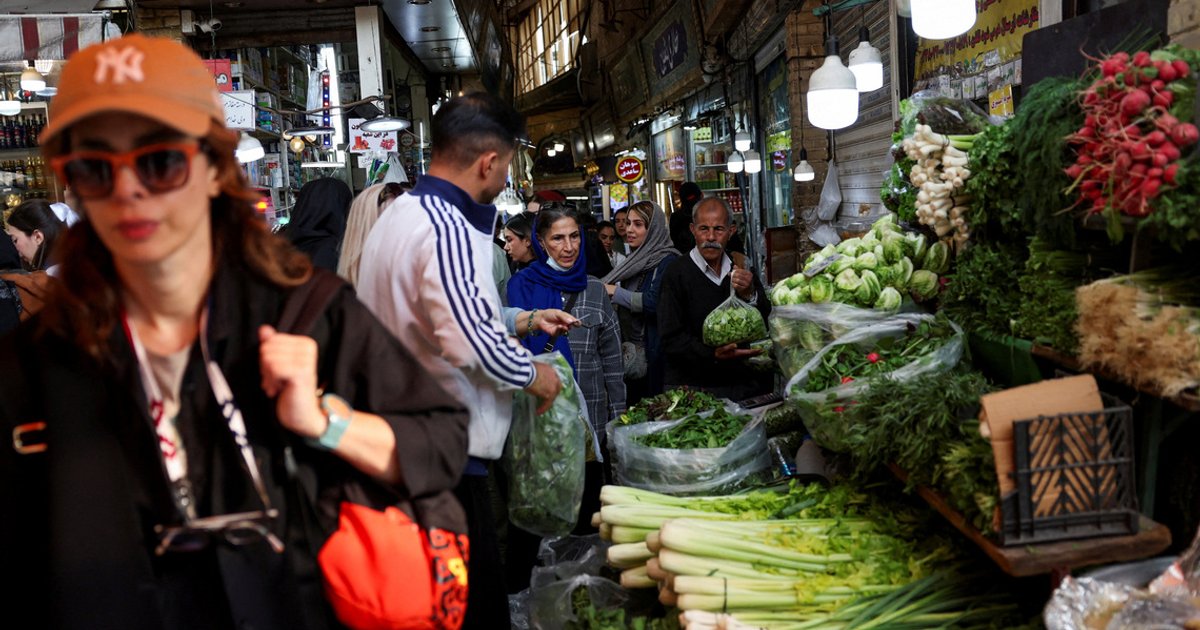
Iranians cut essentials and put dreams on hold as war-hit economy bites DUBAI, Oct 28 - Iranian families are cutting back on food, housing and education as the eight-month-old war with the United States fuels one of the country's worst inflation surges in decades, eroding incomes and pushing households to the brink.
framing: assertive · carried by 1 article(s) · first seen 2026-10-28
🔮 "We had to move to my parents' house last month because my husband got laid off from a small tile factory in May.
2026-10-28 · The Straits Times
Iranians cut essentials and put dreams on hold as war-hit economy bites · assertive framing

Claims (44 extracted, 8 hedged)

Iranians cut essentials and put dreams on hold as war-hit economy bites DUBAI, Oct 28 - Iranian families are cutting back on food, housing and education as the eight-month-old war with the United States fuels one of the country's worst inflation surges in decades, eroding incomes and pushing households to the brink. asserted
war → cut → brink
The strain is being felt far beyond the country's major cities. asserted
strain → feel → cities
Workers say wages no longer cover basic expenses, while businesses face rising costs and weakening demand as families spend most of their budgets on food, rent and other necessities. asserted
families → say → food
The conflict, triggered by US and Israeli strikes on Iran on February 28 and followed by Tehran's closure of the Strait of Hormuz and a US blockade of Iranian ports in the Gulf, has disrupted oil exports, trade and government revenues. asserted
conflict → trigger → exports
The turmoil has compounded the impact of decades of sanctions and economic mismanagement. asserted
turmoil → compound → sanctions
Reuters spoke to more than two dozen people across Iran from different social and economic backgrounds who said worsening conditions had left them struggling to afford food, housing, healthcare and education. asserted
conditions → speak → food
"We have no money, no future and no hope. asserted
We → have → money
We're tired of living in fear, fear of another US attack and fear of not being able to make ends meet at the end of every month," said Mohammadali, a 47-year-old shopkeeper and father of two in the northeastern city of Mashhad. asserted
Mohammadali → live → Mashhad
Iran's Economy Minister Ali Madanizadeh on Tuesday apologised for the mounting cost-of-living pressures facing Iranians, state media reported, saying pensioners, workers and civil servants were bearing the brunt of soaring prices and high inflation. asserted
pensioners → apologise → prices
Iran's inflation surge has shown little sign of easing. asserted
surge → show → easing
Consumer prices in September were nearly 90% higher than a year earlier, while annual inflation accelerated to 73.6%, according to official data and figures reported by state media. uncertain
inflation → accelerate → media
Food prices have risen even faster. asserted
prices → rise → ?
The cost of food and beverages was 121.8% higher than a year ago, forcing many families to cut spending elsewhere. asserted
cost → force → spending
PRICES OUTPACE PAYCHECKS, JOBS DRY UP For Mahmoud, a 44-year-old government employee in the central city of Isfahan, the gap between wages and living costs widens every month. asserted
gap → outpace → wages
"With my salary of less than $100, you can survive only for 10 days ... asserted
you → survive → days
My wife and I lie to our daughters all the time when they ask for a toy or new clothes," he said. asserted
he → lie → toy
Official estimates put the minimum monthly cost of living for a three-person working-class family at around $336, more than three times the average monthly wage of roughly $92 at the free-market exchange rate. asserted
estimates → put → rate
As wages fail to keep pace with inflation, many families have exhausted savings, cut consumption or borrowed money to cover daily expenses. asserted
families → fail → expenses
Government-mandated pay increases have been swiftly overtaken by rising prices. asserted
increases → mandate → prices
For many Iranians, the challenge is no longer preserving their standard of living but avoiding financial collapse. asserted
challenge → preserve → collapse
"We had to move to my parents' house last month because my husband got laid off from a small tile factory in May. uncertain
husband → have → May
We spent all our savings. asserted
We → spend → savings
But my husband is still jobless and we could no longer afford rent," said Hamideh, a 39-year-old mother of two in the northern city of Rasht. uncertain
Hamideh → afford → Rasht
Rising housing costs have added to the squeeze on family budgets. asserted
costs → rise → budgets
Rents in September were 32.8% higher than a year earlier, while housing, utilities and fuel costs were up nearly 38%, according to official data. uncertain
costs → accord → data
The pressure extends to the labour market. asserted
pressure → extend → market
The official unemployment rate climbed to 9.1% in the spring, up 1.8 percentage points from a year earlier. asserted
rate → climb → spring
The economic participation rate fell to 40.7%, indicating fewer working-age Iranians were employed or actively seeking work. asserted
Iranians → fall → work
Nearly a quarter of young people aged 15 to 24 are unemployed. asserted
quarter → age → people
"I have been looking for work since graduating in advertising, but after months of searching I've started to lose hope. asserted
I → look → hope
Companies are cutting budgets, not hiring. asserted
Companies → cut → budgets
Most of my classmates are either unemployed or working in fields unrelated to what they studied," said 23-year-old Firouzeh, who lives with her parents in the northwestern city of Urmia. asserted
who → work → Urmia
STUDYING ABROAD A DISTANT DREAM The weakening rial is also closing off opportunities once seen as pathways to upward mobility. asserted
rial → study → mobility
Iran's currency has lost more than half its value over the past year, putting overseas education beyond the reach of many families. asserted
currency → lose → families
Their dream was to send me abroad to become a medical doctor. asserted
dream → send → me
But after two years studying in Turkey, I could not pay the tuition for this year and I am returning home," said Shahriyar, 25, in Istanbul. uncertain
Shahriyar → study → Istanbul
He said several of his friends were in the same situation. asserted
several → say → situation
Washington's expanded sanctions, announced on August 24 as part of "Operation Economic Outcast" and aimed at cutting Tehran's funding for the war, have added to the economic strain on ordinary Iranians, analysts said. asserted
analysts → expand → Iranians
Sanctions and war-related disruptions have increased the cost of imports and restricted access to foreign currency and raw materials, while retailers and small businesses face higher operating costs just as demand weakens, threatening revenues and jobs. asserted
demand → relate → revenues
For Iran's rulers, the challenge is maintaining essential imports and public services while financing a costly conflict. asserted
challenge → maintain → conflict
…and 4 more, not listed.

💬Give feedback
🕘History 🎫Support