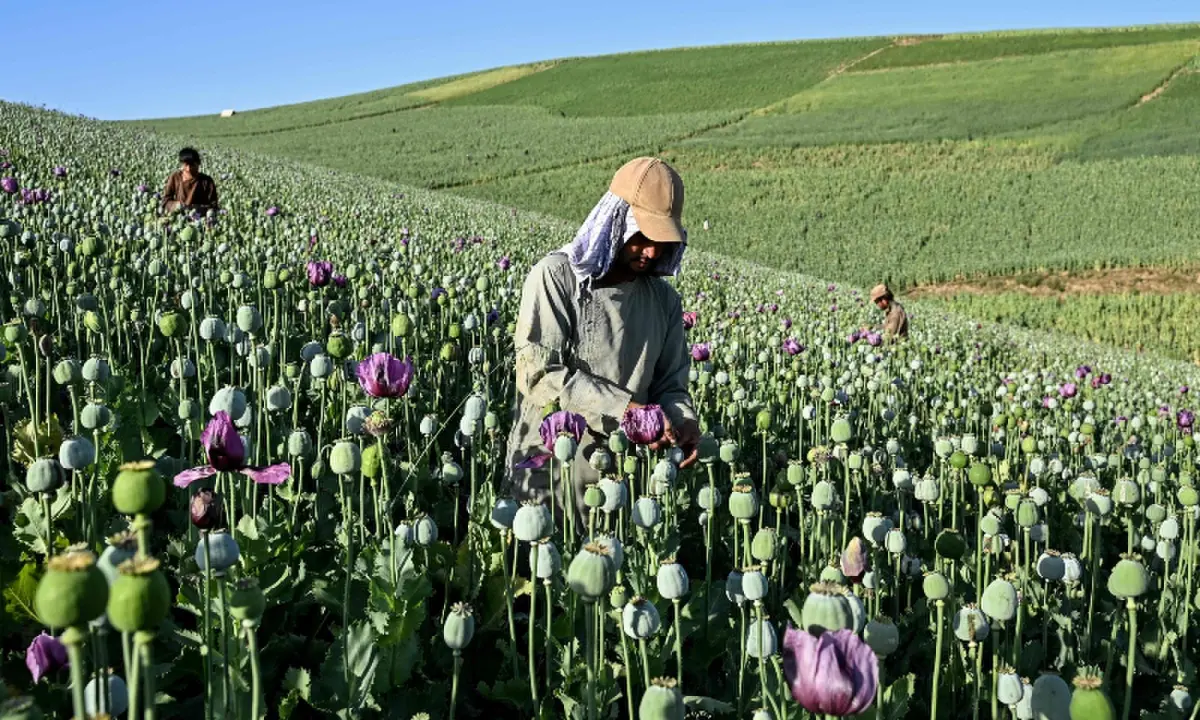
Photo via The Hindu

Afghanistan opium poppy cultivation surges despite Taliban government ban: UN

Read the original at The Hindu ↗
Cite

AFP. (2026, October 29). Afghanistan opium poppy cultivation surges despite Taliban government ban: UN. The Hindu. https://www.thehindu.com/news/international/afghanistan-opium-poppy-cultivation-surges-despite-taliban-government-ban-un/article71639446.ece

Dated from the outlet's own feed. Check the original for its byline.

The Hindu · collected 2026-10-29 · by AFP

Quick Summary

On October 29, 2026, the United Nations reported that opium poppy cultivation in Afghanistan surged to 43,000 hectares and production reached 1,500 tonnes in 2026, marking a significant increase from 2025 levels. This growth occurred despite a Taliban government ban aimed at curbing the illicit trade. The UN Office on Drugs and Crime highlighted that impoverished farmers, driven by economic necessity, continue to cultivate opium poppies due to their higher profitability compared to wheat; one hectare of poppy generates around $10,000 versus just over $770 for wheat.
Written by AI on 2026-10-29, from this article's own text only (the story summary below draws on all the coverage).

AI analysis

Story summary

The United Nations Office on Drugs and Crime (UNODC) reported on October 29, 2026, that opium poppy cultivation in Afghanistan more than quadrupled from 10,000 hectares in 2025 to 43,000 hectares in 2026 despite a ban imposed by the Taliban government. Estimated opium production also jumped fivefold from 300 tonnes to 1,500 tonnes over the same period. This surge marks the first significant increase since the Taliban banned narcotics in 2022, which previously reduced cultivation areas from more than 200,000 hectares.

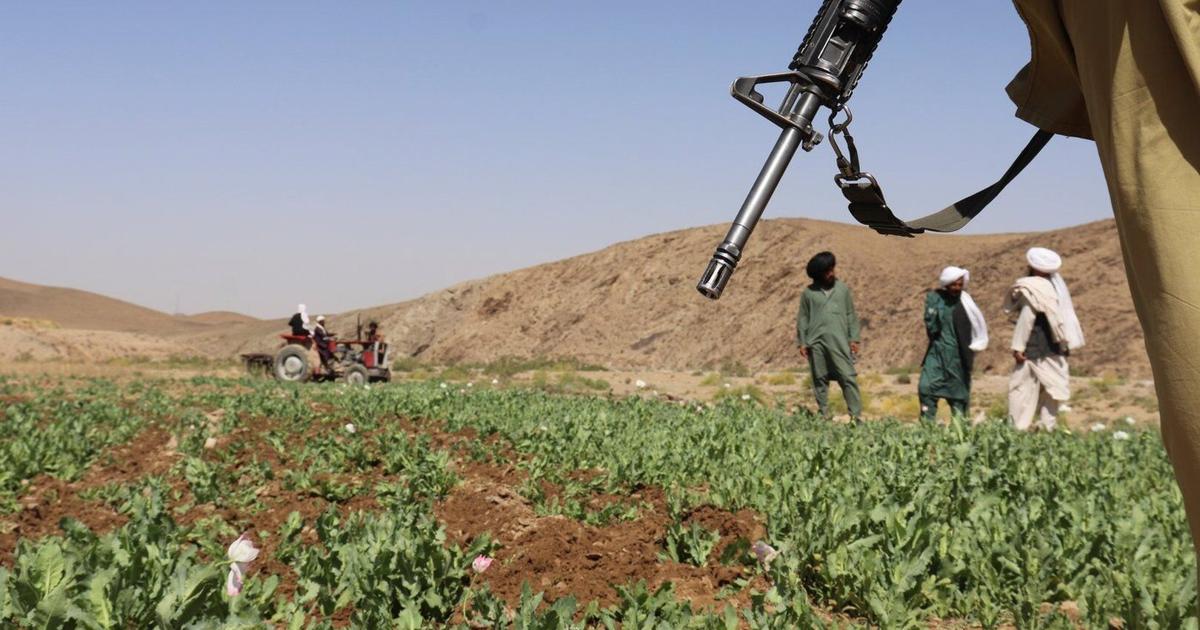
Deepening poverty has driven some farmers back into cultivating opium poppy clandestinely because it is a lucrative crop compared to other less profitable alternatives. Mohammad, a 22-year-old farmer in Afghanistan’s northeast, told AFP that without opium farming, his family cannot even afford basic food. The Taliban authorities claim to have destroyed more than 22,000 hectares of poppy fields but UNODC notes many plots are concealed among cereal crops or behind walls, making them hard to detect.

Written for “Afghanistan Opium Cultivation Surges” on 2026-11-04, grounded in this article and the 3 other(s) covering the same event.

Story

📰 Afghanistan Opium Cultivation Surges
Politics · 4 article(s) covering the same event. Compare every outlet's account →

Compared with similar articles

This article reads unscored and hedges 14% of its claims. Each row says how that neighbour differs.
Dawn
Hedges 5 of 38 claims Outlet record 72/100
Toronto Star
Hedges 0 of 3 claims Outlet record 64/100
Al Jazeera
⚖️ Leans left Hedges 0 of 2 claims Outlet record 60/100
How this article was measured signals, leaning charts, publisher record, byline, topics and claims

Signals How these are calculated →

Claims extracted
37
sentences that state something as happening or true
Uncertain
14%
5 of 37 hedged ("reportedly", "may", "according to")
Leaning
withheld
no quote in the article backed the model's score
Publisher signals
77/100
The Hindu's corrections and hedging, across everything collected from it. Not a measure of accuracy.
Outlets on this story
4
Politics
Same framing elsewhere
1
articles that frame the event the way this one does
Analyzed 2026-10-29 · how these are computed

How this is being covered How these are calculated →

Article leaning vs. publisher reliability
Source leaning vs. consistency

Publisher

The Hindu · 835 article(s) · 2 correction(s) detected
Running correction rate · 2 correction(s)

Who wrote this

AFP
926 article(s) here · 1 carrying a prediction
🔮 "A transport minister in a country like Spain cannot remain in office after two accidents of such seriousness in less than a year, however different they may be, whether or not I bear direct responsibility," Mr. Puente told members of Parliament, referring to the latest tragedy and a January crash in Andalusia that claimed 46 lives.
🔮 “If the Shin Bet or any other authority holds evidence that would justify opening an investigation, it is invited to present it,” said Gali Baharav-Miara, according to a statement sent to the media by her spokesperson.
🔮 Americans voted on Tuesday in a midterm election seen as a nationwide referendum on US President Donald Trump that could wrest control of Congress from his Republican Party and impose major restraints on the remaining two years of his presidency.
🔮 If they did need it, I would say keep it going,” Mr. Trump added.
🔮 Around $2.85bn of the stolen $6.34bn has been frozen, Binance said, meaning that the attackers could not use it or convert it to another currency.
🔮 Iran's president Masoud Pezeshkian said on Tuesday (November 3, 2026) that a return to war would benefit "no one", hours after reported U.S. strikes on an Iranian island in the Strait of Hormuz.
🔮 "If next year we manage to get rid of Parcoursup, among other things, then it will all have been worth it," he said, referring to the university admissions platform.
🔮 European football governing body UEFA said a minute’s silence would be held before matches this week in the Champions League, Europa League and Conference League.
🔮 Denmark, Norway and Sweden say they would refuse to play against Russia in the ice hockey world championships next year because of its war in Ukraine, a day after neighbouring Finland said it would also refuse.
Wire or desk byline, not an individual reporter.
Also by AFP
Nothing else under this byline is closely related to this article, so these are simply their most recent.
All 926 articles by AFP →

Topics

Afghanistan Badakhshan Myanmar Taliban UNODC

Subjects

Afghanistan GPE · 7× UNODC ORG · 7× Taliban ORG · 6× Mohammad PERSON · 5× AFP ORG · 4× Badakhshan GPE · 3× Myanmar GPE · 2× Afghan NORP · 1× the United Nations ORG · 1× the United Nations Office on Drugs and Crime ORG · 1×

Narrative

“Opium prices slightly decreased from US$ 570 per kilogramme in 2025 to US$ 500 per kilogramme in 2026, remaining well above pre-ban levels of less than $100 per kilogramme,” UNODC said in a press release. “The fourfold increase in opium poppy cultivation shows the difficulty in sustaining decreases in illicit opium cultivation when poor farmers have no alternatives to feed their families,” said UNODC Executive Director Monica Juma.
framing: assertive · carried by 1 article(s) · first seen 2026-10-29
🔮 In May, two people were killed in clashes that erupted as Afghan security forces moved to destroy opium poppy fields in Badakhshan.

Claims (37 extracted, 5 hedged)

Opium poppy cultivation in Afghanistan more than quadrupled in 2026 despite a Taliban government ban, the United Nations said Thursday (October 29, 2026), urging that impoverished farmers needed alternatives to the lucrative crop. asserted
farmers → quadruple → crop
Cultivated areas reached 43,000 hectares (around 1,06,200 acres), up from 10,000 hectares in 2025, while estimated opium production jumped fivefold from 300 tonnes to 1,500 tonnes, the United Nations Office on Drugs and Crime (UNODC) said in a report. asserted
Office → reach → report
Long the world’s leading producer of poppies, Afghanistan was overtaken by Myanmar after a 2022 Taliban government ban crushed the trade in the country. asserted
ban → lead → country
But rampant poverty has driven some farmers to return to the trade. asserted
poverty → drive → trade
“Without opium, we cannot even afford basic food,” Mohammad, a 22-year-old farmer in Afghanistan’s northeast, told AFP. asserted
Mohammad → afford → AFP
Afghanistan’s 2022 crackdown drove cultivated areas down from more than 2,00,000 hectares to 10,000 hectares in 2025. asserted
crackdown → drive → 2025
Myanmar cultivated 53,000 hectares in 2025, with no 2026 figures available. asserted
figures → cultivate → 2025
The Taliban authorities claim to have destroyed more than 22,000 hectares. uncertain
authorities → claim → hectares
But UNODC said many poppy plots were concealed among cereal crops or behind walls, making them difficult to detect. asserted
them → say → walls
Mr. Mohammad lives with his parents in Badakhshan which has become Afghanistan’s main opium poppy-growing province. asserted
which → live → Badakhshan
“The Taliban threaten us and do not allow us to grow opium. asserted
us → threaten → opium
We cultivate it with a great deal of fear,” he said, asking only to be identified by his first name. asserted
he → cultivate → name
“I want to buy a car, build a house and get married. asserted
I → want → house
Without opium, I cannot achieve these things,” he further explained. asserted
he → achieve → things
In May, two people were killed in clashes that erupted as Afghan security forces moved to destroy opium poppy fields in Badakhshan. uncertain
forces → kill → Badakhshan
Another 35-year-old farmer named Mohammad, who ploughs his poppy field with an ox, said: “If we grow wheat, it is not enough to sustain our lives. asserted
it → name → lives
We are forced to grow poppies to earn a good income.” asserted
We → force → income
Mr. Mohammad said that he is threatened by the authorities and sometimes his crops are destroyed but he will continue. “It is the only way to cover living expenses,” he said. asserted
he → say → expenses
One hectare of wheat generated just over $770 in 2023, compared with $10,000 for a hectare of poppy, according to UNODC. uncertain
hectare → generate → UNODC
“Opium prices slightly decreased from US$ 570 per kilogramme in 2025 to US$ 500 per kilogramme in 2026, remaining well above pre-ban levels of less than $100 per kilogramme,” UNODC said in a press release. “The fourfold increase in opium poppy cultivation shows the difficulty in sustaining decreases in illicit opium cultivation when poor farmers have no alternatives to feed their families,” said UNODC Executive Director Monica Juma. asserted
Juma → decrease → families
The Taliban government acknowledged that the ban was not a “sustainable and long-term solution” without alternative livelihoods and economic support for farmers. asserted
ban → acknowledge → farmers
The challenge comes as Afghanistan faces the return of 6.6 million Afghans since 2023, climate disasters, dwindling aid and banking isolation since the Taliban movement returned to power in 2021. asserted
movement → come → 2021
With support from Japan and the European Union, UNODC has funded programmes to help farmers find alternatives. asserted
farmers → fund → alternatives
Through the NGO Afghan Aid, Zikrullah, 35, who supports an extended family of 12 in Badakhshan, received improved wheat seeds and fertiliser. asserted
who → support → seeds
“We’re satisfied, it takes less effort than opium and we’re more at ease,” he told AFP, also asking to be identified only by his first name. asserted
he → ’re → name
A third farmer named Mohammad, 30, who has converted 80% of his land to wheat, told AFP, that the lack of water in recent years has affected crops other than poppy. asserted
lack → name → poppy
To curb opium production sustainably, alternative crops alone are insufficient, UNODC Country Representative for Afghanistan Polleak Ok Serei told AFP in an interview in Kabul. asserted
Representative → curb → Kabul
“Sustainable alternative livelihood requires more than thinking in terms of alternative crops,” he said. asserted
he → require → crops
Farmers “need access to markets, including international markets through trades. asserted
Farmers → need → trades
They need infrastructure, roads, irrigation, storage”. asserted
They → need → infrastructure
UNODC estimated in 2025 that the approach would require approximately $500 million, but “only 10%” had been funded by donors and the Taliban authorities, according to Ok Serei. uncertain
% → estimate → Serei
The strategy also takes time, he said. asserted
he → take → time
“Thailand spent 15 years investing in alternative livelihood before starting eradicating,” Ok Serei said. asserted
Serei → spend → livelihood
The problem extends far beyond Afghanistan, he said. “It truly is an international problem,” Mr. Ok Serei added, explaining that Afghan drugs were consumed across other continents. asserted
drugs → extend → continents
Afghan opium is the main source of heroin in the European Union, where approximately 8,50,000 people used opioids in 2024, according to the European Union Drugs Agency. uncertain
people → use → Agency
Addressing the problem requires international cooperation, the UN representative said. asserted
representative → address → cooperation
Mr. Ok Serei called for a “drug demand reduction strategy, not only in Afghanistan but also outside of Afghanistan”. asserted
Serei → call → Afghanistan

💬Give feedback
🕘History 🎫Support