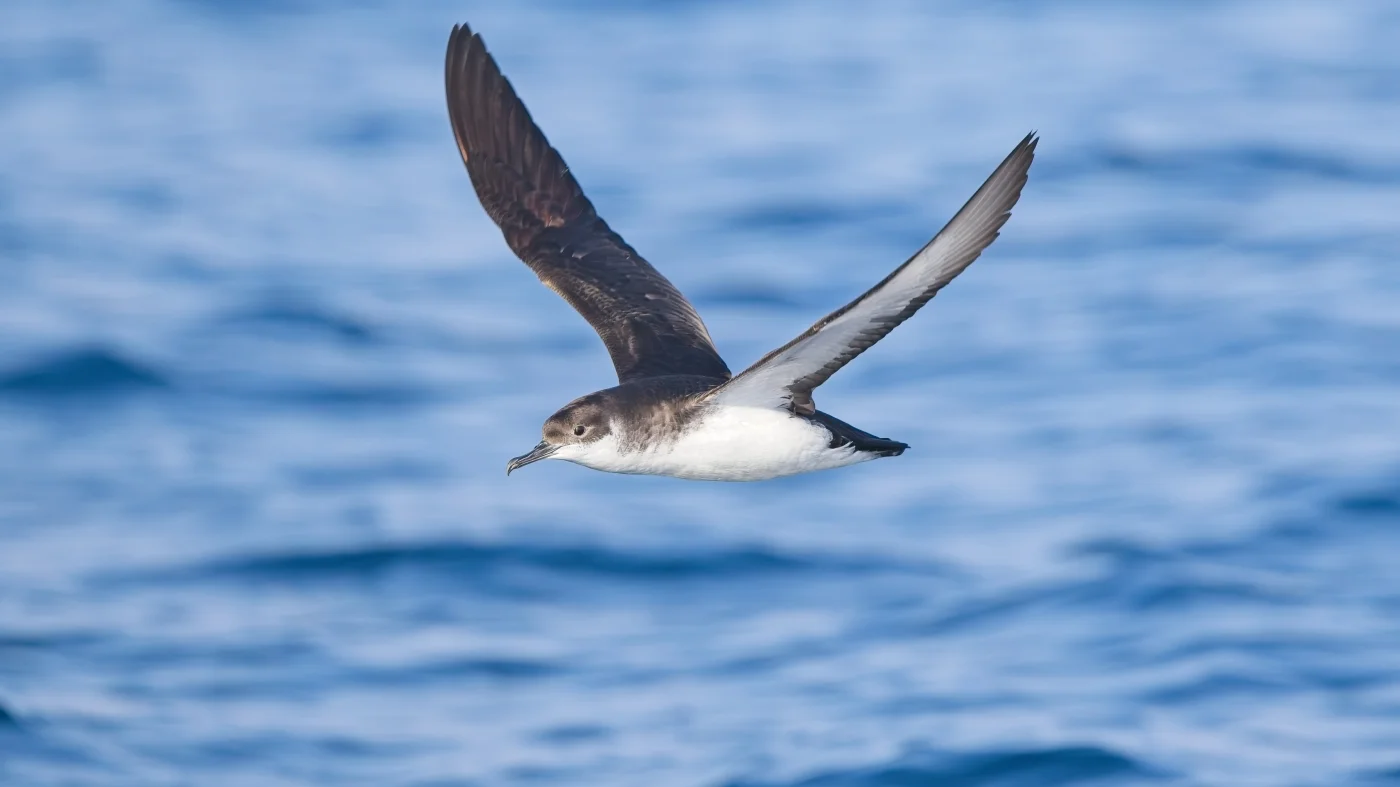
Photo via NPR

Even birds get jet lagged, study shows

Read the original at NPR ↗
Cite

Brumfiel, G. (2026, October 29). Even birds get jet lagged, study shows. NPR. https://www.npr.org/2026/10/29/nx-s1-6019228/manx-shearwater-jet-lag-birds

Dated from the outlet's own feed. Check the original for its byline.

NPR · collected 2026-10-29 · by Geoff Brumfiel

Quick Summary

A new study published in Science reveals that Manx shearwaters, a seabird species common in the British Isles, experience disorientation similar to jet lag during long flights across the Atlantic Ocean. The research, led by Patrick Lewin from the University of Oxford, utilized GPS trackers to observe that these birds veer off course by up to seven degrees when returning from foraging trips, suggesting their internal clocks fall out of sync with solar cues used for navigation. This deviation, though small—only affecting a bird's path by about three miles on a 600-mile journey—provides insight into how the shearwaters cope with transatlantic travel.
Written by AI on 2026-11-01, from this article's own text only (the story summary below draws on all the coverage).

AI analysis

Story summary

New research published in the journal Science shows that Manx shearwater birds experience jet lag similar to humans when flying across different time zones. A team led by Patrick Lewin, a behavioral ecologist at the University of Oxford, discovered that these seabirds become disoriented during long flights over the Atlantic Ocean due to their internal clocks falling out of sync with the sun's position. Manx shearwaters are common in the British Isles and mate for life; pairs lay one egg annually and take turns incubating it while one partner hunts at sea for up to two weeks. The birds then fly back home quickly, often covering hundreds of miles in just a day, leading scientists to investigate how they manage such rapid time zone changes.

Written for “Birds Get Jet Lagged” on 2026-11-01, grounded in this article and the 0 other(s) covering the same event.

Story

📰 Birds Get Jet Lagged
Science · 1 article(s) covering the same event.

Compared with similar articles

Nothing to compare against. No article is close enough to this one for the pipeline to have linked or judged the pair.
How this article was measured signals, leaning charts, publisher record, byline, topics and claims

Signals How these are calculated →

Claims extracted
23
sentences that state something as happening or true
Uncertain
4%
1 of 23 hedged ("reportedly", "may", "according to")
Leaning
not political
takes no side on a contested political question
Publisher signals
60/100
NPR's corrections and hedging, across everything collected from it. Not a measure of accuracy.
Outlets on this story
1
Science
Same framing elsewhere
1
articles that frame the event the way this one does
Analyzed 2026-11-01 · how these are computed

How this is being covered How these are calculated →

Article leaning vs. publisher reliability
Source leaning vs. consistency

Publisher

NPR · 1000 article(s) · 3 correction(s) detected
Running correction rate · 3 correction(s)

Who wrote this

Geoff Brumfiel
4 article(s) here · 1 carrying a prediction
🔮 Then they take turns incubating it: "One partner will sit on the egg nonstop while the other one goes out to sea," Lewin said.
2026-10-29 · assertive framing · Even birds get jet lagged, study shows
🔮 The facility would include data centers and some 456 small nuclear reactors, along with a facility to produce nuclear fuel and others for storing nuclear waste, according to a proposal from the company to federal regulators.
🔮 "So far it's been very difficult to really extract any human understanding from this new AI proof," said James Maynard, a mathematician at the University of Oxford.
🔮 But others warn that the change could lay the groundwork for higher radiation exposures.
Also by Geoff Brumfiel
Nothing else under this byline is closely related to this article, so these are simply their most recent.

Topics

Ontario Western University the British Isles the Centre for Animals on the Move the University of Oxford

Subjects

Lewin PERSON · 5× Alice Boyle PERSON · 1× Boyle PERSON · 1× Canada GPE · 1× Ontario GPE · 1× Patrick Lewin PERSON · 1× Western University ORG · 1× the British Isles GPE · 1× the Centre for Animals on the Move ORG · 1× the University of Oxford ORG · 1×

Narrative

To see if these little birds really did feel the effects of flying through time zones like humans do, Lewin used a remarkable tool – for 20 years, his colleagues had been tagging birds with GPS trackers and collecting data on their flights out to the Atlantic and back.
framing: assertive · carried by 1 article(s) · first seen 2026-11-01
🔮 Then they take turns incubating it: "One partner will sit on the egg nonstop while the other one goes out to sea," Lewin said.
2026-11-01 · NPR
Even birds get jet lagged, study shows · assertive framing

Claims (23 extracted, 1 hedged)

Even birds get jet lagged, study shows New research shows that humans are not the only species to get jet lag: Some birds appear to experience it too. asserted
birds → get → it
A study published in the journal Science found that a type of seabird known as the Manx shearwater appears to become slightly disoriented during long flights across the Atlantic Ocean. asserted
type → publish → Ocean
That disorientation, the authors say, is due to the bird's internal clock falling out of sync with the sun's position in the sky. asserted
clock → say → sky
They look a little like seagulls, but "they're actually very closely related to an albatross," said Patrick Lewin, a behavioral ecologist at the University of Oxford. asserted
Lewin → look → Oxford
Shearwaters mate for life, and when they breed, a couple lays just one egg. asserted
couple → mate → egg
Then they take turns incubating it: "One partner will sit on the egg nonstop while the other one goes out to sea," Lewin said. asserted
Lewin → take → sea
For up to two weeks the hunting partners scour the North Atlantic for fish and squid, often travelling hundreds of miles from their nests. asserted
partners → scour → nests
Once these birds' bellies are full "they absolutely bomb it back to their colony," Lewin said. asserted
Lewin → bomb → colony
Often they make the long journey home in just a day or so. asserted
they → make → day
Which raised an interesting question: Do Manx shearwaters feel jet lag (or perhaps more aptly, flap lag)? asserted
shearwaters → raise → lag
To see if these little birds really did feel the effects of flying through time zones like humans do, Lewin used a remarkable tool – for 20 years, his colleagues had been tagging birds with GPS trackers and collecting data on their flights out to the Atlantic and back. asserted
colleagues → see → Atlantic
He figured he could see the jet lag in their flights. uncertain
he → figure → flights
That's because the Manx shearwaters are believed to use the sun to navigate. asserted
shearwaters → believe → sun
"To use the sun as a compass you have to know what time of day it is," Lewin said. asserted
Lewin → use → day
If the shearwaters had the wrong time of day, they would fly the wrong way. asserted
they → have → day
That's exactly what Lewin and his colleagues saw. asserted
Lewin → see → what
As the birds rushed back to their partners and eggs, they veered ever-so-slightly off course. asserted
they → rush → course
It wasn't much: A seven-degree error, the maximum deviation observed, only took a bird out of its way by about three miles on a 600-mile journey. asserted
error → observe → journey
"It's a really small addition," he said. asserted
he → say → ?
"This paper is so cool," said Alice Boyle, a biologist at the Centre for Animals on the Move at Western University in Ontario, Canada who was not part of the study. asserted
who → say → study
Boyle said pretty much every creature on the planet, from corals to chipmunks, has to navigate its environment, yet it's rare to see a study showing navigation decisions in action. asserted
it → say → action
That's what makes this type of GPS work so valuable. asserted
type → make → work
"It's using these wild birds that travel to completely remote places and we're able to learn so much about how they do that," she said. asserted
she → use → that

💬Give feedback
🕘History 🎫Support