Photo via The Straits Times

Why the US economy looks strong but feels bad to many

Read the original at The Straits Times ↗
Cite

The Straits Times. (2026, October 30). Why the US economy looks strong but feels bad to many. The Straits Times. https://www.straitstimes.com/world/united-states/why-the-us-economy-looks-strong-but-feels-bad-to-many

Dated from the outlet's own feed. Check the original for its byline.

The Straits Times · collected 2026-10-30 · by The Straits Times

Quick Summary

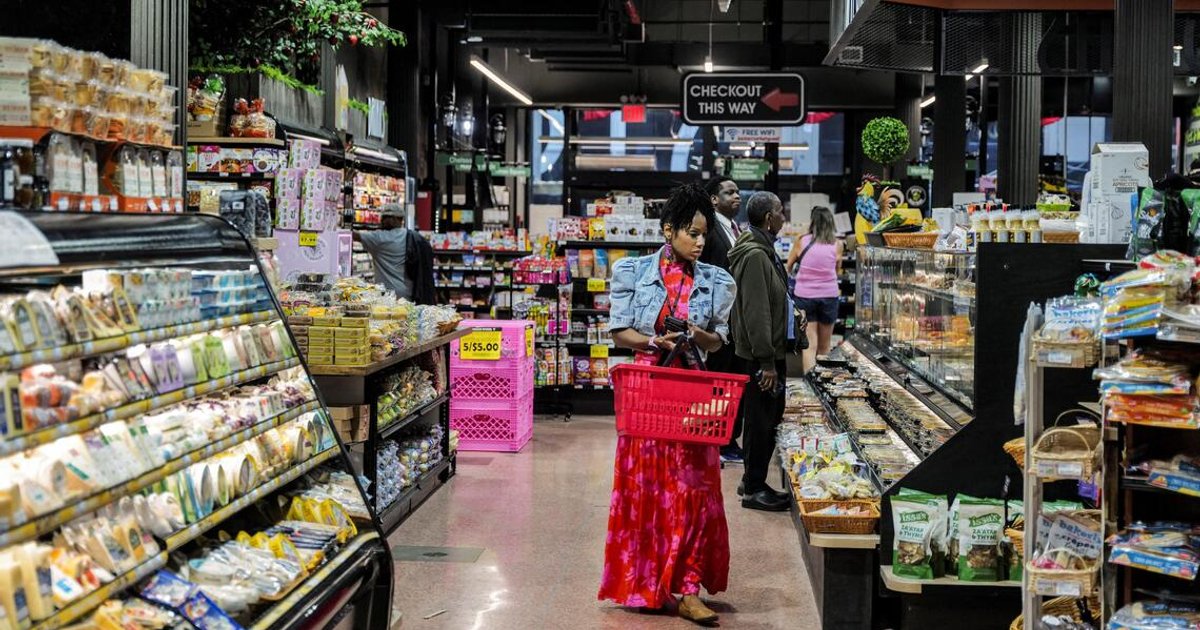
The US economy appears strong with low unemployment and high consumer spending, yet many people feel economically insecure and stressed. Polls show that voters are concerned about inflation and cost of living issues ahead of the midterm elections on November 3. Prices have risen significantly since the end of 2019, with overall consumer prices up by around 30%, groceries by 32%, and rent by over a third. Inflation reached its highest point in decades during the post-pandemic period but has slowed down to 3.7% year-over-year as of September. This article explores why economic indicators suggest prosperity while many Americans experience financial strain due to persistent high inflation rates.
Written by AI on 2026-10-30, from this article's own text only (the story summary below draws on all the coverage).

Story

📰 US Economy Contradiction
Economy/Business · 1 article(s) covering the same event.

Compared with similar articles

Nothing to compare against. No article is close enough to this one for the pipeline to have linked or judged the pair.
How this article was measured signals, leaning charts, publisher record, byline, topics and claims

Signals How these are calculated →

Claims extracted
65
sentences that state something as happening or true
Uncertain
3%
2 of 65 hedged ("reportedly", "may", "according to")
Leaning
Leans left
of the writing, not the subject · beta estimate
Publisher signals
66/100
The Straits Times's corrections and hedging, across everything collected from it. Not a measure of accuracy.
Outlets on this story
1
Economy/Business
Same framing elsewhere
1
articles that frame the event the way this one does
Analyzed 2026-10-30 · how these are computed

How this is being covered How these are calculated →

Article leaning vs. publisher reliability
Source leaning vs. consistency

Publisher

The Straits Times · 4019 article(s) · 5 correction(s) detected
Running correction rate · 5 correction(s)

Who wrote this

The Straits Times
2506 article(s) here · 1 carrying a prediction
🔮 "In no case will there be a family photo with European partners and Mr. Lavrov together because ... there is no normalcy with Russia," German Foreign Minister Johann Wadephul told reporters earlier on Friday.
🔮 The two parties are set to unveil a series of deals – from critical minerals to artificial intelligence – and lay the groundwork for a broader alliance open to other democracies seeking to better navigate global trade tensions.
🔮 The restaurant flap is the latest offbeat detour in a campaign in which Trump has warned darkly about communism, commented on the physique of men's bodies and joked that the $5,000 payments he is promising Americans if Republicans keep Congress would barely cover a meal at his Mar-a-Lago club in Florida.
🔮 Neither side wants to be blamed by Trump for something going wrong in Oleshky, an event that could burnish his self-professed credentials as a peacemaker before US midterm legislative elections. But the two sides remain far apart on potential terms for ending the conflict in Ukraine, and there appears to be no immediate prospect of it ending.
🔮 In a statement announcing the demolitions, Israel's military said it would "continue to operate proactively and offensively" to thwart attacks in the West Bank and "protect residents in the area".
🔮 He registered to vote in Illinois under his birth name Robert Francis Prevost and requested a ballot on October 3, the Chicago Sun-Times reported on Thursday, citing the Will County Clerk's office.
🔮 Meta, TikTok and X argued the notices create unprecedented regulatory burdens, with X claiming that what it described as “the most burdensome information request X has received from any regulator” would cost it millions of pounds.
🔮 President Trump loves his supporters, and in addition to nearly 20 tele-rallies, he will hold back-to-back rallies in Kansas and Iowa on Sunday," the official said, speaking on condition of anonymity.
🔮 Over the past decade or so, G-7 countries would at least “have agreed a coordinated platform before they came to the G-20, but now we don’t even really have that,” she added.
🔮 Given the web of interconnected conflicts in the Horn of Africa, with neighbouring countries and powers further afield backing their respective proxies, experts have warned that war in Ethiopia could trigger a broader conflict in the region.
Also by The Straits Times
Nothing else under this byline is closely related to this article, so these are simply their most recent.
All 2506 articles by The Straits Times →

Topics

Americans Iran Russia Ukraine the US Bureau of Labor Statistics’

Subjects

Americans NORP · 7× Austan Goolsbee PERSON · 1× Fed ORG · 1× Federal Reserve Bank of Chicago ORG · 1× Iran GPE · 1× London GPE · 1× Russia GPE · 1× Ukraine GPE · 1× the US Bureau of Labor Statistics’ ORG · 1×

Narrative

The buildout in artificial intelligence technology fuelled business investment and construction hiring but also sent prices for computer software and components higher. And most recently the Iran war has led to higher energy prices and rising borrowing costs.
framing: assertive · carried by 1 article(s) · first seen 2026-10-30
🔮 But when these milestones do not apply, it might be a sign of falling further behind.
2026-10-30 · The Straits Times
Why the US economy looks strong but feels bad to many · assertive framing

Claims (65 extracted, 2 hedged)

Why the US economy looks strong but feels bad to many The US economic expansion is in its seventh year, and there is no recession in sight. asserted
expansion → look → sight
Consumer spending data suggest that Americans are splurging on things like live entertainment, travel and eating out. asserted
Americans → suggest → entertainment
The economy is growing at its fastest pace in a year. asserted
economy → grow → year
A significant portion of Americans say it feels like the economy is stacked against them. asserted
economy → say → them
Polls indicate that they are stressed out about the cost of living, anxious about job security, and pessimistic about their economic future. asserted
they → indicate → future
And do not even get them started on gasoline prices. asserted
them → get → prices
Economic issues keep showing up as voters’ top concerns ahead of the US midterm elections on Nov 3. asserted
issues → show → Nov
But are things as shaky as many say? asserted
many → say → ?
How much have prices gone up? asserted
prices → go → ?
Americans confronted the hottest inflation in more than four decades in the years immediately following the Covid pandemic. asserted
Americans → confront → pandemic
They are still struggling with sticker shock. asserted
They → struggle → shock
Prices continue to go up, though at a slower pace than a few years ago. asserted
Prices → continue → pace
The basket of goods and services measured by the US Bureau of Labor Statistics’ consumer price index was 3.7% higher in September than a year earlier. asserted
basket → measure → September
That is less than half the 9.1% pace of inflation reached as the US emerged from the pandemic. asserted
US → reach → pandemic
But it is still high enough for people to notice. asserted
people → notice → ?
The steady rise in prices comes on top of the post-pandemic spike. asserted
rise → come → spike
Eating out is close to 40% more. asserted
Eating → eat → ?
Auto maintenance jumped by more than half and car insurance by about 48%. asserted
maintenance → jump → %
Prices are almost always rising, but usually not this fast. asserted
Prices → rise → ?
In the decade before the pandemic, annual inflation averaged around 1.8%. asserted
inflation → average → %
That is in part because the economy faced a series of shocks that accelerated price gains. asserted
that → face → gains
Supply chains stretched and broke in 2021 after the global economy reopened. asserted
economy → stretch → 2021
Then Russia’s invasion of Ukraine choked off fertiliser, wheat and oil shipments, sending food and fuel prices higher. asserted
invasion → choke → prices
The Trump administration’s “Liberation Day” tariffs spooked markets, and subsequent levies raised prices on many goods. asserted
levies → spook → goods
The buildout in artificial intelligence technology fuelled business investment and construction hiring but also sent prices for computer software and components higher. And most recently the Iran war has led to higher energy prices and rising borrowing costs. asserted
war → fuel → prices
“Supply shocks have come more frequently, hit harder and lasted longer,” Federal Reserve Bank of Chicago president Austan Goolsbee said in a speech in London in September. asserted
Goolsbee → come → September
In an effort to tamp down inflation, the Fed in September raised interest rates for the first time since 2023, but left them unchanged at a subsequent rate-setting meeting in October. asserted
Fed → tamp → October
How are Americans getting by? asserted
Americans → get → ?
But adjusted for inflation, pay has barely kept up with rising prices. And even the marginal gains Americans have made are beginning to evaporate. asserted
Americans → adjust → prices
Inflation-adjusted pay was down from a year earlier for six straight months as of September. Even so, workers continue to spend – tapping a range of resources to do so. asserted
workers → adjust → resources
Some people work in the gig economy. asserted
people → work → economy
The stock market hit a series of records this year, lifting investor portfolios. asserted
market → hit → portfolios
Home values have grown substantially over the past few years, and big tax refunds in 2026 boosted household budgets. asserted
refunds → grow → budgets
Sluggish wage growth alongside rising prices has forced many to save less – or not save at all. asserted
growth → rise → less
What is happening in the job market? asserted
What → happen → market
On the good news front, plenty of people are earning a paycheque. asserted
plenty → earn → paycheque
The US economy is by many measures operating at or near full employment. asserted
economy → operate → employment
The unemployment rate is historically low, though it edged higher, to 4.2%, in September. asserted
it → edge → September
Healthcare, construction and manufacturing have all been adding jobs in recent months. And the labour force participation rate also rose in September, typically a positive sign that more people are looking for work. asserted
people → add → work
But sector-specific strength and the low unemployment rate mask a sluggish job market. asserted
strength → mask → market
…and 25 more, not listed.

💬Give feedback
🕘History 🎫Support