Photo via The Guardian

Houthis threaten more Saudi strikes as UN warns of humanitarian crisis in Yemen

Read the original at The Guardian ↗
Cite

editor, P. W. D. (2026, September 15). Houthis threaten more Saudi strikes as UN warns of humanitarian crisis in Yemen. The Guardian. https://www.theguardian.com/world/2026/sep/15/houthis-threaten-saudi-arabia-strikes-un-warning-humanitarian-crisis-yemen

Dated when The Aporia collected the article, usually within hours of publication. Check the original for its exact date and byline.

The Guardian · collected 2026-09-15 · by Patrick Wintour Diplomatic editor

Quick Summary

Houthi rebels in Yemen threatened additional attacks on Saudi cities, leading to concerns over humanitarian issues as 100,000 people have been displaced. Oil prices surpassed $100 per barrel amid fears that Houthi control of the Bab al-Mandab strait could disrupt crucial shipping routes and exacerbate global energy supply tensions. The UN Security Council convened an emergency meeting to address the crisis, with calls for restraint from all parties involved, while Iran’s foreign minister traveled to China to discuss potential diplomatic solutions.
Written by AI on 2026-09-16, from this article's own text only (the story summary below draws on all the coverage).

AI analysis

Story summary

On September 7, 2026, an Iranian container ship was attacked near Hengam Island in the Strait of Hormuz by what state media called an “unidentified projectile,” leaving one person dead and four crew members wounded. This incident occurred as Iran prepared to meet with Gulf states in Oman to discuss shipping traffic safety in the Strait of Hormuz.

On September 12, a critical oil pipeline in Saudi Arabia, which had been moving 4-5% of global oil supplies since late February due to blockades at the Strait of Hormuz, was shut down after being struck by drones launched from Iraq. The attack caused injuries and forced Saudi Arabia to temporarily close the East-West pipeline.

In response to the drone attacks on September 12, Iraq's government confirmed the attacks originated from its territory but an umbrella group of Iran-backed militias in Iraq denied involvement. Iraqi Prime Minister Ali al-Zaiyadi dismissed a military commander as part of an investigation into the incident.

On September 18, oil company Saudi Aramco informed at least two European refining customers that they would receive no crude oil for October due to damage sustained during the drone attack on its pipeline.

These events have significantly impacted global oil markets and international relations, with Iran continuing to impede commercial traffic through the Strait of Hormuz and the Houthis advancing towards strategic locations in Yemen. The United States is grappling with how to address these challenges amidst ongoing conflicts and economic pressures. China's role in fueling tensions further complicates efforts to stabilize the region, leading to discussions between U.S. President Trump and Chinese leader Xi Jinping about potential resolutions. Trump aims to prioritize addressing Iran's influence over other trade issues during his meeting with Xi.

Written for “Houthis Attack Saudi Oil Facilities” on 2026-10-30, grounded in this article and the 39 other(s) covering the same event.

Story

📰 Houthis Attack Saudi Oil Facilities
Politics · 40 article(s) covering the same event. See how they differ ↓

Compared with similar articles

This article reads leans right and hedges 6% of its claims. Each row says how that neighbour differs.
Semafor
⚖️ Leans strongly left further left than this Hedges 0 of 5 claims Outlet record 60/100
BBC News
Hedges 1 of 22 claims Outlet record 69/100
“The articles discuss different aspects of the broader conflict involving Iran and Saudi Arabia but describe distinct events: one about imminent Houthi attacks threatening Saudi cities and a UN warning, while the other is about JP Morgan's struggle to predict oil price impacts due to the US-Iran war.”
CBS News
⚖️ Leans right Hedges 28 of 311 claims Outlet record 66/100
“The articles describe different aspects and timeframes of ongoing conflicts involving Iran, Houthis, and Saudi Arabia but do not refer to the exact same incident occurring at the same moment.”
The Straits Times
Hedges 0 of 6 claims Outlet record 66/100
“Article A discusses Trump blaming Iran for an attack on a Saudi pipeline, while Article B reports threats from Houthis and a UN warning about humanitarian crisis in Yemen.”
The Independent
⚖️ Leans strongly right further right than this Hedges 9 of 53 claims Outlet record 59/100
“The articles describe different phases or outcomes of a larger conflict, not the exact same incident.”
Al Jazeera
⚖️ Leans right Hedges 2 of 16 claims Outlet record 60/100
“The articles discuss different straits and conflicts: Article A focuses on potential Houthi attacks in Bab al-Mandab, while Article B discusses the Strait of Hormuz and its continued openness to shipping despite blockades.”
Al Jazeera
Hedges 0 of 12 claims Outlet record 60/100
“The articles describe related developments but different events: one about threats and warnings regarding the Bab al-Mandab strait, and another about Italy's decision to deploy warships to protect shipping through it.”
South China Morning Post
Hedges 1 of 3 claims Outlet record 64/100
“Article A discusses potential Houthi attacks and UN warnings about a humanitarian crisis, while Article B focuses on the economic impact of a Saudi oil pipeline closure in Asia.”
Al Jazeera
Hedges 4 of 29 claims Outlet record 60/100
“Article A describes the Houthis taking control of Yemen’s Red Sea coast and key shipping route, while Article B reports on threats by Houthis to conduct more attacks against Saudi Arabia and a UN warning about a humanitarian crisis.”
The Hindu
Hedges 1 of 9 claims Outlet record 60/100
“Article A reports on a specific communication where Houthis ask U.S. not to intervene, while Article B covers subsequent threats and attacks by Houthis against Saudi Arabia.”
How this article was measured signals, leaning charts, publisher record, byline, topics and claims

Signals How these are calculated →

Claims extracted
35
sentences that state something as happening or true
Uncertain
6%
2 of 35 hedged ("reportedly", "may", "according to")
Leaning
Leans right
of the writing, not the subject · beta estimate
Publisher signals
66/100
The Guardian's corrections and hedging, across everything collected from it. Not a measure of accuracy.
Outlets on this story
40
Politics
Same framing elsewhere
1
articles that frame the event the way this one does
Analyzed 2026-09-16 · source text last changed 2026-09-16 · how these are computed

How this is being covered How these are calculated →

Article leaning vs. publisher reliability
Source leaning vs. consistency

Publisher

The Guardian · 2714 article(s) · 6 correction(s) detected
Running correction rate · 6 correction(s)

Who wrote this

Patrick Wintour Diplomatic editor
21 article(s) here · 1 carrying a prediction
🔮 Iran would portray either a reduction or complete withdrawal of US forces from the Gulf region as “a strategic success and vindication of its steadfastness, but also use it to embarrass the Gulf states about their decades-long courtship of US protection”.
🔮 Vowing the people of Taiz would resist until the end, he said statements of solidarity were of no use and that what was needed was access for aid agencies, including the UN, to deliver supplies to the city.
🔮 Lingering hopes of averting a major new conflagration between Iran and the US soon after Tuesday’s midterm elections could rest on Iran’s response to a personal letter from the US vice-president, JD Vance, offering to restart diplomacy.
🔮 The US is aware of the talks’ progress but is holding out for a concession that European powers suggest could involve Iran allowing UN weapons inspectors back into the country.
🔮 Security officials and diplomats at Monday’s meeting were expected to discuss how Iran could persuade the Houthis in Yemen to end their crippling missile and drone attacks on infrastructure in Saudi Arabia.
🔮 She has justified her late – but widely predicted – entry into the race on the grounds that the UN security council appears to be close to deadlock on the six remaining candidates in the race, with no one as yet able to establish a clear lead after six rounds of voting, the latest on 16 October.
🔮 Foreign ministers at a summit of eight European and Middle Eastern countries have urged the US and Israel not to renews their attacks on Iran, warning a fresh outbreak of fighting would spread conflict and push oil prices even higher.
🔮 They are trying to burn it, but we can only anticipate there will be diseases such as cholera in the near future.
🔮 Col Javad Mokhtar Rezaei, the deputy head of cultural and social affairs for Iran’s cyber police (Fata), told the Tasnim news agency: “In some cases, the phones offered may actually exist, but exposing electronic components to saltwater and extreme humidity can cause corrosion of internal components, damage to the boards, battery and display, and cause hidden malfunctions in the device’s performance.” Meysam Doost-Mohammadi, a spokesperson for the Iranian mobile association, said it would be unusual for valuable phones to be transported by ship. The bulk of the recent spate of attacks have occurred close to the coast with Oman, a route that Iran regards as unauthorised.
🔮 Unlawful settlement activity will be captured through a breach of international humanitarian law, including the Geneva convention on occupation.
Also by Patrick Wintour Diplomatic editor
Nothing else under this byline is closely related to this article, so these are simply their most recent.
All 21 articles by Patrick Wintour Diplomatic editor →

Topics

Houthi Iran Oman Saudi Saudi Arabia

Subjects

Iran GPE · 10× Houthi NORP · 6× Saudi NORP · 6× Houthis NORP · 5× Hormuz GPE · 4× Oman GPE · 4× Qatar GPE · 4× Saudi Arabia GPE · 4× Yanbu GPE · 2× Yemen GPE · 2×

Narrative

But Maysaa Shuja al-Deen from the Sana’a Center thinktank said: “Any renewed military campaign must be accompanied by a serious reassessment of past mistakes, meaningful reform of the Yemeni government, stronger coordination among anti-Houthi forces, and a more balanced relationship between Yemeni actors and their regional partners.”
framing: assertive · carried by 1 article(s) · first seen 2026-09-16
🔮 The US secretary of state, Marco Rubio, spoke with Oman’s foreign minister, Sayyid Badr Albusaidi, on Tuesday amid US concern that Oman will cede excessive control of the waterway to Iran.

Claims (35 extracted, 2 hedged)

Saudi cities faced the threat of a second day of Houthi attacks as fighting across Yemen led the UN to warn of a humanitarian crisis with 100,000 Yemenis already displaced. asserted
Yemenis → face → crisis
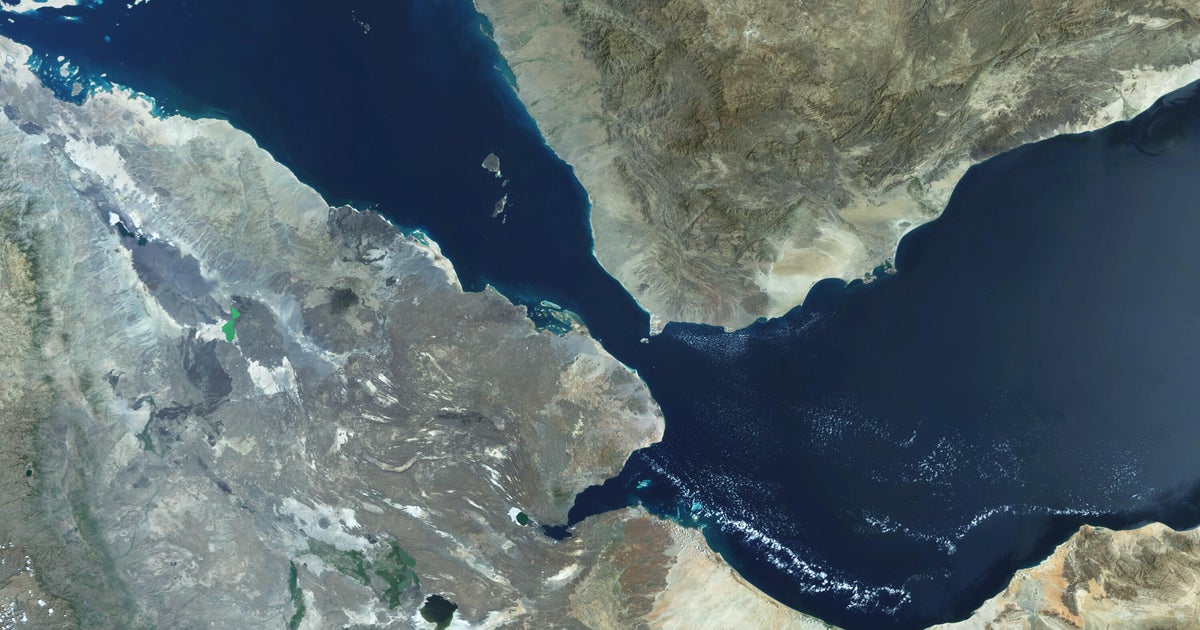
As oil prices remained well over $100 (£74) a barrel, Qatar warned of a catastrophe if the Iran-backed Houthi militants won full control of the Bab al-Mandab strait, the narrow waterway at the bottom of the Red Sea dominating the key naval route to Asia. asserted
militants → remain → Asia
The strait has become vital to Saudi crude oil exports as the wider Middle East war chokes the strait of Hormuz in the Gulf. asserted
war → become → Gulf
An emergency meeting of the UN security council in New York heard repeated calls for Houthi forces to show restraint. asserted
forces → hear → restraint
In a sign that Iran is still seeking a broader solution, its foreign minister, Abbas Araghchi, travelled to Beijing to discuss China’s possible role in solving the related strait of Hormuz dispute. asserted
minister → seek → dispute
The future of the strait of Hormuz – through which a fifth of the world’s traded oil and gas transited in peacetime and which the US and Iran are now mounting blockades of – is the diplomatic key to unlocking the conflict between the US and Iran, and to a lesser extent the related conflict between Saudi Arabia and the Houthis. asserted
US → trade → Arabia
Oil prices rose sharply after Reuters reported that loadings at Saudi Arabia’s Red Sea port of Yanbu had been suspended, citing shipping industry sources. asserted
loadings → rise → sources
The price of Brent crude, the international benchmark, rose nearly 3% to $108 a barrel. asserted
price → rise → 108
Prices have risen this week after the world’s biggest crude oil exporter, Saudi Aramco, closed its East-West pipeline due to an attack by Yemen’s Iran-aligned Houthis. asserted
exporter → rise → Houthis
Aramco had increased use of the Yanbu terminal since the start of the US-Israel war on Iran in late February. asserted
Aramco → increase → February
Qatar, acting as a mediator in the Iran war, is still trying to revive a postponed meeting planned for Monday between Iran and most Gulf Cooperation Council countries. asserted
Qatar → act → Iran
The planned talks in Oman were delayed at the insistence of Saudi Arabia in protest at what it regarded as Iranian-inspired Houthi attacks on Saudi cities. asserted
it → plan → cities
The Houthis had claimed responsibility for a new “large-scale” attack using “dozens of ballistic missiles and drones” against King Khalid airbase in Khamis Mushait, southern Saudi Arabia, on Monday. asserted
Houthis → claim → Monday
Air raid sirens were activated in six governorates including Jeddah on Tuesday. asserted
sirens → activate → Tuesday
The warnings were lifted relatively quickly, but reflect an unprecedented new state of insecurity across Saudi Arabia. asserted
warnings → lift → Arabia
The Oman meeting had been organised with the intention of reaching a regional agreement on an authorised route for commercial shipping through the strait of Hormuz. asserted
meeting → organise → Hormuz
The US secretary of state, Marco Rubio, spoke with Oman’s foreign minister, Sayyid Badr Albusaidi, on Tuesday amid US concern that Oman will cede excessive control of the waterway to Iran. asserted
Oman → speak → Iran
The Qatar foreign ministry official Ibrahim al-Hashmi told reporters: “The world is suffering enough with the closure of the strait of Hormuz, so we cannot also afford to add the Bab al-Mandab into that equation.” asserted
we → tell → equation
He added that the closure of the southern entrance to the Red Sea would be “catastrophic for the entire world … and we are already seeing the consequences”. asserted
we → add → consequences
The strait of Hormuz remained largely closed for commercial traffic on Monday and Tuesday, with a Qatar ship disabled by Iran and only four ships recorded as crossing the strait on Monday compared with a prewar average of about 130 ships. asserted
ship → remain → ships
So far Donald Trump has rejected Saudi pleas to join the fight to drive the Houthis back north up the coast of the Red Sea. asserted
Trump → reject → Sea
Houthi leaders have also spoken to the US vice-president, JD Vance, reassuring the White House that their forces are seeking only to hinder Saudi-owned shipping, and that their overall goal is to end what they regard as a Saudi blockade of Houthi-controlled areas. asserted
they → speak → areas
The Houthis have signed a ceasefire agreement with the US, but are still subject to US sanctions. asserted
Houthis → sign → sanctions
The UK is unlikely to offer direct military, as opposed to political, support to Saudi Arabia unless there is a clear instruction from Washington to do so. asserted
UK → offer → Washington
Inside Yemen the next military engagement is likely to focus on the city of Marib where Saudi air raids have been trying to weaken Houthi formations. asserted
raids → focus → formations
Yemen’s ministry of foreign affairs and expatriates said: “If the world wants stability and calm in the region, it must tell the Saudis: enough interference in the Yemeni affair.” asserted
it → say → affair
Rather than giving direct military help, western governments are providing intelligence, including targeting advice as well as strategic help in the task of trying to integrate the disparate anti-Houthi forces in Yemen. asserted
governments → give → Yemen
But Maysaa Shuja al-Deen from the Sana’a Center thinktank said: “Any renewed military campaign must be accompanied by a serious reassessment of past mistakes, meaningful reform of the Yemeni government, stronger coordination among anti-Houthi forces, and a more balanced relationship between Yemeni actors and their regional partners.” asserted
campaign → say → actors
She added: “In many cases, the Saudis choose Yemeni figures who are weak, easily manipulated, and willing to follow their orders. asserted
who → add → orders
If they instead chose competent, strong actors who could implement a shared agenda, they would also gain the respect of other competent Yemeni figures. uncertain
they → choose → figures
“This approach contrasts with the Iranian and Emirati models, which have generally given their local allies more room to manoeuvre while building relationships around specific objectives and clearer mandates. asserted
which → contrast → objectives
Due to the weakness of the UN-recognised government in Yemen, various militias with different ideological or regional loyalties operate alongside the official national army. asserted
militias → recognise → army
Together on paper, the number of anti-Houthi forces could reach as many as 500,000 troops but in practice not all these forces cooperate or are willing to fight outside their area. uncertain
forces → reach → area
Saudi Arabia gives support to Yemen’s Homeland Shield Forces while the United Arab Emirates had backed both the 80,000-strong Southern Transitional Council’s Giants Brigade and a 20,000-strong force led by Tareq Saleh. asserted
Emirates → give → Saleh
But the UAE, after backing separatist forces in the south, has now pulled out of Yemen. asserted
UAE → back → Yemen

💬Give feedback
🕘History 🎫Support