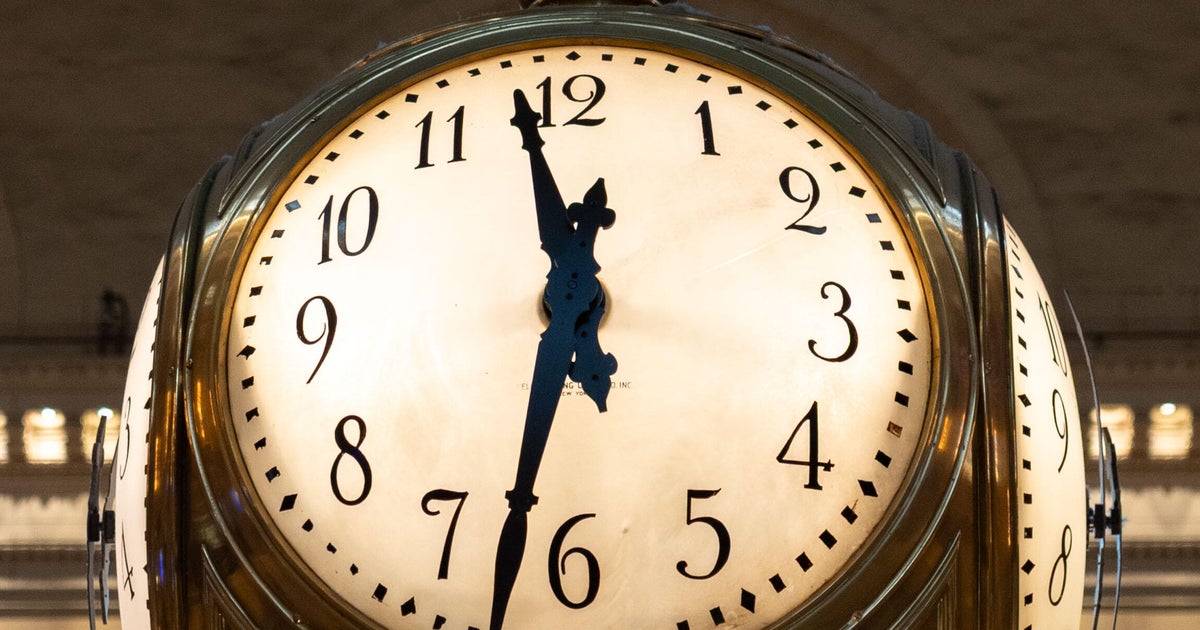
Photo via Global News

Is permanent daylight savings time or standard time better? What to know

Read the original at Global News ↗
Cite

Morgan, R. (2026, October 30). Is permanent daylight savings time or standard time better? What to know. Global News. https://globalnews.ca/news/12127444/permanent-daylight-saving-time/

Dated from the outlet's own feed. Check the original for its byline.

Global News · collected 2026-10-30 · by Rachel Morgan

Quick Summary

As Canadians prepare for the end of Daylight Saving Time (DST), different provinces are split on whether to observe it or remain permanently in standard time. Researchers argue that permanent DST could negatively impact mental and physical health due to later sunrise times, particularly in northern regions where winter sunrises can occur after 9 AM. Professor Kai-Florian Storch of McGill University suggests instead adopting permanent standard time to align better with natural light cycles for public health benefits.
Written by AI on 2026-10-30, from this article's own text only (the story summary below draws on all the coverage).

AI analysis

Story summary

As of 2026, British Columbia, Alberta, and the Northwest Territories are among several provinces in Canada that have decided to permanently end daylight saving time (DST) changes, while others like Ontario, Quebec, and most of the Maritime provinces will continue to observe DST transitions. On November 1st, clocks in regions adhering to traditional practices will be turned back an hour, but not in places that have opted out. The decision has sparked debate among sleep scientists who argue that ending time changes is beneficial but maintaining permanent daylight saving time might negatively impact health due to reduced morning sunlight exposure. Businesses and individuals are also facing practical challenges such as calendar discrepancies and scheduling issues when coordinating across different regions.

Written for “Western Canada Ditches Time Change” on 2026-11-04, grounded in this article and the 12 other(s) covering the same event.

Story

📰 Western Canada Ditches Time Change
Other · 13 article(s) covering the same event. Compare every outlet's account →

Compared with similar articles

This article reads unscored and hedges 12% of its claims. Each row says how that neighbour differs.
CBC News
Hedges 0 of 1 claims Outlet record 74/100
CBS News
Hedges 3 of 40 claims Outlet record 65/100
“The articles discuss daylight saving time in general but do not describe the same specific incident or occurrence.”
NBC News
⚖️ Leans left Hedges 10 of 39 claims Outlet record 78/100
“The articles discuss Daylight Saving Time ending in different regions (Canada vs. United States) and do not describe the exact same occurrence.”
Global News
Hedges 4 of 34 claims Outlet record 63/100
Global News
Hedges 1 of 9 claims Outlet record 63/100
“Article A discusses the change in time practices across Canada, while Article B focuses on Manitoba's adaptation to a new standard time schedule. They cover related topics but describe different specifics.”
CBC News
Hedges 1 of 18 claims Outlet record 74/100
“The articles discuss different regions in Ontario regarding daylight saving time changes, but do not describe a single specific incident occurring at the same time and place.”
Toronto Star
Hedges 0 of 37 claims Outlet record 64/100
“While both articles discuss regions maintaining daylight savings time without changing clocks, they do not describe the exact same incident or occurrence.”
How this article was measured signals, leaning charts, publisher record, byline, topics and claims

Signals How these are calculated →

Claims extracted
33
sentences that state something as happening or true
Uncertain
12%
4 of 33 hedged ("reportedly", "may", "according to")
Leaning
withheld
no quote in the article backed the model's score
Publisher signals
63/100
Global News's corrections and hedging, across everything collected from it. Not a measure of accuracy.
Outlets on this story
13
Other
Same framing elsewhere
1
articles that frame the event the way this one does
Analyzed 2026-10-30 · how these are computed

How this is being covered How these are calculated →

Article leaning vs. publisher reliability
Source leaning vs. consistency

Publisher

Global News · 2747 article(s) · 12 correction(s) detected
Running correction rate · 12 correction(s)

Who wrote this

Rachel Morgan
58 article(s) here · 1 carrying a prediction
🔮 As U.S. President Donald Trump’s approval dips across the country, election workers are bracing for a fight that could test their authority if results do not swing in his favour.
🔮 Canadians holding Russian citizenship may be subject to call-up for mandatory military service,” the GAC said.
🔮 All four victims are expected to survive though police said two have life-altering injuries.
🔮 And those who choose to be for solutions will be pleased with the result.
🔮 As we approach the end of Daylight Saving Time (DST), millions of Canadians will set their clocks back one hour this weekend, while millions of others will not.
🔮 It will take several years to bring the Canadian military’s stockpile of ammunition up to where it should be, according to a new report from the auditor general.
🔮 “The courts may determine that they are an unreasonable, what we call restraint of trade, and invalidate them on that basis,” he said, adding that the responsibility is on the employer to prove a non-compete is necessary.
🔮 The company has said the employees laid off in Hamilton will be offered jobs at their Lake Erie facility but the union representing Stelco workers told Global News only 40 jobs have been offered to the impacted employees.
🔮 Already plagued by the rising costs of gas and groceries, consumers will feel the hit.
🔮 “Climate change and the impacts on health are not some abstract environmental issue that will affect us some at some point in decades from now.
Also by Rachel Morgan
Nothing else under this byline is closely related to this article, so these are simply their most recent.
All 58 articles by Rachel Morgan →

Topics

Canadians Global News Maritime Ontario Quebec

Subjects

Global News ORG · 3× Baylis PERSON · 2× Canadians NORP · 2× Quebec GPE · 2× Alberta GPE · 1× B.C. GPE · 1× Maritime NORP · 1× Nunavut NORP · 1× Ontario GPE · 1× Saskatchewan GPE · 1×

Narrative

The Maritime provinces as well as Quebec and most parts of Ontario and Nunavut, will adhere to the time old tradition of turning their clocks back, while B.C., Alberta, Saskatchewan, Manitoba, Yukon and the Northwest Territories will remain on permanent DST.
framing: assertive · carried by 1 article(s) · first seen 2026-10-30
🔮 As we approach the end of Daylight Saving Time (DST), millions of Canadians will set their clocks back one hour this weekend, while millions of others will not.
2026-10-30 · Global News
Is permanent daylight savings time or standard time better? What to know · assertive framing

Claims (33 extracted, 4 hedged)

As we approach the end of Daylight Saving Time (DST), millions of Canadians will set their clocks back one hour this weekend, while millions of others will not. asserted
millions → approach → others
The Maritime provinces as well as Quebec and most parts of Ontario and Nunavut, will adhere to the time old tradition of turning their clocks back, while B.C., Alberta, Saskatchewan, Manitoba, Yukon and the Northwest Territories will remain on permanent DST. asserted
B.C. → adhere → DST
Researchers have pushed for an end to time changes for years, citing concerns over sleep patterns, mental health, physical health and productivity. asserted
Researchers → push → patterns
But now many are saying remaining on DST permanently may be the wrong choice. uncertain
remaining → say → DST
“When you want to change to permanent time, it should be permanent standard time,” Kai-Florian Storch, a professor of psychiatry at McGill University, told Global News. asserted
Storch → want → News
Transitioning to DST in the spring shifts daylight further into the evening making the day seem longer. asserted
day → transition → evening
But keeping that time into the winter months pushes sunrise later, especially in more northern latitudes. asserted
keeping → keep → latitudes
“You don’t want to wake up too far away from sunrise, so you don’t want to wake up in the dark if possible. asserted
you → want → dark
You want to wake up as close as possible to sunrise,” Storch said. asserted
Storch → want → sunrise
But on permanent DST, Vancouver, Calgary and Winnipeg will see the sun rise between 9 and 9:30 a.m. in the winter. asserted
sun → see → winter
In Edmonton, sunrise on the winter solstice will occur just before 10 a.m. asserted
sunrise → occur → a.m.
In the territories the sun will rise after 11 a.m. asserted
sun → rise → a.m.
When the sun rises in the morning it resets our biological clock, Rebecca Robillard, a psychology professor at the University of Ottawa and co-chair of the Canadian Sleep Research Consortium, told Global News. asserted
Robillard → rise → News
Get weekly health news Having the sun rise later in the morning can cause mental and physical health issues, she said. asserted
she → get → issues
“Whether we talk about heart rate, metabolism, how we process sugar, insulin, all of our hormones are regulated by this biological clock,” she added. asserted
she → talk → clock
These changes can result in an increase in heart attacks, complications related to immune disorders, digestive problems, kidney problems, pregnancy complications, anxiety, depression, substance use and suicide, she said. asserted
she → result → disorders
“At the end of the day, I think this is not just a question of preference. asserted
this → think → preference
This is really a question of public health that we should consider the well-being of all Canadians,” she said. asserted
she → consider → Canadians
Why do we change the clocks? asserted
we → change → clocks
Some Canadian cities began changing their clocks in the early 1910s with the rest of the country standardizing the practice in the late 1960s. asserted
rest → begin → 1960s
The original argument for the change was to increase productivity and facilitate economic interactions with the U.S. and other countries. asserted
argument → increase → U.S.
Now as western Canada moves away from the practice, those provinces will be out of sync with their southern neighbours. asserted
provinces → move → neighbours
“It’s better to all make the same choice,” Patrick Baylis, a professor at the Vancouver School of Economics at the University of British Columbia, told Global News. asserted
Baylis → ’ → News
Aside from business interactions, Baylis said individual productivity could take a hit on permanent DST. uncertain
productivity → say → DST
“You see this first and foremost in student performance, which matters for its own sake, but is also kind of an indicator for what might be happening in the economy,” he said, emphasizing that a lack of sleep can lead to poor performance. uncertain
lack → see → performance
He said shift workers and those with less flexible schedules will feel the hit the most. asserted
workers → say → hit
“If you’re required to be at work at 8 a.m., this matters a lot because you’re now going from a few weeks where the sunrise was going to be after the time when you’re supposed to be at work, to a few months,” he said. asserted
he → require → months
“The rule of thumb is the less flexible your work hours are and the closer that start is to when sunrise would have been, the more effective you’re gonna be.” asserted
you → go → effective
Baylis said the short term effects might be hard to track, but he expects the long term data to be telling. uncertain
data → say → ?
Quebec Premier Paul St-Pierre Plamondon announced earlier this week on social media that his government would put an end to the time changes and will work to determine whether permanent DST or standard time will be the norm. asserted
DST → announce → changes
The province of Ontario previously said that it would get rid of the practice if its neighbours in Manitoba, Quebec and New York did the same. asserted
neighbours → say → same
Storch said he doesn’t think the change will last long. asserted
change → say → ?
“This waking up too early will make people upset and will maybe, in my prediction, convince people to again do away with it and switch back to permanent standard time.” – With files from Global News’ Heather Yourex-West, Aaron McArthur and Tim Sargeant asserted
people → make → West

💬Give feedback
🕘History 🎫Support