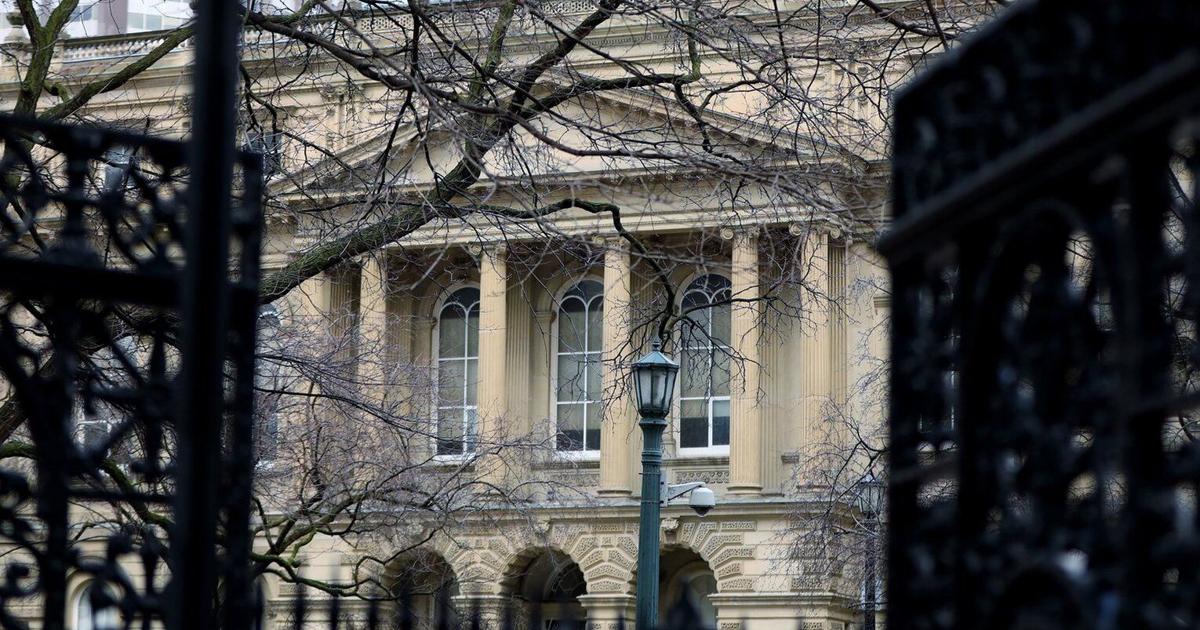
Photo via Toronto Star

Building tool to help courts spot AI-generated evidence is 'challenging': researcher

Read the original at Toronto Star ↗
Cite

Loriggio, P. (2026, October 30). Building tool to help courts spot AI-generated evidence is 'challenging': researcher. Toronto Star. https://www.thestar.com/news/canada/building-tool-to-help-courts-spot-ai-generated-evidence-is-challenging-researcher/article_0bce0e92-ba0f-5e87-9916-478e5a00b06a.html

Dated from the outlet's own feed. Check the original for its byline.

Toronto Star · collected 2026-10-30 · by Paola Loriggio

Quick Summary

Maura Grossman, a researcher in Canada, is working on developing an open-source tool to help courts detect evidence altered by artificial intelligence (AI). Despite initial promising results in laboratory settings using advanced algorithms, she reports significant challenges when applying these tools in real-world scenarios. The project, funded by the Canadian AI Safety Institute program, faces issues such as the loss of metadata and data compression during digital sharing, complicating efforts to accurately identify AI-generated content. Grossman emphasizes that solving this problem will likely require not just technological advancements but also legal reforms and public education.
Written by AI on 2026-10-31, from this article's own text only (the story summary below draws on all the coverage).

AI analysis

Story summary

As of October 30, 2026, Maura Grossman, a co-director of researchers in Canada working on an AI detection tool for courts, reports significant challenges in making the system effective outside laboratory settings. The two-year project aims to develop an open-source, free, and user-friendly tool that can identify evidence altered or created by artificial intelligence. Near its halfway point, Grossman's team has developed a system using state-of-the-art algorithms that operate as a committee to determine if content is AI-generated. However, when tested in real-world scenarios twice, the algorithms failed to reach a consensus useful for practical application. Grossman, who teaches computer science at the University of Waterloo and law at York University’s Osgoode Hall, emphasizes the need for input from policymakers and law enforcement as they tackle these technical issues over the next year.

Written for “Building Tool for AI Evidence Detection” on 2026-10-31, grounded in this article and the 1 other(s) covering the same event.

Story

📰 Building Tool for AI Evidence Detection
Technology · 2 article(s) covering the same event. See how they differ ↓

Compared with similar articles

This article reads unscored and hedges 0% of its claims. Each row says how that neighbour differs.
Global News
Hedges 0 of 18 claims Outlet record 63/100
How this article was measured signals, leaning charts, publisher record, byline, topics and claims

Signals How these are calculated →

Claims extracted
18
sentences that state something as happening or true
Uncertain
0%
0 of 18 hedged ("reportedly", "may", "according to")
Leaning
not political
takes no side on a contested political question
Publisher signals
64/100
Toronto Star's corrections and hedging, across everything collected from it. Not a measure of accuracy.
Outlets on this story
2
Technology
Same framing elsewhere
2
articles that frame the event the way this one does
Analyzed 2026-10-31 · how these are computed

How this is being covered How these are calculated →

Article leaning vs. publisher reliability
Source leaning vs. consistency

Publisher

Toronto Star · 10757 article(s) · 28 correction(s) detected
Running correction rate · 28 correction(s)
2026-10-26
Correction
2026-10-24
Correction
2026-10-07
Correction
2026-09-24
Correction

Who wrote this

Paola Loriggio
6 article(s) here · 1 carrying a prediction
🔮 Grossman says the two times she’s tried it in real-life situations, however, the algorithms couldn’t reach enough of a consensus to be helpful.
🔮 Ontarians in hundreds of municipalities will head to the polls next Monday, but in Kapuskasing it will be a day just like any other.
🔮 A trial is set to begin today in Brampton, Ont., for a man accused in what investigators have called one of the largest gold heists in Canadian history.
2026-10-05 · assertive framing · Trial begins for man accused in Pearson gold heist
🔮 The baby was taken to hospital but could not be revived and was pronounced dead on July 2, 1999.
🔮 TORONTO - Canadian auto parts magnate Frank Stronach will not spend time behind bars after being found guilty of indecent assault in an encounter that took place nearly 50 years ago, an Ontario judge said Thursday.
🔮 Toronto Mayor Olivia Chow praised public servants and emergency responders who fielded an “overwhelming” number of calls and reassured residents that the city had planned and co-ordinated its response ahead of the storm.
Also by Paola Loriggio
Trial begins for man accused in Pearson gold heist
2026-10-05 · The Globe and Mail
Nothing else under this byline is closely related to this article, so these are simply their most recent.
All 6 articles by Paola Loriggio →

Topics

Canada Osgoode Hall York University’s the Canadian Institute for Advanced Research the University of Waterloo

Subjects

Grossman PERSON · 3× British Columbia GPE · 1× Canada GPE · 1× Canadian AI Safety Institute ORG · 1× Maura Grossman PERSON · 1× Ontario GPE · 1× Osgoode Hall ORG · 1× York University’s ORG · 1× the Canadian Institute for Advanced Research ORG · 1× the University of Waterloo ORG · 1×

Narrative

“We’re still hopeful, we’re still continuing to build, but I think we’ve gotten more modest in terms of thinking of one tool being the answer, as opposed to this is a problem that’s going to need some help from the law, from regulation, from policymakers, from educating people to become better at knowing how to decipher what’s real and what’s not.
framing: assertive · carried by 2 article(s) · first seen 2026-10-31
🔮 Grossman says the two times she’s tried it in real-life situations, however, the algorithms couldn’t reach enough of a consensus to be helpful.

Claims (18 extracted, 0 hedged)

A researcher working to help courts detect evidence that’s been created or altered with artificial intelligence says it’s proving difficult to come up with a tool that’s as effective in the real world as it seems to be in the lab. asserted
it → work → lab
Maura Grossman is co-director of a team of researchers in Canada working to make an open-source, free and easy to use tool that courts and others involved in the justice system can use to help distinguish what’s real from what’s fake. asserted
what → work → system
As the two-year project nears its halfway point, she says they’ve built a system that combines state-of-the-art algorithms, which then work as a committee to vote on whether something is AI-generated. asserted
something → near → committee
Grossman says the two times she’s tried it in real-life situations, however, the algorithms couldn’t reach enough of a consensus to be helpful. asserted
algorithms → say → consensus
She says it’s a “wicked technical problem” that presents a real challenge as they continue working on the tool over the next year. asserted
they → say → year
Grossman, a computer science professor at the University of Waterloo who also teaches at York University’s Osgoode Hall law school, says the next phase of the project will involve getting input from law enforcement and policymakers. asserted
phase → teach → enforcement
“I don’t know that I ever thought it was going to be easy, but it’s turned out to be almost daunting how challenging this task is,” she said in an interview Friday. asserted
she → know → interview
“We’re still hopeful, we’re still continuing to build, but I think we’ve gotten more modest in terms of thinking of one tool being the answer, as opposed to this is a problem that’s going to need some help from the law, from regulation, from policymakers, from educating people to become better at knowing how to decipher what’s real and what’s not. asserted
what → ’re → people
Part of what makes things tricky, she said, is that an image posted to social media, for example, will be compressed and likely stripped of its metadata, becoming very different from the original file by the time it’s presented as evidence. asserted
it → make → evidence
“It’s not going to have that information that the original copy had, and chances are the original copy is gone three years later by the time you sue me for saying something horrible about you or whatever I did,” she said. asserted
she → go → whatever
“That’s part of it, and same thing if I email it to you and you email it to six other people, the data just changes through all this transfer.” asserted
data → ’ → transfer
The project is one of two inaugural research initiatives funded through the Canadian Institute for Advanced Research’s Canadian AI Safety Institute program, launched by the federal government in 2024 as part of its broader AI safety strategy. asserted
project → fund → strategy
The team includes technologists and legal scholars based in universities in Ontario and British Columbia, but its advisory board is scattered across North America and includes judges as well as organizations supporting self-represented litigants. asserted
board → include → litigants
When the project was announced last year, Grossman said courts weren’t adequately prepared for AI. asserted
courts → announce → AI
The existing commercial tools weren’t transparent or reliable enough, particularly for the judicial context, where the stakes are high, she said then. asserted
she → exist → context
She stressed Friday that the team never envisioned its tool as a silver bullet, adding any tool would still require human involvement and discernment. asserted
tool → stress → involvement
“You’re going to need somebody to be able to testify why they think what they think and all of that,” she said. asserted
she → go → that
“But there are broader components to this that need to be included in the picture, some of which is policy considerations — like maybe certain things need to prohibited altogether from being created rather than putting all the onus on detecting it after the fact.” asserted
things → be → fact

💬Give feedback
🕘History 🎫Support