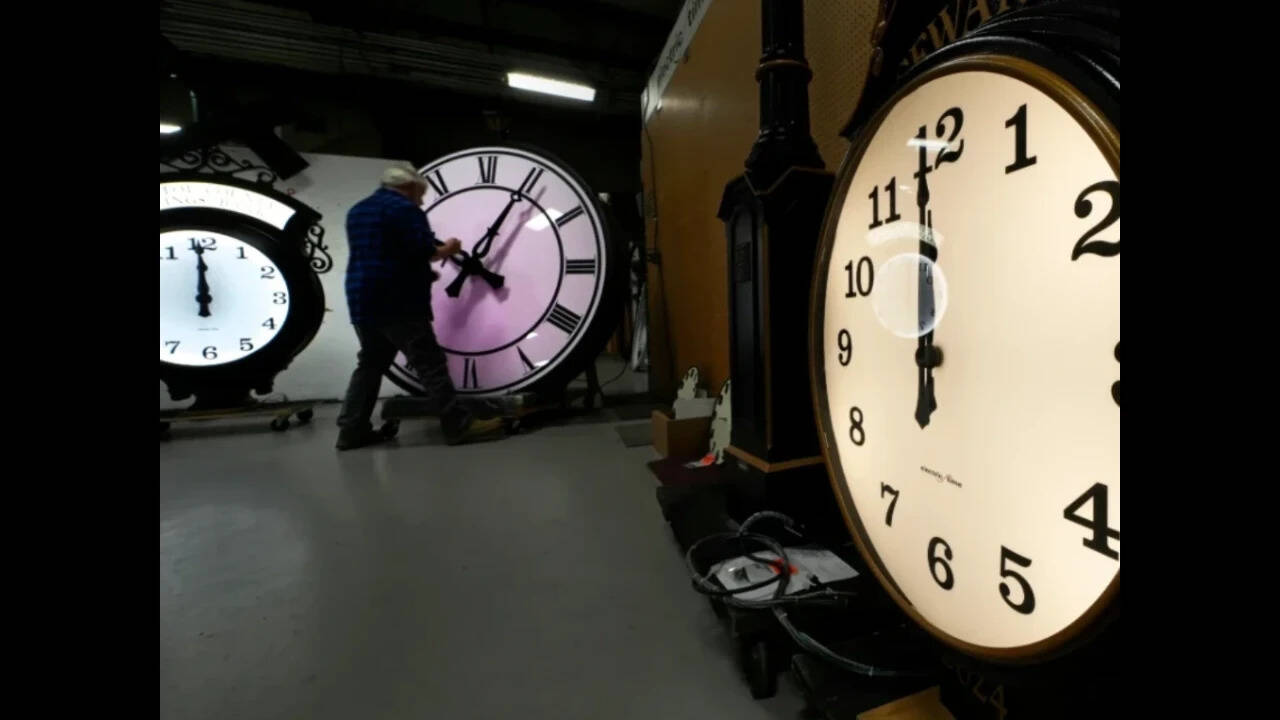
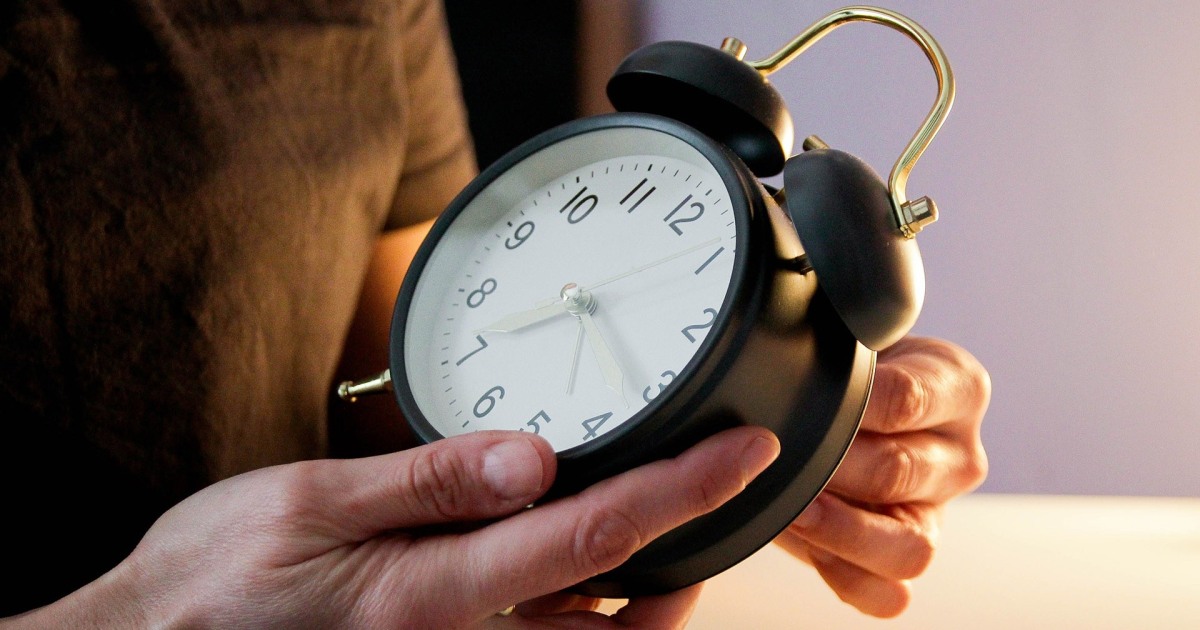
Photo via Times of India

Daylight Saving Time ends tonight: When to change your clocks? When do we spring forward in 2027?

Read the original at Times of India ↗
Cite

TOI World Desk. (2026, October 31). Daylight Saving Time ends tonight: When to change your clocks? When do we spring forward in 2027? Times of India. https://timesofindia.indiatimes.com/world/us/daylight-saving-time-ends-tonight-when-to-change-your-clocks-when-do-we-spring-forward-in-2027/articleshow/135404203.cms

Dated from the outlet's own feed. Check the original for its byline.

Times of India · collected 2026-10-31 · by TOI World Desk

Quick Summary

Daylight Saving Time ends on November 1, 2026, at 2 am local time when clocks will be set back by one hour. This change gives Americans an extra hour of sleep but also affects international time differences; for example, New York will move from being 9 hours and 30 minutes behind India to 10 hours and 30 minutes behind. Clocks in Hawaii, most of Arizona (except the Navajo Nation), and certain US territories do not change during this transition. Daylight Saving Time resumes on March 14, 2027, when clocks move forward by one hour at 2 am local time.
Written by AI on 2026-10-31, from this article's own text only (the story summary below draws on all the coverage).

AI analysis

Story summary

Daylight Saving Time (DST) ended in most of the United States on Sunday, November 1, 2026, at 2 a.m., when clocks were set back by one hour. This change provides Americans with an extra hour of sleep but results in darker afternoons during winter months. The shift can disrupt circadian rhythms and affect sleep schedules temporarily.

Some lawmakers have been advocating for permanent Daylight Saving Time, aiming to eliminate the biannual clock changes. However, as of now, DST remains a seasonal adjustment, with debates ongoing about its necessity and impact on public health.

In Canada, Ontario has filed regulations allowing communities west of the 90th meridian to remain on standard time year-round, following similar decisions in other provinces like Manitoba. This move reflects growing interest among some regions to end DST permanently due to its potential negative effects on human circadian rhythms and overall well-being.

Experts recommend exposure to morning sunlight after clock changes to help bodies adjust more quickly to the new schedule.

Written for “Daylight Saving Time Ends” on 2026-11-02, grounded in this article and the 9 other(s) covering the same event.

Story

📰 Daylight Saving Time Ends
Other · 10 article(s) covering the same event. Compare every outlet's account →

Compared with similar articles

This article reads unscored and hedges 6% of its claims. Each row says how that neighbour differs.
CBS News
Hedges 3 of 40 claims Outlet record 66/100
ABC News (US)
Hedges 2 of 20 claims Outlet record 70/100
NBC News
Outlet record 60/100
NBC News
⚖️ Leans left Hedges 10 of 39 claims Outlet record 60/100
CBS News
Hedges 4 of 40 claims Outlet record 66/100
Toronto Star
Hedges 6 of 28 claims Outlet record 64/100
CBS News
Hedges 7 of 38 claims Outlet record 66/100
“The articles discuss different dates for daylight saving time changes (2026 vs. 2027 start and end).”
CBS News
Hedges 7 of 26 claims Outlet record 66/100
“The articles describe different occurrences of daylight saving time changes in different years (2026 and a future spring forward in 2027).”
New York Post
Hedges 1 of 28 claims Outlet record 66/100
“While both articles discuss Daylight Saving Time ending on November 1, 2026, they are providing different information and advice rather than reporting on a single specific occurrence.”
How this article was measured signals, leaning charts, publisher record, byline, topics and claims

Signals How these are calculated →

Claims extracted
48
sentences that state something as happening or true
Uncertain
6%
3 of 48 hedged ("reportedly", "may", "according to")
Leaning
not political
takes no side on a contested political question
Publisher signals
59/100
Times of India's corrections and hedging, across everything collected from it. Not a measure of accuracy.
Outlets on this story
10
Other
Same framing elsewhere
1
articles that frame the event the way this one does
Analyzed 2026-10-31 · how these are computed

How this is being covered How these are calculated →

Article leaning vs. publisher reliability
Source leaning vs. consistency

Publisher

Times of India · 3913 article(s) · 3 correction(s) detected
Running correction rate · 3 correction(s)

Who wrote this

TOI World Desk
1359 article(s) here · 1 carrying a prediction
🔮 Tennis legend Serena Williams is known for her record-breaking career on the court, but two secondary schools she helped establish in rural Kenya have left a legacy beyond sports.
🔮 According to court records, Chesnut had acquired the house in Cottontown, Tennessee, in 2012 after her brother, James Upchurch, died without leaving a will.
🔮 At its inauguration in 2014, local authorities said the project was expected to benefit about 2,300 children and reach around 10,000 people when their families were included.
🔮 Peter Arnold, executive director of the Fashion Scholarship Fund, said the partnership would provide the organisation's network of alumni, current scholars and applicants with access to creative resources, mentors and career development opportunities.
🔮 Johns Creek, a growing city northeast of Atlanta, might not immediately seem like the setting for a major wildlife initiative.
🔮 The equipment is expected to strengthen access to diagnostic services for patients across Maui County.
🔮 Before agreeing to conduct the ceremony, he had told Wilson that he would not proceed if Conkright was unresponsive.
🔮 She had no idea about its historical importance or how much it could be worth.
🔮 The lower court will continue examining whether the changes to ownership shares approved in 2020 followed the legal requirements for condominium property declarations.
🔮 According to legal documents published by Justia Law, the Texas Third Court of Appeal in Austin overturned a trial court's summary judgment in _Privilege Underwriters Reciprocal Exchange v. Michael MacDougall and William Heyer_.
Wire or desk byline, not an individual reporter.
Also by TOI World Desk
Nothing else under this byline is closely related to this article, so these are simply their most recent.
All 1359 articles by TOI World Desk →

Topics

Americans Arizona Daylight Saving Time India the United States

Subjects

Americans NORP · 3× India GPE · 3× Arizona GPE · 2× American NORP · 1× American Samoa GPE · 1× Guam GPE · 1× Hawaii GPE · 1× New York GPE · 1× the Navajo Nation GPE · 1× the United States GPE · 1×

Narrative

The twice-yearly clock change has remained a subject of political debate in the US, with supporters arguing that permanent Daylight Saving Time would eliminate disruptions caused by changing clocks.
framing: assertive · carried by 1 article(s) · first seen 2026-10-31
🔮 Millions of Americans will gain an extra hour of sleep this weekend as Daylight Saving Time comes to an end for 2026.

Claims (48 extracted, 3 hedged)

Millions of Americans will gain an extra hour of sleep this weekend as Daylight Saving Time comes to an end for 2026. asserted
Time → gain → 2026
Clocks across most of the United States will move back by one hour overnight, marking the return to standard time. asserted
Clocks → move → time
The annual change will take place on Sunday, November 1, at 2 am local time, when clocks will roll back to 1 am. asserted
clocks → take → am
The change means Americans will get an additional hour in their day, with sunrise and sunset occurring earlier according to the clock. uncertain
sunrise → mean → clock
While smartphones, computers and other internet-connected devices generally adjust automatically, people using traditional clocks and watches will need to change them manually. asserted
people → connect → them
The transition will also affect the time difference between the US and other countries, including India, as American cities move back one hour. asserted
cities → affect → India
New York will move from 9 hours 30 minutes behind India to 10 hours 30 minutes behind India. asserted
York → move → India
When does Daylight Saving Time end in 2026? asserted
Time → end → 2026
Daylight Saving Time officially ends at 2 am on Sunday, November 1, 2026, across most of the US. asserted
Time → end → US
Under the current federal schedule, clocks are moved back one hour at 2 am local time, meaning the time becomes 1 am again. asserted
time → move → am
The hour between 1 am and 2 am will therefore occur twice. asserted
hour → occur → am
People who want to adjust their clocks manually can do so before going to bed on Saturday night. asserted
who → want → night
Most smartphones, computers and other digital devices connected to automatic time settings will make the adjustment without requiring any action from users. asserted
smartphones → connect → users
The US follows the practice of moving clocks forward in March and backward in November. asserted
US → follow → November
The system is commonly remembered through the phrase "spring forward, fall back". asserted
system → remember → phrase
Which states do not observe Daylight Saving Time? asserted
states → observe → Time
Although most of the country follows Daylight Saving Time, there are exceptions. asserted
most → follow → Time
Hawaii and most of Arizona do not observe the seasonal clock change and remain on standard time throughout the year. asserted
Hawaii → observe → year
However, the Navajo Nation, which extends into parts of Arizona, observes Daylight Saving Time. asserted
which → extend → Time
Several US territories also do not follow the practice. asserted
territories → follow → practice
These include American Samoa, Guam, the Northern Mariana Islands, Puerto Rico and the US Virgin Islands. asserted
These → include → Samoa
For residents in areas that observe DST, the November 1 change means clocks will move back one hour. asserted
clocks → observe → DST
Those living in locations that do not observe it will continue following their existing time. asserted
that → live → time
When does Daylight Saving Time start again in 2027? Daylight Saving Time will return on Sunday, March 14, 2027, in areas that observe the seasonal clock change. asserted
that → start → change
The transition will happen at 2 am local time, when clocks will jump forward to 3 am. asserted
clocks → happen → am
Unlike the November adjustment, Americans will lose an hour of sleep during the spring transition. asserted
Americans → lose → transition
The change will bring longer daylight hours in the evening, with sunsets occurring an hour later according to the clock. uncertain
sunsets → bring → clock
The US follows a federal schedule under which Daylight Saving Time begins on the second Sunday of March and ends on the first Sunday of November. asserted
Time → follow → November
The current dates were established through the Energy Policy Act of 2005 and came into effect in 2007. asserted
dates → establish → 2007
Why does the US change its clocks twice a year? asserted
US → change → clocks
Daylight Saving Time is a practice of moving clocks forward by one hour during part of the year to extend daylight into the evening. asserted
Time → move → evening
The idea is to make better use of daylight during the warmer months, when the sun rises earlier. asserted
sun → make → months
By moving clocks forward in spring, people get more daylight after typical working hours, although mornings become darker. asserted
mornings → move → hours
When clocks move back in November, daylight shifts back towards the morning hours. asserted
daylight → move → hours
This means people generally experience earlier sunrises and sunsets according to the clock. uncertain
people → mean → clock
The US first introduced Daylight Saving Time nationally in 1918 during World War I, partly as an effort to conserve fuel. asserted
US → introduce → fuel
The practice was later repealed and reintroduced, with Congress eventually establishing uniform rules through the Uniform Time Act of 1966. asserted
Congress → repeal → 1966
The current schedule was expanded in 2007, extending the period of Daylight Saving Time by several weeks. Will the US stop changing clocks permanently? asserted
US → expand → clocks
The twice-yearly clock change has remained a subject of political debate in the US, with supporters arguing that permanent Daylight Saving Time would eliminate disruptions caused by changing clocks. asserted
Time → remain → clocks
President Donald Trump has supported making Daylight Saving Time permanent. asserted
Time → support → ?
…and 8 more, not listed.

💬Give feedback
🕘History 🎫Support