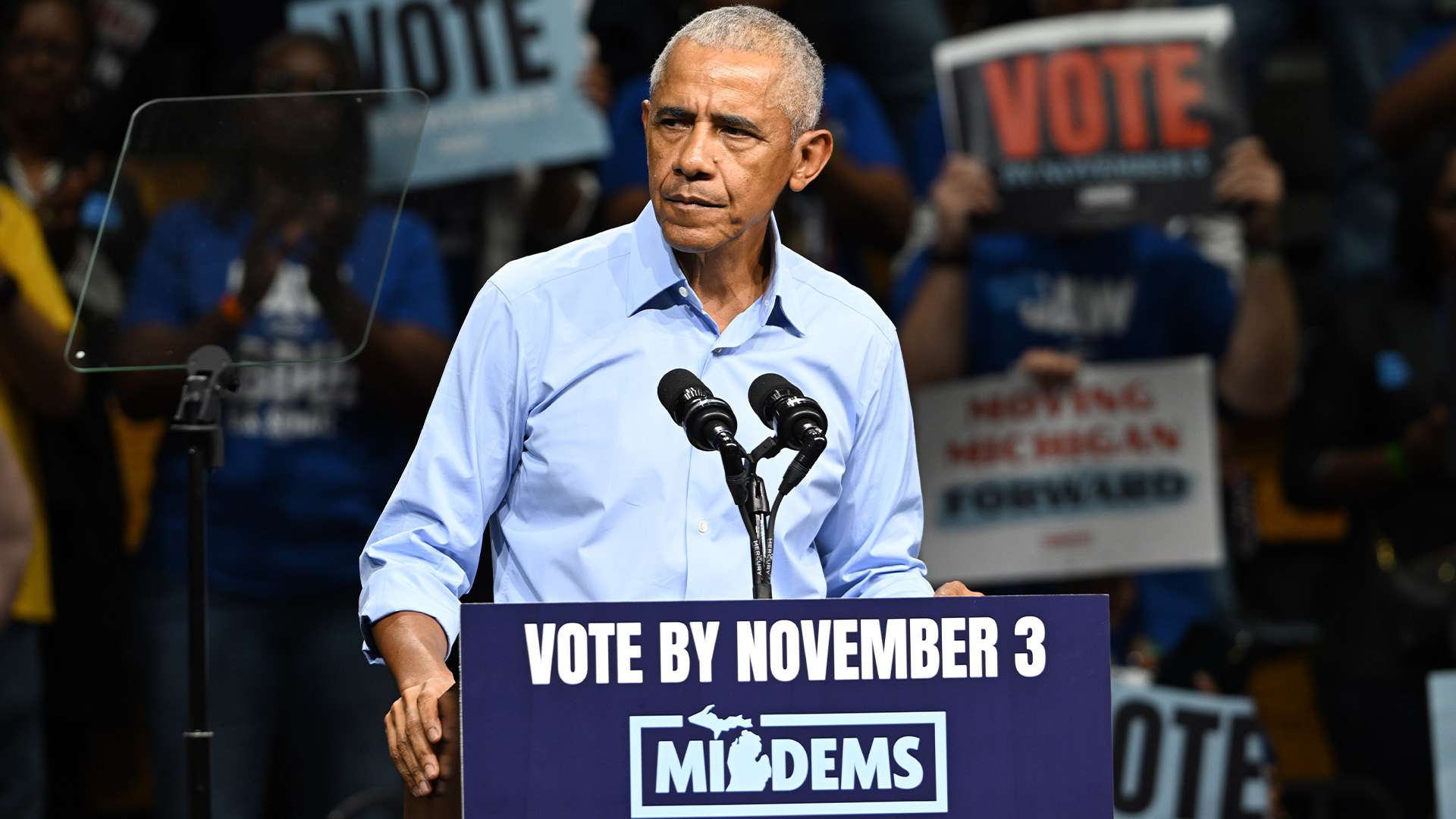
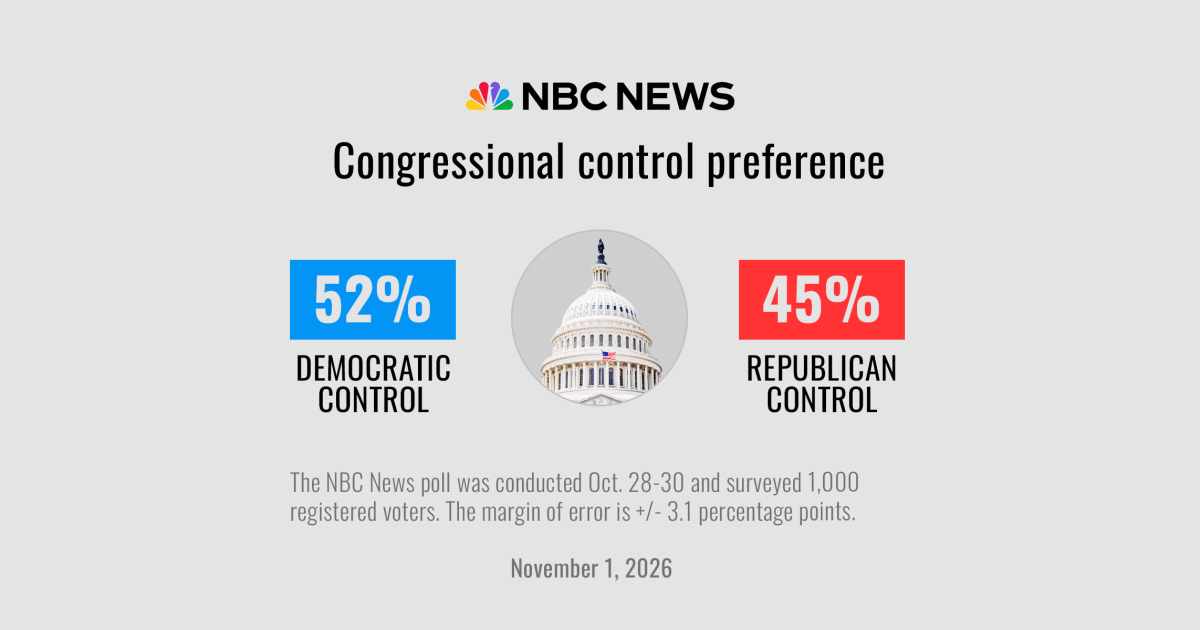
Democrats have made significant gains in the final days of the 2026 midterm campaign, with new polls showing them leading in several states that President Donald Trump carried in 2024.
asserted
Trump → make → 2024
The findings point to a changing political landscape, although the outcome of the Senate contests remains uncertain.
asserted
outcome → point → contests
The final New York Times/Siena College surveys of seven key Senate battlegrounds show Democratic candidates ahead in Michigan, Texas, Kansas, Maine and Ohio.
asserted
surveys → show → Michigan
They also hold narrower leads in Alaska and Iowa, where the contests remain highly competitive.
asserted
contests → hold → Alaska
The results have attracted particular attention because several of these states have traditionally favoured Republicans.
asserted
several → attract → Republicans
Democratic leads in Texas and Kansas, in particular, would have appeared unlikely only a few months ago.
asserted
leads → appear → Texas
The surveys, released on November 1, covered 5,708 likely voters across the seven states.
asserted
surveys → release → states
The individual state surveys had margins of sampling error ranging from approximately 3.3 to 4.8 percentage points.
asserted
surveys → have → points
In Michigan, Democratic candidate Abdul El-Sayed leads Republican Mike Rogers by 53 to 42 per cent.
asserted
Sayed → lead → cent
Kansas Democrat Adam Hamilton leads incumbent Republican Senator Roger Marshall, 49 to 44pc, while in Maine, Democrat Troy Jackson leads Republican Senator Susan Collins, 51 to 45pc.
asserted
Jackson → lead → Collins
Ohio presents another potentially significant contest.
asserted
Ohio → present → contest
Former Democratic senator Sherrod Brown leads Republican Jon Husted, 49 to 44pc.
asserted
Brown → lead → Husted
Mary Peltola leads Republican Senator Dan Sullivan, 48 to 46pc, while Democrat Josh Turek is ahead of Republican Ashley Hinson, 48 to 47pc.
asserted
Turek → lead → Hinson
Although Democrats lead numerically in all seven surveys, the differences in Alaska and Iowa are too small to establish a statistically reliable advantage.
asserted
differences → lead → advantage
Even the larger leads elsewhere remain subject to polling error.
asserted
leads → remain → error
The findings nevertheless show how competitive the Senate map has become as both parties seek control of Congress.
asserted
parties → show → Congress
A Republican warning: The Senate remains competitive
The prospect of Democratic gains is no longer being acknowledged only by Democratic strategists or traditionally liberal media outlets.
asserted
prospect → remain → strategists
Fox News, which generally offers a more favourable perspective on Republican electoral prospects, has also revised its assessments.
asserted
which → offer → assessments
In its November 1 Power Rankings, Fox moved Kansas from “Lean Republican” to “Toss-up”, acknowledging that the Republican incumbent was facing a serious challenge in a traditionally conservative state.
asserted
incumbent → move → state
Of the 100 seats in the Senate, Fox considers Democrats favoured in 48 Senate seats and Republicans in 45, with seven competitive states likely to determine control of the chamber.
asserted
states → consider → chamber
It nevertheless describes the overall Senate contest as a toss-up.
asserted
It → describe → up
Its reasoning is based largely on electoral geography.
asserted
reasoning → base → geography
Trump carried seven of the 11 battleground states in 2024, several by double-digit margins.
asserted
Trump → carry → margins
Republicans believe that voters who supported him in those states could return to the polls and support Republican Senate candidates, even if the national political environment has shifted.
uncertain
environment → believe → candidates
Fox also points to the number of undecided voters in Alaska, Iowa and Kansas.
asserted
Fox → point → Alaska
A late movement towards Republican candidates, combined with strong Election Day participation, could change the outcome.
uncertain
movement → combine → outcome
The network’s analysis presents two possible scenarios: a Democratic gain that could give the party as many as 55 Senate seats, or a Republican performance strong enough to preserve a majority of up to 52.
uncertain
that → present → 52
Either party needs to secure 51 seats in the Senate for a majority win.
asserted
party → need → win
Fox’s final Power Rankings project that Democrats are likely to win at least 223 seats, with the possibility of reaching 240 in a strong performance.
asserted
Democrats → project → performance
In the lower House of Representatives, the winner needs to gain at least 218 out of the 435 voting seats.
asserted
winner → need → seats
Other forecasts examine the changing political map.
asserted
forecasts → examine → map
The Wall Street Journal, reporting on the latest assessment by the Cook Political Report, said Democrats had become slight favourites to capture the Senate.
asserted
Democrats → report → Senate
Cook identifies seven Senate races — Alaska, Iowa, Kansas, Maine, Michigan, Ohio and Texas — as sufficiently competitive to remain within the margin of error.
asserted
Cook → identify → error
For the House, Cook projects Democratic gains of between 12 and 25 seats, potentially giving the party a majority of as many as 240 members.
asserted
Cook → project → members
CBS News has also reported a sustained Democratic advantage in its House modelling.
asserted
News → report → modelling
Its October 25 analysis, however, offered an important qualification: the Democratic lead had remained relatively stable rather than expanding, and voters who were still uncertain about participating tended to lean more Republican.
asserted
who → offer → qualification
That distinction matters.
asserted
distinction → matter → ?
A favourable polling environment does not necessarily mean that all voters expressing dissatisfaction with the administration will turn out on Election Day.
asserted
voters → mean → Day
The Harvard model assigns probabilities to a possible Democratic takeover.
asserted
model → assign → takeover
A forecast from the Harvard ElectIt project offers another way of assessing the congressional contests.
asserted
forecast → offer → contests
…and 31 more, not listed.
 The Aporia