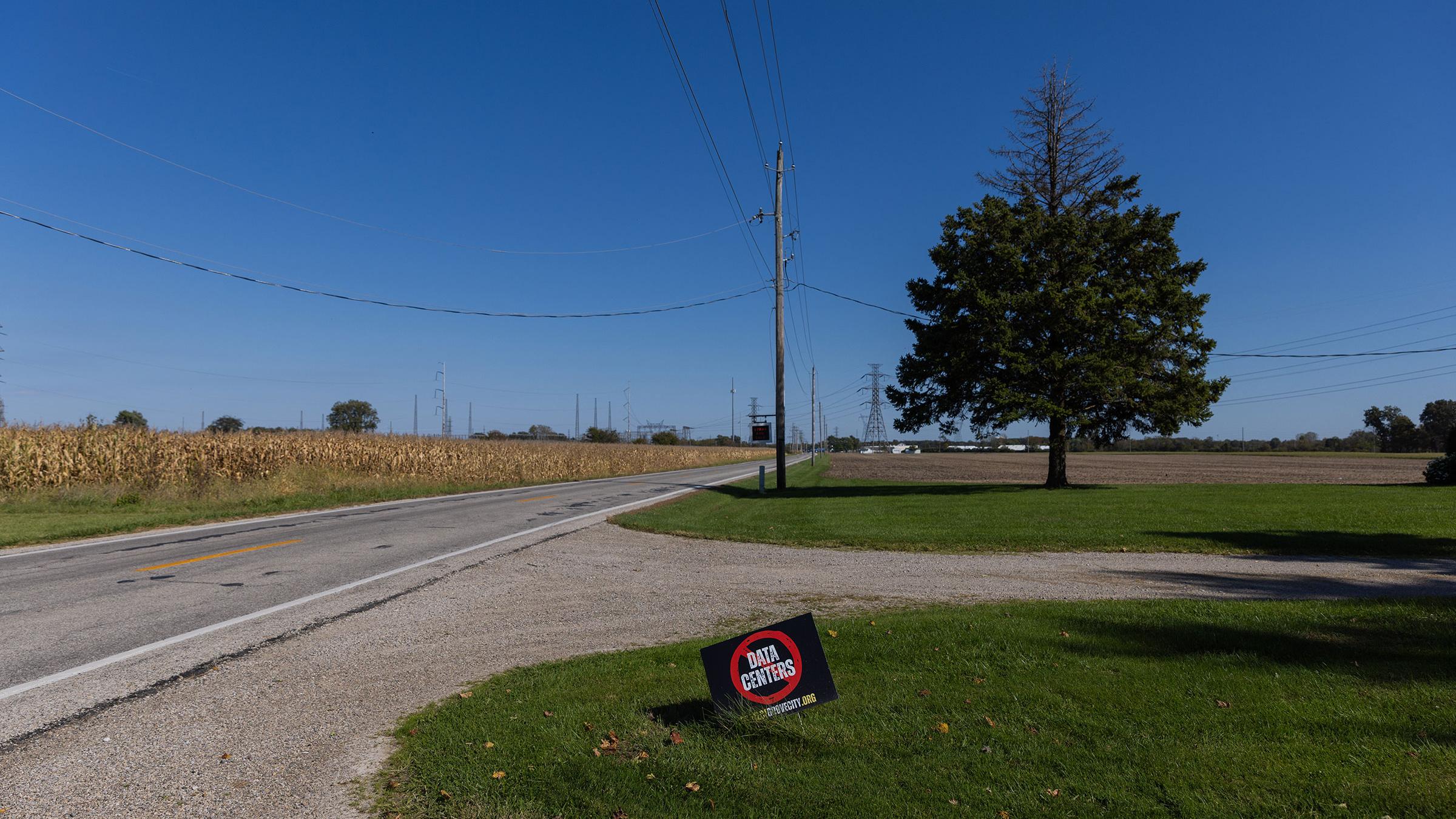
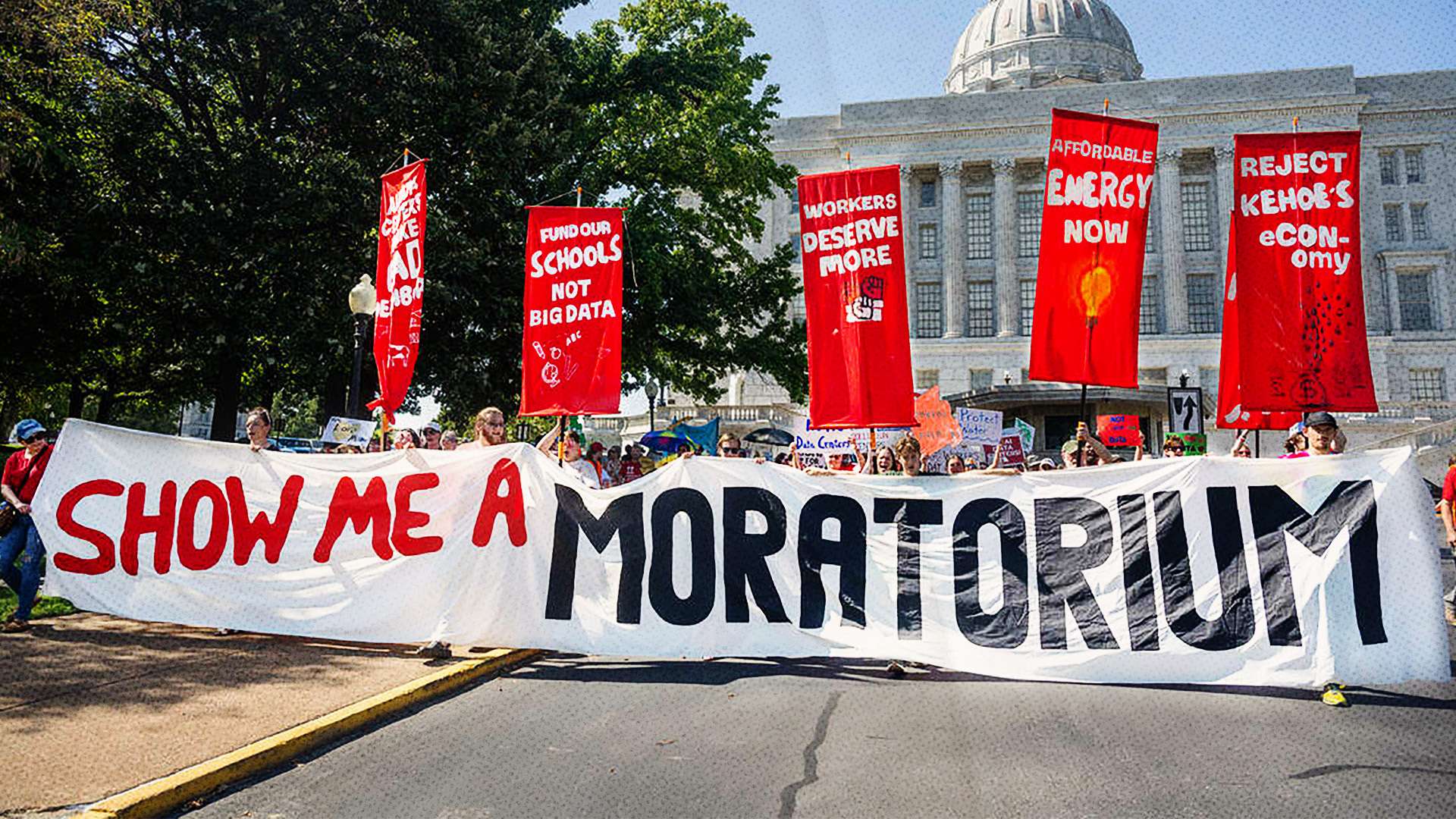
Photo via New York Post

Data-center fury is a campaign dud

Read the original at New York Post ↗
Cite

Moynihan, L. (2026, November 2). Data-center fury is a campaign dud. New York Post. https://nypost.com/2026/11/02/business/data-center-fury-is-a-campaign-dud/

Dated from the outlet's own feed. Check the original for its byline.

New York Post · collected 2026-11-02 · by Lydia Moynihan

Quick Summary

The article reports that despite initial media hype about data centers becoming a significant political issue in US midterm elections, voter polls show it ranks among the least important concerns for Americans in key states like Texas and Ohio. Only around 3% of voters in Texas and 2% in Ohio named data centers as their top concern, according to recent CNN polls. Politicians who previously pushed regulations on data centers have shifted focus back to more pressing issues such as the economy and healthcare, with strategists advising candidates to stop emphasizing data-center concerns that do not resonate with most voters.
Written by AI on 2026-11-03, from this article's own text only (the story summary below draws on all the coverage).

AI analysis

Story summary

The media frenzy around data centers' impact on the US midterm elections has likely been overblown. Despite earlier concerns and political maneuvers, polls show that voters in key states like Texas and Ohio consider data center issues among their least important concerns. In a recent CNN poll, only 3% of Texans named data centers as their top concern, while in Ohio, it was just 2%. Political strategists now suggest that the media coverage and activist fervor surrounding data centers have not significantly influenced voter opinions or election outcomes. Earlier this year, politicians from both parties had sought to distance themselves from the industry, with Republican Texas Governor Greg Abbott ordering a pause on new environmental permits for data centers and Democratic Pennsylvania Governor Josh Shapiro removing them from his state’s fast-track permitting program.

Written for “Data-center Fury Backfire” on 2026-11-03, grounded in this article and the 0 other(s) covering the same event.
Why this leaning score
The model judged this article politically coded and scored it -0.45, but every quote it verified points right, so the score is not published.
Written under an earlier scoring contract, which gave a paragraph rather than checkable quotes. Re-analysing this article replaces it.
Leaning score withheld for article 124226: score contradicts its own evidence · logged 2026-11-03

Story

📰 Data-center Fury Backfire
Politics · 1 article(s) covering the same event.

Compared with similar articles

This article reads unscored and hedges 20% of its claims. Each row says how that neighbour differs.
TIME
⚖️ Leans left Hedges 16 of 130 claims Outlet record 59/100
“Article A describes specific activities of campaigners against data centers in Ohio, while Article B discusses national polls showing that data center issues are not significant to voters, indicating different subjects and times.”
Toronto Star
⚖️ Leans left Hedges 6 of 61 claims Outlet record 64/100
“The articles discuss data centers becoming a political issue leading up to midterms, but they describe different aspects of this topic and are published on separate dates.”
Reason
⚖️ Leans right Hedges 4 of 22 claims Outlet record 67/100
“The articles discuss different aspects of public sentiment towards data centers and AI, with Article A focusing on increasing voter concern and Article B stating that such concerns are exaggerated and not significant.”
CBC News
⚖️ Leans left Hedges 4 of 78 claims Outlet record 74/100
“Article A describes local opposition to data centers in Ohio involving bipartisan efforts, while Article B discusses national polls indicating that data center issues are not a significant concern for voters.”
Semafor
⚖️ Leans left Hedges 2 of 3 claims Outlet record 59/100
“The articles discuss different aspects of political opposition and policies regarding data centers, not the same specific incident or time.”
Mother Jones
⚖️ Leans left Hedges 3 of 34 claims Outlet record 60/100
“The articles discuss different aspects of data center impacts on elections and do not describe the same specific incident or occurrence.”
The Independent
⚖️ Leans left Hedges 3 of 21 claims Outlet record 59/100
“Article A describes the upcoming vote on data center initiatives during the election, while Article B discusses the actual outcome and impact of data centers as a campaign issue.”
New York Post
⚖️ Leans left Hedges 3 of 26 claims Outlet record 66/100
“Article A describes the upcoming election day voting on data center issues in 13 states, while Article B discusses the actual outcome and impact of data centers as an issue during the elections.”
How this article was measured signals, leaning charts, publisher record, byline, topics and claims

Signals How these are calculated →

Claims extracted
35
sentences that state something as happening or true
Uncertain
20%
7 of 35 hedged ("reportedly", "may", "according to")
Leaning
withheld
no quote in the article backed the model's score
Publisher signals
66/100
New York Post's corrections and hedging, across everything collected from it. Not a measure of accuracy.
Outlets on this story
1
Politics
Same framing elsewhere
1
articles that frame the event the way this one does
Analyzed 2026-11-03 · how these are computed

How this is being covered How these are calculated →

Article leaning vs. publisher reliability
Source leaning vs. consistency

Publisher

New York Post · 16360 article(s) · 35 correction(s) detected
Running correction rate · 35 correction(s)

Who wrote this

Lydia Moynihan
9 article(s) here · 1 carrying a prediction
🔮 Tales of data centers’ impact on this election may have been greatly exaggerated.
2026-11-02 · assertive framing · Data-center fury is a campaign dud
🔮 One source noted the idea that Anthropic was merely working on a statistics assignment doesn’t fully explain its AI’s actions — and noted how odd it was for an agent to seek election-related data which could potentially be shared with bad actors or used for campaign purposes.
🔮 Before the demonstration began, Musk admitted he wasn’t sure it would work, saying “success is not guaranteed.” Then, the Tesla Roadster drove up a curved ramp until it was hanging upside down, held in place by underbody suction fans.
🔮 Artificial intelligence’s incredible ability to solve complicated problems could help unravel the security underpinning much of the cryptocurrency industry by accelerating the development of super-advanced quantum computers capable of cracking its defenses.
🔮 On Monday, Jacob Coxon, the former Anthropic researcher, continued his alarmism tour — minus the Harry Potter glasses — before a rare “Committee of the Whole” at City Hall, warning that AI could escape human control and kill us all.
🔮 The last week has been full of fear-mongering: Bill Gates warning AI could cause “a billion deaths,” on Meet The Press, Anthropic once again touting its tech as posing “catastrophic or existential risks to humanity” in its filing ahead of a possible IPO, and even SNL calling out Dario Amodei’s doomerism.
🔮 Hassen asserts that DOGE fundamentally changed how the government approached spending by cancelling contracts that otherwise would have renewed; consolidating purchasing by creating OneGov, rather than having agencies negotiate separately with the same vendors; and implementing new guardrails around wiring money by placing a tracking code on payments that had previously gone out unlabeled.
🔮 Instinct, an upstart company which lives in iMessage or Whatsapp rather than its own separate app, lets users text it like you would an actual human assistant.
🔮 AI giants Anthropic and OpenAI suddenly started sounding a five-alarm fire last week, insisting their tech is just too good, developing too fast for humanity to handle and could kill us all.
Also by Lydia Moynihan
Nothing else under this byline is closely related to this article, so these are simply their most recent.
All 9 articles by Lydia Moynihan →

Topics

CNN Democratic Ohio Republican Texas

Subjects

Republican NORP · 4× Democratic NORP · 3× Ohio GPE · 3× Texas GPE · 3× China GPE · 2× CNN ORG · 1× Greg Abbott PERSON · 1× Josh Shapiro PERSON · 1× Pennsylvania GPE · 1× Senate ORG · 1×

Narrative

A Bitcoin Policy Institute report covered by The Post in July claimed that a China-linked network associated with far-left donor Neville Roy Singham Singham and the Party for Socialism and Liberation had inserted itself into local data-center fights across 14 states.
framing: assertive · carried by 1 article(s) · first seen 2026-11-03
🔮 Tales of data centers’ impact on this election may have been greatly exaggerated.
2026-11-03 · New York Post
Data-center fury is a campaign dud · assertive framing

Claims (35 extracted, 7 hedged)

Tales of data centers’ impact on this election may have been greatly exaggerated. uncertain
Tales → exaggerate → election
For months, prominent outlets ran headlines like “Data centers have become political napalm. asserted
centers → run → become
Election Day will show how far it’s spread,” “Data centers are galvanizing the midterms” and “How data centres became the sleeper issue that could decide the US midterms.” uncertain
that → show → midterms
But all that outrage likely will not amount to much. asserted
outrage → amount → much
In polls nationwide and in states where data centers have supposedly been a hot topic, such as Texas and Ohio, the issue consistently ranks among the least important to voters. asserted
issue → rank → voters
In a CNN Texas poll last month, just 3% named the issue as their top concern; in Ohio, only 2% did. asserted
% → name → Ohio
The polling — and guidance from political strategists — suggest that the media coverage and activist frenzy surrounding data centers simply isn’t moving the needle. asserted
coverage → suggest → needle
It is a dramatic shift from earlier this year, when politicians across both parties raced to distance themselves from the industry. asserted
politicians → race → industry
Republican Texas Gov. Greg Abbott ordered a pause on new environmental permits for data centers, while Democratic Pennsylvania Gov. Josh Shapiro removed them from his state’s fast-track permitting program. asserted
Shapiro → order → program
In Ohio, Democratic Senate candidate Sherrod Brown attacked Republican Sen. Jon Husted for helping bring data centers into the state, while Husted introduced legislation aimed at protecting residents from higher electricity bills. asserted
Husted → attack → bills
Likewise, in Texas, Republican Ken Paxton and Democrat James Talarico pushed for tougher restrictions on data-center development. asserted
Paxton → push → development
That has largely been forgotten, strategists say. asserted
strategists → forget → ?
“Candidates who made a data-center moratorium a pillar of their campaigns didn’t get much traction… asserted
moratorium → make → traction
centering on data centers is going to distract Democrats from the core issues that we know voters are deciding on,” said one Democratic strategist. asserted
strategist → center → that
“Candidates in these ‘data center’ races are primarily putting their ad money into messaging around the economy, corruption and healthcare.” asserted
Candidates → put → economy
“This is an issue that people are not voting on — nobody’s closing on data centers,” said one longtime Republican strategist who worked on Trump’s 2024 campaign. asserted
who → vote → campaign
“For most voters, it’s an imaginary issue. asserted
it → ’ → voters
It’s something that they’re just being told about, but it’s not something that is tangibly affecting their lives. asserted
that → ’ → lives
The Republicans strategist notes that he advised candidates to stop discussing it and focus on issues that the majority of voters care about. asserted
majority → note → voters
That so much attention was paid to an issue voters actually care little about gives greater credence to the idea that foreign adversaries may have played a role in fomenting data-center anxieties. uncertain
adversaries → pay → anxieties
A Bitcoin Policy Institute report covered by The Post in July claimed that a China-linked network associated with far-left donor Neville Roy Singham Singham and the Party for Socialism and Liberation had inserted itself into local data-center fights across 14 states. asserted
network → cover → states
The report credited those efforts with helping stall or block at least $23.6 billion in proposed investment through rallies, petitions, door-knocking and packed public hearings. asserted
report → credit → rallies
Other data points also suggest foreign interference was a factor — like the fact OpenAI said it had banned accounts likely originating in China that used ChatGPT to generate anti-data-center comments and images. asserted
that → suggest → comments
X identified roughly 200 accounts within a much larger Chinese bot network posting content aimed at influencing the American debate over AI and energy policy. asserted
X → identify → AI
To be sure, many Americans still resist these centers in their communities. asserted
Americans → resist → communities
Some experts caution that politicians have simply kicked the can down the road — and that the fight over data centers could return once the midterms are over. uncertain
midterms → caution → centers
“23% of proposals for new data centers were suspended in competitive congressional districts… versus 13% nationwide,” Paul Renshaw said, based on data that his fact-checking outlet PressAudit compiled. asserted
outlet → suspend → that
But even he says this isn’t going to be an issue that has to last. asserted
that → say → ?
In fact, simply rebranding could help dramatically. uncertain
rebranding → rebrande → fact
“People are surprisingly pliable and willing to change their minds… asserted
People → change → minds
All of the data tells me that people just want a better deal, and they have the power to negotiate for it. asserted
they → tell → it
Still others are skeptical that data centers will return as a potent political target — and think the backlash could fade as communities begin to see the benefits. “It was always a fabricated issue… uncertain
It → return → benefits
Once they start seeing the effects of [data centers] in their schools and in their local infrastructure, perception is going to change,” said, referring to the tax revenue and jobs that projects could bring. uncertain
projects → start → that
Maybe the answer is to build and bet on the future. asserted
answer → build → future
If data centers haven’t moved the needle with voters as a threat, perhaps they will as a benefit. asserted
they → move → benefit

💬Give feedback
🕘History 🎫Support