Photo via The Straits Times

Pope Leo readies to visit a Latin America where Catholicism is on the decline

Read the original at The Straits Times ↗
Cite

The Straits Times. (2026, November 4). Pope Leo readies to visit a Latin America where Catholicism is on the decline. The Straits Times. https://www.straitstimes.com/world/europe/pope-leo-readies-to-visit-a-latin-america-where-catholicism-is-on-the-decline

Dated from the outlet's own feed. Check the original for its byline.

The Straits Times · collected 2026-11-04 · by The Straits Times

Quick Summary

Pope Leo embarks on his first trip to Latin America as pontiff from November 6-17, visiting Uruguay, Argentina, and Peru. The journey covers nearly 31,000 km and includes meetings with political leaders, outdoor Masses expected to draw millions of attendees, and visits to remote Andean communities by helicopter. Despite Catholicism being the largest faith in absolute numbers in Latin America, Pew surveys show a decline in Catholic identity across six populous countries, with one-fifth of adults having left the Church since a decade ago. Pope Leo's visit aims to address this trend amidst growing evangelical influences and changing social attitudes.
Written by AI on 2026-11-04, from this article's own text only (the story summary below draws on all the coverage).

AI analysis

Story summary

Pope Leo is healthy and ready for his South American trip beginning on November 6th, despite undergoing lung cancer surgery less than a month ago. Vatican spokesperson Matteo Bruni confirmed that no extra medical precautions are being taken for the 12-day tour of Uruguay, Argentina, and Peru, which was scheduled before his diagnosis. Leo, who became pope in May 2025, had surgery on October 13th to remove the lower lobe of his right lung due to adenocarcinoma, a common form of lung cancer. The trip is one of the most rigorous papal itineraries in recent decades, covering over 31,000 km across three countries. Leo will spend two days in Uruguay, three in Argentina, and nearly a week in Peru, engaging with millions at outdoor Masses and addressing political leaders.

Written for “Pope Leo's Health Update” on 2026-11-04, grounded in this article and the 2 other(s) covering the same event.
Why this leaning score
This article does not take a side on a contested political question, so it has no leaning score. That is an answer rather than a gap: a match report or a rescue can be warmly or critically written without being left or right, and scoring it anyway is how approval of a subject gets recorded as a political position.
No political leaning scored for article 128380 · logged 2026-11-04

Story

📰 Pope Leo's Health Update
Health · 3 article(s) covering the same event. See how they differ ↓

Compared with similar articles

This article reads unscored and hedges 5% of its claims. Each row says how that neighbour differs.
The Independent
Hedges 3 of 23 claims Outlet record 59/100
The Straits Times
⚖️ Leans left Hedges 0 of 22 claims Outlet record 66/100
“While both articles discuss Pope Leo's upcoming visit to Latin America, they do not describe the exact same incident or occurrence.”
The Straits Times
⚖️ Leans left Hedges 2 of 53 claims Outlet record 66/100
“While both articles discuss Pope Leo's upcoming visit to Latin America, they describe different aspects and timelines of the event.”
The Straits Times
Hedges 1 of 20 claims Outlet record 66/100
“While both articles discuss Pope Leo's upcoming South America trip, Article A is reporting on the health status and preparations immediately before departure, while Article B discusses the broader context of Catholicism in Latin America for his visit. They describe different aspects related to but not a single specific event.”
The Independent
Hedges 3 of 35 claims Outlet record 59/100
“Article A discusses Pope Leo's preparation and health status after lung cancer surgery, while Article B focuses on his upcoming visit to Latin America, though both are related to the same general period.”
Toronto Star
Hedges 2 of 37 claims Outlet record 64/100
“Article A focuses on Pope Leo XIV's visit to a troubled neighborhood in Montevideo, while Article B discusses his broader Latin American tour starting from Uruguay.”
How this article was measured signals, leaning charts, publisher record, byline, topics and claims

Signals How these are calculated →

Claims extracted
37
sentences that state something as happening or true
Uncertain
5%
2 of 37 hedged ("reportedly", "may", "according to")
Leaning
not political
takes no side on a contested political question
Publisher signals
66/100
The Straits Times's corrections and hedging, across everything collected from it. Not a measure of accuracy.
Outlets on this story
3
Health
Same framing elsewhere
1
articles that frame the event the way this one does
Analyzed 2026-11-04 · how these are computed

How this is being covered How these are calculated →

Article leaning vs. publisher reliability
Source leaning vs. consistency

Publisher

The Straits Times · 4378 article(s) · 5 correction(s) detected
Running correction rate · 5 correction(s)

Who wrote this

The Straits Times
2870 article(s) here · 1 carrying a prediction
🔮 US midterms: International politicians react to Democrats winning Governments and politicians around the world reacted to the Democrats winning the US midterm elections, a result that could have major implications for global trade, security and energy prices.
🔮 Additional files will be uploaded by February 2027 but the files are far from complete, as many were destroyed in 1956 during Hungary's anti-Soviet uprising and also in 1988-1989.
🔮 Leo will spend two days in Uruguay, three in Argentina and nearly a week in Peru, where he will celebrate outdoor Masses expected to draw millions, address political leaders, join youth vigils and reach remote Andean communities by helicopter.
🔮 South Africa says US midterm results usher in new era JOHANNESBURG, Nov 4 - South African President Cyril Ramaphosa said on Wednesday that the results from midterm elections in the United States would usher in a new era in world relations, after millions of voters delivered a scathing rebuke to President Donald Trump.
2026-11-04 · assertive framing · South Africa says US midterm results usher in new era
🔮 Trump told The New York Times in an interview that he was “absolutely willing to accept those results” and was prepared to work with Democrats.
🔮 The Israeli electoral authorities on Nov 4 rejected allegations promoted by Israeli Prime Minister Benjamin Netanyahu of fraud by Arab parties, who could hold the key to removing him from power after a divisive vote.
🔮 Puente's resignation will only become effective once it is published in the official state gazette, but the exact timeline for this remains unclear.
🔮 Combining Hinojosa’s victory with those of other Democrats who won gubernatorial races from Georgia to Ohio and Pennsylvania could leave half of proposed AI data centre additions across the US vulnerable to stricter local scrutiny and pushback.
🔮 Rogers also devoted significant effort to courting Jewish voters who may have been uneasy with El-Sayed’s opposition to US military aid for Israel and his characterisation of Israel’s actions in Gaza as genocide.
🔮 Trump and Vice-President J.D. Vance visited Texas several times ahead of Election Day, attempting to rally support for Paxton. But Paxton’s ethical issues may have proven too much.
Also by The Straits Times
Nothing else under this byline is closely related to this article, so these are simply their most recent.
All 2870 articles by The Straits Times →

Topics

Argentina Catholic Church Peru Uruguay

Subjects

Catholic NORP · 11× Argentina GPE · 4× Leo PERSON · 4× Pew ORG · 3× Church ORG · 2× Peru GPE · 2× Reinaudo PERSON · 2× Uruguay GPE · 2× Catholicism NORP · 1× MONTEVIDEO GPE · 1×

Narrative

However, Miguel Pastorino, a professor at Uruguay's Catholic University who studies the philosophy of religion, cautioned against attributing the Church's losses directly to those shifts, saying a broader culture of individual choice has also reshaped how people approach religion globally.
framing: assertive · carried by 1 article(s) · first seen 2026-11-04
🔮 Leo will spend two days in Uruguay, three in Argentina and nearly a week in Peru, where he will celebrate outdoor Masses expected to draw millions, address political leaders, join youth vigils and reach remote Andean communities by helicopter.
2026-11-04 · The Straits Times
Pope Leo readies to visit a Latin America where Catholicism is on the decline · assertive framing

Claims (37 extracted, 2 hedged)

Pope Leo readies to visit a Latin America where Catholicism is on the decline MONTEVIDEO, Nov 4 - asserted
Catholicism → ready → decline
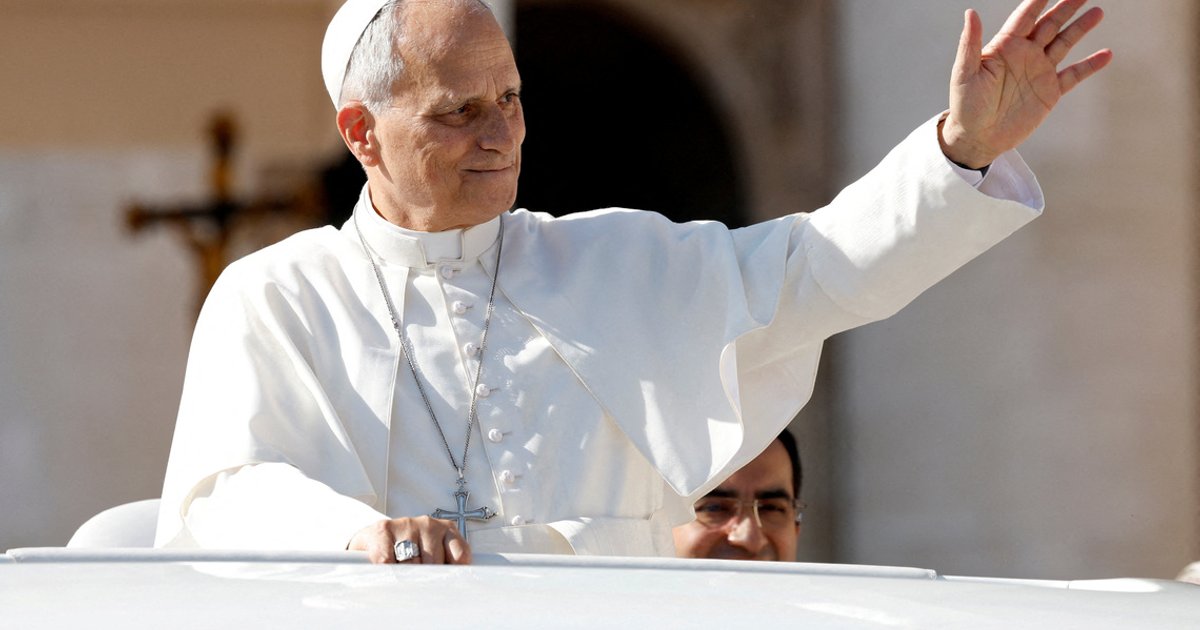
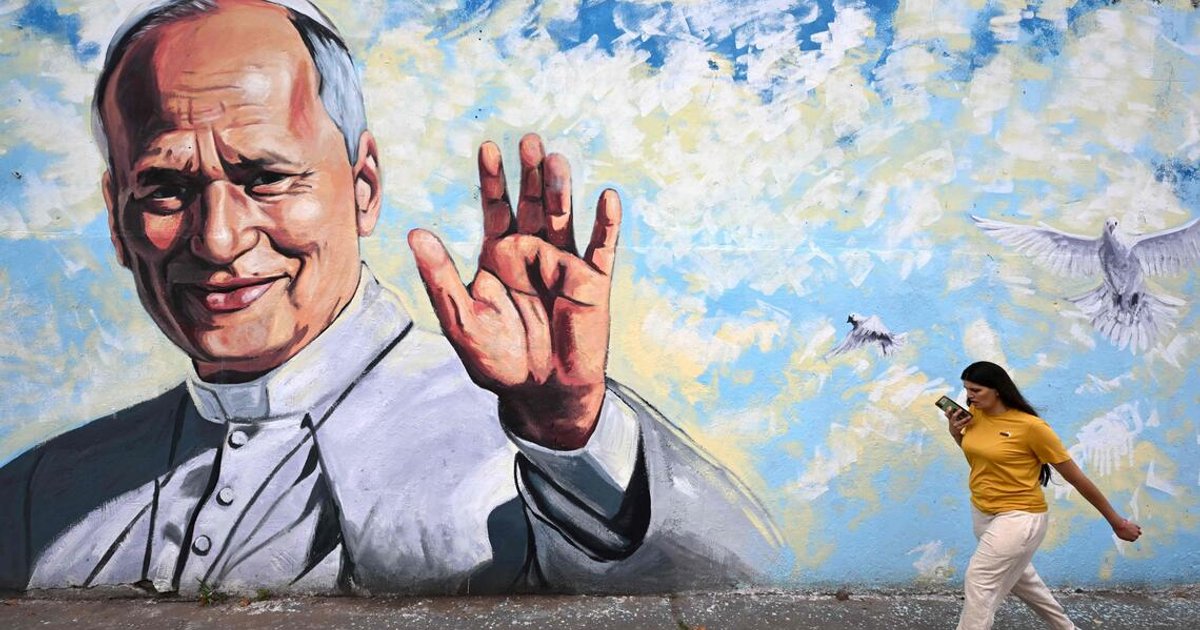
Pope Leo begins his first trip to Latin America as pontiff on Friday, embarking on an 11-day journey across a region that remains the world's largest Catholic stronghold but where Catholic identity is steadily shrinking even as belief in God remains strong. asserted
belief → begin → God
Coming weeks after the 71-year-old pontiff's lung cancer surgery, the ambitious itinerary from November 6-17 remains unchanged, the Vatican said. asserted
Vatican → come → November
The trip takes him some 31,000 km (19,260 miles) from secular Uruguay to Argentina, homeland of his predecessor Pope Francis, before heading to Peru, where he spent years as a missionary and bishop, eventually becoming a citizen. asserted
he → take → missionary
Leo will spend two days in Uruguay, three in Argentina and nearly a week in Peru, where he will celebrate outdoor Masses expected to draw millions, address political leaders, join youth vigils and reach remote Andean communities by helicopter. asserted
he → spend → helicopter
Latin America remains the world’s largest Catholic region in absolute numbers. asserted
America → remain → numbers
Yet the continent the Chicago-born pope is returning to is markedly less Catholic than the one he first encountered as a missionary decades ago. asserted
he → bear → missionary
The Church has been losing ground to fast-growing evangelical denominations, more progressive social attitudes and individualized forms of worship. asserted
Church → lose → worship
A Pew survey in 2024 of six of the most populous Latin American countries found that in all those nations fewer people were identifying as Catholic compared to a decade ago. asserted
people → find → nations
Around one-fifth of adults in each country said they were raised Catholic but had left the Church, the poll found. asserted
poll → say → Church
"We have seen a decline in all of the countries that we surveyed in 2024," said Kirsten Lesage, an associate researcher at the Pew Research Center, a non-profit that monitors faith worldwide. asserted
that → see → faith
But, she added: "The region is still very religious and they're very religious by a variety of standards. asserted
they → add → standards
TIKTOK HAIL MARY Rev. Jorge Reinaudo, a parish priest in Córdoba, Argentina, one of the cities on Pope Leo's itinerary, has spent nearly a decade building a social media following. asserted
Reinaudo → spend → following
He posts humorous sketches to his 800,000 followers across different platforms, gently poking fun at biblical stories and trends like superstitions aimed at helping Argentina's soccer team win the World Cup. asserted
team → post → Cup
Growing numbers of younger people are seeking spirituality through retreats, silence and even Buddhist- or Hindu-inspired practices, often blending them with traditional Christian elements such as rosaries and holy water, he said in an interview. asserted
he → grow → interview
"Not belonging to a religion does not mean people lack faith; it means they live out their faith in their own way," Reinaudo said. asserted
Reinaudo → belong → way
Belief in God remains exceptionally high in Latin America compared to other global regions, even among the growing numbers of people who are unaffiliated with a religion, according to the Pew survey. uncertain
who → remain → survey
That distinction suggests the Catholic Church's challenge is less disbelief than changes in worship habits and people keen to build their own spiritual identities outside traditional institutions, according to religious leaders and researchers interviewed by Reuters. uncertain
challenge → suggest → Reuters
Marverick Ruben Mendoza Oseguera, a 31-year-old accountant in Honduras, came across Reinaudo on social media while following Argentine Catholic musicians. asserted
Oseguera → come → musicians
Raised Catholic, he said he became critical of organized religion after witnessing troubling behavior in church communities, including violence against women and clergy who appeared to protect abusers. asserted
who → raise → abusers
"Experiences like these eroded the trust and faith of many young people, including me," he said. asserted
he → erode → me
In all six countries Pew found adults 50 and older were more likely than those aged 18 to 34 to identify as Catholic. asserted
adults → find → Catholic
Oseguera attends a weekly online Eucharistic adoration service to help manage anxiety, finding comfort in the ritual even though he no longer identifies as Catholic. asserted
he → attend → Catholic
"It feels more like spending time with a close friend," he said. asserted
he → feel → friend
Catholic decline has coincided with a period of rapid social change across Latin America, as countries expanded rights ranging from abortion and euthanasia to same-sex marriage. asserted
countries → coincide → marriage
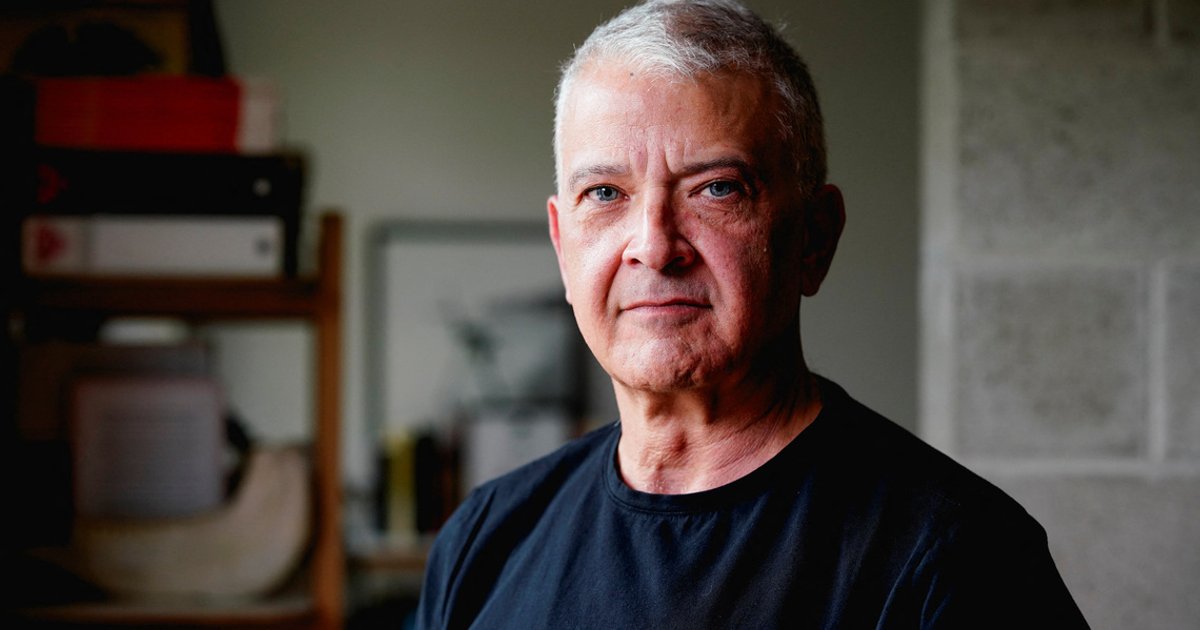
However, Miguel Pastorino, a professor at Uruguay's Catholic University who studies the philosophy of religion, cautioned against attributing the Church's losses directly to those shifts, saying a broader culture of individual choice has also reshaped how people approach religion globally. asserted
people → study → religion
"There's a growing trend toward 'à la carte' religiosity, in which people create their own spiritual menu, without feeling the need to subscribe to any particular institution," he said. asserted
he → be → institution
Evangelical groups have also made inroads among urban working populations in Latin America and are especially strong in Brazil, where nearly 27% of people identify as evangelical Christians. asserted
% → make → Christians
Pentecostalism, the fastest-growing branch, was introduced to Latin America by US missionaries a century ago. asserted
Pentecostalism → grow → missionaries
Today, most towns are home to a Pentecostal chapel, where song and prayer often blare over loudspeakers onto the street. asserted
song → blare → street
"They (Pentecostals) go straight to personal testimony, like the early Church did," Pastorino said. asserted
Pastorino → go → testimony
"When the Catholic Church goes into poor neighborhoods, it often does a great deal of social work, but very little evangelization. asserted
it → go → work
" However, events such as a papal visit can help strengthen Catholic identity, he said. asserted
he → help → identity
Pablo Coimbra, a Uruguayan parish priest at Nuestra Señora de Guadalupe in Montevideo's Casavalle neighborhood, where the pope plans to visit on his second day, said the pontiff's impending arrival was already having an effect. asserted
arrival → plan → effect
More people were participating in Masses at his church. asserted
people → participate → church
Demand for baptisms and holy communion was also rising, he added. asserted
he → rise → baptisms
"The pope's visit has perhaps awakened a memory, something deep in people's hearts regarding faith and belonging to the Church," Coimbra said. asserted
Coimbra → awaken → Church

💬Give feedback · no sign-in needed

No sign-in needed for now. Your note is sent without a name, so it cannot be answered.

🕘History 🎫Support