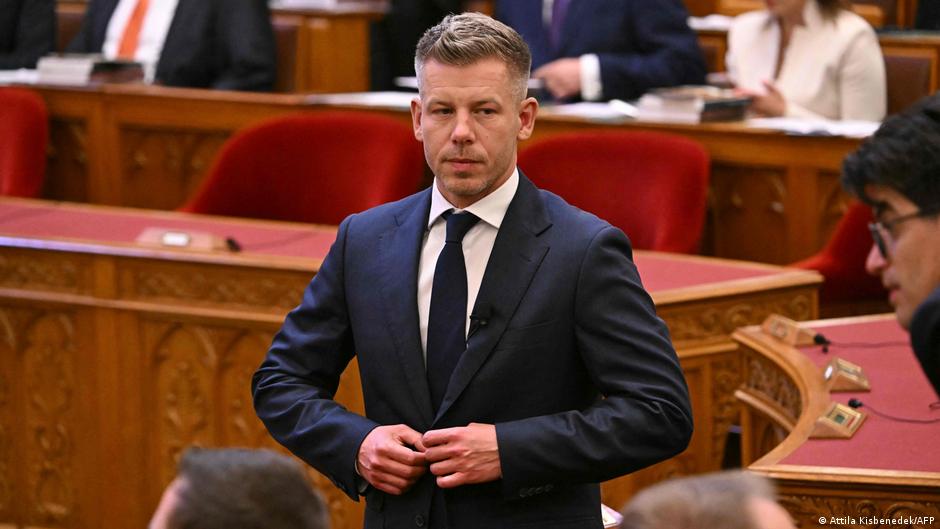
Photo via BBC News

Secret police files released in Hungary, 47 years after fall of communism

Read the original at BBC News ↗
Cite

Thorpe, N. (2026, November 4). Secret police files released in Hungary, 47 years after fall of communism. BBC News. https://www.bbc.co.uk/news/articles/c977p01kgmmko?at_medium=RSS&at_campaign=rss

Dated from the outlet's own feed. Check the original for its byline.

BBC News · collected 2026-11-04 · by Nick Thorpe

Quick Summary

Hungary has released secret police files from its communist era to the public, a move aimed at addressing societal traumas stemming from 45 years of communist rule. The government opened these records on November 4th, symbolizing the day Soviet forces crushed Hungary's revolution in 1956. Prime Minister Péter Magyar defended this action as fulfilling a promise made by those who ended Communist rule in 1989. Approximately 60,000 people recruited by the communist-era secret services now have their names and personal data available online through nyitottaktak.hu. The files include details such as real names, codenames, dates of birth, addresses, motives for recruitment, and handling officers' identities. Critics argue that releasing incomplete files risks causing unnecessary anguish and division within families.
Written by AI on 2026-11-04, from this article's own text only (the story summary below draws on all the coverage).

AI analysis

Story summary

On November 4, 2026, Hungary's new government, led by Prime Minister Péter Magyar, released tens of thousands of names of state informants from the communist era, uploading them to an online public database. The move aims to confront the past and rebuild public trust after nearly four decades since the collapse of communism. From 1945 to 1989, Hungary’s secret police relied on a vast network of informants who monitored society and suppressed dissent. Many informers were coerced or blackmailed into cooperation; others joined voluntarily for various advantages. The release was initially planned for April but was postponed due to the complexity and sensitivity of the files. Prime Minister Magyar defended the move as a fulfillment of his campaign promise, emphasizing that many family members will now face difficult truths about deceased relatives. Critics argue that releasing incomplete files so long after the fact may cause unnecessary anguish and division.

Written for “Hungary Opens Communist-Era Files” on 2026-11-06, grounded in this article and the 3 other(s) covering the same event.

Story

📰 Hungary Opens Communist-Era Files
Politics · 4 article(s) covering the same event. Compare every outlet's account →

Compared with similar articles

This article reads unscored and hedges 0% of its claims. Each row says how that neighbour differs.
Deutsche Welle
⚖️ Leans left Hedges 3 of 41 claims Outlet record 95/100
The Straits Times
Hedges 0 of 10 claims Outlet record 66/100
The Straits Times
Hedges 0 of 12 claims Outlet record 66/100
“Article A discusses Orban's personal history with secret police, while Article B reports on Hungary releasing communist-era secret police files to the public.”
The Guardian
Hedges 2 of 55 claims Outlet record 66/100
“The articles describe related actions but refer to different dates and details, suggesting they are about separate events or phases of an initiative rather than a single occurrence.”
How this article was measured signals, leaning charts, publisher record, byline, topics and claims

Signals How these are calculated →

Claims extracted
23
sentences that state something as happening or true
Uncertain
0%
0 of 23 hedged ("reportedly", "may", "according to")
Leaning
withheld
no quote in the article backed the model's score
Publisher signals
66/100
BBC News's corrections and hedging, across everything collected from it. Not a measure of accuracy.
Outlets on this story
4
Politics
Same framing elsewhere
1
articles that frame the event the way this one does
Analyzed 2026-11-04 · how these are computed

How this is being covered How these are calculated →

Article leaning vs. publisher reliability
Source leaning vs. consistency

Publisher

BBC News · 5236 article(s) · 7 correction(s) detected
Running correction rate · 7 correction(s)

Who wrote this

Nick Thorpe
5 article(s) here · 1 carrying a prediction
🔮 - Published Hungary has opened communist-era secret police files to the public, in a controversial move the government says will help Hungarian society heal itself from the traumas of 45 years of communist rule.
🔮 - Published When they met in northern Serbia last November, Serbian President Aleksandar Vučiċ and Hungarian Prime Minister Viktor Orbán could hardly have guessed they would both be out of power within a year.
🔮 Most commentators suggest that a high final turnout, 65% or above, would favour the students.
🔮 At the weekend, the prime minister asked rhetorically what would happen if he stepped down.
🔮 The constant boom of petrol bombs could be heard exploding on Saturday.
Also by Nick Thorpe
Nothing else under this byline is closely related to this article, so these are simply their most recent.

Topics

Budapest Hungarian Hungary Soviet communist

Subjects

Hungary GPE · 4× Budapest GPE · 2× Hungarian NORP · 2× communist NORP · 2× Fidesz ORG · 1× Magyar PERSON · 1× Péter Magyar PERSON · 1× Socialist ORG · 1× Soviet NORP · 1× the Communist party ORG · 1×

Narrative

A typical entry records the real name of the informer, their codename, date of birth, address and mother's name, their motive for recruitment - whether voluntary or because they were blackmailed or coerced - and the name of their handling officer.
framing: assertive · carried by 1 article(s) · first seen 2026-11-04
🔮 - Published Hungary has opened communist-era secret police files to the public, in a controversial move the government says will help Hungarian society heal itself from the traumas of 45 years of communist rule.

Claims (23 extracted, 0 hedged)

- Published Hungary has opened communist-era secret police files to the public, in a controversial move the government says will help Hungarian society heal itself from the traumas of 45 years of communist rule. asserted
society → publish → rule
Critics say it has come too late, that the files themselves are incomplete, and that the move risks sowing division and causing unnecessary anguish to family members. asserted
move → say → members
The date of the opening is symbolic - on 4 November 1956 Soviet tanks rolled through Budapest and other cities, to crush Hungary's short-lived revolution. asserted
tanks → roll → revolution
"I ask everyone to treat this long overdue publication of documents with dignity and humanity," Prime Minister Péter Magyar told reporters at the state archives in Budapest. asserted
Magyar → ask → Budapest
"Many families will now face difficult information, often related to a deceased relative," he added. asserted
he → face → relative
"It is impossible to process a trauma without discussion and asking questions." asserted
It → process → questions
Magyar defended the move, which was a central promise of his election campaign ahead of his landslide victory in April elections, as the fulfilment of a promise made by those who toppled the Communist party in 1989 in Hungary. asserted
who → defend → Hungary
In the ensuing decades, conservative, Socialist-Liberal, and Fidesz-led governments have all contemplated, but ultimately refused to open the files. asserted
governments → ensue → files
Since 1998, it has been possible to apply for your own file, and for historians to research those of others. asserted
historians → apply → others
But many names were blacked out, and many files withheld by the post-communist secret services for their own use. asserted
files → black → use
Over the past 36 years, there have been frequent leaks of data from the files, as successive governments tried to damage their opponents. asserted
governments → try → opponents
Many files were also shredded, as the Communist party lost its grip in 1988-89. asserted
party → shred → 1988
From Wednesday, the names and personal data of around 60,000 people recruited by the communist-era secret services have become available on the nyitottaktak.hu website, external. asserted
names → recruit → website
A typical entry records the real name of the informer, their codename, date of birth, address and mother's name, their motive for recruitment - whether voluntary or because they were blackmailed or coerced - and the name of their handling officer. asserted
they → record → officer
Another batch of files, known as the "B-dossiers" are currently being digitalised, and will be made available on 25 February. asserted
batch → know → February
These will offer much more detail about the recruitment process, and the high or low value of the information they provided. asserted
they → offer → information
Critics of the opening of the files emphasise this point - that people will be too quick to judge those they find in the files, and unwilling to understand the nuances. asserted
they → emphasise → nuances
Around 150-160,000 people are estimated to have been recruited as informers between December 1944 and February 1990 in Hungary. asserted
people → estimate → Hungary
Many were blackmailed, with threats including loss of work or study opportunities, loss of access to medicines, or the leaking of information about their sex lives or addictions. asserted
Many → blackmail → lives
Such intimate details will be carefully edited out of the current disclosures too. asserted
details → edit → disclosures
Krisztian Ungváry, a historian who has long campaigned for the full release of the files, says access to information on what is recorded by the state against the citizen is a citizens' right, and should not depend on the whims of those in power. asserted
what → campaign → power
"In the overwhelming majority of surviving agent reports, it isn't even possible to identify the agent, let alone their motives," counters an opponent of today's move, Zsuzsanna Borvendég, a historian and MEP of the far-right Our Homeland party. asserted
opponent → survive → party
Publishing the names of informers without fully explaining the circumstances of their recruitment and their activities risks misleading the public, she told Hungarian media. asserted
she → publish → media

💬Give feedback · no sign-in needed

No sign-in needed for now. Your note is sent without a name, so it cannot be answered.

🕘History 🎫Support