Photo via Deutsche Welle

36 years later: Hungary opens Communist-era secret service files

Read the original at Deutsche Welle ↗
Cite

Verseck, K. (2026, November 4). 36 years later: Hungary opens Communist-era secret service files. Deutsche Welle. https://www.dw.com/en/36-years-later-hungary-opens-communist-era-secret-service-files/a-79858016?maca=en-rss-en-world-4025-rdf

Dated from the outlet's own feed. Check the original for its byline.

Deutsche Welle · collected 2026-11-04 · by Keno Verseck

Quick Summary

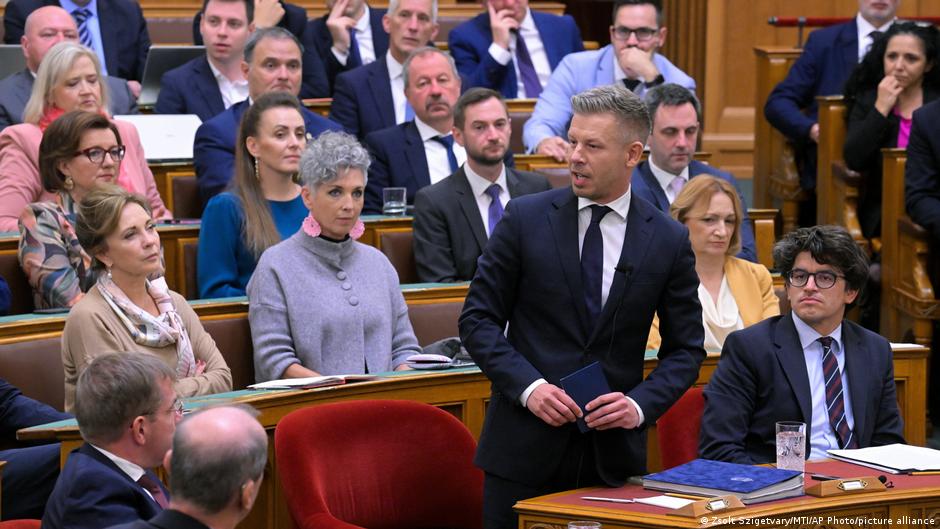
Hungary’s current prime minister, Peter Magyar, has ordered the full release of the country’s secret police “agent files,” containing names of state security informants dating back to the Communist era. This decision marks an historic event following over three decades of debate and opposition from previous governments, including Hungary's first post-Communist prime minister Jozsef Antall and Viktor Orban's Fidesz party, which voted against file releases more than 30 times since 2010. The release is expected to reignite debates about Communist-era guilt and responsibility, while providing transparency into a dark chapter of Hungarian history.
Written by AI on 2026-11-04, from this article's own text only (the story summary below draws on all the coverage).

AI analysis

Story summary

On November 4, 2026, Hungary's new government, led by Prime Minister Péter Magyar, released tens of thousands of names of state informants from the communist era, uploading them to an online public database. The move aims to confront the past and rebuild public trust after nearly four decades since the collapse of communism. From 1945 to 1989, Hungary’s secret police relied on a vast network of informants who monitored society and suppressed dissent. Many informers were coerced or blackmailed into cooperation; others joined voluntarily for various advantages. The release was initially planned for April but was postponed due to the complexity and sensitivity of the files. Prime Minister Magyar defended the move as a fulfillment of his campaign promise, emphasizing that many family members will now face difficult truths about deceased relatives. Critics argue that releasing incomplete files so long after the fact may cause unnecessary anguish and division.

Written for “Hungary Opens Communist-Era Files” on 2026-11-05, grounded in this article and the 3 other(s) covering the same event.
Why this leaning score
The article's own words the score was based on. Each is quoted verbatim and was checked against the article text before being stored, so you can find it in the original.
Reading Leans left (beta estimate) Confidence high 1 quote(s) discarded as not found in the article
Leaning: leans left for article 129762 (high confidence, 2 verified quotes) · logged 2026-11-04

Story

📰 Hungary Opens Communist-Era Files
Politics · 4 article(s) covering the same event. Compare every outlet's account →

Compared with similar articles

This article reads leans left and hedges 7% of its claims. Each row says how that neighbour differs.
BBC News
Hedges 0 of 23 claims Outlet record 66/100
The Guardian
Hedges 2 of 55 claims Outlet record 66/100
The Straits Times
Hedges 0 of 10 claims Outlet record 66/100
How this article was measured signals, leaning charts, publisher record, byline, topics and claims

Signals How these are calculated →

Claims extracted
41
sentences that state something as happening or true
Uncertain
7%
3 of 41 hedged ("reportedly", "may", "according to")
Leaning
Leans left
of the writing, not the subject · beta estimate
Publisher signals
95/100
Deutsche Welle's corrections and hedging, across everything collected from it. Not a measure of accuracy.
Outlets on this story
4
Politics
Same framing elsewhere
1
articles that frame the event the way this one does
Analyzed 2026-11-04 · how these are computed

How this is being covered How these are calculated →

Article leaning vs. publisher reliability
Source leaning vs. consistency

Publisher

Deutsche Welle · 590 article(s) · 0 correction(s) detected
No corrections detected for this publisher. That may mean careful reporting, or simply that nothing has been checked.

Who wrote this

Keno Verseck
7 article(s) here · 1 carrying a prediction
🔮 The law relevant to the files contained provisions that were open to broad interpretation, which allowed government agencies such as the Ministry of Interior to prevent the transfer of files from the secret police to the Historical Archives of the Hungarian State Security, or ABTL, if they believed it would compromise national security.
🔮 But it is also a risky maneuver — if convicted, Magyar could lose his seat in Parliament.
🔮 Even after a Russian drone struck a high-rise apartment building in the eastern Romanian city of Galati in late May this year, many EU and NATO representatives hesitated to accuse Russia of intentional action.
2026-09-26 · mixed framing · Russia expected to intensify hybrid war on Europe
🔮 Moldova's Defense Minister Anatolie Nosatii said that the deaths of Moldovan citizens could no longer be ruled out in future.
2026-09-12 · assertive framing · Russia's drone war comes to Moldova and Romania
🔮 All this came to an end in May, when the new government headed by Peter Magyar took office.
🔮 Magyar has talked of a sum of around €60 billion ($70 billion), though other estimates suggest the real amount could be three times that much.
2026-09-06 · assertive framing · Hungary begins hunt for corrupt regime's billions
Also by Keno Verseck
Nothing else under this byline is closely related to this article, so these are simply their most recent.
All 7 articles by Keno Verseck →

Topics

Communist Fidesz Hungarian Hungary Soviet

Subjects

Hungarian NORP · 9× Hungary GPE · 4× ABTL ORG · 2× Communist NORP · 2× Fidesz ORG · 2× Magyar PERSON · 2× Soviet NORP · 2× Telex ORG · 2× Peter Magyar PERSON · 1× anti-Communist NORP · 1×

Narrative

The law relevant to the files contained provisions that were open to broad interpretation, which allowed government agencies such as the Ministry of Interior to prevent the transfer of files from the secret police to the Historical Archives of the Hungarian State Security, or ABTL, if they believed it would compromise national security.
framing: assertive · carried by 1 article(s) · first seen 2026-11-04
🔮 The law relevant to the files contained provisions that were open to broad interpretation, which allowed government agencies such as the Ministry of Interior to prevent the transfer of files from the secret police to the Historical Archives of the Hungarian State Security, or ABTL, if they believed it would compromise national security.
2026-11-04 · Deutsche Welle
36 years later: Hungary opens Communist-era secret service files · assertive framing

Claims (41 extracted, 3 hedged)

On November 4, 1956, tens of thousands of Soviet soldiers and tanks swept into Hungary, brutally suppressing the country's anti-Communist uprising. asserted
thousands → sweep → uprising
Decades of dictatorship followed, relying on Hungary's brutal secret police to keep the system in place. asserted
Decades → follow → place
Events on Nov. 4 this year represent something of a reckoning with this dark chapter of Hungarian history. asserted
Events → represent → history
Prime Minister Peter Magyar's government is ordering the full release of the country's secret police "agent files," which contain the names of Hungarian state security informants, some of whom cooperated out of their own volition even as others passed on information unwittingly. asserted
others → order → information
Magyar and his Tisza party had previously promised to make the "agent files" public if elected. asserted
files → promise → ?
Their release is an historic event, as it comes after over three decades of heated debate over how to handle such sensitive files. asserted
it → come → files
The decision to publish is also sure to spark further debate on Communist-era guilt and responsibility. asserted
decision → publish → guilt
Release opposed for years Hungarians have been calling for the release of the files for years. asserted
Hungarians → oppose → years
After the fall of the Berlin Wall in 1989 and the end of Soviet rule, civil rights activists and smaller Hungarian political parties said the files should be released. asserted
files → say → rule
Demands for their publication were expressed repeatedly over following decades. asserted
Demands → express → decades
Yet Hungary's first post-Communist prime minister Jozsef Antall, a conservative, rejected the idea as did Viktor Orban's long-ruling Fidesz party. asserted
party → reject → idea
The latter blocked efforts to open the files, voting more than 30 times against such plans since 2010, according to Hungarian news platform Telex. uncertain
latter → block → Telex
A partial release of state security files did occur in the 1990s, when the Hungarian parliament passed the so-called "agents law" in 1994. asserted
parliament → occur → 1994
This required members of the government, members of parliament and certain public servants to undergo background checks to determine whether they had ever worked for the former state security services. asserted
they → require → services
From 1997, Hungarian citizens have been able to view their own files and in 2003, permissions were expanded. asserted
permissions → view → 2003
But they have never been able to find out the names of informants. asserted
they → find → informants
The law relevant to the files contained provisions that were open to broad interpretation, which allowed government agencies such as the Ministry of Interior to prevent the transfer of files from the secret police to the Historical Archives of the Hungarian State Security, or ABTL, if they believed it would compromise national security. asserted
it → contain → security
Such a selective release of files not only prevented Hungarian society from learning the truth about its state security service, it also made it possible for files to be exploited in political power struggles, for example, by leaking compromising information about politicians to the public. asserted
files → prevent → public
One such case involved former Hungarian Prime Minister Peter Medgyessy, who was exposed by the Fidesz-affiliated daily Magyar Nemzet in 2002 for having worked as a Communist-era secret agent. asserted
who → involve → agent
Political fallout expected Magyar's government is putting an end to this. asserted
government → expect → this
From Nov. 4, databases containing all the names of, and key information about, informants will be made available online. asserted
databases → contain → names
Additional databases will be released as well. asserted
databases → release → ?
They include one of the most extensive databases on individuals recruited to work for the Hungarian state security agency. asserted
They → include → agency
Confidentiality provisions set out in the old "agent law" have also been scaled back, meaning significantly more files will likely be accessible in the future. asserted
files → set → future
The upcoming release of data on up to 60,000 out of an estimated 150,000 secret police informants could have major political consequences. uncertain
release → estimate → consequences
Even so, ABTL director Bendeguz Gergo Cseh recently cautioned that, "you can't believe everything the state security agencies and their files claim." uncertain
agencies → caution → everything
Many documents were incomplete and not fully reliable and many files had been destroyed, he said. asserted
he → destroy → ?
Historian Janos M. Rainer, an expert on Hungary's dictatorship, told Telex that the publication would have made sense right after the fall of the regime. asserted
publication → tell → regime
Releasing the files after all these years is more of a symbolic gesture, he argued. asserted
he → release → gesture
Meanwhile historian Krisztian Ungvary, who has researched the state security files extensively, welcomes the upcoming publication. asserted
who → research → publication
It will allow historians to pursue new research and society to engage in fresh debates, Ungvary told DW. asserted
Ungvary → allow → DW
He believes Hungary will benefit from such reflection, as "societal lies inevitably lead to a strained relationship with politics and the price we paid for that was 16 years of Fidesz rule." asserted
we → believe → rule
For Magyar, making this information public carries great significance. asserted
information → make → significance
The idea of coming to terms with the past, especially the years of the Orban regime, is one of his favorite topics. asserted
idea → come → topics
When the Hungarian parliament amended the law about the files in mid-September, Magyar wrote on Facebook that, "after a 36-year delay, the Hungarian parliament today decided, at the initiative of Tisza, to make the 'agent files' public. asserted
files → amend → Tisza
Fidesz did not support the motion. asserted
Fidesz → support → motion
I wonder why?" asserted
I → wonder → ?
The most well-known of the latter is likely Jozsef Horvath, a former full-time employee of the department of Hungarian state security that was responsible for suppressing the domestic opposition. asserted
that → know → opposition
Under Orban, Horvath worked as an intelligence officer and security advisor, and in 2024, he became the research director of Orban's Sovereignty Protection Office. asserted
he → work → Office
This was an agency that exposed supposed enemies of the Orban regime, branding them " foreign agents ." asserted
that → expose → them
…and 1 more, not listed.

💬Give feedback · no sign-in needed

No sign-in needed for now. Your note is sent without a name, so it cannot be answered.

🕘History 🎫Support