Claims extracted
13
sentences that state something as happening or true
Uncertain
23%
3 of 13 hedged
("reportedly", "may", "according to")
Leaning
withheld
no quote in the article backed the model's score
Publisher signals
69/100
Washington Examiner's corrections and
hedging, across everything collected from it. Not a measure of accuracy.
Outlets on this story
1
Politics
Same framing elsewhere
1
articles that frame the event the way this one does
Democratic Senators who have acted as party mavericks, willing to defect or speak out against their party, are likely to wield less power heading into the next Congress as their party expands its control of the upper chamber.
asserted
party → act → chamber
Democrats have won at least 54 seats in the Senate, with races in Alaska and Mississippi still too close to call, picking up at least nine seats in the upper chamber.
asserted
races → win → chamber
The shift expands Democrats’ power more than many pollsters expected, leaving more centrist Democrats with less power than they would have in a makeup with thin margins.
asserted
they → expand → margins
Recommended Stories
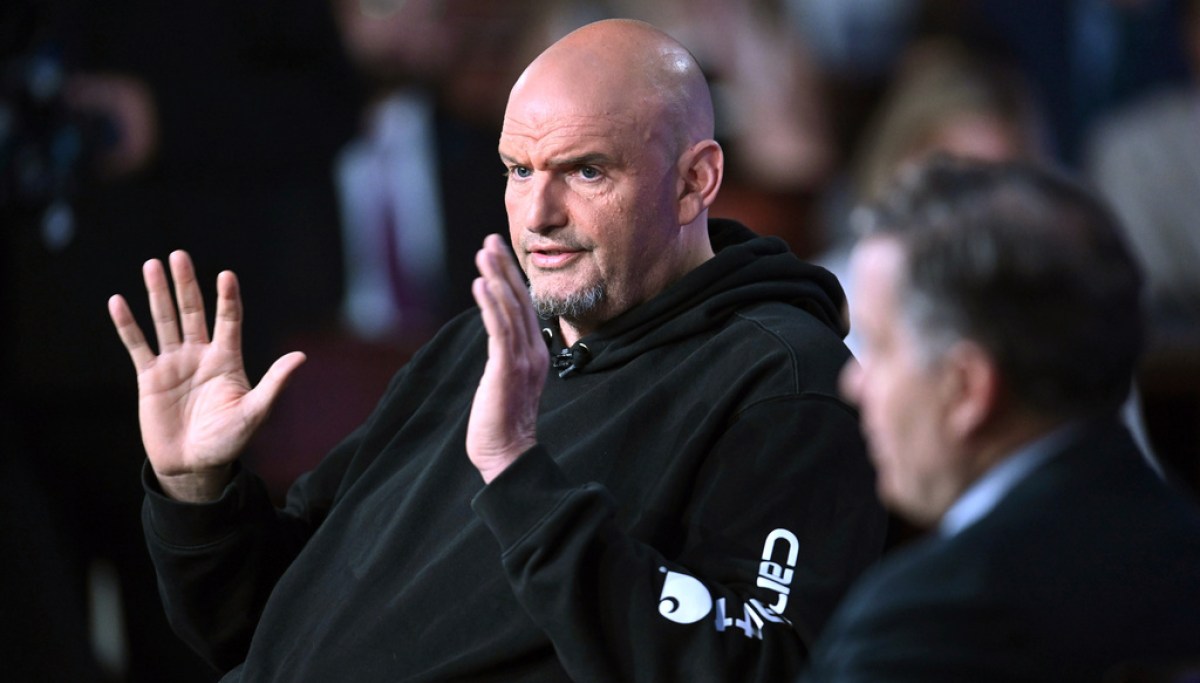
Sen. John Fetterman (D-PA) has been a key example of a Democratic senator willing to defect from his party to vote with Republicans on issues with which he disagrees with the majority of Democrats.
asserted
he → defect → Democrats
Fetterman broke rank to support funding for Israel, fund the U.S. government during shutdowns, and advance Markwayne Mullin’s nomination as Homeland Security Secretary.
asserted
Fetterman → break → Secretary
“I know Democrats are frustrated with me, but I will remain one, and that’s where I’m at,” Fetterman told the Washington Examiner this fall, asserting his loyalty to his party.
asserted
Fetterman → know → party
While Fetterman’s vote has been crucial for Democrats in their 53-45 party makeup disadvantage against Republicans this Congress, his marginal vote will be much less meaningful when Democrats have at least four seats over 50.
asserted
Democrats → have → 50
Several other marginal Democrats and Independents who caucus with Democrats also fall in this same boat.
asserted
who → caucus → boat
More centrist Senators like Sens. Angus King (I-ME), Maggie Hassan (D-NH) and Jacky Rosen (D-NV), who also have a history of defecting from their caucus on certain issues and votes, will have fewer cards to play if Democratic leadership thinks they can get a vote across the line with or without their support.
asserted
they → have → support
The same trend may go for more progressive Democratic caucus members who defect from the caucus to push legislation more to the left.
uncertain
who → go → left
Depending on whether the Democratic Party drifts further left while they have the majority, the opinions of socialist or far-left Senators like Sen. Bernie Sanders (I-VT) may also be less consequential if the Democratic majority thinks they can get a more centrist vote through without progressive outliers.
uncertain
they → depend → outliers
The results in Mississippi and Alaska’s Senate race remain too close to call, with Democrats potentially able to swing to up to 56 seats in the Senate if they can flip the two remaining seats blue.
Democrat Scott Colom was leading Sen. Cindy Hyde-Smith (R-MS) around noon on Wednesday by just 43 votes, according to the Associated Press, which counted 96% of the vote.
uncertain
which → call → vote
In Alaska, just after noon, Democrat Mary Peltola led incumbent Sen. Dan Sullivan (R-AK) by 626 votes with 74% counted, though neither held a majority.
asserted
neither → lead → majority
 The Aporia