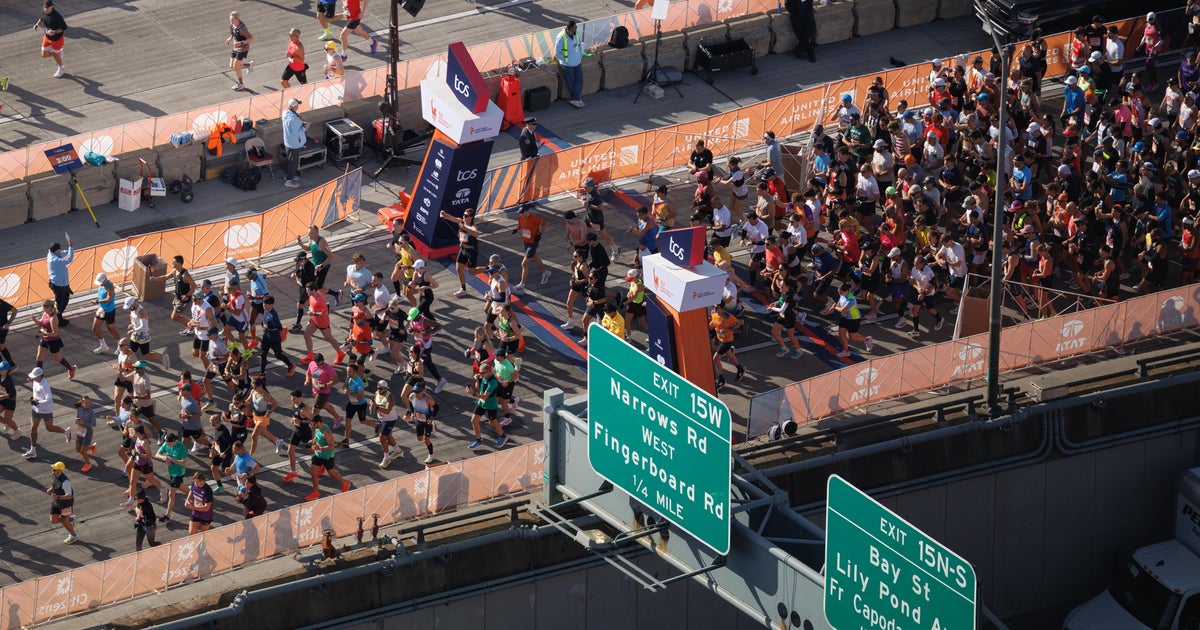
A rare and sometimes deadly muscle condition known as rhabdomyolysis is back in the headlines this week after the death of a healthy 24-year-old New York City Marathon runner.
asserted
condition → know → runner
Rachel Apa, a Pennsylvania native and former Division One field hockey player at Bucknell University, collapsed two miles short of the race’s finish line Sunday, her father Steve Apa said.
asserted
father → collapse → line
Doctors spent over six hours trying to save her life but were unsuccessful.
asserted
Doctors → spend → life
Her father said her cause of death was rhabdomyolysis.
asserted
cause → say → death
Rhabdomyolysis, often referred to as “rhabdo,” occurs when muscles break down and can poison the body.
asserted
muscles → refer → body
It is typically triggered by overexertion, physical trauma, certain medications or an underlying health condition.
asserted
It → trigger → overexertion
The condition is relatively uncommon with about 26,000 cases recorded in the U.S annually, according to the Cleveland Clinic.
uncertain
cases → record → Clinic
Some cases can be fatal, and Vanderbilt University research shows there are around 1,500 annual deaths.
asserted
research → show → ?
"It's a problem, and it's very dangerous," Jacque Crockford, a college athlete turned personal trainer who suffered from rhabdo, told US News in 2017.
asserted
who → turn → 2017
What happened to Rachel Apa?
asserted
What → happen → Apa
Apa, who was running her first marathon, was feeling strong before she collapsed near the mile-24 marker at 1:33 p.m. EST, The New York Times reported Tuesday.
asserted
Times → run → p.m.
She had texted her father that she had “never felt this good” earlier in the race but he told her repeatedly not to “overdo it,” Steve Apa told NBC News.
asserted
Apa → texte → News
When she collapsed, spectators ran to help her - including two doctors - and performed CPR before emergency medical crews arrived with a defibrillator.
asserted
crews → collapse → defibrillator
She was taken by ambulance to the Mount Sinai Medical Center at 1:50 p.m., which one spectator claimed was “was an unacceptable amount of time.”
asserted
spectator → take → time
After continued efforts trying to resuscitate Apa, she was declared dead at 9:40 p.m. EST.
asserted
she → continue → p.m.
“It’s unfathomable,” her father told The Times.
asserted
father → ’ → Times
Cases of rhabdo has been widely reported in college football players.
asserted
Cases → report → players
More than a dozen University of Iowa players were hospitalized in 2011 after a strenuous squat workout, according to The Daily Iowan.
uncertain
players → hospitalize → Iowan
In 2017, three Oregon football players were hospitalized with the condition following grueling strength and conditioning workouts.
asserted
players → hospitalize → workouts
Other people have spoken out about developing the condition, including a Virginia man who was doing pull-ups.
asserted
who → speak → ups
“It was just kind of a shocking thing,”Justin Urban, then 41, told The Washington Post in 2021.
asserted
Urban → tell → 2021
“Forty pull-ups put me in the hospital for a week.”
asserted
ups → put → week
Joseph Henson, who ran Alabama’s Mercedes Half Marathon in 2019, went into cardiac arrest after developing rhabdo.
asserted
who → run → rhabdo
“My takeaway from all of this is it can happen to anybody, I’m pretty young for cardiac arrest and consider myself pretty fit,” Henson, then 34, told Runner’s World.
asserted
Henson → happen → World
What happens to the body?
asserted
What → happen → body
Rhabdo occurs when a person’s muscles break down during extreme exercise.
asserted
muscles → occur → exercise
This breakdown releases the contents of the muscle into the bloodstream, including proteins called myoglobin and creatine kinase and the essential mineral potassium, according to the Cleveland Clinic.
uncertain
breakdown → release → Clinic
A build up of myoglobin in the body can damage the kidneys, while high levels of potassium can cause a deadly heart rhythm.
asserted
levels → damage → rhythm
That’s how half of people with rhabdo develop a kidney injury, the clinic notes.
asserted
clinic → ’ → injury
Other common causes of rhabdo include heat stroke, drug abuse, crush injuries and medications, such as statins and antidepressants.
asserted
causes → include → statins
In high temperatures, muscle breaks down rapidly, and taking drugs can have a similar effect.
asserted
taking → break → effect
The rare genetic conditions McArdle disease and Duchenne muscular dystrophy can also lead to rhabdo.
asserted
conditions → lead → rhabdo
Both cause muscle weakness.
asserted
Both → cause → weakness
It doesn’t matter whether you’re a weekend workout warrior or a professional athlete, you can be impacted by rhabdo.
asserted
you → matter → rhabdo
While the likelihood of developing the condition is slim, people who drastically increase their exercise training intensity or length are at a higher risk, Dr. William Roberts wrote in Runner’s World in 2017.
asserted
Roberts → develop → 2017
“At The Ohio State University Wexner Medical Center, we see rhabdo most associated with endurance sports, such as cycling or running,” Dr. Bryant Walrod, a family medicine physician, said.
asserted
Walrod → see → cycling
People who work in active jobs are also at risk, including firefighters, police officers, outdoor workers and military service members, the Centers for Disease Control and Prevention says.
asserted
Centers → work → Control
Symptoms of rhabdo can be varied and range in severity, but typically occur within 1-3 days of muscles degrading.
asserted
muscles → occur → days
People should seek medical attention if they experience muscle pain, weakness, dark urine that looks like cola, an inability to pee, nausea or loss of consciousness.
asserted
that → seek → consciousness
Rhabdo can be treated using IV fluids and electrolytes, though people may need dialysis if their kidneys fail.
uncertain
kidneys → treat → dialysis
…and 5 more, not listed.
 The Aporia