- Midterm results in full: See all the live maps and charts as the votes come in.
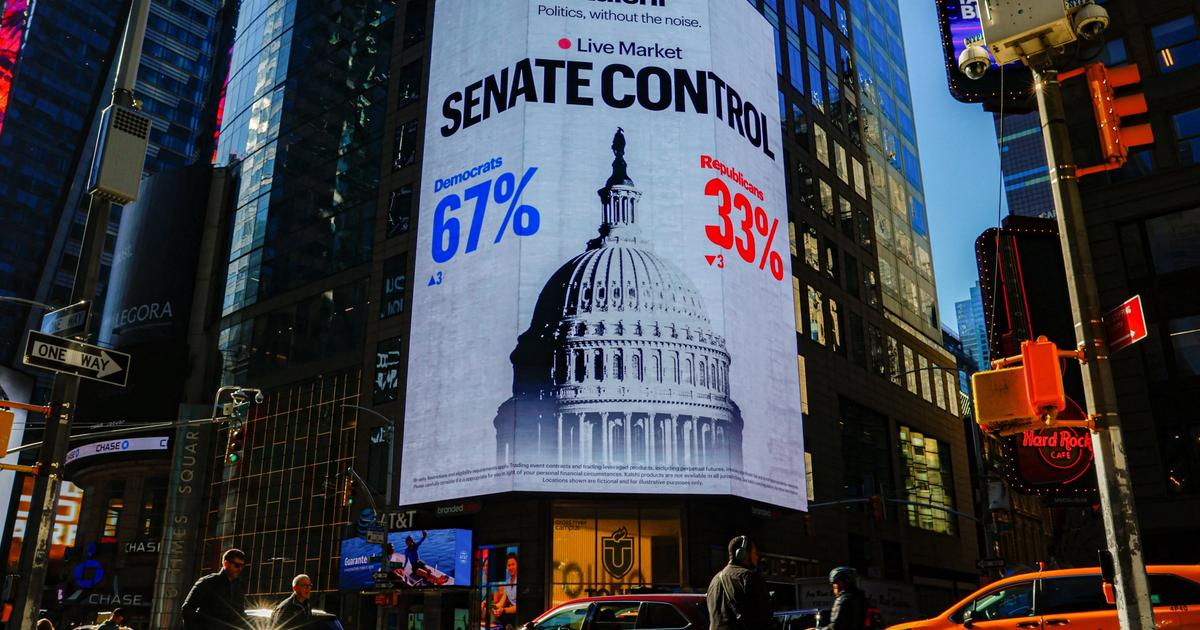
Prediction market Kalshi is claiming a major victory after its election-night favorites won or were leading in 98 percent of races during the 2026 midterms, as traders wagered billions of dollars on the outcome of the elections.
The findings come after prediction markets became an increasingly prominent feature of the 2026 election cycle, with traders placing enormous sums on everything from control of Congress to individual House races.
Kalshi said total trading volume across its election markets exceeded $2.5 billion, compared with $1.3 billion during the 2024 election cycle, which included the presidential race.
asserted
which → see → race
The company also claimed its markets were faster than traditional sources at calling the outcome of major contests.
asserted
markets → claim → contests
Markets for control of the House reached 99 percent certainty at 8.18pm ET on election night, while the Senate market passed the same threshold at 9.02pm ET.
Kalshi had also signaled a Democratic wave months before voters headed to the polls.
Traders first favored Democrats to take control of the Senate in April, with the likelihood of a so-called blue wave rising above 80 percent and a blue tsunami reaching 55 percent.
asserted
tsunami → reach → percent
By election day, before votes were counted, the market put Democrats' chances of winning the Senate at 75 percent, with the probability of a blue tsunami climbing to 70 percent.
asserted
probability → count → percent
The Texas Senate showdown had attracted nearly $198 million in trading volume, making it the most heavily traded individual race of the entire midterm cycle
In Kansas, traders favored Democrat Adam Hamilton during the final five days of the race, despite the state's 94-year streak without electing a Democrat to the Senate
In Maine, traders had favored Democrat Troy Jackson since August before he ousted Republican Senator Susan Collins, who was seeking a sixth term
Several individual races also demonstrated the market's early signals.
asserted
races → attract → signals
In Texas, traders flipped their Senate favorite to Democrat James Talarico in mid-August, despite the fact that the state had not voted for a Democrat statewide since 1994.
asserted
state → flip → 1994
By the end of the day, the Texas Senate showdown had attracted nearly $198 million in trading volume, making it the most heavily traded individual race of the entire midterm cycle.
asserted
it → attract → cycle
In Maine, traders had favored Democrat Troy Jackson since August before he ousted Republican Senator Susan Collins, who was seeking a sixth term.
asserted
who → favor → term
In Kansas, traders favored Democrat Adam Hamilton during the final five days of the race, despite the state's 94-year streak without electing a Democrat to the Senate.
asserted
traders → favor → Senate
The company said its markets correctly picked the winner or current leader in 479 of 487 races across the country, including contests for the House, Senate, governor, attorney general, lieutenant governor and secretary of state.
asserted
markets → say → state
The figures were based on market prices at 5pm ET on election night, before votes were counted, according to a new report released by Kalshi.
uncertain
votes → base → Kalshi
The results suggest prediction markets were remarkably accurate in anticipating the outcome of races, with favorites winning or leading in 99 percent of House contests, 97 percent of Senate races and 97 percent of gubernatorial contests.
asserted
favorites → suggest → contests
Kalshi's report also claimed its forecasts outperformed several major polling models when measured using Brier scores.
asserted
forecasts → claim → scores
In races for governor, Kalshi recorded a score of 0.0140, compared with 0.0183 for the average of the polling models included in its comparison.
asserted
Kalshi → record → comparison
When gubernatorial races were excluded, Kalshi scored 0.0127, beating the model average of 0.0167.
asserted
Kalshi → exclude → 0.0167
The company also outperformed individual models from outlets and organizations including The Economist, Polymarket, Silver Bulletin, and VoteHub.
asserted
company → outperform → Economist
Attention is now turning to 2028, with Kalshi saying hundreds of millions of dollars have already been traded on markets predicting the next Democratic and Republican presidential nominees.
asserted
millions → turn → nominees
 The Aporia