Photo via The Guardian

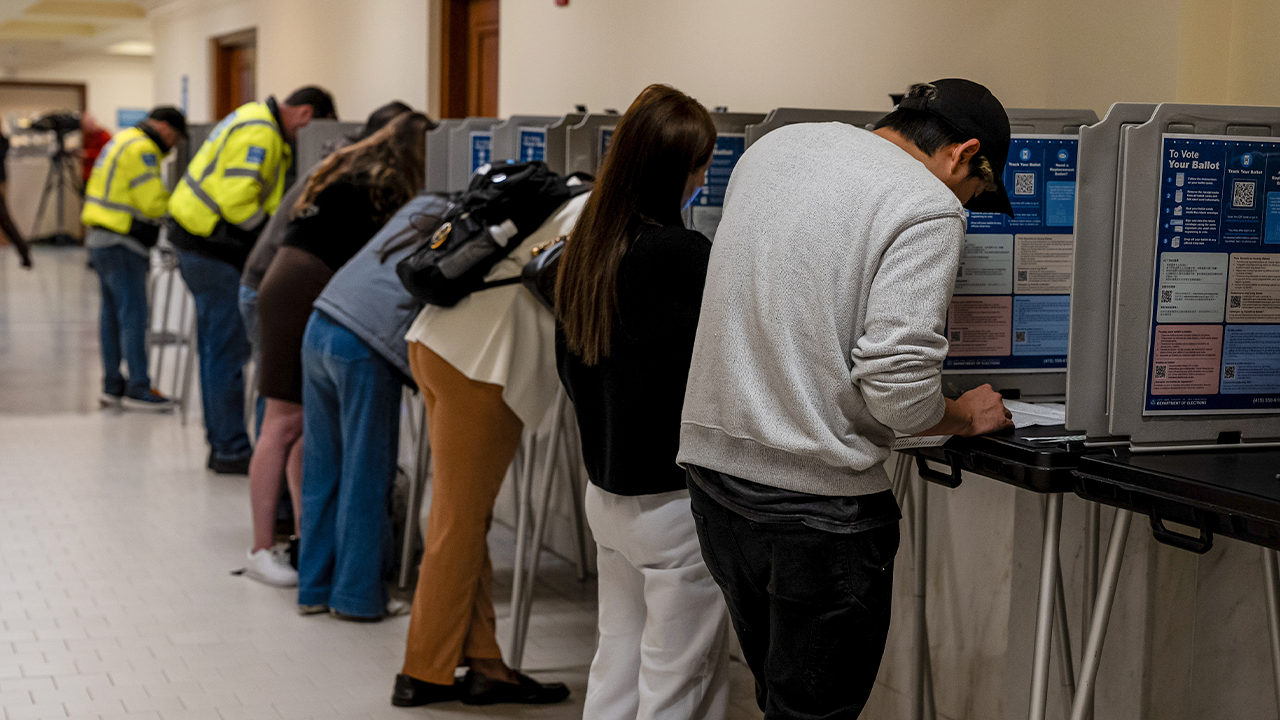
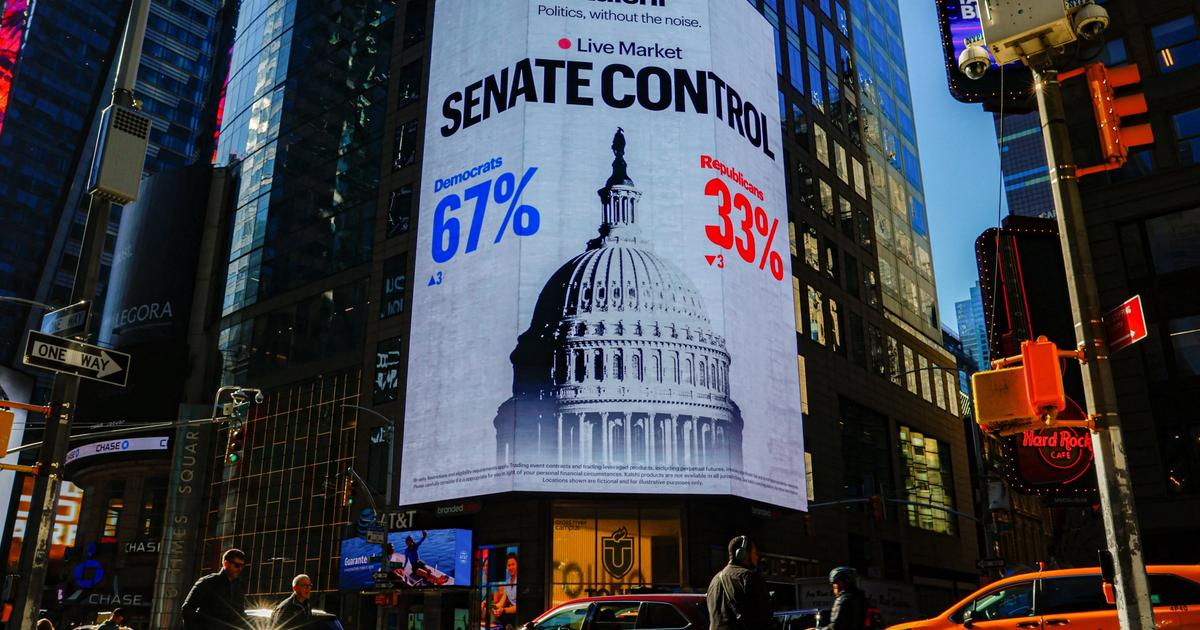
Polling experts hail ‘great night’ after correctly calling most key US midterm election races

Read the original at The Guardian ↗
Cite

York, A. B. i. N. (2026, November 5). Polling experts hail ‘great night’ after correctly calling most key US midterm election races. The Guardian. https://www.theguardian.com/us-news/2026/nov/05/polls-midterms-results-accurate

Dated from the outlet's own feed. Check the original for its byline.

The Guardian · collected 2026-11-05 · by Anna Betts in New York

Quick Summary

Polling experts celebrated the accuracy of pre-election surveys during the recent US midterm elections, which correctly predicted a strong Democratic performance. Ashley Koning from Rutgers University noted that credible polls accurately forecasted the outcomes in many races, though they slightly underestimated some Democratic victories. Diana Mutz and Christopher Wlezien highlighted challenges such as voter turnout prediction and low response rates, yet still praised the overall reliability of the polling industry's predictions this time around.
Written by AI on 2026-11-05, from this article's own text only (the story summary below draws on all the coverage).

AI analysis

Story summary

Polling experts are celebrating a successful performance by US pre-election polls after they accurately predicted the outcomes of most key midterm elections. Ashley Koning, director at Rutgers University’s Eagleton Center for Public Interest Polling, noted that credible polls correctly identified the direction of nearly every race called on election night. However, some polls underestimated the scale of Democratic victories in a few Senate races, such as in Texas and New Hampshire. This positive outcome follows criticisms after polls inaccurately predicted Donald Trump's performance in the 2016, 2020, and 2024 presidential elections. Ahead of this year’s midterms, polls indicated that Democrats were likely to win control of both chambers, which ultimately came true when Democrats flipped both the House and Senate on Tuesday night.

Written for “Polling Experts Correctly Predict Midterms” on 2026-11-05, grounded in this article and the 0 other(s) covering the same event.
Why this leaning score
This article does not take a side on a contested political question, so it has no leaning score. That is an answer rather than a gap: a match report or a rescue can be warmly or critically written without being left or right, and scoring it anyway is how approval of a subject gets recorded as a political position.
No political leaning scored for article 130978 · logged 2026-11-05

Story

📰 Polling Experts Correctly Predict Midterms
Politics · 1 article(s) covering the same event.

Compared with similar articles

This article reads unscored and hedges 19% of its claims. Each row says how that neighbour differs.
NPR
Hedges 9 of 87 claims Outlet record 60/100
“The articles cover different aspects of election-related polling: one addresses listener questions about trusting polls before the elections, and the other reports on the accuracy of polls after the midterm elections.”
Fox News
⚖️ Leans left Hedges 2 of 24 claims Outlet record 68/100
“Article A discusses the trends and projections leading up to the election, while Article B describes the reactions of polling experts after the election results were known.”
The Independent
Hedges 6 of 29 claims Outlet record 59/100
“The articles describe different phases of an election: Article A refers to pre-election polling data released just before Election Day, while Article B discusses post-election analyses and outcomes.”
The Independent
Hedges 4 of 24 claims Outlet record 59/100
“The articles discuss different aspects of election coverage and analysis, not the same specific incident or moment.”
The Sydney Morning Herald
Hedges 2 of 35 claims Outlet record 61/100
“Article A discusses pre-election analysis and caution about poll accuracy, while Article B reports on post-election success of polls in accurately predicting results.”
CBS News
Outlet record 65/100
“While both articles discuss the outcomes of the US midterm elections, they describe different aspects and times: Article A focuses on exit polls as voting wraps up, while Article B covers polling experts' reactions a day later after results are known.”
Fox News
Hedges 0 of 20 claims Outlet record 68/100
“The articles discuss different aspects of polling accuracy leading up to and following election day, not a single specific incident.”
BBC News
⚖️ Leans left Hedges 0 of 19 claims Outlet record 66/100
“The articles describe different aspects of the midterm elections; one focuses on Democratic gains in Senate races, while the other discusses the accuracy of polling predictions for those elections.”
Silver Bulletin
⚖️ Centre Hedges 3 of 37 claims
“The articles describe different aspects related to the election outcomes and polling accuracy rather than the exact same specific incident.”
Semafor
Hedges 1 of 7 claims Outlet record 59/100
“While both articles discuss the accuracy of polling and prediction markets during the midterm elections, they focus on different aspects and have distinct sources (prediction markets vs. political polling experts).”
How this article was measured signals, leaning charts, publisher record, byline, topics and claims

Signals How these are calculated →

Claims extracted
26
sentences that state something as happening or true
Uncertain
19%
5 of 26 hedged ("reportedly", "may", "according to")
Leaning
not political
takes no side on a contested political question
Publisher signals
66/100
The Guardian's corrections and hedging, across everything collected from it. Not a measure of accuracy.
Outlets on this story
1
Politics
Same framing elsewhere
1
articles that frame the event the way this one does
Analyzed 2026-11-05 · how these are computed

How this is being covered How these are calculated →

Article leaning vs. publisher reliability
Source leaning vs. consistency

Publisher

The Guardian · 2089 article(s) · 6 correction(s) detected
Running correction rate · 6 correction(s)

Who wrote this

Anna Betts in New York
3 article(s) here · 1 carrying a prediction
🔮 In the lead-up to this week’s midterm elections, polls had indicated that Democrats were poised to win the House and might lead enough states to also take the Senate.
🔮 The order warned the US government would “impose tangible and significant consequences” on people involved in investigations that Washington said threatened the national security of the US or its allies, including Israel.
🔮 In New York City, the national September 11 memorial and museum will hold its annual commemoration ceremony, with the families of victims gathering at the 9/11 Memorial Plaza and reading aloud the names of those killed in the 9/11 attacks and in the 1993 World Trade Center bombing.
Also by Anna Betts in New York
Nothing else under this byline is closely related to this article, so these are simply their most recent.

Topics

Democratic Democrats Republicans Senate Texas

Subjects

Democrats NORP · 8× Trump PERSON · 4× Democratic NORP · 3× Republicans NORP · 3× Senate ORG · 3× Texas GPE · 2× Ashley Koning PERSON · 1× New Hampshire GPE · 1× Rutgers University ORG · 1× the Eagleton Center for Public Interest Polling ORG · 1×

Narrative

Ashley Koning, the director of the Eagleton Center for Public Interest Polling at Rutgers University, said: “Some of the most credible pre-election polls that we know of correctly saw the direction of every race that’s been called so far.” “If anything,” she added in an interview, “the polls underestimated some Democrats this year.” The accuracy of US polling has come into sharp focus in recent years, especially after Donald Trump outperformed polls in the 2016, 2020 and 2024 presidential elections.
framing: assertive · carried by 1 article(s) · first seen 2026-11-05
🔮 In the lead-up to this week’s midterm elections, polls had indicated that Democrats were poised to win the House and might lead enough states to also take the Senate.

Claims (26 extracted, 5 hedged)

Political polling experts hailed a “great night” for the industry after surveys accurately foresaw much of the Democratic blue wave that swept across the US in midterm elections. asserted
that → hail → elections
In only a handful of US Senate races, including Texas and New Hampshire, key polls failed to gauge the scale of the Democratic victory over Republicans on Tuesday. asserted
polls → include → Tuesday
Ashley Koning, the director of the Eagleton Center for Public Interest Polling at Rutgers University, said: “Some of the most credible pre-election polls that we know of correctly saw the direction of every race that’s been called so far.” “If anything,” she added in an interview, “the polls underestimated some Democrats this year.” The accuracy of US polling has come into sharp focus in recent years, especially after Donald Trump outperformed polls in the 2016, 2020 and 2024 presidential elections. asserted
Trump → say → 2016
In the lead-up to this week’s midterm elections, polls had indicated that Democrats were poised to win the House and might lead enough states to also take the Senate. uncertain
Democrats → indicate → Senate
On Tuesday night, Democrats flipped both chambers, with victories across the country. asserted
Democrats → flip → country
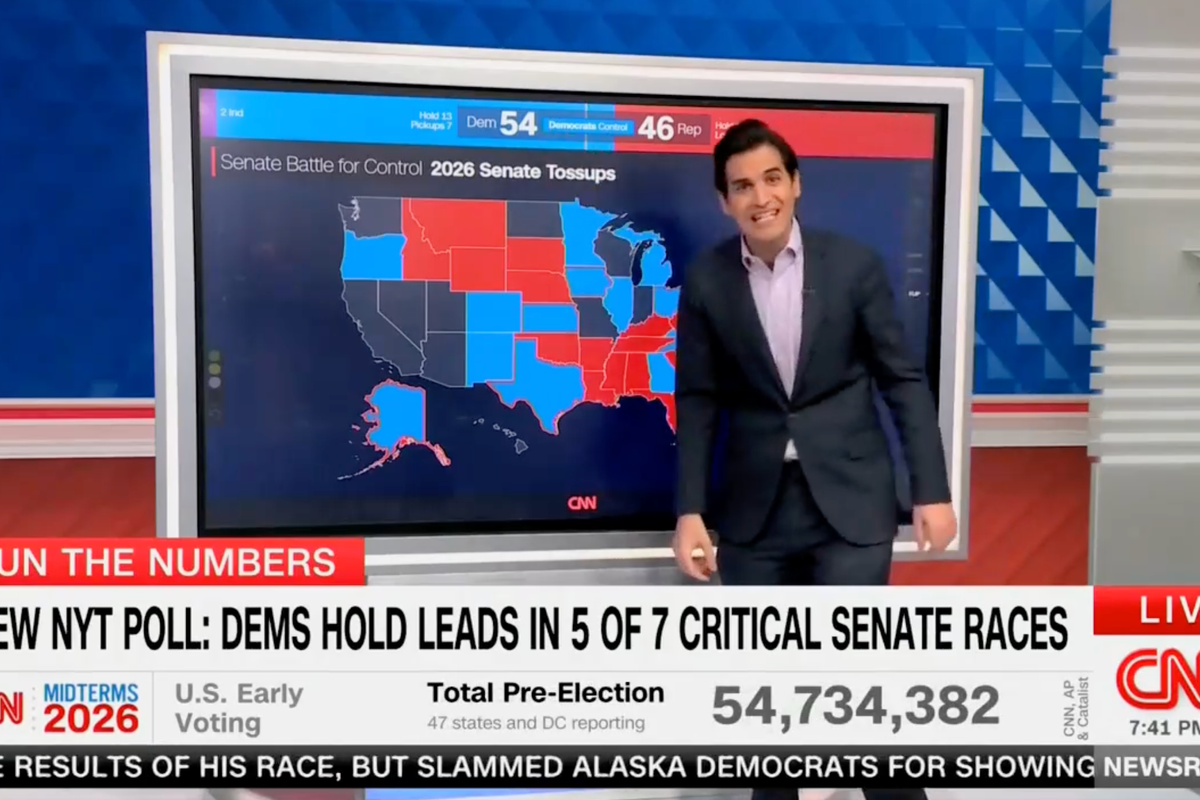
The final New York Times/Siena Poll, published on Sunday, put Democrats ahead in Senate races in Iowa, Kansas, Maine, Michigan, Ohio and Texas, all seats they ultimately won. asserted
they → publish → Iowa
In several of those states, however, Democrats outperformed their polling numbers, marking a reversal of a trend seen in recent years in which surveys have tended to underestimate support for Republicans, especially under Trump. asserted
surveys → outperform → Trump
Diana Mutz, director of the Institute for the Study of Citizens and Politics at the University of Pennsylvania, described the pre-election polls as “pretty good”, saying they had generally captured the results without any major errors. asserted
they → describe → errors
One of the biggest challenges for pollsters, she noted, was “knowing who is actually going to turn out to vote” – especially in midterm elections, which typically see a lower turnout than presidential contests. asserted
which → note → contests
Christopher Wlezien, a professor of government at the University of Texas at Austin, observed that the accuracy of the pre-election polls varied on the size of individual victories. asserted
accuracy → observe → victories
“Some were much closer than others,” he said. asserted
he → say → others
“But it was hard to do, because the big swings like this are hard to predict … asserted
swings → do → this
you have to try to capture who’s going to vote, and that’s always tricky.” asserted
that → have → ?
The polling industry has also grappled with decreasing response rates. asserted
industry → grapple → rates
In September, the Pew Research Center reported that rates had fallen from 36% in 1997 to the low single digits in recent years. asserted
rates → report → years
It also pointed to what it described as growing evidence that Republicans had become less likely than Democrats to participate. asserted
Republicans → point → Democrats
In this cycle, there was “so much focus on whether polls were underestimating Trump voters, as they have done in presidential elections when Trump has been on the ballot, that there was significantly less conversation about whether they could be underestimating Democrats, as was the case”, said Christine Matthews, president of Bellwether Research and Consulting. uncertain
Matthews → be → Research
Polls “accurately forecast dramatic shifts toward Democrats among some of the voters who were drawn to Trump in 2024”, Matthews said, referring to Hispanic and younger voters. asserted
Matthews → forecast → voters
Sean Freeder, who oversees the Public Opinion Research Lab at the University of North Florida, said he believed this was likely the first time in more than a decade or so that polls “underestimated the Democratic vote rather than the Republican vote share”. asserted
polls → oversee → vote
“I see one of the major effects here being that this might this election have increased the risk appetite for pollsters,” Freeder said. uncertain
Freeder → see → pollsters
“Pollsters have been burned in the past by reality, and specifically in one direction. asserted
Pollsters → burn → direction
Now that, all of a sudden, you have an election in which the other party was undercounted, now I think it’s possible pollsters would say: I’m going to trust my results. asserted
I → have → results
I’m going to go ahead and release it.” asserted
I → go → it
Looking ahead to 2028 and beyond, David Paleologos, director of the Suffolk University Political Research Center, said pollsters need to make sure they are not always just asking: “Are you undercounting Republicans? Are you undercounting Trump voters?” but also: “Are you undercounting Democratic voters, too?” asserted
you → look → voters
“Pollsters were wary of overestimating Democratic performance because of misses in recent years,” according to Tim Servinsky Jr, who leads the quantitative work at the Center for Survey Research at Pennsylvania State University. uncertain
who → overestimate → University
“Ultimately,” he added, “the polls got it right, but they possibly underestimated Democratic enthusiasm in places like South Carolina, Texas and Georgia, and because it wasn’t considered competitive, we saw virtually no polling in Mississippi.” uncertain
we → add → Mississippi

💬Give feedback · no sign-in needed

No sign-in needed for now. Your note is sent without a name, so it cannot be answered.

🕘History 🎫Support