Lahore’s fine particulate matter pollution remained above Pakistan’s prescribed standards for the past 12 months, including the relatively cleaner summer months, indicating that the city’s air pollution remained a year-round problem intensified by winter weather and seasonal agricultural burning, according to an analysis.
uncertain
pollution → remain → analysis
The report, titled ‘Lahore’s smog: The year-round baseline, and what changes in October ’, was released by the environmental monitoring project ‘Hamari Hawa’ on November 2 and prepared by its founder, Hammad Tariq.
asserted
what → title → founder
It drew on ground-monitoring data, satellite observations and atmospheric reanalysis to examine pollution levels and possible sources around Lahore.
asserted
It → draw → Lahore
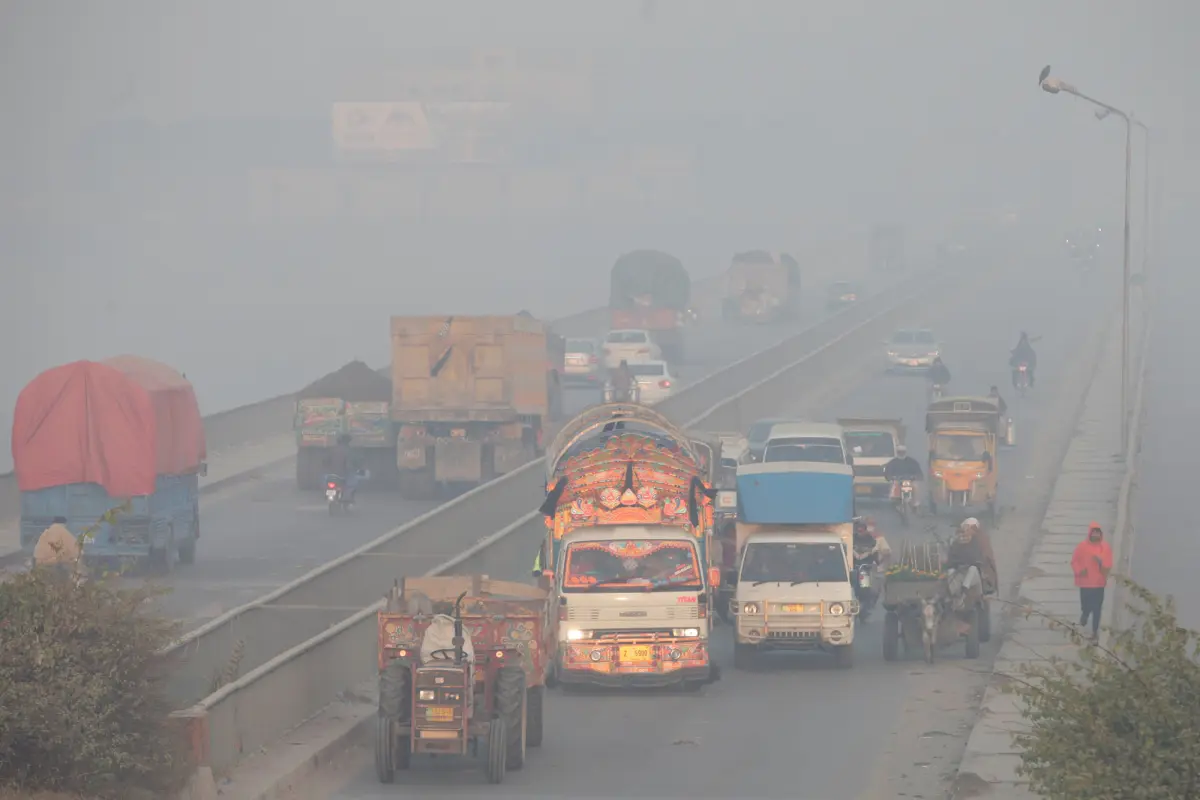
On Monday, air pollution in Lahore reached hazardous levels, with the Air Quality Index (AQI) crossing 530 and fine particulate matter (PM2.5) concentrations climbing to 343 micrograms per cubic metre.
asserted
concentrations → reach → metre
According to the analysis, Lahore’s monthly average PM2.5 concentration remained above 35 micrograms per cubic metre from October 2025 to October 2026.
uncertain
concentration → accord → October
Even in the city’s cleaner months, April to September 2026, monthly averages ranged from 40 to 59 micrograms per cubic metre, against the national annual standard of 15 micrograms per cubic metre.
asserted
averages → range → metre
The report used IQAir’s historical data, which aggregates readings from ground monitors across the city.
asserted
which → use → city
It recorded a monthly average of 40 micrograms per cubic metre in June 2026, the lowest during the period, while averages from October 2025 to February 2026 ranged between 124 and 183 micrograms per cubic metre.
asserted
averages → record → metre
October 2026 recorded 100 micrograms per cubic metre.
asserted
October → record → metre
The report cautioned that the national limit of 35 micrograms per cubic metre is a 24-hour standard, whereas the monthly figures are monthly averages.
asserted
figures → caution → metre
The comparison therefore showed the persistence of pollution but does not establish how many individual days exceeded the daily limit.
asserted
days → show → limit
The analysis identified a sharp seasonal decline in the height of the atmospheric layer into which pollutants can disperse as one of the factors behind the winter increase.
asserted
pollutants → identify → increase
Using ERA5 atmospheric reanalysis data, it estimated that the average mixing height over Lahore falls from around 830 to 860 metres in May and June to about 400 metres in October and 260 metres in November.
uncertain
height → use → November
It declined further to around 190 metres in December.
asserted
It → decline → December
A shallower mixing layer leaves less air available for pollutants to disperse, allowing concentrations near the ground to rise even without an increase in emissions, the report said.
asserted
report → leave → emissions
According to the report, in an idealised comparison where emissions and other conditions remain unchanged, reducing the mixing layer to half or a third of its earlier depth could make smoke roughly two to three times more concentrated.
uncertain
smoke → accord → depth
It also noted that Lahore’s average wind speed remained relatively light throughout the year, ranging from about 1.8 to 2.4 metres per second, and that October is not necessarily windier or calmer than September.
asserted
October → note → September
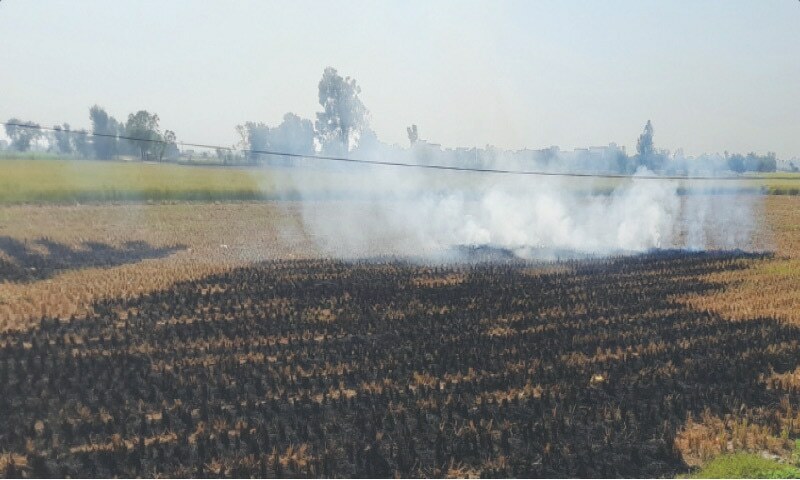
The report also examined satellite-detected heat spots on farmland around Lahore, which it classified as crop-associated detections after excluding locations near known kilns, dumps, industrial sites and towns.
asserted
it → examine → kilns
Between October 15 and November 1, 2026, satellites recorded 781 such detections within 40 kilometres of central Lahore.
asserted
satellites → record → Lahore
The analysis found that between 37 and 63pc of crop-associated satellite detections within 100 kilometres of Lahore on the Pakistani side occurred after November 1 in each of the seven seasons from 2019 to 2025.
asserted
37 → find → 2025
It said the timing was significant because agricultural burning around the rice harvest coincided with the period when the atmospheric mixing layer becomes progressively shallower.
asserted
layer → say → period
However, the report stressed that satellite heat detections do not confirm individual fires.
asserted
detections → stress → fires
A single field fire may generate several detections, while fires obscured by clouds or occurring between satellite passes may not be recorded.
uncertain
fires → generate → passes
The figures also do not measure the area burnt or the quantity of pollution released.
asserted
figures → measure → pollution
The report said pollution sources operating throughout the year include vehicle exhaust, factories, brick kilns, power plants, generators, household fuels, open rubbish burning and dust.
asserted
sources → say → exhaust
Some fine particles are also formed in the atmosphere through chemical reactions involving gases released by these sources.
asserted
particles → form → sources
Citing the Urban Unit’s 2023 Lahore emissions inventory, which was based on 2020–21 data, the report said that transport accounted for about 35pc of the city’s PM2.5 emissions, compared with 33pc from crop-residue burning, 29pc from waste burning and three per cent from industry.
asserted
transport → cite → industry
It cautioned against interpreting the frequently quoted figure of 83pc for transport as its share of PM2.5.
asserted
It → caution → PM2.5
That figure covers all pollutants by weight and is dominated by carbon monoxide, it added.
asserted
it → cover → monoxide
A separate Punjab-wide Urban Unit inventory for 2020 estimated that heavy-duty vehicles and buses produced 55pc of road vehicles’ exhaust PM2.5, compared with 18pc from motorcycles.
asserted
vehicles → estimate → motorcycles
The report said the figures are provincial estimates and should not be treated as a direct measurement of Lahore’s current pollution.
asserted
figures → say → pollution
It also identified 890 mapped brick kilns within 50 kilometres of central Lahore, including 196 within 25 kilometres.
asserted
It → identify → kilometres
The analysis further highlighted the difficulty of establishing how much pollution originates from within Pakistan and how much of it crosses the border.
asserted
much → highlight → border
It cited estimates of the cross-border contribution to Lahore’s pollution ranging from 13 to 30pc based on figures from different studies and geographical areas.
asserted
It → cite → studies
It concluded that emissions inventories, ground-level monitoring and source-apportionment studies measure different aspects of air pollution and their percentages cannot be directly compared or converted into one another.
asserted
percentages → conclude → one
The report’s central finding was that the seasonal improvement in air quality does not mean Lahore has clean air during the rest of the year.
asserted
Lahore → mean → year
It argued that persistent emissions form the baseline, while the shrinking atmospheric mixing layer and crop-residue burning add to pollution during the smog season.
asserted
layer → argue → season
Meanwhile, the Environment Protection and Climate Change Department (EPCCD) released a report stating Lahore recorded a 15pc net improvement across six major air pollutants during the first year of the Punjab government’s real-time air quality monitoring programme, while the city’s peak Air Quality Index (AQI) declined by 28pc in October 2026 compared to the corresponding period last year.
asserted
Index → release → period
The department said the improvement reflected a reduction across six major atmospheric pollutants rather than a change in a single parameter, particularly fine particulate matter (PM2.5).
asserted
improvement → say → parameter
Lahore also recorded no days in the hazardous AQI category, defined as an index above 300, during October 2026, against four such days in October 2025.
asserted
Lahore → record → October
…and 29 more, not listed.
 The Aporia