You’re reading Dispatch Markets, a weekly dive into the forces driving economic growth—and those holding it back—featuring Scott Lincicome, Kyla Scanlon, Karl Smith, Marian Tupy, and Adam Ozimek.
asserted
You → read → Lincicome
On October 21, Meta announced a 2-for-1 stock split, meaning that every Meta shareholder gets a second share for each one that they own.
asserted
they → announce → that
Companies do this all the time, usually as a way to make a stock that trades at a lofty price feel a bit more approachable.
asserted
that → do → price
A stock split doesn’t mean that everyone gets twice as rich (unfortunately!): It’s more like breaking a $20 bill into two $10s.
asserted
It → mean → 10s
But if you read the 109-page filing, you’ll find that the split wasn’t really about the share price (or pursuing acquisitions, etc., as the company stated), but was rather the end result of a monthslong negotiation between Mark Zuckerberg and his own board over two things: 1) how to fund the company’s AI investments, and 2) a California ballot measure that would impose a wealth tax on billionaires.
asserted
that → read → billionaires
The way that they settled things could change who controls Meta for years to come, and it gives us a lot of information on the future of taxation in the United States.
uncertain
it → settle → States
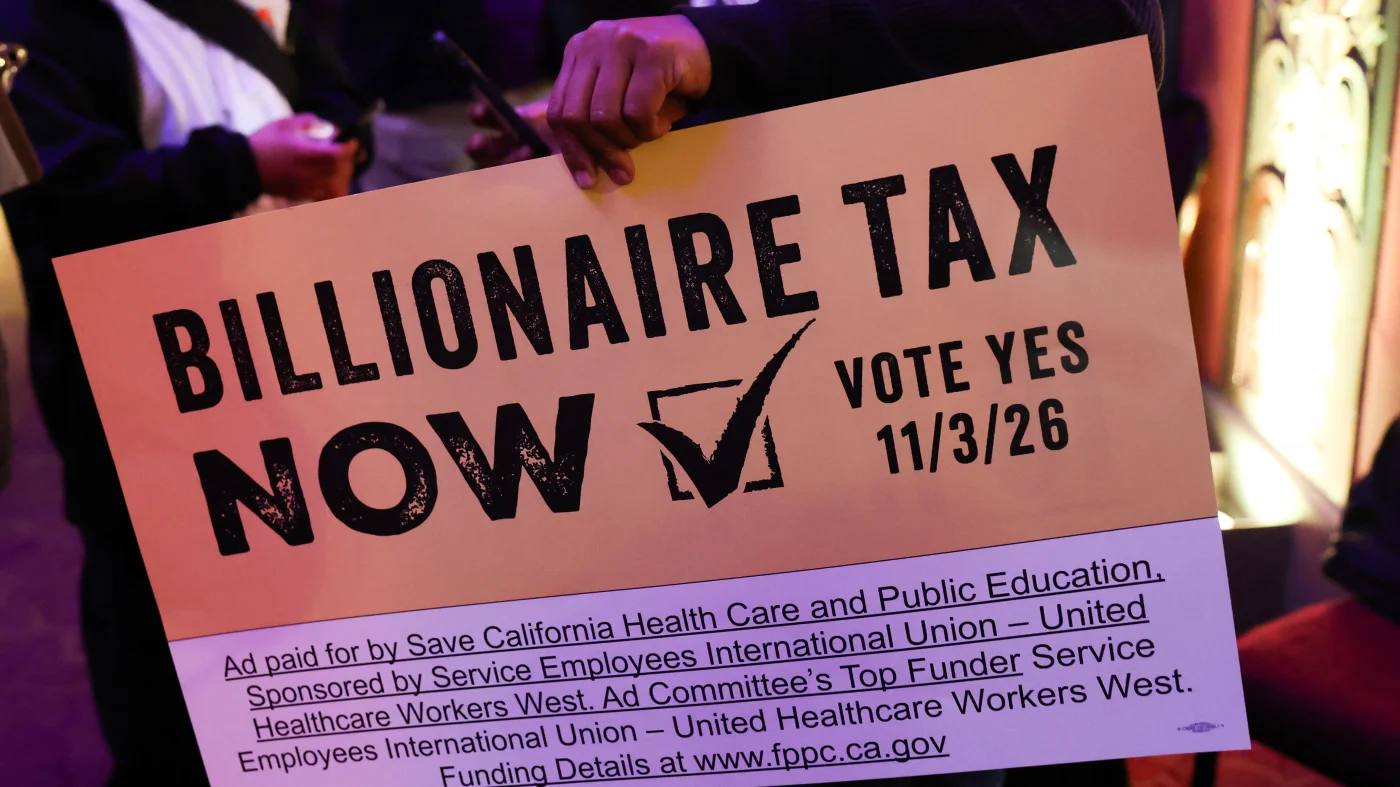
California’s Proposition 40 would impose a one-time 5 percent tax on the net worth of anyone who was a California resident on January 1, 2026, and is worth at least $1 billion when the state measures their wealth on December 31, 2026.
asserted
state → impose → December
The tax hits about 200 people.
asserted
tax → hit → people
If the measure passes—a result we might not know for weeks, though it’s currently losing by a decent margin—these 200 billionaires can pay their whole tax bill in April 2027 or spread it over five years (with interest).
uncertain
billionaires → pass → interest
The proposed tax is a tax on ownership, not on income, which makes it tricky.
asserted
it → propose → income
Most of the taxes that we pay are on money that comes in (income tax) or goes out (sales tax), and this is a wealth tax, so it’s a tax on money that’s just sitting there (like a property tax on your house).
asserted
that → pay → house
For most of the 200 people on that list, their wealth is in shares of a company they founded.
asserted
they → found → company
Zuckerberg’s net worth is somewhere around $240 billion—depending on the day and the index you use—and more than 90 percent of his wealth is Meta stock.
asserted
percent → depend → wealth
The tax on his $240 billion would come out to about $12 billion.
asserted
tax → come → billion
As the fifth-richest person in the entire world, he can certainly afford it: A tax of 5 percent on someone who owns $100,000 worth of assets would be about $5,000, for context.
asserted
who → afford → context
It’s nothing to sneeze at, but Zuckerberg would have to sell Meta shares to pay it.
asserted
Zuckerberg → ’ → it
That could end up costing him more than just the $12 billion: It also threatens his control over the company.
uncertain
It → end → company
Zuckerberg has never been willing to run a company he could lose.
uncertain
he → run → company
He has always been in charge and has always voted down one-share-one-vote proposals.
asserted
He → vote → proposals
The company’s whole structure exists seemingly to make him unfireable.
asserted
him → exist → ?
Meta has two kinds of stock—Class A is what you and I can buy, and it has one vote per share.
asserted
it → have → share
Class B gets 10 votes per share, and Zuckerberg owns most of them.
asserted
Zuckerberg → get → them
It’s how he controls Meta: He owns only about 13 percent of the company while controlling about 61 percent of the votes through super-voting shares.
asserted
He → ’ → shares
Votes matter a lot.
asserted
Votes → matter → ?
Votes pick the board, and the board, of course, picks the CEO.
asserted
board → pick → CEO
If you hold the majority of the votes, no one can fire you, ever.
asserted
one → hold → you
Zuckerberg has been untouchable since Facebook went public.
asserted
Facebook → go → ?
And he wants to keep it that way.
asserted
he → want → it
The Meta board has had a problem for a while.
asserted
board → have → while
In February, it created a special committee to figure out how to pay for the AI buildout.
asserted
it → create → buildout
Management had presented three forecasts, and in each, Meta needed to raise hundreds of billions of dollars, starting within months.
asserted
Meta → present → months
The obvious way to raise billions is to sell stock.
asserted
way → raise → stock
But every new voting share created dilutes Zuckerberg’s majority (if there are 100 shares and you own 10, you own 10 percent, but if the company sells 100 more to raise money, you would now own 5 percent), and he told the board he would not support an equity raise that did so.
asserted
that → create → raise
On July 8, according to the recent filing about the new share class, Zuckerberg told the chair of a committee that paying Prop 40 could force him to sell enough Class B to drop his voting stake to about 53 percent.
uncertain
paying → accord → percent
But one more tax hike or big AI fundraise could push him under it.
uncertain
hike → push → it
Within weeks, his lawyers were saying he was considering leaving California.
asserted
he → say → California
Leaving wouldn’t have changed much, as Prop 40 would apply to anyone who lived in California on January 1, 2026.
asserted
who → leave → January
What a move would have done is spared him California’s 13.3 percent income tax on shares he’d have to sell to pay the Prop 40 tax, and protect him if the “one-time” tax turned out not to be one-time.
asserted
tax → do → him
Nothing really happened.
asserted
Nothing → happen → ?
A few months later, Zuckerberg said he was listing his Palo Alto house in four days and reminded everyone that such a listing is public.
asserted
listing → say → everyone
…and 108 more, not listed.
 The Aporia