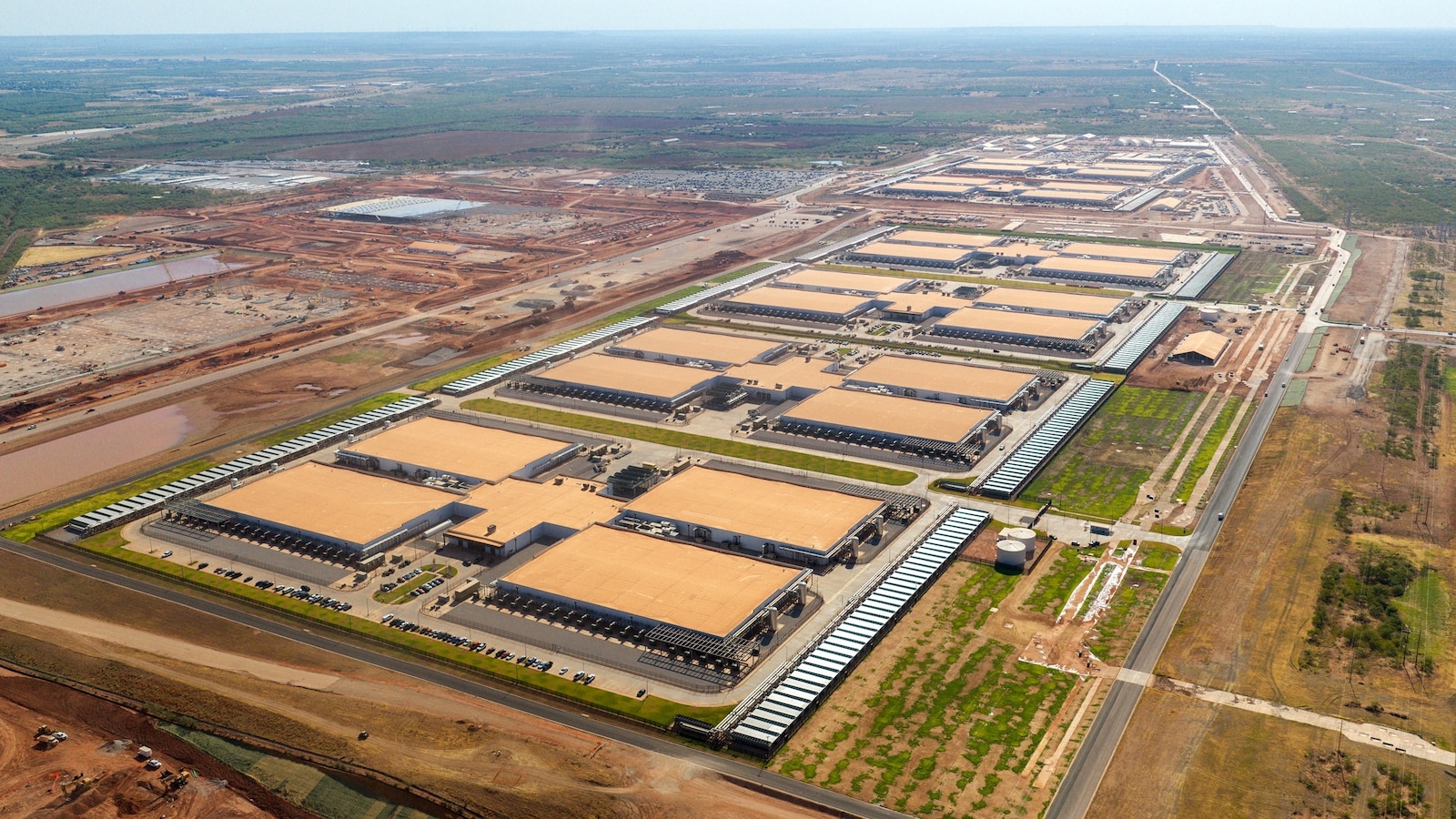
Photo via BBC News

Did a data centre revolt affect the US mid-term election results?

Read the original at BBC News ↗
Cite

Chu, B. (2026, November 6). Did a data centre revolt affect the US mid-term election results? BBC News. https://www.bbc.co.uk/news/articles/crvg9yyz5437o?at_medium=RSS&at_campaign=rss

Dated from the outlet's own feed. Check the original for its byline.

BBC News · collected 2026-11-06 · by Ben Chu

Quick Summary

A recent US midterms voter poll suggests that data centers were a significant issue for many voters, with 56% saying they were crucial or major factors in their vote and 76% opposing new constructions locally. The poll highlights growing public opposition to the expansion of artificial intelligence infrastructure, particularly among those who voted Democrat. Although other issues like government corruption and cost of living were more prominent concerns, three Senate seats flipped to Democrats in states with high concentrations of data centers, indicating potential voter influence over these projects.
Written by AI on 2026-11-06, from this article's own text only (the story summary below draws on all the coverage).

AI analysis

Story summary

In the 2026 US midterm elections, voters across 11 states rejected data center projects through ballot measures and local referendums, signaling a significant setback for the artificial intelligence (AI) industry's expansion plans. Despite initial concerns about the impact of data centers on election outcomes, the results showed that many voters were motivated by opposition to AI infrastructure development. In Ohio, 21 out of 41 ballot measures related to data center bans or moratoriums passed, reflecting a widespread public backlash against large-scale AI projects. Additionally, in Texas, Republican Governor Greg Abbott had already suspended approvals for new data centers, and the election results suggest that this trend will continue with Democratic victories potentially leading to stricter regulations on AI development across up to 30% of planned US facilities.

Written for “Voters Reject Data Centers Midterms” on 2026-11-06, grounded in this article and the 28 other(s) covering the same event.
Why this leaning score
The article's own words the score was based on. Each is quoted verbatim and was checked against the article text before being stored, so you can find it in the original.
Reading Leans left (beta estimate) Confidence high
Leaning: leans left for article 133753 (high confidence, 2 verified quotes) · logged 2026-11-06

Story

📰 Voters Reject Data Centers Midterms
Politics · 29 article(s) covering the same event. Compare every outlet's account →

Compared with similar articles

This article reads leans left and hedges 32% of its claims. Each row says how that neighbour differs.
The Straits Times
⚖️ Leans left Hedges 2 of 26 claims Outlet record 66/100
“Article A reports on the voting results of one specific town regarding data centers, while Article B discusses a broader voter poll about the impact of data centers in general during the US midterms.”
Mother Jones
⚖️ Leans strongly left further left than this Hedges 3 of 34 claims Outlet record 60/100
“The articles discuss different aspects of voter sentiment and ballot measures related to data centers but do not describe the same specific incident or outcome.”
ABC News (US)
⚖️ Leans left Hedges 3 of 31 claims Outlet record 67/100
“The articles discuss different aspects of voter sentiment towards data centers but do not describe the same specific event.”
Semafor
⚖️ Leans left Hedges 2 of 3 claims Outlet record 68/100
“Article A discusses political opposition to data centers during a gubernatorial race and its potential impact on future policies, while Article B talks about how data center issues affected US midterm election results based on voter polls.”
Al Jazeera
⚖️ Leans left Hedges 9 of 53 claims Outlet record 60/100
“Article A describes a protest against data centers outside Oakland City Hall, while Article B discusses a voter poll about data centers' influence on election outcomes.”
The Straits Times
⚖️ Leans strongly left further left than this Hedges 4 of 38 claims Outlet record 66/100
“Article A discusses the political shift due to Gina Hinojosa's election as governor and its impact on AI data centre development, while Article B focuses on a voter poll indicating that data centres were a significant factor in shaping public opinion during the US midterm elections.”
TIME
⚖️ Leans strongly left further left than this Hedges 10 of 70 claims Outlet record 59/100
Semafor
⚖️ Leans left Hedges 0 of 7 claims Outlet record 68/100
“Article A reports on the specific ballot measures and voter decisions against data centers, while Article B discusses a poll about how data centers influenced voting behavior in general.”
Reason
Hedges 4 of 32 claims Outlet record 67/100
“The articles discuss similar themes related to data centers and voter attitudes but describe different aspects of the overall issue. Article A focuses on ballot measures in Ohio and other states, while Article B discusses a US midterms voter poll's findings.”
404 Media
⚖️ Leans strongly left further left than this Hedges 1 of 40 claims Outlet record 95/100
“Article A reports on the actual election results regarding data centers, while Article B discusses a voter poll and its implications for the election outcome.”
How this article was measured signals, leaning charts, publisher record, byline, topics and claims

Signals How these are calculated →

Claims extracted
19
sentences that state something as happening or true
Uncertain
32%
6 of 19 hedged ("reportedly", "may", "according to")
Leaning
Leans left
of the writing, not the subject · beta estimate
Publisher signals
66/100
BBC News's corrections and hedging, across everything collected from it. Not a measure of accuracy.
Outlets on this story
29
Politics
Same framing elsewhere
1
articles that frame the event the way this one does
Analyzed 2026-11-06 · how these are computed

How this is being covered How these are calculated →

Article leaning vs. publisher reliability
Source leaning vs. consistency

Publisher

BBC News · 5236 article(s) · 7 correction(s) detected
Running correction rate · 7 correction(s)

Who wrote this

Ben Chu
7 article(s) here · 1 carrying a prediction
🔮 - Published A US midterms voter poll has suggested data centres were a highly motivating issue for many Americans, leading some to argue public backlash against the artificial intelligence (AI) infrastructure construction boom might have helped shape the election outcome. BBC Verify has looked at its role in the campaign and examined the potential consequences for the AI industry.
🔮 Their political opponents have criticised them for a lack of detail on welfare reform in Wednesday's Budget, accusing the government of delaying difficult decisions over cuts. Official forecasts released alongside the Budget indicate welfare spending is going to increase by £79bn in cash terms over the next few years.
🔮 Economists think the buffer might have halved in the last six months from around £24bn to as low as £11bn, in part because of rising interest rates the government has been paying to borrow money from private investors.
🔮 The US economy is also being helped by an AI investment boom, and could falter if that spending were to dry up. So how does all this feel for the average American?
🔮 - Published Conservative leader Kemi Badenoch has announced she will overhaul inheritance tax if her party wins the next general election.
🔮 There are growing concerns of another inflationary shock on the world economy, which could cause interest rates to rise, increase mortgage costs and raise the price of almost everything in the shops including food.
🔮 In a speech at a care home on Wednesday he announced that cross-party talks involving the Conservatives and Liberal Democrats would start later.
Also by Ben Chu
Nothing else under this byline is closely related to this article, so these are simply their most recent.
All 7 articles by Ben Chu →

Topics

Americans Democrats Ohio Senate Texas

Subjects

Senate ORG · 4× Democrats NORP · 3× Texas GPE · 3× Americans NORP · 2× BBC Verify ORG · 2× Ohio GPE · 2× BBC ORG · 1× Democrat NORP · 1× Iowa GPE · 1× Pew Research ORG · 1×

Narrative

Analysts from the consultancy Oxford Economics have said there are also strong economic incentives for politicians to avoid policies that would severely disrupt data centre construction, pointing to tax revenue and construction jobs they bring. Deepak Surana of the Futurum Group, a technology research firm, said he expected there would ultimately be "a negotiation, not a moratorium" from Texas state leaders on data centres to ensure no negative impact on residents' energy and water bills. OpenAI, which has a data centre in Texas and under-construction projects in Ohio, pledged to ensure it fully paid for its own electricity on Thursday, external - one day after the midterm results.
framing: mixed · carried by 1 article(s) · first seen 2026-11-06
🔮 - Published A US midterms voter poll has suggested data centres were a highly motivating issue for many Americans, leading some to argue public backlash against the artificial intelligence (AI) infrastructure construction boom might have helped shape the election outcome. BBC Verify has looked at its role in the campaign and examined the potential consequences for the AI industry.

Claims (19 extracted, 6 hedged)

- Published A US midterms voter poll has suggested data centres were a highly motivating issue for many Americans, leading some to argue public backlash against the artificial intelligence (AI) infrastructure construction boom might have helped shape the election outcome. BBC Verify has looked at its role in the campaign and examined the potential consequences for the AI industry. uncertain
Verify → publish → industry
What did the voter poll suggest? asserted
poll → suggest → What
The poll for AP and a consortium of news organisations found 56% of surveyed voters said data centres were a "crucial or major" factor in their vote, while 76% said they would oppose the construction of a new data centre in their community. asserted
they → find → community
The hostile sentiment was considerably stronger among those who said they voted Democrat at this election. asserted
they → say → election
This follows other recent Pew Research polling, external which suggested about half of Americans think data centres are "mostly bad" for the environment, home energy costs and quality of life, a big deterioration in favourability since January. uncertain
centres → follow → January
The congressional voter poll results certainly suggest a remarkable degree of salience for a subject which likely would not have been on most Americans' radar five years ago. asserted
which → suggest → radar
However, it is some way behind several key issues people considered "crucial or major factors" in their vote, including government corruption (90%) and the cost of living (89%). asserted
people → consider → living
Did the AI backlash affect Senate races? asserted
backlash → affect → races
Three of the Senate seats flipped by the Democrats have significantly more data centres, external, Texas (595), Ohio (258) and Iowa (117), than the median of 55 across all 50 states. asserted
Three → flip → states
And Texas alone has 31 ongoing data centre construction projects, the most of any state, external. But other factors would also have been motivating voters in these states, as elsewhere. asserted
factors → have → states
suggests states which swung to the Democrats either followed the national trend over data centre concerns, or seemed less concerned. uncertain
which → suggest → concerns
So we can't say how many votes or Senate seats were directly delivered by data centre opposition. But it's notable that three key states in the US AI build-out, Texas, Georgia and Ohio, all elected Democrats as senators and governors who called for tighter regulation on data centres in one form or another. asserted
who → say → form
These proposals include: temporary bans on construction ending tax breaks requirements to fully cover their own energy and water infrastructure costs mandates to use unionised construction workers stricter environmental and transparency safeguards local rights to veto What could the election results mean for the future of the AI boom? The US economy has been heavily supported in recent years by massive corporate investments in AI, external, including for data centre construction. uncertain
economy → include → construction
Official data, external shows inflation-adjusted monthly spending on building data centres, excluding the IT hardware to go into them, in August 2026 was $5bn (£4.2bn) - five times higher than in 2023. asserted
spending → show → 2023
Analysis by Columbia Business School, external suggests AI infrastructure investment in the US is currently larger as a share of the overall economy than spending on new railways was at the height of that boom in the 19th Century. uncertain
spending → suggest → Century
Cori Crider, executive director of the Future of Tech Institute, a European think tank, told BBC Verify the industry should anticipate that new state leaders will put conditions on or "even stop runaway data centre build". asserted
leaders → tell → build
Seema Shah, from global investment firm Principal Asset Management, said requirements for developers to pay for additional investment in the electricity grid, meet tougher standards over their usage of resources like water, or give up tax incentives could "raise development costs and slow new supply". However, Heather West from the Eurasia Group consultancy said temporary bans on construction and new regulations might delay the data centre roll out, but would not stop it entirely. uncertain
bans → say → it
She said "projects already permitted or under construction will largely proceed", but delays would affect the "next wave" of building through "local fights, slower permitting, and pressure to make data centres pay for their own power". asserted
centres → say → power
Analysts from the consultancy Oxford Economics have said there are also strong economic incentives for politicians to avoid policies that would severely disrupt data centre construction, pointing to tax revenue and construction jobs they bring. Deepak Surana of the Futurum Group, a technology research firm, said he expected there would ultimately be "a negotiation, not a moratorium" from Texas state leaders on data centres to ensure no negative impact on residents' energy and water bills. OpenAI, which has a data centre in Texas and under-construction projects in Ohio, pledged to ensure it fully paid for its own electricity on Thursday, external - one day after the midterm results. asserted
it → say → results

💬Give feedback · no sign-in needed

No sign-in needed for now. Your note is sent without a name, so it cannot be answered.

🕘History 🎫Support