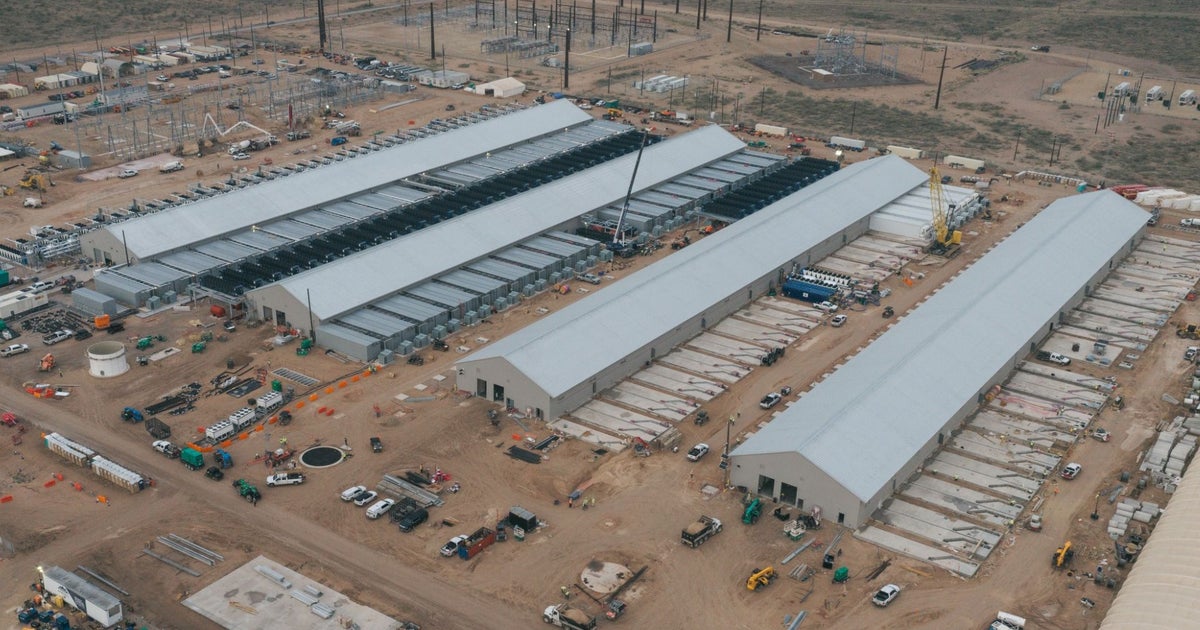
Photo via Mother Jones

Midterm Rout for Data Centers: Voters in Nearly 40 Towns Rejected Projects

Read the original at Mother Jones ↗
Cite

Mahoney, A. (2026, November 5). Midterm Rout for Data Centers: Voters in Nearly 40 Towns Rejected Projects. Mother Jones. https://www.motherjones.com/environment/2026/11/midterm-rout-rejected-data-centers-ballot-initiatives-results/

Dated from the outlet's own feed. Check the original for its byline.

Mother Jones · collected 2026-11-05 · by Adam Mahoney

Quick Summary

Voters across ten states rejected data center projects in nearly 40 towns during recent midterms, with only one measure passing in Harwood, North Dakota. Nationally, 77 percent of voters voted against data center development, largely driven by concerns over environmental justice and rising utility costs. In places like Joliet, Illinois, where communities have long fought industrial pollution, nearly 80 percent restricted new data centers. The article highlights the growing opposition to data centers as part of a broader struggle for environmental justice, with activists demanding more community control over industrial development.
Written by AI on 2026-11-05, from this article's own text only (the story summary below draws on all the coverage).

AI analysis

Story summary

The U.S. midterm elections on November 3, 2026, saw Republican Ken Paxton narrowly defeat Democrat James Talarico in the closely watched Texas Senate race, despite early voting trends favoring Democrats and a record-breaking \$500 million spent on the campaign. This outcome could determine control of the U.S. Senate for the remainder of Donald Trump’s presidency. Voters also rejected nearly 40 data center projects across multiple states, reflecting growing opposition to such facilities amid environmental concerns raised by Black-led groups like Memphis Community Against Pollution and Young, Gifted & Green in Tennessee.

Written for “Elon Musk's Midterm Losses” on 2026-11-05, grounded in this article and the 115 other(s) covering the same event.
Why this leaning score
The article's own words the score was based on. Each is quoted verbatim and was checked against the article text before being stored, so you can find it in the original.
Reading Leans strongly left (beta estimate) Confidence high 1 quote(s) discarded as not found in the article
Leaning: leans strongly left for article 131431 (high confidence, 3 verified quotes) · logged 2026-11-05

Story

📰 Elon Musk's Midterm Losses
Politics · 116 article(s) covering the same event. Compare every outlet's account →

Compared with similar articles

This article reads leans strongly left and hedges 9% of its claims. Each row says how that neighbour differs.
Semafor
⚖️ Leans left further right than this Hedges 0 of 7 claims Outlet record 59/100
Washington Examiner
⚖️ Leans left further right than this Hedges 0 of 2 claims Outlet record 69/100
404 Media
⚖️ Leans strongly left Hedges 1 of 40 claims Outlet record 95/100
CBS News
⚖️ Leans left further right than this Hedges 6 of 27 claims Outlet record 69/100
CBS News
⚖️ Leans left further right than this Hedges 6 of 27 claims Outlet record 69/100
The Straits Times
⚖️ Leans left further right than this Hedges 2 of 26 claims Outlet record 66/100
The Guardian
⚖️ Leans left further right than this Hedges 1 of 20 claims Outlet record 66/100
ABC News (AU)
⚖️ Leans left further right than this Hedges 4 of 50 claims Outlet record 67/100
CBS News
⚖️ Leans left further right than this Hedges 0 of 1 claims Outlet record 69/100
“While both articles discuss data center-related ballot measures in midterm elections, they do not describe the exact same incident or outcome.”
Reason
⚖️ Leans left further right than this Hedges 1 of 23 claims Outlet record 67/100
“Article A discusses the general impact of data center opposition on the election, while Article B provides specific details about ballot measures voted on in various towns.”
How this article was measured signals, leaning charts, publisher record, byline, topics and claims

Signals How these are calculated →

Claims extracted
34
sentences that state something as happening or true
Uncertain
9%
3 of 34 hedged ("reportedly", "may", "according to")
Leaning
Leans strongly left
of the writing, not the subject · beta estimate
Publisher signals
60/100
Mother Jones's corrections and hedging, across everything collected from it. Not a measure of accuracy.
Outlets on this story
116
Politics
Same framing elsewhere
1
articles that frame the event the way this one does
Analyzed 2026-11-05 · how these are computed

How this is being covered How these are calculated →

Article leaning vs. publisher reliability
Source leaning vs. consistency

Publisher

Mother Jones · 492 article(s) · 1 correction(s) detected
Running correction rate · 1 correction(s)

Who wrote this

Adam Mahoney
3 article(s) here · 1 carrying a prediction
🔮 The national opposition, made clear on November 3, could advance a demand Black environmental activists have pressed for generations: not simply protection from pollution, but a meaningful say in whether the facilities producing it get built in their communities at all.
🔮 Will electricity bills rise? How much water will it use?
🔮 California lawmakers have passed AB 1661, which would steer $5 million collected from penalized oil wells in Inglewood into direct cash aid for 1,000 nearby households with qualifying respiratory or reproductive health impacts.
Also by Adam Mahoney
Nothing else under this byline is closely related to this article, so these are simply their most recent.

Topics

Black Capital B Climate Desk Florida Illinois

Subjects

Black NORP · 4× Florida GPE · 2× Illinois GPE · 2× Republicans NORP · 2× Trump PERSON · 2× California GPE · 1× Capital B ORG · 1× Climate Desk ORG · 1× Harwood GPE · 1× North Dakota GPE · 1×

Narrative

Largely, the current struggle against data centers has roots in Memphis, Tennessee, where Black-led groups such as Memphis Community Against Pollution and Young, Gifted & Green challenged the pollution and lack of public oversight surrounding Elon Musk’s xAI facility.
framing: assertive · carried by 1 article(s) · first seen 2026-11-05
🔮 The national opposition, made clear on November 3, could advance a demand Black environmental activists have pressed for generations: not simply protection from pollution, but a meaningful say in whether the facilities producing it get built in their communities at all.
2026-11-05 · Mother Jones
Midterm Rout for Data Centers: Voters in Nearly 40 Towns Rejected Projects · assertive framing

Claims (34 extracted, 3 hedged)

This story was originally published by Capital B and is reproduced here as part of the Climate Desk collaboration. asserted
story → publish → collaboration
Silicon Valley wants communities across the country to make room for its data centers. asserted
communities → want → centers
On Tuesday, those communities had their say. asserted
communities → have → say
Voters considered nearly 40 data center-related ballot measures across 10 states, turning the midterms into a sprawling referendum shifting the technology industry’s demand for power into a test of political power. asserted
Voters → consider → power
Of the ballot measures, just one—in Harwood, North Dakota—counted as a victory for the tech industry. asserted
one → count → industry
In the other measures, which were voted on in California, Florida, Illinois, Kansas, Maine, Nevada, New Jersey, Ohio, and Wisconsin, voters either banned data center construction or halted the development of all planned facilities in their municipalities. asserted
voters → vote → municipalities
When Jamil Davis, an organizer with Black Voters Matter in northern Florida, knocked on doors this fall, he saw this growing outrage against data centers. asserted
he → knock → centers
Before asking people to vote, he said, organizers have to listen to the problems shaping their lives. asserted
organizers → ask → lives
“And almost every time, utility bills, data centers, [are] the key things that people bring up,” he said. asserted
he → bring → that
The fight over data centers belongs to a much older struggle against environmental racism: Who gets the benefits of industrial development, and who is left to live with its burdens? asserted
who → belong → burdens
Data centers, which are connected to a slew of environmental issues like water depletion and air pollution, are more likely to be located in communities of color. asserted
which → connect → color
Largely, the current struggle against data centers has roots in Memphis, Tennessee, where Black-led groups such as Memphis Community Against Pollution and Young, Gifted & Green challenged the pollution and lack of public oversight surrounding Elon Musk’s xAI facility. asserted
groups → have → facility
The national opposition, made clear on November 3, could advance a demand Black environmental activists have pressed for generations: not simply protection from pollution, but a meaningful say in whether the facilities producing it get built in their communities at all. uncertain
facilities → make → communities
“They’re choosing marginalized and predominantly Black communities to build data centers, and it is an environmental justice issue,” David explained. asserted
David → choose → centers
The growth of data centers, which are needed for virtually every internet service from scrolling social media to streaming TV and using ChatGPT, has also contributed to skyrocketing utility prices nationwide. asserted
which → need → prices
More than half of the ballot initiatives were first introduced by citizen initiatives rather than elected officials. asserted
half → introduce → initiatives
In all, 77 percent of voters rejected data center development. asserted
percent → reject → development
In Joliet, Illinois, where Black and Latino residents have long fought against pollution from the warehouse and trucking industry, nearly 80 percent of voters moved to restrict data centers. asserted
percent → fight → centers
A nationwide poll Wednesday found that more than half of midterm voters considered AI and data centers to be a major or crucial factor in their vote. asserted
AI → find → vote
The results of the measures were also a rebuke of President Donald Trump, some political analysts said. asserted
analysts → say → Trump
Trump has vowed to make America the “AI capital of the world.” asserted
America → vow → world
Even a majority of Republicans oppose new data center construction in their communities. asserted
majority → oppose → communities
Elizabeth Bast, executive director at Oil Change Action, said voters sent a “clear message.” asserted
voters → say → message
“They’re fed up with Trump’s agenda of fossil fuel giveaways, illegal and immoral wars, and unchecked data center expansion that makes their lives more expensive while lining the pockets of Big Oil and Big Tech,” she said. asserted
she → feed → Oil
“This incoming Congress must listen to the people who elected it.” asserted
who → listen → it
Tech corporations and their allies outspent the local citizen campaigns by approximately 100 to 1 nationwide in an attempt to block these measures, according to the group Data Center Resistance. uncertain
corporations → outspent → group
Elon Musk alone spent $474 million backing Republicans, conservative groups, and pro-AI candidates during the 2026 US midterm elections, the largest amount ever contributed by an individual donor in a single election cycle. asserted
Musk → spend → cycle
In California, Google, Meta, and other Big Tech interests account for at least 20 percent of all the contributions on the state’s legislative races, according to a CalMatters analysis of campaign finance disclosures. uncertain
Google → account → disclosures
“This is nothing short of a political earthquake,” said Ed FitzGerald, director of Data Center Resistance. asserted
FitzGerald → say → Resistance
“They had the money, but we had the people.” asserted
we → have → people
Across the South, tech companies have attempted to operate in secrecy by entering non-disclosure agreements with elected officials, shielding citizens from learning important details about these facilities. asserted
companies → attempt → facilities
In Alabama, the League of Conservation Voters invested $300,000 in digital ads targeting Rhett Marques, a Republican supporter of data centers, focusing on how the data center boom has directly increased utility bills for Alabamians. asserted
boom → invest → Alabamians
Marques went on to lose to US Rep. Shomari Figures, a Black politician whose position was under threat because of the weakening of the Voting Rights Act. asserted
position → go → Act
“This win is a huge victory, especially for Black communities in Alabama whose voice was attempted to be silenced by the racial gerrymandering efforts of the state legislature and Supreme Court earlier this year,” LCV President Pete Maysmith said. asserted
Maysmith → attempt → legislature

💬Give feedback · no sign-in needed

No sign-in needed for now. Your note is sent without a name, so it cannot be answered.

🕘History 🎫Support