Photo via The Guardian

Friday briefing: ​After a week of disruption, is living with threats our new normal?

Read the original at The Guardian ↗
Cite

Brooks, L. (2026, November 6). Friday briefing: ​After a week of disruption, is living with threats our new normal? The Guardian. https://www.theguardian.com/world/2026/nov/06/friday-briefing-after-a-week-of-disruption-is-living-with-threats-our-new-normal

Dated from the outlet's own feed. Check the original for its byline.

The Guardian · collected 2026-11-06 · by Libby Brooks

Quick Summary

This article discusses widespread hoax bomb threats across Europe affecting at least 25 commercial flights and causing several emergency landings. It also mentions cyber-attacks targeting supermarket refrigerators and blood storage facilities in multiple countries. The piece explores the context of these disruptions within a grey zone characterized by escalating global conflicts and heightened national security threats, questioning whether constant vigilance has become the new norm.
Written by AI on 2026-11-06, from this article's own text only (the story summary below draws on all the coverage).

AI analysis

Story summary

On November 5, 2026, a new wave of bomb hoaxes disrupted dozens of passenger flights across Europe, marking the third major outbreak in less than a week. The threats prompted unplanned landings and fighter jet escorts for some planes. Affected airlines included Ryanair, LOT Polish Airlines, and Scandinavian carriers. In response to earlier threats on November 3, two Ryanair flights from Lisbon and Dublin, as well as other European routes, were forced into emergency landings after receiving bomb threats. Security experts speculate that the incidents could be either individuals acting out of personal grievances or more coordinated "hybrid attacks" aimed at destabilizing Europe amid geopolitical tensions.

Written for “Bomb Threats Disrupt European Flights” on 2026-11-06, grounded in this article and the 52 other(s) covering the same event.

Story

📰 Bomb Threats Disrupt European Flights
Crime & Law · 53 article(s) covering the same event. Compare every outlet's account →

Compared with similar articles

This article reads leans left and hedges 6% of its claims. Each row says how that neighbour differs.
Semafor
Hedges 1 of 4 claims Outlet record 68/100
Global News
Hedges 1 of 41 claims Outlet record 63/100
“Article A reports on bomb threats to flights specifically on Thursday, while Article B discusses a broader week of disruptions including multiple days and additional types of attacks.”
Dawn
⚖️ Leans strongly left further left than this Hedges 1 of 17 claims Outlet record 72/100
The Straits Times
Hedges 4 of 43 claims Outlet record 66/100
The Hindu
Hedges 0 of 2 claims Outlet record 78/100
“Article A describes cyberattacks on supermarkets in multiple European countries, while Article B mentions a broader context of chaos including hoax bomb threats and an additional attack on cold storage facilities for blood services.”
CBS News
Hedges 12 of 30 claims Outlet record 69/100
“While both articles discuss cyberattacks on refrigeration systems in grocery stores and blood storage facilities, ARTICLE A describes incidents primarily in October and November across Europe with a focus on France, while ARTICLE B mentions multiple days of disruptions including bomb threats and affects Belgium, Sweden, the UK, and France. These are likely related but distinct events.”
The Straits Times
Hedges 4 of 20 claims Outlet record 66/100
“While both articles discuss bomb threats against flights in Europe, Article B covers additional cyber-attacks on supermarket fridges and blood storage facilities, indicating a different but related set of events.”
The Straits Times
Hedges 2 of 16 claims Outlet record 66/100
“While both articles mention cyberattacks on supermarket fridges in multiple countries, Article A focuses specifically on the cybersecurity chief's comments about the attacks being a sign of future threats, whereas Article B provides an overview of disruptions including bomb threats and extends to mentioning cold storage facilities for blood services.”
Daily Mail
Hedges 4 of 21 claims Outlet record 69/100
“Article A focuses on a specific attack in France that warned about potential risks for UK blood banks, while Article B describes multiple cyber attacks across various countries including an incident with French blood service storage but does not specifically mention the same exact event.”
The Guardian
Hedges 0 of 1 claims Outlet record 66/100
“Article A describes the EU condemning disruptions in food supply chains, while Article B covers multiple incidents including cyber-attacks on supermarket fridges and blood service cold storage facilities, suggesting different but related events or a broader context of disruptions.”
How this article was measured signals, leaning charts, publisher record, byline, topics and claims

Signals How these are calculated →

Claims extracted
98
sentences that state something as happening or true
Uncertain
6%
6 of 98 hedged ("reportedly", "may", "according to")
Leaning
Leans left
of the writing, not the subject · beta estimate
Publisher signals
66/100
The Guardian's corrections and hedging, across everything collected from it. Not a measure of accuracy.
Outlets on this story
53
Crime & Law
Same framing elsewhere
1
articles that frame the event the way this one does
Analyzed 2026-11-06 · how these are computed

How this is being covered How these are calculated →

Article leaning vs. publisher reliability
Source leaning vs. consistency

Publisher

The Guardian · 3088 article(s) · 6 correction(s) detected
Running correction rate · 6 correction(s)

Who wrote this

Libby Brooks
12 article(s) here · 1 carrying a prediction
🔮 Donald Trump signed a proclamation that he says will prevent future administrations from changing his design of the Oval Office and Cabinet Room, spaces he declared as national monuments that should be preserved.
🔮 John Healey has backed away from cutting the cost of welfare this parliament, amid dire warnings his first budget could lead to brutal spending cuts because of a £28bn shortfall in public finances.
🔮 I spoke to the Guardian’s Latin America correspondent Tom Phillips, who was in São Paulo at the Workers’ party vote count, to find out what the result means and what may lie ahead.
🔮 Emmanuel Macron has said “illegitimate” demonstrations will be banned over the coming days as France seeks to get a grip on civil unrest after some of its worst street violence in years.
🔮 For our prime minister, it’s “one of the most annoying things on public transport”: maybe you’re trying to work, or read, or you’ve finally got your kid to sleep, when someone starts blasting sound from their phone at full volume. As I sign off this First Edition en route from Glasgow to London (the things I’ve heard on this commute, against my will, I’ll save for another newsletter), I’m hoping everyone has been paying attention.
🔮 Kemi Badenoch has announced that the Conservatives would abolish inheritance tax on family homes if elected, prompting criticism that she is prioritising cutting taxes for the rich.
🔮 While Green members celebrated, or mourned, the motion passing, some have questioned its purpose, arguing it will distract from what’s important – keeping eyes on Gaza and holding the Israeli government to account – instead igniting a divisive discussion about ideology that will only harm the party. Today, I spoke to Guardian columnist Jonathan Freedland, to understand how the vote has been received by many Jewish people beyond the Greens, and senior political correspondent Peter Walker, who reported on the fallout of the vote at the party conference in Brighton at the weekend.
🔮 Later today, Donald Trump will be in the state of Nebraska to rev up supporters as he kicks off a campaign blitz of rallies ahead of the midterm elections on 3 November.
🔮 When prompted, AI chat bots will edit images to remove the hijabs from Muslim women, a violation of one of the world’s most common and visible expressions of faith.
🔮 Already there’s a sense of what action under Burnham might look like.
Also by Libby Brooks
Nothing else under this byline is closely related to this article, so these are simply their most recent.
All 12 articles by Libby Brooks →

Topics

Belgium France Guardian Sweden Washington

Subjects

Dan ORG · 2× Guardian ORG · 2× Ukraine GPE · 2× Andy Burnham PERSON · 1× Belgium GPE · 1× Dan Sabbagh PERSON · 1× Donald Trump PERSON · 1× France GPE · 1× Russell Brand PERSON · 1× Sweden GPE · 1×

Narrative

While a key element of a cyber-attack is the psychological impact, that can be hard to square with the UK government’s own Be Ready initiative, which advises us to off-set threats of hybrid warfare and hostile state sabotage by stockpiling 72 hours’ worth of emergency supplies – including water, beans and Twiglets (if you’re Andy Burnham).
framing: assertive · carried by 1 article(s) · first seen 2026-11-06
🔮 Donald Trump signed a proclamation that he says will prevent future administrations from changing his design of the Oval Office and Cabinet Room, spaces he declared as national monuments that should be preserved.

Claims (98 extracted, 6 hedged)

A multiplicity of hoax bomb threats divert passenger flights across Europe. asserted
multiplicity → divert → Europe
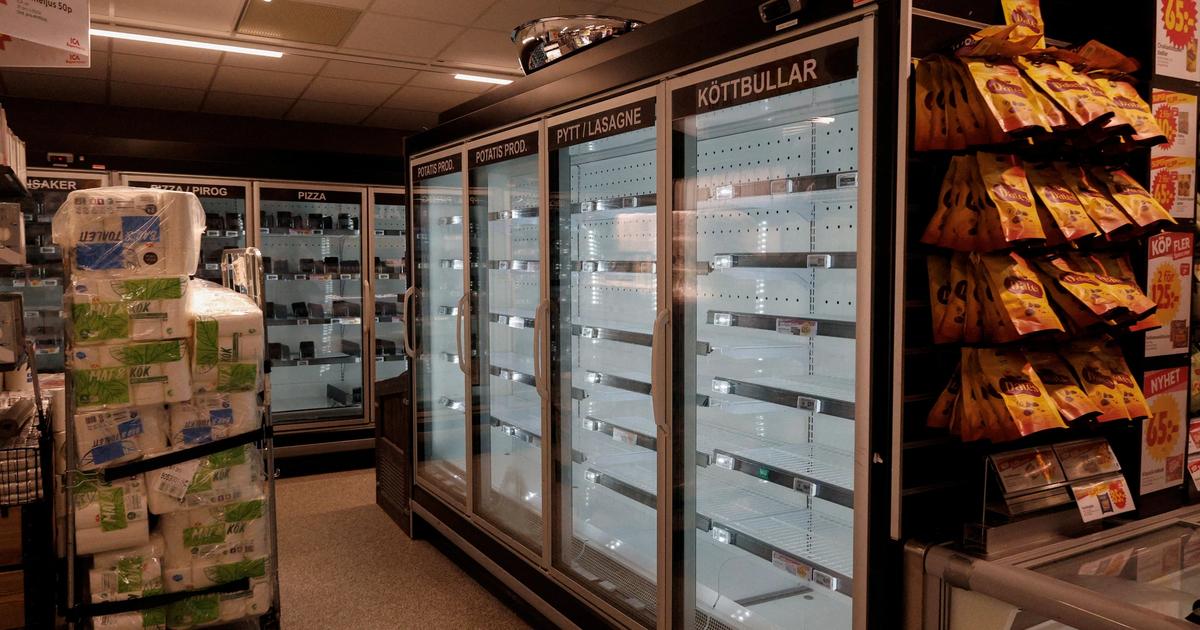
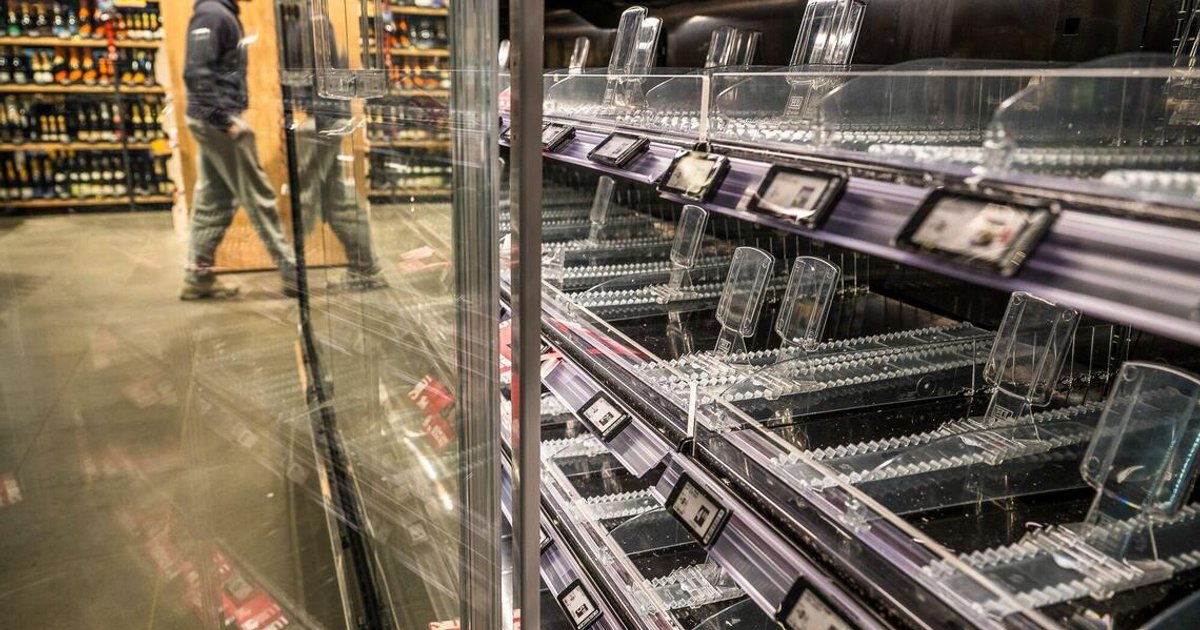
A malign cyber-attack targets supermarket fridges in Belgium, Sweden, the UK and – in a sickening escalation – the cold storage facilities of France’s national blood service. asserted
attack → target → service
The actors behind this week of chaos and disruption, be they hostile states or criminal gangs – or even enterprising teenagers – are yet to be identified. asserted
they → identify → chaos
But what is certain is that they operate in a context of deepening global conflicts, building national threat and an accompanying, pervasive sense of vulnerability. asserted
they → operate → vulnerability
Welcome to the grey zone – that ambiguous space between routine peace and conventional military conflict, where proxies duck state accountability and cyber-tactics are developing at an alarming rate. asserted
proxies → welcome → rate
For today’s newsletter, I spoke to the Guardian’s defence and security editor, Dan Sabbagh, and our global technology team about flights, fridges and why “keep calm and carry on” is more than a tote bag slogan. asserted
keep → speak → slogan
Russell Brand has been found guilty of raping a woman and sexually assaulting three others over the course of five years of his show business career. asserted
Brand → find → career
Donald Trump signed a proclamation that he says will prevent future administrations from changing his design of the Oval Office and Cabinet Room, spaces he declared as national monuments that should be preserved. asserted
that → sign → monuments
Andy Burnham has said he wants to “recast” the UK’s deal to cede control of the Chagos Islands after resistance from Washington. asserted
he → say → Washington
- Health | Cancer diagnoses in England have hit record highs, with more than 1,000 people a day diagnosed, NHS figures show. asserted
figures → hit → highs
The UN-recognised government of Yemen has shaken up its political and military leadership in an attempt to regain territory lost to the Houthis in September. asserted
government → recognise → September
In depth: ‘Terrorism doesn’t have to be violent. asserted
Terrorism → have → depth
The purpose is to scare’ Hoax bomb threats disrupted at least 25 different commercial flights across Europe yesterday, with some forced to make emergency landings, and after similar threats on Tuesday, when seven planes were searched or diverted after malicious alerts. There is, at least so for, no suggestion of orchestration by a hostile terror group or state actor according to investigators, although investigations continue. uncertain
investigations → scare → investigators
It’s perfectly possible that this could be the work of some lone disruptors, says Dan, who reminds me that “airlines receive bomb threats on a daily basis, at a rate that we would find extraordinary if we knew”. uncertain
we → ’ → rate
Nonetheless, the fact that these airlines are treating these threats as credible suggests a potential level of coordination, aviation experts told the Guardian on Thursday. uncertain
experts → treat → Thursday
These threats take place with aviation security under sharper scrutiny after the flydubai incident, when a pilot fought off his knife-wielding colleague in an apparent attempt to crash a full passenger flight heading for Tel Aviv. asserted
pilot → take → Aviv
But beyond that “jittery background noise”, is a significant step-change in the manner of threat we face. asserted
we → face → threat
Twenty-five years on from the inception of the War on Terror, when Islamist terrorism has receded relative to the hostile state threats, “we’re living in a different world with familiar uncertainties, but attributed to different players,” Dan tells me. asserted
Dan → recede → me
Conflicts in Ukraine and the Middle East are reverberating closer to home. asserted
Conflicts → reverberate → home
Since 2022, we’ve witnessed intensifying acts of sabotage on European states that are believed to trace back to Russia but deliberately fall below the threshold for military response – a so-called hybrid or “shadow war” with the singular purpose of disrupting support for Ukraine. asserted
that → witness → Ukraine
Only two months ago, an alleged attack plot on RAF Fairford was organised by a handler police believe was working on behalf of Iran. asserted
police → organise → Iran
Meanwhile, tech expert Azeem Azhar warned recently that the internet is experiencing it’s own Wuhan moment, as AI enables bad actors to hunt for system flaws and spread them, mirroring the early days of the Covid pandemic. asserted
AI → warn → pandemic
“Terrorism doesn’t have to be violent to terrorise,” says Dan. asserted
Dan → have → ?
“The purpose of terrorism is to scare.” asserted
purpose → scare → terrorism
Ratcheting up disruption, and the accompanying psychological hit, is precisely what we’ve seen elsewhere this week. asserted
we → ratchet → what
Supermarket fridges and freezers in seven European countries malfunctioned earlier this week, their thermostats remotely cranked up in some cases to 50C, in what some fear indicates a new front in hacking tactics. asserted
some → malfunction → tactics
Similar incidents have been reported in the UK, and I spoke to our global technology editor Dan Milmo on his way back from interviewing a fruit and veg wholesaler based near Heathrow, whose fridges went on the blink on Monday. asserted
fridges → report → Monday
The experience has prompted him to add some tinned goods to his weekend shopping list. asserted
experience → prompt → list
“There are only ever two likely candidates for a hack,” Dan tells me. asserted
Dan → be → me
He adds an emerging tertiary category of “troublesome teenagers”, such as the loose collective of English-speaking hackers Scattered Spider, two of whom were jailed in July for their attack on Transport for London. asserted
two → add → London
One cybersecurity researcher told Dan that attacks on dummy Danfoss fridge controls – one of the software systems also targeted by the hackers in mainland Europe – had “all the hallmarks” of operations linked to Russia. asserted
attacks → tell → Russia
What are security services doing about these threats? asserted
services → do → threats
“There is a very real and intense cyberwar going on out there,” Dan Sabbagh tells me, and security agencies in the UK have viewed technological resilience as a key part of their responsibility for a number of years. asserted
agencies → be → years
The Turing Institute, for example, is looking at ways to utilise AI to make critical infrastructure systems more secure. asserted
systems → look → AI
The police and security services are monitoring for threats all the time – MI5 has about 3,000 active subjects of interest currently – arranged in a hierarchy, with an understandable focus on the more serious ones, including threats to life. asserted
MI5 → monitor → life
But lower level activity that is not obviously threatening, whether that’s online activity or buying paint with the intention of daubing racist graffiti, can be harder to pick up. asserted
that → ’ → graffiti
Is chaos easier to generate in our interconnected world? asserted
chaos → generate → world
I put this to our global technology reporter Aisha Down, who explains that many hacks happen though edge devices – networked items that are connected to the internet but don’t have processing power and so aren’t the main focus of security upgrades by a company or household. asserted
that → put → company
Famously, in 2016, North Korea came within a few keystrokes of pulling off a billion-dollar heist by hacking the Bank of Bangladesh via an unsecured printer. asserted
Korea → come → printer
Aisha is keen to dial down the panic. asserted
Aisha → dial → panic
…and 58 more, not listed.

💬Give feedback · no sign-in needed

No sign-in needed for now. Your note is sent without a name, so it cannot be answered.

🕘History 🎫Support