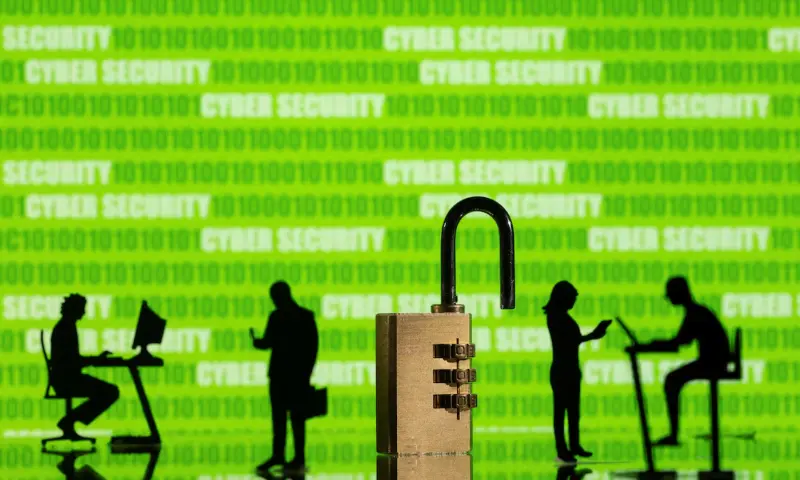
Photo via Dawn

AI-enabled cyberthreats could target financial services, critical infrastructure such as banks, utility providers

Read the original at Dawn ↗
Cite

News Desk. (2026, November 6). AI-enabled cyberthreats could target financial services, critical infrastructure such as banks, utility providers. Dawn. https://www.dawn.com/news/2042639/ai-enabled-cyberthreats-could-target-financial-services-critical-infrastructure-such-as-banks-utility-providers

Dated from the outlet's own feed. Check the original for its byline.

Dawn · collected 2026-11-06 · by News Desk

Quick Summary

The National Cyber Emergency Response Team (NCERT) issued an advisory on November 5 warning about increased AI-driven cyber threats targeting financial services and critical infrastructure like utility providers. The team noted that threat actors could broaden their attacks using automated bots and agentic tools, potentially disrupting banking systems, digital platforms, and industrial control systems. NCERT provided specific indicators of such attacks, including unusual login attempts and changes to operational parameters, and recommended security measures for both financial institutions and critical infrastructure operators.
Written by AI on 2026-11-06, from this article's own text only.

AI analysis

Why this leaning score
This article does not take a side on a contested political question, so it has no leaning score. That is an answer rather than a gap: a match report or a rescue can be warmly or critically written without being left or right, and scoring it anyway is how approval of a subject gets recorded as a political position.
No political leaning scored for article 135396 · logged 2026-11-06

Compared with similar articles

Nothing to compare against. No article is close enough to this one for the pipeline to have linked or judged the pair.
How this article was measured signals, leaning charts, publisher record, byline, topics and claims

Signals How these are calculated →

Claims extracted
16
sentences that state something as happening or true
Uncertain
50%
8 of 16 hedged ("reportedly", "may", "according to")
Leaning
not political
takes no side on a contested political question
Publisher signals
72/100
Dawn's corrections and hedging, across everything collected from it. Not a measure of accuracy.
Outlets on this story
unclustered
not grouped into a story yet
Same framing elsewhere
2
articles that frame the event the way this one does
Analyzed 2026-11-06 · how these are computed

How this is being covered How these are calculated →

Article leaning vs. publisher reliability
Source leaning vs. consistency

Publisher

Dawn · 2827 article(s) · 3 correction(s) detected
Running correction rate · 3 correction(s)

Who wrote this

News Desk
370 article(s) here · 1 carrying a prediction
🔮 “These capabilities may help threat actors and sophisticated cybercriminal groups to broaden the scale, speed and sophistication of their operations,” it added.
🔮 “These capabilities may help threat actors and sophisticated cyber criminal groups to broaden the scale, speed and sophistication of their operations,” NCERT said in its advisory dated Nov 5.
🔮 The National Cyber Emergency Response Team (NCERT) has warned of an increased use of artificial intelligence (AI), automated bots, botnets and agentic tools to identify vulnerabilities and conduct credential-based and coordinated cyber attacks, noting that critical infrastructure and financial services are most at risk. “These capabilities may help threat actors and sophisticated cyber criminal groups to broaden the scale, speed and sophistication of their operations,” NCERT said in its advisory dated Nov 5.
🔮 A report by the Journal claimed on Thursday that the kingdom had approached the Houthis “to see what it would take to arrive at a negotiated halt to the hostilities”, and the group demanded $51bn in return.
🔮 Former US president Bill Clinton said Democrats will lower costs, protect healthcare, end senseless wars, while also stopping tariffs that make life more expensive.
🔮 “The KP governor will submit a review report to the federal government every month regarding the exercise of all such powers,” the statement said.
2026-11-04 · assertive framing · Federal cabinet ratifies defence agreement with Kuwait
🔮 Petroleum Minister Ali Pervaiz Malik on Tuesday assured the public that the government will make utmost efforts to meet the demand for liquefied petroleum gas (LPG) during the winter months.
🔮 Petroleum Minister Ali Pervaiz Malik on Tuesday assured the public that the government will make utmost efforts to meet the demand for liquefied petroleum gas (LPG) during winters.
Wire or desk byline, not an individual reporter.
Also by News Desk
Nothing else under this byline is closely related to this article, so these are simply their most recent.
All 370 articles by News Desk →

Topics

NCERT The National Cyber Emergency Response Team

Subjects

NCERT ORG · 8× The National Cyber Emergency Response Team ORG · 1×

Narrative

“Keep applying security updates and maintain backup operating procedures for essential processes.” NCERT also urged all organisations to check their preparedness against bot-driven AI cyberattacks, maintain incident logs and enhance arrangements for incident response, business continuity and security monitoring.
framing: mixed · carried by 2 article(s) · first seen 2026-11-06
🔮 “These capabilities may help threat actors and sophisticated cyber criminal groups to broaden the scale, speed and sophistication of their operations,” NCERT said in its advisory dated Nov 5.

Claims (16 extracted, 8 hedged)

The National Cyber Emergency Response Team (NCERT) has warned of an increased use of artificial intelligence (AI), automated bots, botnets, and agentic tools to carry out credential-based and coordinated cyberattacks, noting that critical infrastructure and financial services are most at risk. asserted
infrastructure → warn → risk
“These capabilities may help threat actors and sophisticated cyber criminal groups to broaden the scale, speed and sophistication of their operations,” NCERT said in its advisory dated Nov 5. uncertain
NCERT → help → advisory
It warned banks that they could face attacks targeting core banking systems, digital banking platforms, payment systems and customer-facing applications, with potential scenarios including the disruption of online services, automated credential attacks, and manipulation of displayed account balances. uncertain
they → warn → balances
In terms of critical infrastructure, NCERT warned, “Third-party service providers, connected IoT (internet of things) devices, vulnerabilities in industrial control systems and insecure remote access may expose oil and gas facilities, water utilities, power generation and distribution networks, manufacturing, transportation and other essential services. uncertain
providers → warn → facilities
“A compromise could disrupt physical processes and critical services,” it added. uncertain
it → disrupt → processes
NCERT cited recent incidents in Europe, where supermarket refrigerators and freezers were targeted in cyberattacks, as examples of the “physical and commercial consequences of attacks against connected operational systems”. “However, AI involvement in said incidents has not been confirmed yet,” it added. asserted
it → cite → incidents
The advisory listed anomalies which may indicate a potential cyberattack targeting financial institutions, such as frequent automated login attempts, repeated authentication failures, and unusual application programming interface (API) requests. uncertain
which → list → attempts
Abnormal transaction patterns, a difference between core banking records and the displayed account balance, and unauthorised payment access were other indicators. asserted
patterns → display → records
For critical infrastructure, NCERT said changes to refinery, pipeline, grid, power generation or distribution parameters could indicate an attack, as could unexpected changes to pressure, temperature, cooling or heading control settings. uncertain
changes → say → settings
Unexpected access sessions remotely or changes to IoT/operational technology (OT) device configurations could also point towards a cyberattack. uncertain
sessions → point → cyberattack
Recommendations NCERT recommended that financial institutions check their core banking security, APIs, third-party integrations, payment gateways and digital banking applications. asserted
institutions → recommend → security
It further urged them to use multi-factor authentication and protection against automated login attempts, while enforcing integrity checks between consumer-facing applications and core banking records. asserted
It → urge → applications
The team also suggested monitoring bot-driven attempts, potential service disruption and abnormal API activity. uncertain
team → suggest → attempts
For utility providers, NCERT’s advice was to limit direct internet exposure and remote access and check the security of IoT assets and industrial control systems. asserted
advice → limit → assets
“Enforce OT/IT network segmentation and continuously monitor access to operational systems,” it recommended. asserted
it → enforce → systems
“Keep applying security updates and maintain backup operating procedures for essential processes.” NCERT also urged all organisations to check their preparedness against bot-driven AI cyberattacks, maintain incident logs and enhance arrangements for incident response, business continuity and security monitoring. asserted
NCERT → apply → response

💬Give feedback · no sign-in needed

No sign-in needed for now. Your note is sent without a name, so it cannot be answered.

🕘History 🎫Support