Why did California's billionaire tax fail to surf the blue wave?
asserted
tax → fail → wave
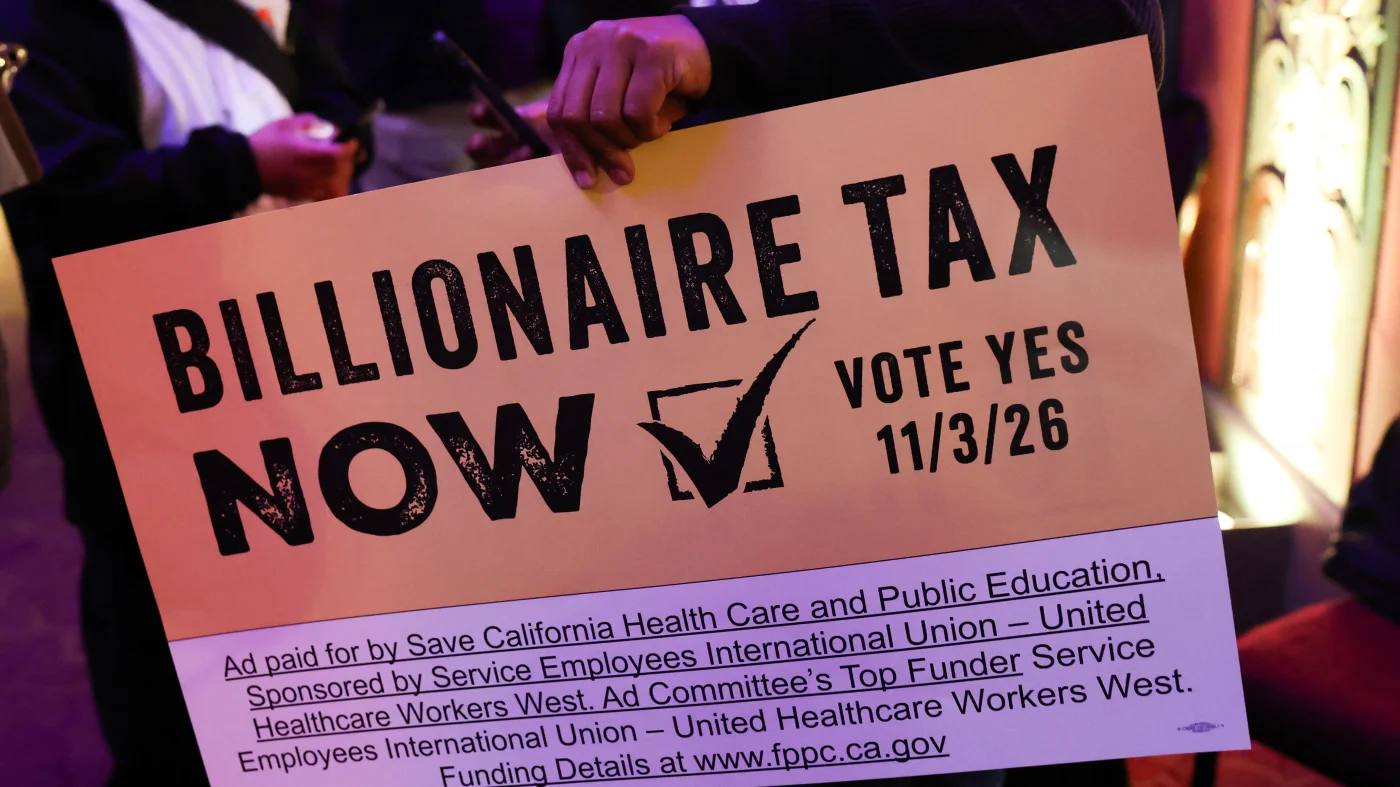
Late Monday, The Associated Press determined that California voters had rejected Prop 40, the proposed billionaire wealth tax I wrote about last week.
asserted
I → determine → Prop
Given the big blue wave we saw during the midterms, why did this tax on billionaires fail to surf to victory?
asserted
tax → give → victory
To make sense of the results, I went back to the two economists I spoke with last week: UC Berkeley's Gabriel Zucman, a leading champion of wealth taxes, and Stanford's Joshua Rauh, a prominent critic of Prop 40.
asserted
I → make → Prop
Last week, they disagreed on what this wealth tax on billionaires would do to California's economy and tax revenue.
asserted
tax → disagree → economy
Now comes the sequel, in which they disagree on what the results say about the politics of wealth taxes.
asserted
results → come → taxes
Their debate could foreshadow a bigger one in the next Democratic presidential primary: should the party embrace a wealth tax?
Did billionaire money tip the scales?
uncertain
money → foreshadow → scales
Zucman blames the corrosive influence of money for Prop 40's failure.
asserted
Zucman → blame → failure
"I am not surprised," Zucman says.
asserted
Zucman → say → ?
Opponents of Prop 40 spent almost $400 million fighting it, including spending on competing ballot measures, making it one of the most expensive ballot initiative fights in history.
asserted
it → spend → history
"The money spent by the billionaires was critical," Zucman says.
asserted
Zucman → spend → billionaires
"Anyone who lives in California has been carpet-bombed by a deluge of ads.
asserted
who → live → ads
One can easily see how this could be pivotal in such a closely contested ballot.
uncertain
this → see → ballot
But didn't Democrats win plenty of races this cycle despite huge sums spent against them?
asserted
Democrats → win → them
In Texas, for example, Elon Musk alone poured more than $150 million into defeating Democrat James Talarico.
asserted
Musk → pour → Talarico
And Talarico ended up winning his Senate race by a comfortable margin.
asserted
Talarico → end → margin
For one, Zucman says, the spending gap was much bigger in the fight over Prop 40.
asserted
gap → say → Prop
"The billionaires spent more than $300 million on ads versus negligible sums on the other side," Zucman says.
asserted
Zucman → spend → side
"On TV and in their mailboxes, voters were exposed only to the anti-tax arguments.
asserted
voters → expose → arguments
It's also possible that money can matter more in ballot initiatives than in races between candidates.
asserted
money → matter → candidates
Analysts have complained for decades that California's ballot initiative system is too easily manipulated by special interest groups.
asserted
system → complain → groups
The nitty-gritty details of specific policies can get complicated, and many voters don't take the time to get educated on them.
asserted
voters → complicate → them
That can give well-funded advertising campaigns more power to shape their views.
asserted
That → give → views
In candidate races, meanwhile, voters can at least fall back on name recognition or party labels, which give them an easy mental shortcut — what social scientists call a "heuristic" — when making decisions at the ballot box.
asserted
scientists → fall → box
Even when they know little about the candidates, they usually know which party they prefer.
asserted
they → know → party
But Prop 40 didn't come with the same clear partisan signal.
asserted
Prop → come → signal
In fact, prominent Democrats, including California Gov. Gavin Newsom, came out against it.
asserted
Democrats → include → it
Newsom said he favored a national minimum tax on billionaires instead.
asserted
he → say → billionaires
"Popular opinion on wealth taxes is clearly not as strong as proponents thought," Rauh says.
asserted
Rauh → think → taxes
Rauh questions whether money and advertising can really explain Prop 40's poor showing.
asserted
money → question → showing
He compared support for the tax with support for Kamala Harris in the 2024 presidential election.
asserted
He → compare → election
In some of "the most progressive Bay Area counties," he says, Harris won overwhelming support while Prop 40 won much less.
asserted
Prop → say → less
This gap between support for Harris and support for Prop 40 was bigger there than it was in other Democratic-leaning counties across the state.
asserted
it → lean → state
If advertising was the main explanation for this tax's poor showing, he argues, why was the gap so much bigger in the Bay Area?
asserted
gap → argue → Area
Sure, he says, advertisers may have done more targeting there, but he thinks the uneven pattern across the state casts doubt on the idea that advertising was the decisive factor.
uncertain
advertising → say → idea
"[T]he counties with the largest defections are actually the ones whose residents are most likely to know a billionaire, to work for one, or to have watched one move to Texas or Florida," Rauh writes in a recent post.
asserted
Rauh → know → post
"The simple reading is that proximity to the people being taxed, and to the businesses they fund, made voters more skeptical of the tax relative to their baseline politics."
asserted
voters → tax → politics
For Rauh, that skepticism points to a broader conclusion: "The electorate even in progressive California has shown that it isn't ready for a wealth tax," he says.
asserted
he → point → tax
More moderate Democratic voters, especially in affluent areas like the Bay Area, may simply dislike this novel way of taxing rich people in America and the consequences it could have.
uncertain
it → dislike → America
After all, this policy idea has divided Democrats before.
asserted
idea → divide → Democrats
…and 34 more, not listed.
 The Aporia