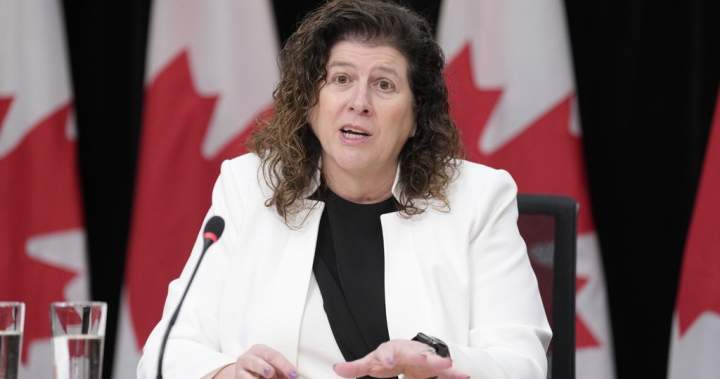
Ottawa wrote off $4.5 billion in COVID-19 benefit overpayments and payments to ineligible recipients in the 2025-26 fiscal year, up from $26 million the year before, according to Auditor General Karen Hogan’s annual commentary on the government’s financial audits, released Friday.
uncertain
Ottawa → write → audits
The money went to Canadians who either received more than they were entitled to or did not qualify for pandemic benefits at all.
asserted
they → go → benefits
Federal departments may write off such debts only after all reasonable collection efforts have been exhausted.
uncertain
efforts → write → debts
The commentary was released alongside the 2025-26 public accounts, a day after the government tabled its 2026 federal budget.
asserted
government → release → budget
Most of the loss was already on the books
The write-off is less a new hit to the treasury than a formal admission that the money is gone.
asserted
money → go → admission
Each year, Ottawa estimates how much of what it is owed it will never collect and sets that amount aside as an allowance for doubtful accounts.
asserted
it → estimate → accounts
The $4.5-billion write-off came out of both the debt and that allowance.
asserted
off → come → debt
The auditor general’s figures show how little the government now expects to recover.
asserted
government → show → little
At the end of 2025-26, Canadians still owed $7.6 billion in pandemic benefit overpayments, down from $13 billion a year earlier.
asserted
Canadians → owe → billion
Ottawa has flagged $6.3 billion of that as unlikely to be collected.
asserted
Ottawa → flag → that
That leaves $1.3 billion, or roughly 17 percent, that it expects to get back, down from $2.5 billion a year earlier.
asserted
it → leave → billion
The scale of the problem was flagged years ago.
asserted
scale → flag → problem
In a December 2022 audit, Hogan’s office found at least $4.6 billion in overpayments to ineligible recipients and a further $27.4 billion in payments it said should be investigated.
asserted
it → find → payments
Business loan losses are mounting
Pandemic business lending is also weighing on the books.
asserted
lending → mount → books
Ottawa lent $49.1 billion through the Canada Emergency Business Account (CEBA), which offered interest-free loans of up to $60,000 to small businesses and not-for-profits.
asserted
which → lend → profits
The government raised its allowance for potential losses on those loans to $5.6 billion from $5.4 billion, roughly 78 percent of the remaining balance.
asserted
government → raise → balance
Borrowers who repaid on time could have up to one-third of their loan forgiven, to a maximum of $20,000.
uncertain
third → repay → 20,000
Ottawa extended that deadline twice: from Dec. 31, 2022, to Dec. 31, 2023, and then to Jan. 18, 2024.
asserted
Ottawa → extend → Jan.
Unpaid balances then converted to term loans at five percent interest, with full repayment due Dec. 31, 2026.
asserted
balances → convert → repayment
What the numbers don’t say
The commentary does not break the write-off down by program.
asserted
commentary → say → program
It also doesn’t say how much reflects overpayments to eligible recipients versus payments to people who never qualified, or why write-offs rose roughly 170-fold in a single year.
asserted
offs → say → year
Critics have long argued that pandemic aid was handed out with too little scrutiny.
asserted
aid → argue → scrutiny
In a column for The Hub, Sabrina Maddeaux wrote that businesses largely failed to use federal support to raise productivity, innovate or protect jobs.
asserted
businesses → write → jobs
“In too many cases, loans didn’t save failing businesses but simply prolonged their pain and demise at the public expense,” she wrote.
asserted
she → save → expense
Maddeaux’s column focused mainly on business supports.
asserted
column → focus → supports
She cited the auditor general’s finding that more than 77,000 ineligible businesses received CEBA loans.
asserted
businesses → cite → loans
She also noted that federal debt write-offs and forgiveness topped $18 billion in 2023.
asserted
offs → note → 2023
She noted that the problem was not limited to loans or to Ottawa.
asserted
problem → note → Ottawa
The Canada Revenue Agency penalized 185 companies for misusing the federal wage subsidy, far fewer than the number of misuse complaints it received.
asserted
it → penalize → complaints
Ontario’s auditor general found in 2021 that the province paid at least $210 million in pandemic funds to ineligible businesses.
asserted
province → find → businesses
Maddeaux argued that any future emergency aid should be tightly targeted, publicly trackable and backed by enforcement.
asserted
aid → argue → enforcement
“Corporate welfare shouldn’t be treated as a right, but a rare privilege that comes with heightened scrutiny, expectations, and obligations to the public,” she wrote.
asserted
she → treat → public
The next test comes at the end of December, when every remaining CEBA loan falls due.
asserted
loan → come → December
Next year’s public accounts will show how much of the $7.2 billion still outstanding turns into permanent losses.
asserted
much → show → losses
Phoenix backlog target missed
asserted
target → miss → ?
Hogan’s office also flagged problems unrelated to pandemic aid.
asserted
office → flag → aid
The government missed its March 31 target to clear all pay transactions more than a year old under the Phoenix pay system.
asserted
government → miss → system
Nearly 111,000 such transactions were still waiting at that date, though the total backlog has fallen to about 182,000 from a peak of more than 447,000.
asserted
backlog → wait → 447,000
The government plans to begin moving to a replacement system, Dayforce, in July 2027.
asserted
government → plan → July
Ottawa has written off $4.5 billion in COVID-19 benefit overpayments and payments to ineligible recipients for the 2025-26 fiscal year, a significant increase from $26 million the previous year.
asserted
Ottawa → write → million
…and 3 more, not listed.
 The Aporia