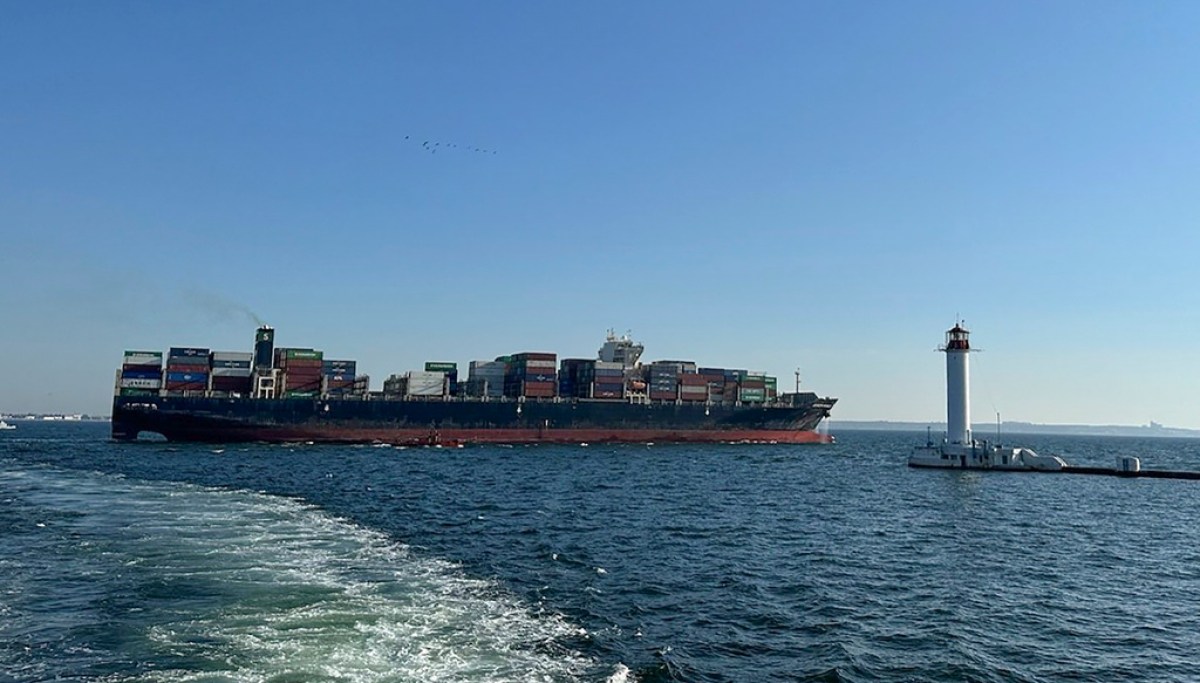
Photo via Washington Examiner

Iran’s Guiana backdoor: Contested barrels, ghost flags, and the prison pipeline

Read the original at Washington Examiner ↗
Cite

Alvarez, J. L. (2026, November 11). Iran’s Guiana backdoor: Contested barrels, ghost flags, and the prison pipeline. Washington Examiner. https://www.washingtonexaminer.com/op-eds/4797643/iran-sanctions-evasion-guyana-suriname-energy-security-pact-would-secure-buffer/

Dated from the outlet's own feed. Check the original for its byline.

Washington Examiner · collected 2026-11-11 · by Jose Lev Alvarez

Quick Summary

The article discusses Iran's strategic maritime presence in northern South America, particularly through its partnership with Venezuela since 2006, aimed at circumventing Western financial sanctions. It details how Iranian entities use shell companies registered in Suriname and employ former criminals from Brazil’s criminal underworld to facilitate the movement of illicit goods and people, leveraging weak border controls in Guyana and Suriname for their operations.
Written by AI on 2026-11-11, from this article's own text only (the story summary below draws on all the coverage).

AI analysis

Story summary

As of November 11, 2026, the Washington Examiner reported that Iran's maritime presence in northern South America is part of a long-term strategy to evade Western financial sanctions. In 2006, Iran and Venezuela established a shipping and petrochemical agreement aimed at moving crude oil outside of Western financial systems. This led to the formation of shell companies registered in Suriname, which later became key nodes for Iran's sanctions-evasion network. By 2008, Iranian naval personnel were conducting port visits across Venezuela under commercial pretenses, establishing operational knowledge over Caribbean transit lanes.

In parallel, Iranian proxies have been recruiting financially desperate ex-convicts and paroled felons from Brazil to conduct surveillance and operations for them, thus securing plausible deniability. This strategy has allowed Tehran to exploit South America's criminal networks as a conduit for its activities, highlighting the interconnectedness of geopolitical and criminal operations in the region.

Written for “Iran’s Oil Export Tactics” on 2026-11-11, grounded in this article and the 0 other(s) covering the same event.
Why this leaning score
The article's own words the score was based on. Each is quoted verbatim and was checked against the article text before being stored, so you can find it in the original.
Reading Leans right (beta estimate) Confidence high
Leaning: leans right for article 144811 (high confidence, 2 verified quotes) · logged 2026-11-11

Story

Iran’s Oil Export Tactics
Politics · 1 article(s) covering the same event.

Compared with similar articles

Nothing to compare against. No article is close enough to this one for the pipeline to have linked or judged the pair.
How this article was measured signals, leaning charts, publisher record, byline, topics and claims

Signals How these are calculated →

Claims extracted
9
sentences that state something as happening or true
Uncertain
0%
0 of 9 hedged ("reportedly", "may", "according to")
Leaning
Leans right
of the writing, not the subject · beta estimate
Publisher signals
68/100
Washington Examiner's corrections and hedging, across everything collected from it. Not a measure of accuracy.
Outlets on this story
1
Politics
Same framing elsewhere
1
articles that frame the event the way this one does
Analyzed 2026-11-11 · how these are computed

How this is being covered How these are calculated →

Article leaning vs. publisher reliability
Source leaning vs. consistency

Publisher

Washington Examiner · 4638 article(s) · 9 correction(s) detected
Running correction rate · 9 correction(s)

Who wrote this

Jose Lev Alvarez
23 article(s) here · 0 carrying a prediction
Intelligence assessments indicate that the complex could support more than 100 launches daily, expanding a network of at least 11 fixed Russian drone locations.
Israel’s founding father, David Ben-Gurion, understood from the start that the newborn Jewish state could never survive by begging hostile neighbors for validation.
This outpost will track Russian proxy flights into the Sahel and choke Turkish weapon resupply into Al Watiya.
By leveraging this, Tehran has shown America’s adversaries that a regional rogue power can sustain a prolonged chokepoint before Washington musters the political will to deploy decisive force.
First, a formal pact will pool computing power, model weights, and elite talent before European regulators turn the West into a technological museum while China weaponizes algorithms.
Over a century ago, Admiral William Caperton mapped this exact transnational vulnerability.
Hydrocarbons chemically fingerprinted as Alberta production should enter the United States tariff-free the moment Edmonton files for secession, while barrels moving under Ottawa export licenses will retain existing tariffs.
From Khasab, American shore batteries, maritime patrol aircraft, and specialized boarding teams will directly dominate the strait’s traffic lanes.
Paris willfully ignores this reality abroad while erasing Islamist threats at home.
As usual, this is just another empty gesture of European virtue-signaling, considering that Abbas will bypass the restriction and spew his propaganda via Zoom anyway, thanks to a shameful 152–3 United Nations vote that handed him the digital floor.
2026-09-22 · assertive framing · Trump must serve the United Nations its eviction notice
Also by Jose Lev Alvarez
Once again, Vance declares war on Israel
2026-11-10 · Washington Examiner
Nothing else under this byline is closely related to this article, so these are simply their most recent.
All 23 articles by Jose Lev Alvarez →

Topics

Brazilian Iran Suriname Tehran Venezuela

Subjects

Tehran GPE · 3× Brazilian NORP · 2× Suriname GPE · 2× Hezbollah ORG · 1× Iran GPE · 1× Iranian NORP · 1× Islamic Revolutionary Guard Corps ORG · 1× PCC ORG · 1× Venezuela GPE · 1× the Primeiro Comando da Capital ORG · 1×

Narrative

Because Guyana and Suriname sit directly astride these terminal corridors — yet lack coastal radar coverage and biometric interdiction capabilities — Tehran and its proxies have acquired an unmonitored conduit linking South American prison networks directly to regional transit points.
framing: assertive · carried by 1 article(s) · first seen 2026-11-11
2026-11-11 · Washington Examiner
Iran’s Guiana backdoor: Contested barrels, ghost flags, and the prison pipeline · assertive framing

Claims (9 extracted, 0 hedged)

Tehran’s maritime foothold in northern South America is not an improvised gambit; it is the calculated maturation of an architecture drafted two decades ago. asserted
it → improvise → architecture
In 2006, Iran and Venezuela formalized a joint shipping and petrochemical pact engineered expressly to move crude beyond Western financial clearinghouses. asserted
Iran → formalize → clearinghouses
That arrangement quickly supplied the corporate blueprint for a constellation of shell management firms that later took root in Suriname’s commercial registry. asserted
that → supply → registry
By 2008, Islamic Revolutionary Guard Corps naval personnel were conducting port familiarization visits across Venezuela under commercial cover, establishing the operational fluency over Caribbean transit lanes that today underpins Tehran’s sanctions-evasion apparatus. asserted
that → conduct → apparatus
Parallel to this maritime evasive apparatus, Iranian proxies have opened a dangerous second front by exploiting South America’s criminal underworld. asserted

proxies → open → underworld
As uncovered in Brazilian counterterrorism investigations such as Operation Trapiche, Hezbollah has shifted toward contracting financially vulnerable Brazilian ex-convicts and paroled felons. asserted
Hezbollah → uncover → convicts
By hiring nonideological recruits for cash, the organization secures plausible deniability for surveillance and operational staging while relying on historic relationships with the Primeiro Comando da Capital for illicit arms procurement and logistics. asserted
organization → hire → procurement
The PCC commands established trafficking corridors funneling contraband from Brazil’s interior toward remote river ports and airstrips along the Atlantic seaboard. asserted
commands → establish → seaboard
Because Guyana and Suriname sit directly astride these terminal corridors — yet lack coastal radar coverage and biometric interdiction capabilities — Tehran and its proxies have acquired an unmonitored conduit linking South American prison networks directly to regional transit points. asserted
Tehran → sit → points
Give feedback · no sign-in needed

No sign-in needed for now. Your note is sent without a name, so it cannot be answered.

History Support