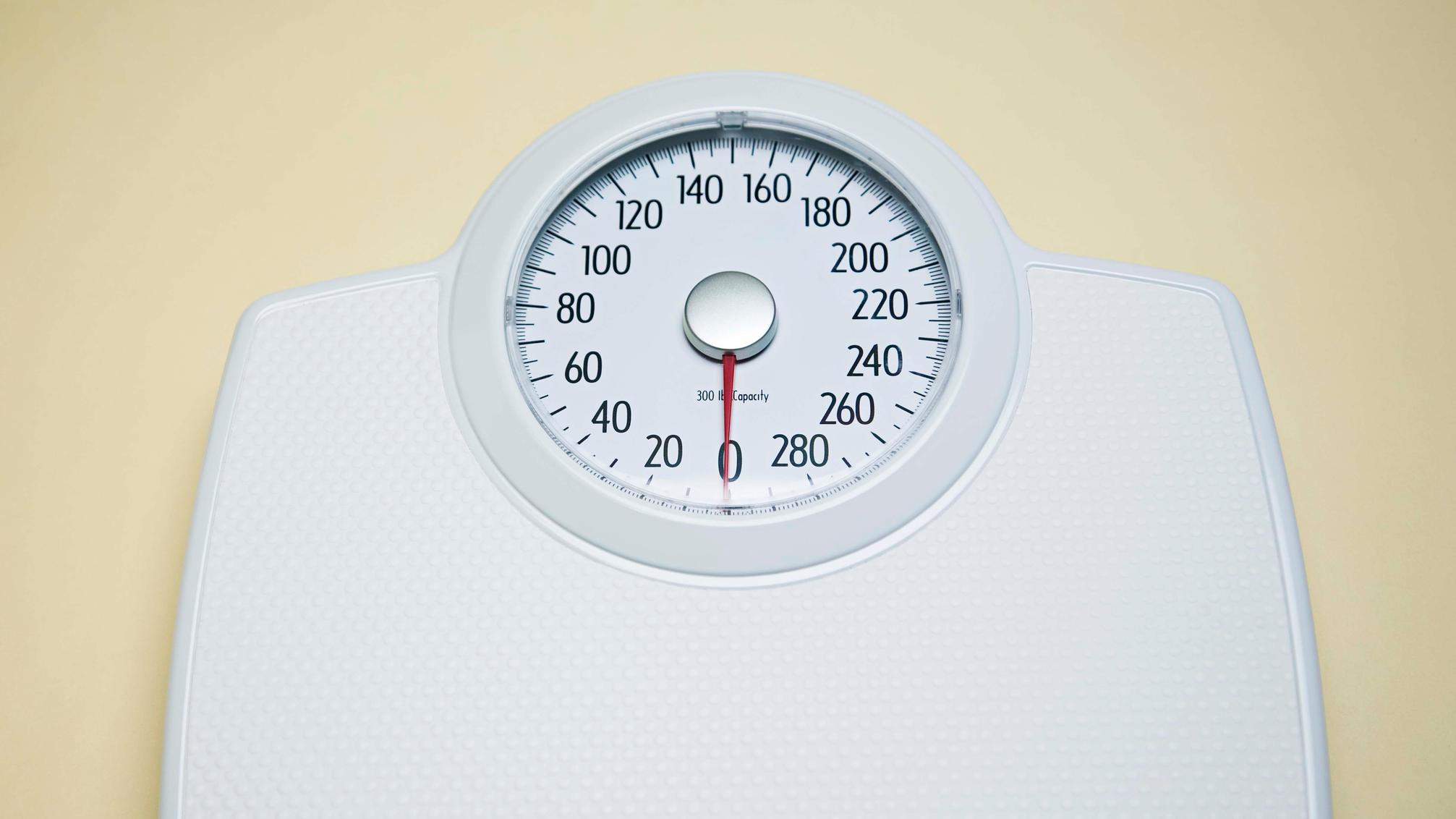
Photo via The Guardian

BMI alternative for identifying obesity ‘could prevent misdiagnosis in millions’

Read the original at The Guardian ↗
Cite

editor, I. S. S. (2026, November 11). BMI alternative for identifying obesity ‘could prevent misdiagnosis in millions’. The Guardian. https://www.theguardian.com/society/2026/nov/11/bmi-alternative-obesity-diagnosis-body-mass-index

Dated from the outlet's own feed. Check the original for its byline.

The Guardian · collected 2026-11-11 · by Ian Sample Science editor

Quick Summary

Medical experts who analyzed health records from over 800,000 people in the UK, US, China, and Spain argue that a new diagnostic approach can correct BMI's tendency to miss obesity in 5-9% of adults while misdiagnosing healthy individuals in as many as 3%. The proposed method combines BMI with waist measurements, weight-to-height ratios, and organ function tests to distinguish between healthy people, those with pre-clinical obesity, and those with clinical obesity who face a substantially higher risk of death. This approach identifies that only 5% to 10% of the wider population has clinical obesity, a much smaller figure than the nearly one billion people currently classified as obese based on BMI alone. The article reports on these findings, emphasizing that the current reliance on BMI as a blunt instrument leads to significant misclassifications for tens of millions of people worldwide.
Written by AI on 2026-11-14, from this article's own text only (the story summary below draws on all the coverage).

AI analysis

Story summary

Medical experts are advocating for a new diagnostic approach to obesity that combines body mass index (BMI) with additional body measurements and organ function tests. This new method aims to address the limitations of BMI, which is currently calculated by dividing weight in kilograms by height in metres squared. Research suggests that using BMI alone misses obesity in 5-9% of adults while wrongly diagnosing the condition in as many as 3% of people. These inaccuracies could result in the misclassification of tens of millions of people globally. Currently, approximately 1.6 billion people worldwide are classified as overweight with a BMI between 25 and 29.9, while nearly 1 billion are considered obese with a BMI of 30 or more. Francisco Rubino, a professor of metabolic and bariatric surgery at King’s College London, noted that these misclassifications pose a significant problem at both a population scale and for individual patients. The new diagnostic framework helps doctors distinguish between clinical obesity, where fat is actively impairing organ function, and pre-clinical obesity, where fat poses a health risk but has not yet caused clinical problems.

Written for “BMI alternative for obesity” on 2026-11-15, grounded in this article and the 0 other(s) covering the same event.

Compared with similar articles

This article reads unscored and hedges 14% of its claims. Each row says how that neighbour differs.
New York Post
Hedges 3 of 27 claims Outlet record 66/100
“The articles discuss similar topics but describe different aspects of the issue, with different dates and specifics about the new definition's accuracy and methodology.”
The Straits Times
Hedges 5 of 14 claims Outlet record 64/100
“While both articles discuss the same topic of a new approach to diagnosing obesity that goes beyond BMI, they describe different aspects of the same broader issue and do not report on the same specific incident or study.”
TIME
Hedges 2 of 24 claims Outlet record 60/100
“The articles discuss related topics about the limitations of BMI but describe different aspects and are published on different dates.”

Story

BMI alternative for obesity
Health · 1 article(s) covering the same event.
How this article was measured signals, leaning charts, publisher record, byline, topics and claims

Signals How these are calculated →

Claims extracted
21
sentences that state something as happening or true
Uncertain
14%
3 of 21 hedged ("reportedly", "may", "according to")
Leaning
not political
takes no side on a contested political question
Publisher signals
65/100
The Guardian's corrections and hedging, across everything collected from it. Not a measure of accuracy.
Outlets on this story
1
Health
Same framing elsewhere
1
articles that frame the event the way this one does
Analyzed 2026-11-14 · how these are computed

How this is being covered How these are calculated →

Article leaning vs. publisher reliability
Source leaning vs. consistency

Publisher

The Guardian · 3442 article(s) · 7 correction(s) detected
Running correction rate · 7 correction(s)

Who wrote this

Ian Sample Science editor
5 article(s) here · 1 carrying a prediction
An alternative to BMI for diagnosing obesity could prevent misdiagnosis in millions of people worldwide, according to doctors who found it more accurately distinguished healthy people from those with harmful excess body fat.
It could be the opening of a Jurassic Park rip-off: scientists examining ancient dinosaur bones find what appear to be fossilised red blood cells, and traces of the molecule that gives the beast’s blood its distinctive crimson hue.
Cheers and applause broke out at SpaceX after initial suggestions the orbit attempt might be abandoned were quashed and the decision to go ahead was announced.
The work suggests the distant world may be habitable, if not exactly hospitable, to at least some forms of life.
What may be the earliest known evidence for human drug taking has been traced to ancient Indonesian foragers who sucked on mind-altering nuts as long as 25,000 years ago.
Also by Ian Sample Science editor
Nothing else under this byline is closely related to this article, so these are simply their most recent.

Topics

China King’s College London Lancet Commission Spain

Subjects

Rubino PERSON · 2× China GPE · 1× Francisco Rubino PERSON · 1× King’s College London ORG · 1× Lancet Commission ORG · 1× Nature ORG · 1× Spain GPE · 1×

Narrative

In a second step of the diagnosis, doctors distinguish between clinical obesity, meaning an active disease where excess body fat is already impairing organ function, and pre-clinical obesity, where the extra fat is a health risk but has yet to cause problems.
framing: assertive · carried by 1 article(s) · first seen 2026-11-14
An alternative to BMI for diagnosing obesity could prevent misdiagnosis in millions of people worldwide, according to doctors who found it more accurately distinguished healthy people from those with harmful excess body fat.

Claims (21 extracted, 3 hedged)

An alternative to BMI for diagnosing obesity could prevent misdiagnosis in millions of people worldwide, according to doctors who found it more accurately distinguished healthy people from those with harmful excess body fat. uncertain
it → diagnose → fat
Medical experts have long considered body mass index a blunt instrument for defining obesity, leading to concerns that substantial numbers of people with excess body fat are missed while others who are healthy are wrongly diagnosed. asserted
who → consider → fat
The new approach, which combines BMI with other body measurements and organ function tests, suggests BMI alone misses obesity in 5-9% of adults, while wrongly diagnosing the condition in as many as 3%. uncertain
BMI → combine → %
“This misclassification can account for tens of millions of people, so the inaccuracy of BMI is a big problem at scale and also for individuals,” said Francisco Rubino, a professor of metabolic and bariatric surgery at King’s College London. asserted
Rubino → account → London
BMI is calculated by dividing weight in kilograms by height in metres squared. asserted
BMI → calculate → metres
About 1.6 billion people worldwide are classified as overweight, meaning their BMI falls between 25 and 29.9, and nearly a billion with a BMI of 30 or more are considered obese. asserted
billion → classify → 30
Two-thirds of adults in the UK and more than 70% of adults in the US are overweight or obese based on BMI alone. asserted
thirds → base → BMI
Rubino and his colleagues drew on health records from more than 800,000 people in the UK, US, China and Spain to test a diagnostic approach for obesity that he and other world experts proposed last year in a Lancet Commission report. asserted
he → draw → report
They used the records to track people’s health for up to 15 years. asserted
They → use → years
Under the new definition, someone with a BMI over 40 is considered obese, but doctors check people with a lower BMI for excess body fat by looking at their waist measurement and weight-to-height ratio. asserted
doctors → consider → height
A BMI of 30-plus with a raised waist measurement or waist-to-height ratio counts as obese, as does a BMI from 25 to 29.9 if waist measurement and waist-to-height ratio are high. asserted
measurement → raise → height
In most countries, a raised waist measurement means more than 102cm (40in) for men and 88cm for women, while thresholds for a high waist-to-height ratio are about 0.57. asserted
thresholds → raise → ratio
In a second step of the diagnosis, doctors distinguish between clinical obesity, meaning an active disease where excess body fat is already impairing organ function, and pre-clinical obesity, where the extra fat is a health risk but has yet to cause problems. asserted
fat → distinguish → problems
Obesity levels rose only slightly overall under the new definition, and only a quarter to a third of obese people, or 5% to 10% of the wider population, who had clinical obesity and a substantially higher risk of death. asserted
who → rise → death
The approach allows doctors to distinguish between healthy and sick people who have the same BMI. asserted
who → allow → BMI
Three people with a BMI of 32, for example, would all be classed as obese but would have very different diagnoses. asserted
people → class → diagnoses
One might have no excess body fat and be healthy, another could have excess fat but no organ dysfunction and have pre-clinical obesity, and the third could have excess fat and organ dysfunction and be clinically obese. Writing in Nature, the scientists describe how some people with a high BMI were not obese under the new definition and actually had a lower mortality risk than others considered healthy. uncertain
others → have → risk
Reassuringly, 80% to 90% of people with pre-clinical obesity did not progress to clinical obesity, or active disease, in the next 10 years. asserted
% → progress → years
The approach makes the process more complex for clinicians, but Rubino said people should be diagnosed for obesity at the individual level to ensure the best healthcare, whether that involved lifestyle advice, GLP-1 weight loss drugs or surgery. asserted
that → make → advice
“We can optimise our interventions and ultimately make better use of our resources with more safety, more efficacy,” he said. asserted
he → optimise → safety
“If you ask if I think this should be employed in the clinic, I think absolutely, yes.” asserted
I → ask → clinic

Give feedback · no sign-in needed

No sign-in needed for now. Your note is sent without a name, so it cannot be answered.

History Support