Photo via TIME

Why BMI Is Not the Best Measure of Health

Read the original at TIME ↗
Cite

Park, A. (2026, November 13). Why BMI Is Not the Best Measure of Health. TIME. https://time.com/article/2026/11/13/why-bmi-is-not-the-most-accurate-measure-of-health/

Dated from the outlet's own feed. Check the original for its byline.

TIME · collected 2026-11-13 · by Alice Park

Quick Summary

This analysis reports on a study led by Francesco Rubino at King’s College London which argues that Body Mass Index (BMI) is an insufficient measure of health because it cannot distinguish between muscle and fat. Using a decade of data from over 844,000 people across China, Spain, the U.K., and the U.S., researchers found that relying solely on BMI missed diagnoses in nearly 9% of people and misdiagnosed 3% as obese. The study advocates for a new framework that combines BMI with waist circumference or waist-to-height ratios to differentiate between "clinical obesity," which carries a 69% higher mortality risk, and "preclinical obesity," where 77% to 91% of individuals did not progress to clinical obesity over 10 years.
Written by AI on 2026-11-13, from this article's own text only (the story summary below draws on all the coverage).

Compared with similar articles

This article reads unscored and hedges 8% of its claims. Each row says how that neighbour differs.
The Straits Times
Hedges 5 of 14 claims Outlet record 64/100
“While both articles discuss a study published in Nature regarding the limitations of BMI in diagnosing obesity and health, they are not reporting on the exact same specific event or time frame. Article A focuses on the study's findings and its implications for obesity diagnosis, while Article B provides more context about why BMI is inadequate and introduces the researchers behind the study, suggesting a different angle or time in reporting.”
New York Post
Hedges 3 of 27 claims Outlet record 66/100
“While both articles discuss the limitations of BMI and the release of a new study, they do not clearly indicate that they are reporting on the exact same specific incident or the same exact time and place.”
The Guardian
Hedges 3 of 21 claims Outlet record 65/100
“The articles discuss related topics about the limitations of BMI but describe different aspects and are published on different dates.”

Story

Why BMI Is Not the Best Measure of Health
Other · 1 article(s) covering the same event.
How this article was measured signals, leaning charts, publisher record, byline, topics and claims

Signals How these are calculated →

Claims extracted
24
sentences that state something as happening or true
Uncertain
8%
2 of 24 hedged ("reportedly", "may", "according to")
Leaning
not political
takes no side on a contested political question
Publisher signals
60/100
TIME's corrections and hedging, across everything collected from it. Not a measure of accuracy.
Outlets on this story
1
Other
Same framing elsewhere
1
articles that frame the event the way this one does
Analyzed 2026-11-13 · how these are computed

How this is being covered How these are calculated →

Article leaning vs. publisher reliability
Source leaning vs. consistency

Publisher

TIME · 966 article(s) · 2 correction(s) detected
Running correction rate · 2 correction(s)

Who wrote this

Alice Park
7 article(s) here · 1 carrying a prediction
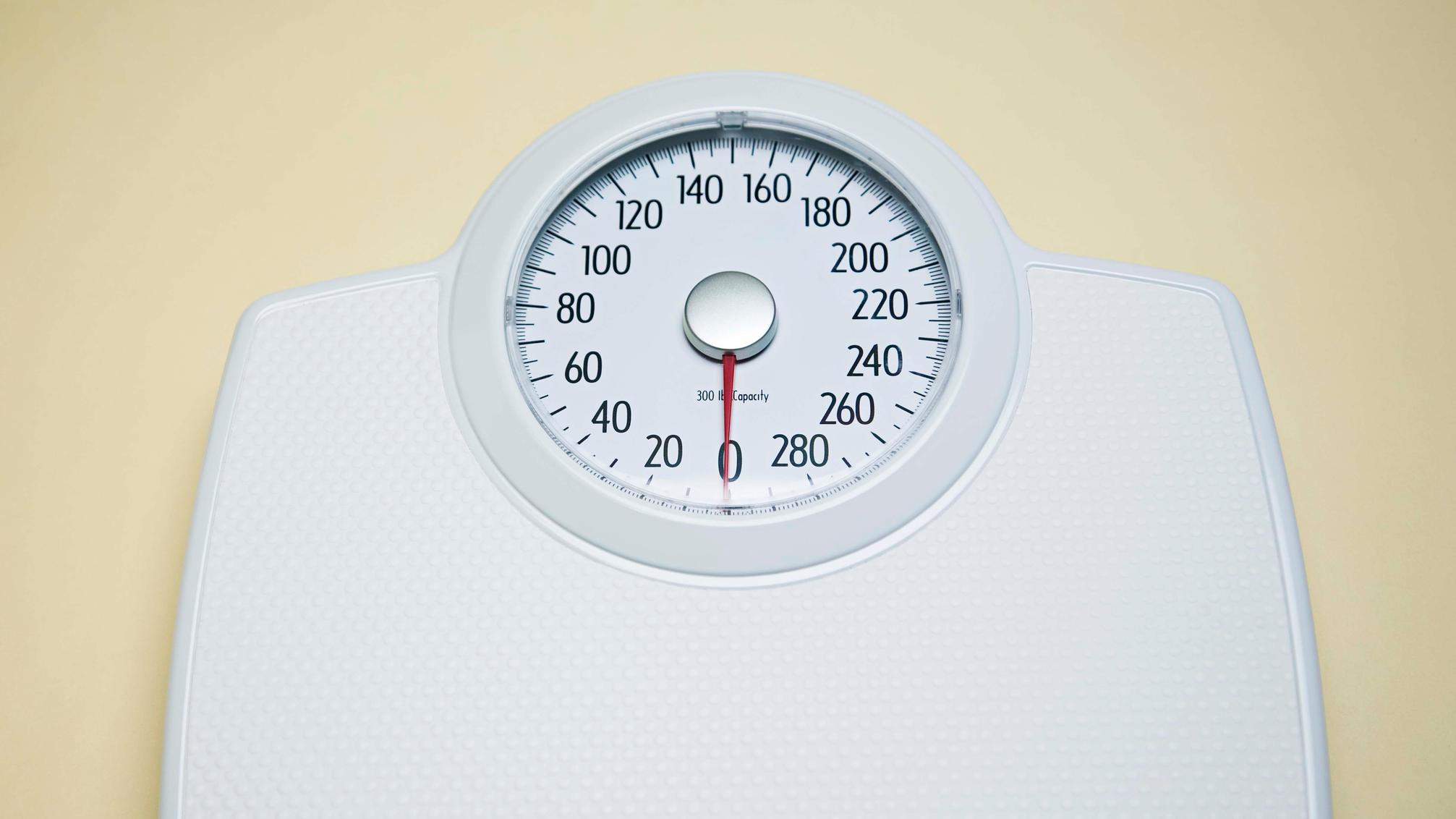
A calculation that takes into account a person’s weight and height, BMI is supposed to reflect how much excess fat a person might be carrying and give doctors a sense of a patient's risk for obesity-related health conditions.
2026-11-13 · assertive framing · Why BMI Is Not the Best Measure of Health
The results will be presented at the European Society of Medical Oncology meeting in Madrid on Oct. 24.
Immune-based treatments for cancer have become the biggest new advance in tackling tumors, and the latest approval could make a big difference for some people with rectal cancer.
The scientists used a modified version of a reprogramming strategy that earned a Nobel Prize in 2012 for turning mature, adult cells back to an embryonic-like state from which they could become any of the cells in the body—including healthy new versions of diseased or older cells.
Since each has specific receptors in the body and brain, targeting all three may be contributing to the more potent effects on weight for people with diabetes than drugs that target GLP-1 alone, like Ozempic and Wegovy (semaglutide), or GLP-1 and GIP together, as Mounjaro and Zepbound (tirzepatide) do.
In a new study published in Science, researchers report that for some of those cases, an inherited genetic mutation might be involved.
Also by Alice Park
Nothing else under this byline is closely related to this article, so these are simply their most recent.
All 7 articles by Alice Park →

Topics

China King’s College London Nature Spain U.K.

Subjects

Rubino PERSON · 6× China GPE · 1× Francesco Rubino PERSON · 1× King’s College London ORG · 1× Nature ORG · 1× Spain GPE · 1× U.K. GPE · 1× U.S. GPE · 1× the Lancet Diabetes and Endocrinology Commission ORG · 1×

Narrative

In a study published Nov. 11 in Nature, researchers led by Francesco Rubino at King’s College London report that a new framework for assessing obesity that combines BMI with other measures can dramatically improve doctors’ ability to determine whether a person’s excess weight is a health concern or not.
framing: assertive · carried by 1 article(s) · first seen 2026-11-13
A calculation that takes into account a person’s weight and height, BMI is supposed to reflect how much excess fat a person might be carrying and give doctors a sense of a patient's risk for obesity-related health conditions.
2026-11-13 · TIME
Why BMI Is Not the Best Measure of Health · assertive framing

Claims (24 extracted, 2 hedged)

A calculation that takes into account a person’s weight and height, BMI is supposed to reflect how much excess fat a person might be carrying and give doctors a sense of a patient's risk for obesity-related health conditions. uncertain
person → take → conditions
For years, however, doctors have found that BMI isn’t the best measure of obesity-related health, since it can’t distinguish between fat and muscle weight. asserted
it → find → fat
In a study published Nov. 11 in Nature, researchers led by Francesco Rubino at King’s College London report that a new framework for assessing obesity that combines BMI with other measures can dramatically improve doctors’ ability to determine whether a person’s excess weight is a health concern or not. asserted
weight → publish → ability
The study included more than a decade's worth of data from more than 844,000 people in China, Spain, the U.K., and the U.S. asserted
study → include → China
The scientists compared determinations of obesity calculated by either BMI alone or by the new combined framework, which includes BMI along with a person's waist circumference or their waist-to-height ratio. asserted
which → compare → height
They found that using only BMI missed diagnosing obesity in nearly 9% of people and misdiagnosed 3% as having obesity when their body weight wasn’t an immediate reason for concern. asserted
weight → find → concern
The team used a model for comparing organ function in people without obesity to those with obesity to determine obesity-related health problems. asserted
team → use → problems
They also tracked who died during the study. asserted
who → track → study
“The scale of the problem with BMI is beyond what we imagined,” says Rubino. asserted
Rubino → imagine → what
“We all know that BMI doesn’t represent health accurately. asserted
BMI → know → health
But the scale of the problem is concerning because of the number of people it misclassifies, by misdiagnosing in both directions. asserted
it → misclassifie → directions
This is dozens of millions of people in the large countries we studied, and across the world, we’re talking many, many more—so it’s really a concern.” asserted
it → study → more
Even when excess weight is correctly identified, not all experts agree on the appropriate next steps. asserted
experts → identify → steps
The new framework, first proposed in 2025 by the Lancet Diabetes and Endocrinology Commission—which Rubino led—argues for a new classification called preclinical obesity, in which patients with excess weight do not necessarily require immediate treatment (or treatment at all). asserted
patients → propose → treatment
This condition, Rubino and others say, is distinct from clinical obesity, a medical diagnosis that requires more immediate interventions like diet, exercise, or drug options such as GLP-1 medications. asserted
that → say → medications
In the current study, about 77% to 91% of people who had preclinical obesity did not progress to clinical obesity over 10 years. asserted
who → have → years
In the study, about 5% to 11% of people in the general population were determined to have clinical obesity; their risk of dying during the study was 69% higher than people without excess fat. asserted
risk → determine → fat
Distinguishing clinical from preclinical obesity, therefore, “allows doctors to triage and treat people differently, because the two groups are meaningfully different and the difference in mortality is quite obvious,” says Rubino. asserted
Rubino → distinguish → mortality
“All in all, [the study results provide] quite a robust level of evidence to say that the old system of BMI is something that is unsustainable in the clinic.” asserted
that → provide → clinic
Precision surrounding obesity diagnoses is even more relevant now that GLP-1 drugs can effectively treat the condition. asserted
drugs → surround → condition
Determining whether someone is already experiencing health-related issues in their organs could help doctors better counsel them about staying on these medications through the side effects, or it could inform their dosing decisions. uncertain
it → determine → decisions
“Obesity never had that kind of granular information diagnostically to deploy treatments proportionate to need,” says Rubino. asserted
Rubino → have → treatments
The results should provide further support for shifting away from relying solely on BMI to assess obesity risk, says Rubino. asserted
Rubino → provide → risk
In taking into account a number of related measurements, the new framework, he says, “is no different than the standards used to diagnose other conditions in medicine.” asserted
he → take → medicine

Give feedback · no sign-in needed

No sign-in needed for now. Your note is sent without a name, so it cannot be answered.

History Support