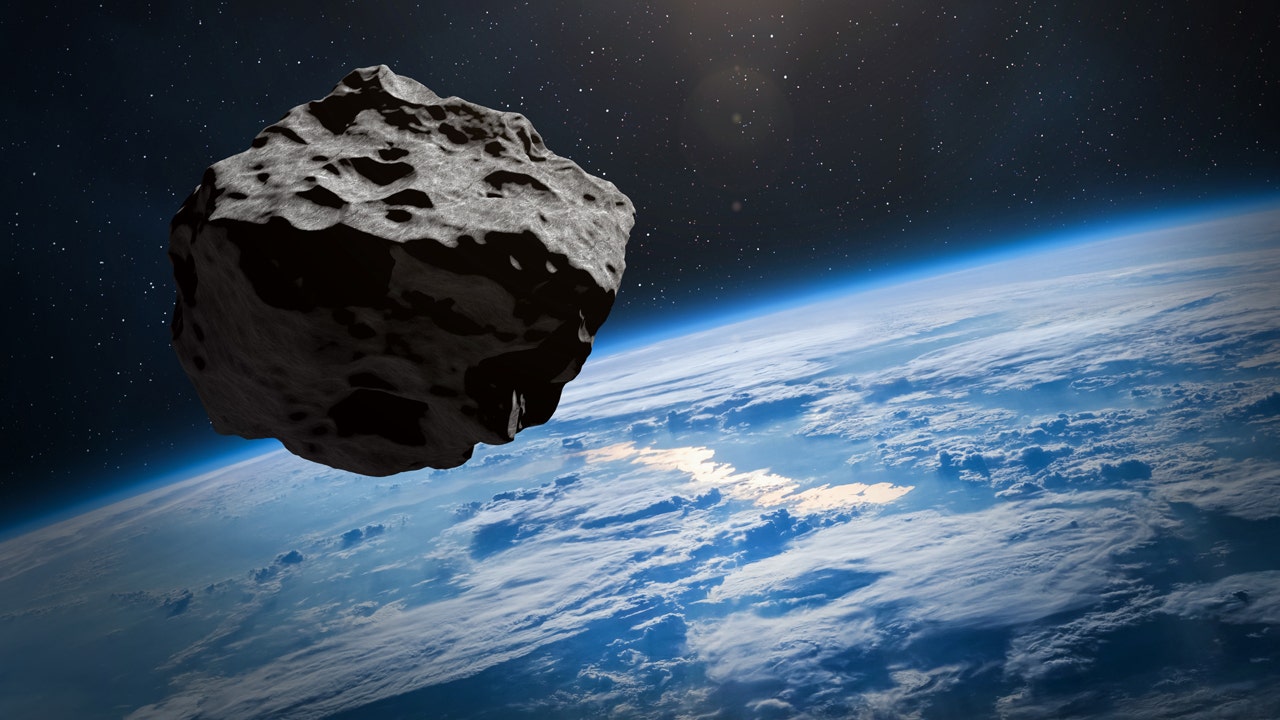
Photo via Daily Mail

Object heading toward Earth is mysteriously accelerating as scientist claims it is a long-lost spacecraft

Read the original at Daily Mail ↗
Cite

Melore, C. (2026, November 12). Object heading toward Earth is mysteriously accelerating as scientist claims it is a long-lost spacecraft. Daily Mail. https://www.dailymail.com/sciencetech/article-16285087/object-earth-accelerating-lost-spacecraft.html?ns_mchannel=rss&ns_campaign=1490&ito=1490

Dated from the outlet's own feed. Check the original for its byline.

Daily Mail · collected 2026-11-12 · by Chris Melore

Quick Summary

Scientists have observed that the near-Earth object 1998 KY26, initially thought to be a simple asteroid, is accelerating at a rate unexplained by gravitational forces alone. This mysterious acceleration has led Harvard Professor Avi Loeb to propose that 1998 KY26 might actually be the lost Soviet spacecraft Phobos 1, which vanished in 1988. The object, approximately 36 feet in length and spinning very rapidly, will come within 32 million miles of Earth in 2028 and even closer in 2039. Researchers at the Georgia Institute of Technology have ruled out ice as the cause of the object's acceleration, as its temperature is too high to sustain ice in space.
Written by AI on 2026-11-14, from this article's own text only (the story summary below draws on all the coverage).
See how they differ ↓

AI analysis

Story summary

A mysterious object, known as 1998 KY26, is accelerating in a way that cannot be explained by gravity alone, leading some scientists to speculate that it might be a lost Soviet spacecraft. Harvard astrophysicist Avi Loeb challenges NASA Administrator Jared Isaacman's assertion that the object is just an asteroid, arguing that 1998 KY26 exhibits non-gravitational acceleration, suggesting it is influenced by forces other than gravity. The object is approximately 36 feet wide and is currently 189 million miles from Earth, with its closest approach to Earth expected to be within 32 million miles in 2028. Scientists are closely monitoring the object, which was originally thought to be a near-Earth asteroid but now raises questions due to its unusual acceleration pattern.

Written for “Mysterious Object In Space Debate” on 2026-11-18, grounded in this article and the 4 other(s) covering the same event.

How they differ

4 outlets covered “Mysterious Object In Space Debate”.

What each outlet says

One AI summary per outlet of its latest article on this story, written from that article alone and checked against it. Open the article for the outlet's own words.

Daily MailThis outlet12 Nov

Scientists have observed that the near-Earth object 1998 KY26, initially thought to be a simple asteroid, is accelerating at a rate unexplained by gravitational forces alone. This mysterious acceleration has led Harvard Professor Avi Loeb to propose that 1998 KY26 might actually be the lost Soviet spacecraft Phobos 1, which vanished in 1988. The object, approximately 36 feet in length and spinning very rapidly, will…

Object heading toward Earth is mysteriously accelerating as scientist claims it is a long-lost spacecraft (this article)
Fox News15 Nov

Harvard astrophysicist Avi Loeb is challenging NASA Administrator Jared Isaacman's assertion that the mysterious space object 1998 KY26 is an asteroid. Loeb argues that the object's unusual acceleration suggests it is not a typical asteroid but could be the Soviet spacecraft Phobos 1. Isaacman stated during a Fox & Friends appearance that there is no evidence to suggest otherwise, while Loeb, in an interview with…

Harvard scientist pushes back on NASA chief over mystery space object: 'It's not an asteroid' →2 articles from Fox News on this story
New York Post12 Nov

Scientists are investigating the unusual acceleration of an object in space called 1998 KY26, which measures about 36 feet wide and is speeding through the solar system. Researchers have proposed theories ranging from it being a dark comet with buried water ice to a Soviet spacecraft from 1988. However, a new study by Georgia Institute of Technology scientists, published in the journal Icarus, casts doubt on the…

Scientists question what is pushing strange, speeding object through space as new theory grows →
Euronews15 Nov

An object called "1998 KY26," approximately 11 meters wide, is exhibiting unusual acceleration near Earth, leading scientists to speculate it might be the Soviet spacecraft Phobos 1, which disappeared in 1988. Harvard astrophysicist Avi Loeb and colleagues have proposed this hypothesis after modeling Phobos 1 and finding a match with observations of KY26, including its reflective properties and rotation speed…

Mysterious object in space: Could it be a Soviet probe missing for 40 years? →

Where they agree and split

Framing

How the first headlines put it

A claim to check1
Stated as fact2
The headlines (3)

Object heading toward Earth is mysteriously accelerating as scientist claims it is a long-lost spacecraft Daily Mail · a claim to check

Mysterious object moving through space could be lost Soviet probe as NASA weighs in on theory Fox News · stated as fact

Scientists question what is pushing strange, speeding object through space as new theory grows New York Post · stated as fact

The full story: what happened, how it changed, and all 5 articles →

Compared with similar articles

This article reads unscored and hedges 20% of its claims. Each row says how that neighbour differs.
New York Post
Hedges 7 of 27 claims Outlet record 66/100
Fox News
Hedges 7 of 27 claims Outlet record 67/100
Fox News
Hedges 7 of 29 claims Outlet record 67/100
“While both articles discuss the same object, 1998 KY26, and its mysterious acceleration, they describe different aspects of the ongoing narrative: Article A focuses on the acceleration and possible non-natural cause, while Article B focuses on the debate between a Harvard scientist and NASA over the nature of the object.”
Euronews
Hedges 8 of 29 claims Outlet record 60/100

Story

Mysterious Object In Space Debate
Science · 5 article(s) covering the same event. Compare every outlet's account →
How this article was measured signals, leaning charts, publisher record, byline, topics and claims

Signals How these are calculated →

Claims extracted
25
sentences that state something as happening or true
Uncertain
20%
5 of 25 hedged ("reportedly", "may", "according to")
Leaning
not political
takes no side on a contested political question
Publisher signals
70/100
Daily Mail's corrections and hedging, across everything collected from it. Not a measure of accuracy.
Outlets on this story
5
Science
Same framing elsewhere
1
articles that frame the event the way this one does
Analyzed 2026-11-14 · how these are computed

How this is being covered How these are calculated →

Article leaning vs. publisher reliability
Source leaning vs. consistency

Publisher

Daily Mail · 11727 article(s) · 24 correction(s) detected
Running correction rate · 24 correction(s)

Who wrote this

Chris Melore
9 article(s) here · 1 carrying a prediction
But it would only be the beginning of cyber chaos that has stoked nationwide fears of a coordinated attack against the backdrop of reports of a possible 'dirty bomb' plot on American soil.
'It is a developing situation, and there will be knock-on impacts for travellers,' the Australian Travel Industry Association (ATIA) said on Saturday.
The European Space Agency said the object's orbit will take it even closer in 2039, coming within 10million miles.
SERFOR said a quick search of scientific publications also revealed that one of the Europeans may be a tarantula researcher.
Pastor Joshua Mhlakela, a South African preacher, recently said he has calculated the exact time of the biblical event in which believers are lifted into the clouds to meet Jesus Christ, claiming that it will happen between October 12 and 13.
Reverend Mikey Noechel (Left) has been revealed as the Buddhist spiritual advisor who was present at Christa Pike's failed execution Wild Heart Meditation Center in Nashville, Tennessee The Daily Mail has learned that both Noechel and Wild Heart Meditation Center have opposed Pike's execution, citing Buddhist teachings which believe killing continues a cycle of violence which could have karmic consequences.
What I can say from the radar is that it is organized, it is structural, and a solid geological mass would not have returned such a strong signature.
The epicenter of Tuesday's quake was also near the Cascadia Subduction Zone, a major fault capable of producing powerful earthquakes and tsunamis that scientists fear may be overdue for a major rupture.
- MORE: America faces cyber apocalypse as expert warns rogue AI could cripple nation in a DAY - See more Daily Mail on Google - save us as a Preferred Source Tech giant
Also by Chris Melore
Nothing else under this byline is closely related to this article, so these are simply their most recent.
All 9 articles by Chris Melore →

Topics

Harvard KY26 Soviet Union The European Space Agency the Georgia Institute of Technology

Subjects

Loeb PERSON · 4× Avi Loeb PERSON · 2× Harvard ORG · 2× Hansen PERSON · 1× Japan GPE · 1× Korbin Hansen PERSON · 1× Masatoshi Hirabayashi PERSON · 1× Soviet Union GPE · 1× The European Space Agency ORG · 1× the Georgia Institute of Technology ORG · 1×

Narrative

Loeb, a respected physicist and the Frank B Baird Jr Professor of Science at Harvard, explained that the object's acceleration would come from the sun's energy pushing on Phobos 1's shiny metal surfaces and solar panels – creating a condition known as 'solar radiation pressure.' They also found that a simple 3D model of Phobos 1 matched several of the 1998 KY26’s brightness changes seen by telescopes from Earth, called light curves.
framing: assertive · carried by 1 article(s) · first seen 2026-11-14
The European Space Agency said the object's orbit will take it even closer in 2039, coming within 10million miles.

Claims (25 extracted, 5 hedged)

A mysterious object once believed to be a simple space rock passing Earth is accelerating, and scientists cannot explain why. asserted
scientists → believe → Earth
A new study by researchers at the Georgia Institute of Technology has determined that 1998 KY26, a suspected near-Earth asteroid, is speeding up in a way that the gravity of the sun and planets cannot account for. asserted
gravity → determine → sun
Simply put, the alleged space rock has something else powering it as it moves around our solar system. asserted
it → put → system
Near-Earth objects are rocky space bodies that orbit the sun and sometimes come relatively close to Earth. asserted
that → orbit → Earth
This object is roughly 36 feet in length, about the size of a school bus, and spins once every 5.35 minutes – extremely fast for a space rock. asserted
object → spin → rock
Although it is about 189million miles from Earth right now, its current course is taking it within 32million miles of our planet in 2028. asserted
course → take → 2028
The European Space Agency said the object's orbit will take it even closer in 2039, coming within 10million miles. asserted
orbit → say → miles
While 1998 KY26 is widely believed to be a relatively tiny rock, its unexplainable increase in speed has led one scientist to claim the mystery object is actually a long-lost spacecraft that disappeared four decades ago. uncertain
that → believe → scientist
Harvard Professor Avi Loeb has theorized the object is really Phobos 1, a spacecraft launched by the former Soviet Union in 1988. asserted
object → theorize → 1988
It was lost and vanished just months after its journey to Mars began, but Loeb believes 1998 KY26's size and mysterious movements could be proof astronomers have finally located the missing craft. uncertain
astronomers → lose → craft
An artist's rendition of the near-Earth object 1998 KY26 with Japan's Hayabusa2 probe landing on it. asserted
probe → land → it
The probe will attempt to intercept the object in 2031 In 2023, scientists first discovered that 1998 KY26 was moving faster than normal after looking at telescope data collected over the previous 25 years. asserted
KY26 → attempt → years
Those long-term measurements showed a small, steady extra push that slowly nudged the object's path differently than scientists had predicted based solely on the impact of gravity on an average space rock. asserted
scientists → show → rock
Now, the new study by aerospace engineers Korbin Hansen and Masatoshi Hirabayashi has concluded that this mysterious uptick in speed is not the result of a natural phenomenon taking place inside 1998 KY26. asserted
uptick → conclude → KY26
Specifically, Hansen and Hirabayashi said it is not possible that the acceleration is being caused by ice on its surface or buried deep inside melting off and blasting out into space like a jet engine. asserted
acceleration → say → engine
According to the latest findings in the journal Icarus, 1998 KY26 is too warm to carry water ice through the vacuum of space. uncertain
KY26 → accord → space
Even the coldest spots average around -53°F to -78°F or warmer over the course of its orbit around the sun. asserted
spots → average → sun
Ice needs to stay much colder, roughly staying below -198°F for it to last a long time in space. asserted
it → need → space
'We determined that 1998 KY26 is likely a dehydrated asteroid,' the researchers wrote in their report, released this month. However, the team's findings have therefore ruled out the 'dark comet' theory, which suggested that hidden ice inside the asteroid was slowly turning into gas and giving it a gentle push, even though no visible tail or dust cloud could be seen. uncertain
tail → determine → push
A model of the Phobos 1 spacecraft, the Soviet probe which was lost on route to Mars in 1988. asserted
which → lose → 1988
Professor Avi Loeb has theorized that 1998 KY26 is Phobos 1 That has left Loeb's theory that the mysterious object is not a 36-foot rock orbiting the sun after all. Loeb and co-authors Adam Hibberd and Adam Crowl released their own study on arXiv which argued that the object’s size, unusually high shininess, rapid spin and orbit are consistent with a man-made spacecraft. asserted
size → theorize → spacecraft
Loeb, a respected physicist and the Frank B Baird Jr Professor of Science at Harvard, explained that the object's acceleration would come from the sun's energy pushing on Phobos 1's shiny metal surfaces and solar panels – creating a condition known as 'solar radiation pressure.' They also found that a simple 3D model of Phobos 1 matched several of the 1998 KY26’s brightness changes seen by telescopes from Earth, called light curves. asserted
model → explain → Earth
'The similarity of the orbit of 1998 KY26 to the orbit of the lost Phobos 1 spacecraft suggests that the two objects are the same,' Loeb declared in a statement. uncertain
Loeb → lose → statement
A Japanese space probe is set to intercept the object in 2031, when the spacecraft Hayabusa2 will use its remaining fuel to become the first Earth spacecraft to make contact with and study a space object that small. asserted
spacecraft → set → object
Hayabusa2 previously visited the asteroid Ryugu, collected samples from its surface and returned those samples to Earth in 2020. 'Our prediction is that instead of an iceberg, Hayabusa 2’s cameras will reveal the label "Made in the U.S.S.R."' the professor added. asserted
professor → visit → U.S.S.R.
Give feedback · no sign-in needed

No sign-in needed for now. Your note is sent without a name, so it cannot be answered.

History Support