“What do we do now?
asserted
we → do → What
Do we have to stay here?”
asserted
we → have → ?
Those are the nervous questions Ariel Bombara can be heard asking a triple-zero operator while her father was shooting her mother’s best friend and her daughter.
asserted
father → hear → friend
The harrowing call – during which gun shots and screaming can be heard – was played to a packed courtroom on Thursday at a coronial inquest into the deaths of Jennifer Petelczyc, 59, and her 18-year-old daughter, Gretl, on May 24, 2024.
uncertain
shots → hear → May
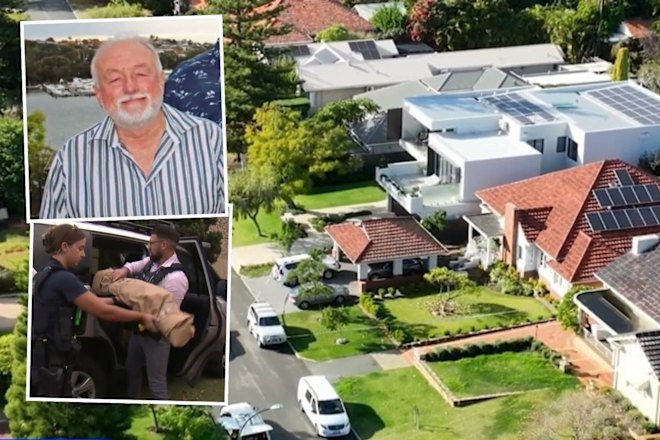
Jennifer and Gretl were gunned down by Mark Bombara, a 63-year-old man who, fuelled with rage over a recent separation, was looking for his wife Rowena and daughter Ariel, who had both fled the family’s Mosman Park home and gone into hiding.
asserted
who → gun → hiding
It is believed they were Bombara’s targets and that he attended the Petelczycs’ Floreat home looking for them, killing the women “in proxy” for the mother and daughter he could not find.
uncertain
he → believe → mother
Questions were also raised about Bombara suffering from a brain injury after two strokes and a 10-centimetre cyst that was found during a scan.
But the most damning evidence presented during the five-day inquest was about police’s handling of concerns raised by Ariel about her father’s escalating behaviour.
asserted
evidence → raise → behaviour
On Thursday, WA Police Commander Jason Longhorn outlined a catalogue of failures made by officers during multiple triple-zero calls as the incident was unfolding.
asserted
incident → outline → calls
Longhorn said he could “not categorically say” there was not a radio failure that delayed dispatchers from sending officers to the Floreat home after triple-zero calls were made by both Gretl, from inside the home, and Ariel, who was with her mother at a separate location.
uncertain
who → say → location
The inquest previously heard how police operators were slow to answer calls from Gretl, who had her hands tied and appeared to be hiding from Bombara, who was holding a gun to her mother’s head.
asserted
who → hear → head
Screaming]
Ariel: “It’s an emergency, he’s got a gun.
asserted
he → scream → gun
He’s just shot someone I think.
asserted
I → shoot → someone
It’s my father.
asserted
It → ’ → ?
Operator: “Who’s been shot?“
Ariel: “Jenny Petelczyc.
asserted
Who → shoot → ?
She lives at the house.
asserted
She → live → house
My father, Mark Bombara has a gun.
asserted
father → have → gun
It’s a domestic violence situation.
asserted
It → ’ → ?
Ariel: “No he’s showed up at their house.“
asserted
he → show → house
Operator: “What’s the name of your father? What’s the name of the female involved?“
asserted
name → ’ → female
Operator: “How do you spell her surname”
Ariel: “P-e-t-e-l-c-z-y-c.“
Operator: “Who is Jenny to your dad?“
asserted
Jenny → spell → dad
Ariel: “She’s my mum’s best friend and my father has turned up there with a gun …”
asserted
father → ’ → gun
Operator: “The job’s already on.
asserted
job → ’ → ?
Who called you?”
asserted
Who → call → you
Ariel: “Jenny called my mum and said Mark just showed up and left, and then he came back, and I heard her say, ‘put the gun down’ and then I heard gun shots.”
asserted
I → call → shots
How many shots did you hear?”
asserted
you → hear → shots
I’m still here.
asserted
I → ’m → ?
Do we know why he went to the house at all in the first place?”
asserted
he → know → place
She is going to leave him …
asserted
She → go → him
they’re going through a divorce.
asserted
they → go → divorce
He thought that my mother was staying with her best friend.
asserted
mother → think → friend
And so he was looking for her.”
asserted
he → look → her
Operator: “OK, so the job’s on there.
asserted
job → ’ → there
If you get a call from a private number it will be from a policeman.”
asserted
it → get → policeman
Ariel: “So what do we do now?”
asserted
we → do → what
Operator: “Just stay where you at the moment, police will most likely be in contact with you.
asserted
police → stay → you
Ariel: “OK so we have to stay here, we can’t go and see if jenny’s OK?”
Operator: “That’s up to you, just answer your phone if police call.”
asserted
police → have → phone
The inquest was also told the incident was initially categorised as a priority 2, which at the time was described as “immediate threat”, whereas a priority 1 incident was described as “imminent threat to life”.
asserted
incident → tell → life
That was despite Ariel telling an operator on multiple occasions that “someone has been shot”.
asserted
someone → tell → occasions
Longhorn said he had reviewed the call and determined himself that it should have been made a priority 1.
asserted
it → say → call
“Yes, knowing the outcome of this incident – when I reviewed the call, the information that was provided, it was more than likely a priority 1,” he said.
asserted
he → know → call
…and 5 more, not listed.
 The Aporia