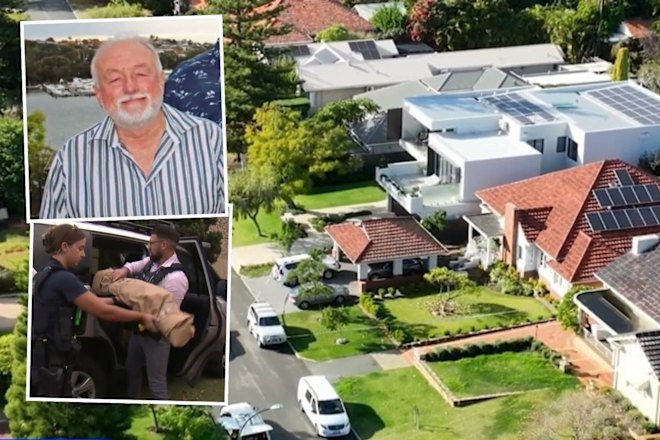
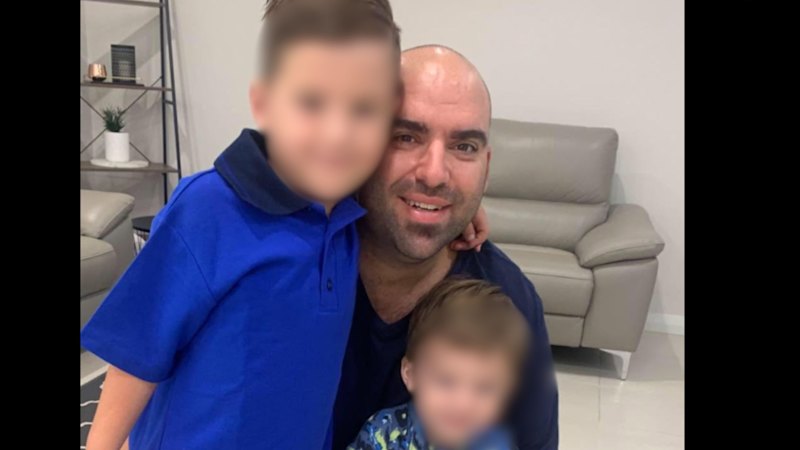
A WA Police constable tasked with assisting the wife and daughter of double murderer Mark Bombara to collect their belongings weeks before he was hunting them with guns, has told an inquest he thought he was a “nice guy” and spent half an hour talking to him about his riverfront Mosman Park home and new 54-foot boat.
asserted
he → task → home
Constable Shaun King told the inquest into the double murder on Thursday and Friday that the biggest concern he had when he got to the home was that Isaac Bombara - Rowena and Mark’s son - was tall, and not that he was in possession of multiple firearms and ammunition.
asserted
he → tell → firearms
King and another officer picked up the priority 4 job on April 1, 2024, that entailed assisting Rowena and Ariel attend their multimillion dollar home to retrieve their belongings a day after they had fled in the middle of the night and presented at Mirrabooka Police Station asking for help.
asserted
they → pick → help
They had sought a police escort because they held fears for their safety as Bombara’s behaviour had become more aggressive and erratic following two strokes and the breakdown of his marriage.
asserted
behaviour → seek → marriage
Both women claim they reiterated their safety concerns to the officers ahead of entering the home, but King testified that despite Bombara redirecting the conversation back to his guns on three separate occasions, he did not place any importance on them.
uncertain
he → claim → them
“I wasn’t thinking about the firearms, stupidly,” he said.
asserted
he → think → firearms
“I’m in the house while Rowena and Ariel are upstairs getting their things.
asserted
Rowena → ’m → things
I’m just talking drivel for an hour … trying to keep him occupied.”
asserted
I → talk → him
King told the inquest he “wasn’t aware” Rowena and Ariel were afraid of Mark Bombara and said he did not know he was there as part of a domestic violence situation.
asserted
he → tell → situation
It was also put to King that he and other officers in attendance were being “groomed” and “manipulated” by Mark Bombara, who offered them coffee and tea and chatted to them about his new 54-foot boat.
“Did you get the impression he wanted to reinforce to you that he was a successful, wealthy and powerful man?”
asserted
he → put → you
Ariel and Rowena’s lawyer Kathryn Kraus asked.
asserted
Ariel → ask → ?
“No,” the officer responded.
asserted
officer → respond → ?
“You were overwhelmed by it,” she said.
asserted
she → overwhelm → it
“I was impressed,” he answered.
asserted
he → impress → ?
“Your ability to assess his character was impacted,” Kraus suggested.
uncertain
Kraus → assess → character
“Yes,” he replied.
asserted
he → reply → ?
“Was it jarring to you that after the high level of concern everyone conveyed to you, that when you walked into the house he was a calm and docile man?” Kraus asked.
asserted
Kraus → convey → house
“No,” he replied.
asserted
he → reply → ?
“I hate to say it but he seemed like a nice man,” King later said.
asserted
King → hate → man
It was later revealed that Bombara was “ruminating” over the visit and ranting about the police attending his house for weeks.
asserted
police → reveal → weeks
He even addressed it in his suicide note, which the officer was unaware of.
asserted
officer → address → which
“[He wrote] ‘armed cops, TRG and firearms squad coming to the house’,” Kraus told the officer.
asserted
Kraus → write → officer
“[He wrote] ‘If that’s how they’re painting me, maybe that’s the person I should be’.
asserted
I → write → me
You agree from the frequency of Mr Bombara referencing this, that is something that he felt very strongly about?”
“Yes,” King answered.
asserted
King → agree → that
“But there was no sign to you, as he was speaking to you, that he was experiencing what would develop into that level of rage about this incident?” she asked.
asserted
she → be → incident
“No,” he replied.
asserted
he → reply → ?
“Would you accept that you failed to identify the risk? … [and] placed too much weight on Mr Bombara and not enough on the concerns that were raised?”
asserted
that → accept → concerns
“Yes,” he responded.
asserted
he → respond → ?
Kraus told the officer that in his Internal Affairs interview, he stated that presented with the same set of circumstances, he would not do anything different, to which King said he could not remember saying that.
uncertain
he → tell → that
“I would definitely do something different now,” he said.
asserted
he → do → something
WA Police Commander Levinia Hugo, who at the time was the superintendent of the Family Violence Unit, later told the inquest that since the deaths of Jennifer and Gretl Petelczyc the approach to standby tasks is very different and they are now immediately treated as a domestic violence incident.
asserted
they → tell → incident
She said that in 2024 standby tasks were treated more like a security guard position, a ‘keep the peace’-type role.
asserted
tasks → say → peace’-type
“The policy we’ve written now was that we will not attend a standby task unless there is imminent reason to do so,” she told the inquest.
asserted
she → write → inquest
“And it will be treated as a FV incident.
asserted
it → treat → incident
We will now do a whole lot of back work … we will ask why.”
asserted
we → do → work
WA Police and individual officers have faced intense scrutiny throughout the inquest.
asserted
Police → face → inquest
Hugo opened her evidence by urging the court to remember that “one person made a decision that day to take those lives …
asserted
person → open → lives
I want to make sure we bring that to the fore.”
asserted
we → want → fore
She admitted that the conduct of some of the officers who dealt with Rowena and Ariel’s concerns prior to the shootings “did not meet the standard” before stating they had met with disciplinary action.
asserted
they → admit → action
The inquest continues.
asserted
inquest → continue → ?
 The Aporia