Photo via The Straits Times

NASA scan discovers new, ‘once in a century’ moon crater

Read the original at The Straits Times ↗
Cite

The Straits Times. (2026, September 17). NASA scan discovers new, ‘once in a century’ moon crater. The Straits Times. https://www.straitstimes.com/world/united-states/nasa-scan-discovers-new-once-in-a-century-moon-crater

Dated when The Aporia collected the article, usually within hours of publication. Check the original for its exact date and byline.

The Straits Times · collected 2026-09-17 · by The Straits Times

Quick Summary

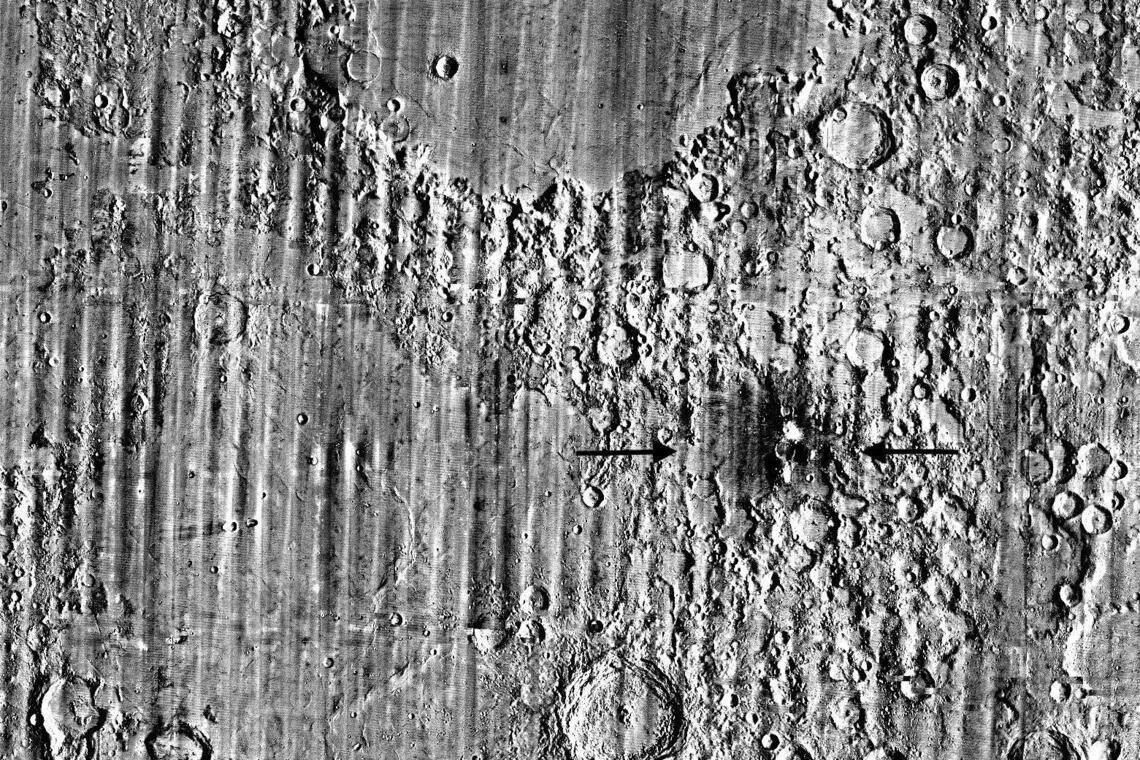
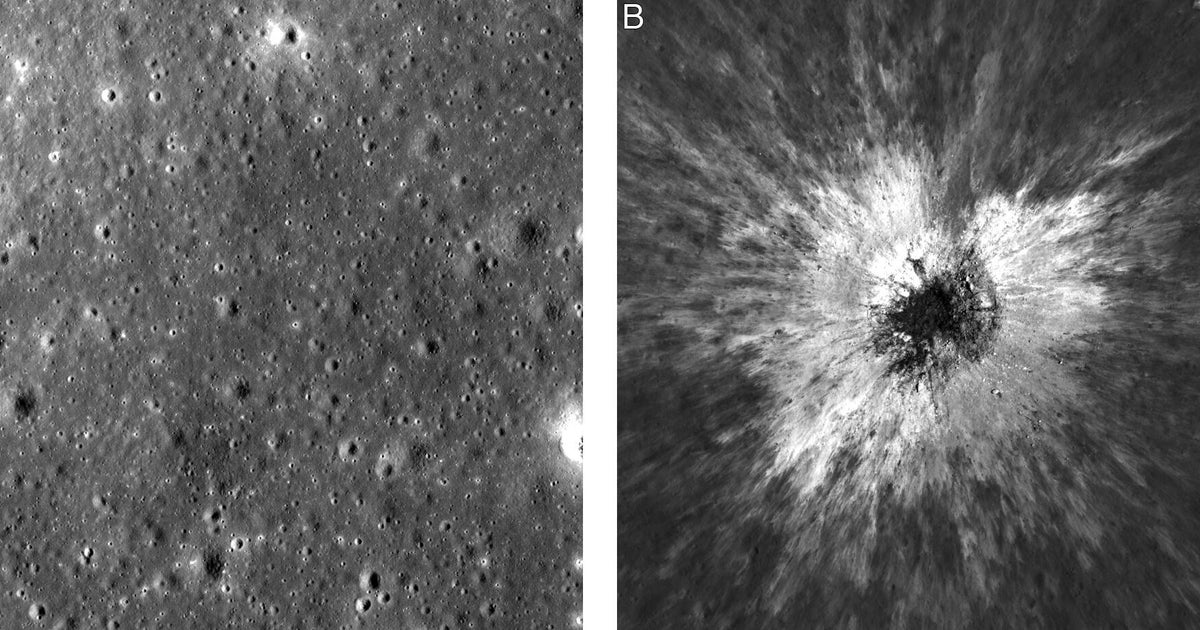
A researcher at NASA discovered a recently formed crater on the Moon named McGetchin, measuring 222 meters wide, believed to have been caused by an asteroid or comet collision in spring 2024. Scientists consider impacts of this scale to be once-in-a-century events. The Lunar Reconnaissance Orbiter (LRO) detected the crater as a bright spot with a dark halo and it is noted as the largest newly discovered crater in the solar system according to a study published on September 16th. This finding aids understanding of lunar geology and prepares future crewed missions to the Moon.
Written by AI on 2026-09-17, from this article's own text only (the story summary below draws on all the coverage).

AI analysis

Story summary

NASA’s Lunar Reconnaissance Orbiter (LRO) discovered a massive crater on the moon's near side, larger than the Roman Colosseum, measuring about 728 feet across and up to 141 feet deep, in May 2024. The impact that formed this crater was caused by an asteroid or comet fragment roughly the size of a three- to six-story building. This event is estimated to occur only once every 132 years, making it a rare opportunity for researchers studying lunar geology and future moon missions. The crater was initially missed by Earth-based telescopes but spotted later in data analysis, providing valuable insights into the moon's surface changes as NASA plans to establish a base there.

Written for “Moon Crater Discovery” on 2026-11-01, grounded in this article and the 4 other(s) covering the same event.

Story

📰 Moon Crater Discovery
Science · 5 article(s) covering the same event. Compare every outlet's account →

Compared with similar articles

This article reads unscored and hedges 20% of its claims. Each row says how that neighbour differs.
New York Post
Hedges 3 of 19 claims Outlet record 66/100
CBC News
Hedges 3 of 17 claims Outlet record 74/100
CBS News
Hedges 4 of 21 claims Outlet record 66/100
ABC News (AU)
Hedges 4 of 31 claims Outlet record 68/100
How this article was measured signals, leaning charts, publisher record, byline, topics and claims

Signals How these are calculated →

Claims extracted
10
sentences that state something as happening or true
Uncertain
20%
2 of 10 hedged ("reportedly", "may", "according to")
Leaning
not political
takes no side on a contested political question
Publisher signals
66/100
The Straits Times's corrections and hedging, across everything collected from it. Not a measure of accuracy.
Outlets on this story
5
Science
Same framing elsewhere
1
articles that frame the event the way this one does
Analyzed 2026-09-17 · how these are computed

How this is being covered How these are calculated →

Article leaning vs. publisher reliability
Source leaning vs. consistency

Publisher

The Straits Times · 4126 article(s) · 5 correction(s) detected
Running correction rate · 5 correction(s)

Who wrote this

The Straits Times
2665 article(s) here · 1 carrying a prediction
🔮 If not for the “economic funk” engulfing most voters, the National Party would have a much easier route back to office, said political commentator Grant Duncan.
🔮 Explainer-How Trump’s noncitizen voter lists could affect the midterms
🔮 “It’s been a hell of a year – analogue astronauts living in captivity of our own free will,” Ellen Ellis, the medical officer on the Crew Health and Performance Exploration Analog, or CHAPEA, mission, said in remarks at Johnson Space Center after emerging with her three crewmates on Oct 31. The four entered the 1,700-square-foot (158sq m) 3D-printed habitat on Oct 19, 2025, and performed tasks such as growing crops in simulated Martian soil and interfacing with NASA officials with delays recreating those inherent in interplanetary communications.
🔮 Races in some areas are so tight, that turnout from the Indian community may change the outcomes, rally organisers say.
🔮 Initial complaints were expected to be filed on Nov 1.
🔮 Final results are due in coming days and not expected to change the outcome.
🔮 The head of a student group said a campaign of high school blockades would restart from Nov 2, adding the government’s proposals did not go far enough.
🔮 “Evidence is being reviewed and further action will be taken as appropriate.”
🔮 The head of Germany’s far-left Die Linke (The Left) party, Ines Schwerdtner, told the Rheinische Post daily that the demands made by those “demonstrating peacefully will not disappear because small angry groups followed up with acts of vandalism”.
🔮 Pope Leo says he hopes Oleshky truce could spur Ukraine-Russia peace efforts VATICAN CITY, Nov 1 - Pope Leo said on Sunday he hoped cooperation between Russia and Ukraine in implementing a ceasefire in the Russian-occupied Ukrainian town of Oleshky would pave the way for broader peace efforts. Ukraine and Russia said on October 23 they had agreed to a ceasefire in Oleshky, brokered by US first lady Melania Trump with the additional involvement of Pope Leo, to allow aid deliveries and evacuations from the frontline town, which has been suffering acute food and medicine shortages. "
Also by The Straits Times
Nothing else under this byline is closely related to this article, so these are simply their most recent.
All 2665 articles by The Straits Times →

Topics

LRO Lunar Reconnaissance Orbiter NASA Science Advances WASHINGTON

Subjects

NASA ORG · 5× AFP ORG · 1× China GPE · 1× McGetchin PERSON · 1× Robert Wagner PERSON · 1× Science Advances ORG · 1× WASHINGTON GPE · 1× the United States GPE · 1×

Narrative

Although the crater had been there for years, it was not discovered until Robert Wagner, a researcher with NASA’s Lunar Reconnaissance Orbiter (LRO), noticed it in a new scan of the Moon’s surface. The crater appeared as a “large bright spot circled by a dark halo” by the LRO probe, which has been studying the Moon since 2009.
framing: assertive · carried by 1 article(s) · first seen 2026-09-17
🔮 This in turn could better prepare future crewed missions to the moon, which are currently planned by both the United States and China.
2026-09-17 · The Straits Times
NASA scan discovers new, ‘once in a century’ moon crater · assertive framing

Claims (10 extracted, 2 hedged)

NASA scan discovers new, ‘once in a century’ moon crater AI generated asserted
scan → discover → crater
A researcher at NASA has found a massive, recently-formed crater on the moon, a rare occurrence that only happens “once in a century or even longer,” according to scientists. uncertain
that → find → scientists
The crater, dubbed “McGetchin,” measures 222m wide, NASA said in a blog post. asserted
NASA → dub → post
It is believed to have been created in the spring of 2024 from a comet or asteroid colliding with the Moon, with researchers describing the object that caused it to be the size of a building three-to-six stories high. “ asserted
it → believe → building
Scientists estimate that an impact of this magnitude happens on the Moon about once in a century or even longer,” NASA said in the blog post. asserted
NASA → estimate → post
Although the crater had been there for years, it was not discovered until Robert Wagner, a researcher with NASA’s Lunar Reconnaissance Orbiter (LRO), noticed it in a new scan of the Moon’s surface. The crater appeared as a “large bright spot circled by a dark halo” by the LRO probe, which has been studying the Moon since 2009. asserted
which → discover → 2009
A study published on Sept 16 in the journal Science Advances determined it was the largest new crater ever discovered in the solar system. asserted
it → publish → system
While the moon has numerous craters, many of which are far bigger than McGetchin, researching a crater’s formation in real time can help build understanding of the Moon’s geology. asserted
researching → have → geology
This in turn could better prepare future crewed missions to the moon, which are currently planned by both the United States and China. uncertain
which → prepare → States
Unlike Earth, the moon has virtually no atmospheric layer, so space debris does not slow down or burn up before colliding with the surface. asserted
debris → have → surface
💬Give feedback
🕘History 🎫Support