Photo via Reason

D.C. Rejects Robotaxis To Protect Jobs

Read the original at Reason ↗
Cite

Ibrahim, R. (2026, November 13). D.C. Rejects Robotaxis To Protect Jobs. Reason. https://reason.com/2026/11/13/d-c-rejects-robotaxis-to-protect-jobs/

Dated from the outlet's own feed. Check the original for its byline.

Reason · collected 2026-11-13 · by Reem Ibrahim

Quick Summary

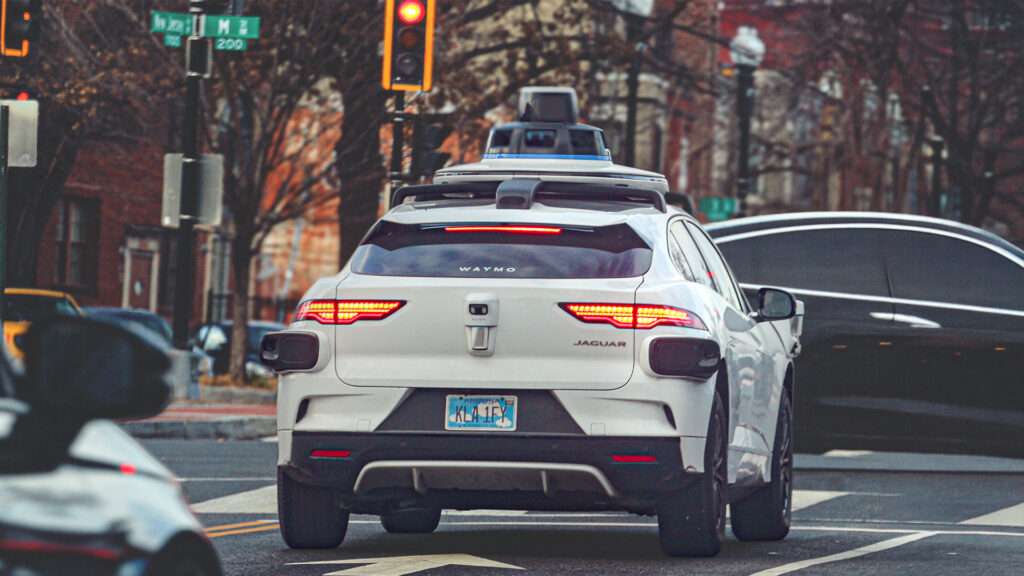
The D.C. Council rejected a bill that would have allowed autonomous vehicles to operate in Washington, D.C., in a 3-3 vote on Thursday. The bill, proposed by Councilmember Charles Allen, aimed to create a legal framework for companies to run driverless taxis and delivery vehicles, potentially reducing road accidents significantly. Despite evidence showing that autonomous vehicles are involved in far fewer crashes than human-driven cars, the bill was defeated due to concerns about job displacement and competition with unionized transportation services.
Written by AI on 2026-11-15, from this article's own text only (the story summary below draws on all the coverage).

AI analysis

Story summary

The D.C. Council rejected a bill that would have allowed autonomous vehicles (A.V.s) to operate in the nation's capital, with a 3–3 vote in the Committee on Transportation and the Environment on Thursday, November 9, 2026. Councilmember Charles Allen, Mayor-elect Janeese Lewis George, and Councilmembers Zachary Parker and Elissa Silverman voted against the bill, while Councilmember Allen, Council Chair Phil Mendelson, and Christina Henderson voted in favor. The legislation, proposed by Allen, aimed to establish the first legal framework for companies like Waymo to run driverless taxis and delivery vehicles in the district. Waymo's analysis of over 271 million miles without a human driver showed that autonomous vehicles were involved in 95% fewer crashes resulting in serious injuries or fatalities, 93% fewer pedestrian injury crashes, and 86% fewer cyclist crashes with injuries compared to human drivers. The rejection of the bill reflects concerns about job protection, despite potential safety benefits.

Written for “D.C. Rejects Robotaxis” on 2026-11-17, grounded in this article and the 0 other(s) covering the same event.

Compared with similar articles

Nothing to compare against. No article is close enough to this one for the pipeline to have linked or judged the pair.

Story

D.C. Rejects Robotaxis
Politics · 1 article(s) covering the same event.
How this article was measured signals, leaning charts, publisher record, byline, topics and claims

Signals How these are calculated →

Claims extracted
24
sentences that state something as happening or true
Uncertain
17%
4 of 24 hedged ("reportedly", "may", "according to")
Leaning
Leans right
of the writing, not the subject · beta estimate
Publisher signals
67/100
Reason's corrections and hedging, across everything collected from it. Not a measure of accuracy.
Outlets on this story
1
Politics
Same framing elsewhere
1
articles that frame the event the way this one does
Analyzed 2026-11-15 · how these are computed

How this is being covered How these are calculated →

Article leaning vs. publisher reliability
Source leaning vs. consistency

Publisher

Reason · 1358 article(s) · 4 correction(s) detected
Running correction rate · 4 correction(s)

Who wrote this

Reem Ibrahim
19 article(s) here · 1 carrying a prediction
With the agency still using decades-old technology, they examine why efforts to modernize the system have stalled and whether privatization would be more effective than another $50 billion in federal funding.
2026-11-16 · assertive framing · Why Is America's Air Traffic Control so Broken?
The D.C. Council has rejected a bill that would have allowed autonomous vehicles (A.V.s) to operate in the country's capital.
2026-11-13 · assertive framing · D.C. Rejects Robotaxis To Protect Jobs
Proposition 40 would have imposed a 5 percent tax on individuals who lived in the state on January 1, 2026, and whose net worth is over $1 billion as of December 31, 2026.
2026-11-10 · assertive framing · California Voters Reject 5% Billionaire Wealth Tax
Voters in North Carolina approved changes to the state constitution that would cap personal and corporate income taxes at 3.5 percent.
2026-11-05 · assertive framing · Tax Cuts Won and Lost in the Midterms
In European cities, I would often spend evenings hopping between bars on organized bar crawls, but this Halloween I wasn't able to because of Washington, D.C.'s prohibition on pub crawls.
Under the new plans, many departments could see staffing reductions of anywhere from 20 to 60 percent, according to the letter.
Singer says that removing barriers that prevent new companies from competing with established providers could not only increase choice but also drive down prices.
Starting next week, Pennsylvania will begin enforcing a law prohibiting the sale of e-cigarettes that have not been explicitly approved by the state.
There's no way to guarantee a risk-free environment, that there will not be major hacks, scams, or negative consequences of AI, Altman says.
On Wednesday, Sen. Rand Paul (R–Ky.) blocked efforts to pass the Senate's Kids Online Safety Act (KOSA)—a bill that would legally require platforms to "exercise reasonable care" in creating any "design feature" that could foreseeably harm minors—through unanimous consent (a fast-track procedure that would only pass if no senator objects).
Also by Reem Ibrahim
Nothing else under this byline is closely related to this article, so these are simply their most recent.
All 19 articles by Reem Ibrahim →

Topics

Committee on Transportation and the Environment The D.C. Council Waymo the Autonomous Vehicle Deployment Authorization Amendment Act the D.C. Council's

Subjects

Parker PERSON · 2× Waymo ORG · 2× Charles Allen PERSON · 1× Christina Henderson PERSON · 1× Committee on Transportation and the Environment ORG · 1× Council ORG · 1× Janeese Lewis George PERSON · 1× Phil Mendelson PERSON · 1× The D.C. Council ORG · 1× the D.C. Council's ORG · 1×

Narrative

"My reference class for this kind of problem is infrastructure, where it's super common for people near a new infrastructure to say they don't want it," Lucas Pombo, a research fellow at the Foundation for American Innovation, tells Reason, while people who will benefit won't know that yet. Technological progress has always disrupted existing industries.
framing: assertive · carried by 1 article(s) · first seen 2026-11-15
The D.C. Council has rejected a bill that would have allowed autonomous vehicles (A.V.s) to operate in the country's capital.
2026-11-15 · Reason
D.C. Rejects Robotaxis To Protect Jobs · assertive framing

Claims (24 extracted, 4 hedged)

The D.C. Council has rejected a bill that would have allowed autonomous vehicles (A.V.s) to operate in the country's capital. asserted
vehicles → reject → capital
During a session of the D.C. Council's Committee on Transportation and the Environment on Thursday, the Autonomous Vehicle Deployment Authorization Amendment Act of 2026 was defeated in a 3–3 vote. asserted
Act → defeat → vote
Councilmember Charles Allen, who introduced the bill, Council Chair Phil Mendelson, and Christina Henderson, voted in favor. asserted
who → introduce → favor
Mayor-elect Janeese Lewis George and Councilmembers Zachary Parker and Elissa Silverman voted against. asserted
George → vote → ?
The legislation would have created the first legal pathway for companies to operate driverless taxis and delivery vehicles in the district, potentially preventing thousands of road accidents in the process. asserted
companies → create → process
Waymo, an autonomous driving technology company, analyzed more than 271 million miles without a human driver. asserted
Waymo → drive → driver
The results showed autonomous vehicles were involved in 95 percent fewer crashes resulting in serious injuries or fatalities, 93 percent fewer pedestrian injury crashes, and 86 percent fewer cyclist crashes with injuries compared with human drivers travelling comparable distances. asserted
vehicles → show → distances
In July, the Insurance Institute for Highway Safety published research finding similar results—Waymo's driverless vehicles were involved in 68 percent fewer police-reportable crashes and 81 percent fewer injury crashes per mile than human drivers. asserted
vehicles → publish → drivers
As Allen argued at Thursday's hearing, "A.V.s do not drive while impaired, distracted, or tired. asserted
A.V.s → argue → hearing
They can be programmed to follow traffic laws that are all too often broken with deadly consequences." asserted
that → program → consequences
Despite evidence that A.V.s could improve road safety, which was acknowledged, the bill failed primarily due to opposition from lawmakers concerned about the impact of automation on existing workers. uncertain
bill → improve → workers
"I support bringing autonomous vehicles to the district," said councilmember Parker, who voted against the legislation. asserted
who → support → legislation
"My concerns include impacts on existing jobs, and the degree to which new jobs or other benefits secured in this legislation will help individuals who stand to lose out." asserted
who → include → individuals
Concessions were already made to lawmakers concerned about job displacement. asserted
Concessions → make → displacement
The original bill would have imposed a costly regulatory framework, including an extraordinarily expensive $6 million three-year permit, $5 million in insurance, and a tax of 15 cents on every mile driven, in part to fund government training programs for rideshare drivers. asserted
bill → impose → drivers
Prior to Thursday's vote, the bill received a substantial rewrite to make even more concessions, including granting Uber and Lyft drivers collective bargaining rights, extending unionization rights to autonomous vehicle maintenance workers, and limiting the number of driverless vehicles to 200 per operator and 800 citywide. asserted
bill → receive → operator
Yet even these concessions failed to win over politicians. asserted
concessions → fail → ?
Parker expressed concern that autonomous vehicles would compete with unionized transportation services. asserted
vehicles → express → services
"The bill also permits A.V.s with capacity up to 10 passengers," he said, "And I've heard from our friends in labor that they're concerned that that may decimate their union transit operations." uncertain
that → permit → operations
Arguing that automated vehicles, which may save lives, must be prohibited because they would compete with unionized labor is absurd. uncertain
they → argue → labor
A study published in Transportation Research Record found that public transit remained competitive with autonomous ridesharing services where good transit options were available. asserted
options → publish → services
The researchers concluded that fears of a mass exodus from public transit to driverless vehicles may be limited, at least in the short term. uncertain
fears → conclude → term
"My reference class for this kind of problem is infrastructure, where it's super common for people near a new infrastructure to say they don't want it," Lucas Pombo, a research fellow at the Foundation for American Innovation, tells Reason, while people who will benefit won't know that yet. Technological progress has always disrupted existing industries. asserted
progress → say → industries
That doesn't mean we should try to stop it, particularly when the potential cost of doing so is measured in human lives. asserted
cost → mean → lives

Give feedback · no sign-in needed

No sign-in needed for now. Your note is sent without a name, so it cannot be answered.

History Support