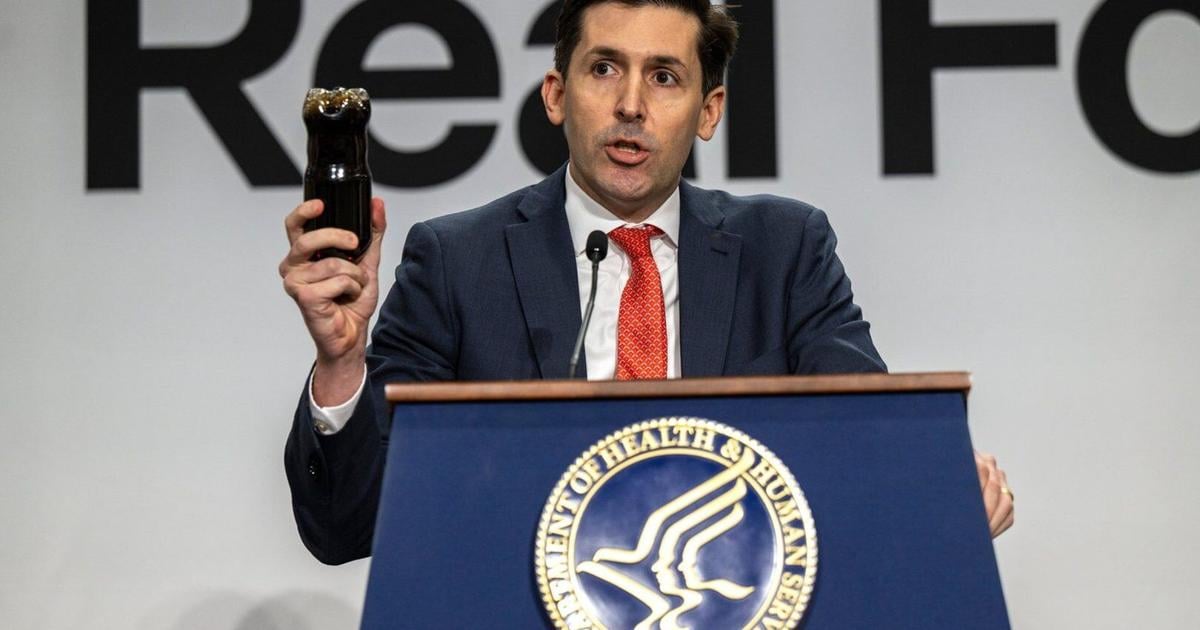
Photo via The Independent

US gives states another 6 months before they have to remove people from Medicaid for not working

Read the original at The Independent ↗
Cite

Hussein, F., & Mulvihill, G. (2026, November 13). US gives states another 6 months before they have to remove people from Medicaid for not working. The Independent. https://www.independent.co.uk/news/world/americas/medicaid-donald-trump-democrats-mehmet-oz-nebraska-b3084865.html

Dated from the outlet's own feed. Check the original for its byline.

The Independent · collected 2026-11-13 · by Fatima Hussein, Geoff Mulvihill

Quick Summary

The Trump administration announced on Friday that states have until July 1 to begin removing individuals from Medicaid for failing to meet new work requirements. While the national requirement was originally scheduled for January 1, this six-month extension aims to help state social service departments overcome staffing, training, and technology hurdles to avoid losing enrollees due to administrative failures. The policy applies to those in the 40-state voluntary expansion and requires beneficiaries to work or volunteer for at least 80 hours a month or attend school at least half-time. This reporting frames the delay as a practical necessity for state agencies while noting that the extension provides a window for a Democratic-led Congress to potentially roll back the requirements.
Written by AI on 2026-11-14, from this article's own text only (the story summary below draws on all the coverage).
See how they differ ↓

AI analysis

Story summary

The Trump administration has delayed the enforcement of Medicaid work requirements, originally set to begin on January 1, 2027, by six months, allowing states until July 1, 2027, to implement the changes. The delay aims to give states more time to prepare for the new requirements, which include verifying that Medicaid recipients are working, in school, or volunteering. Despite the delay, states must still assess whether recipients meet these requirements starting January 1, but no one will lose coverage due to administrative failures during this period. Critics argue that the rushed initial timeline posed a significant risk to millions of Americans' health coverage, potentially leading to coverage losses due to additional red tape and paperwork. The delay is seen as a response to concerns raised by state officials and healthcare advocates.

Written for “Trump Administration Delays Medicaid Cuts” on 2026-11-17, grounded in this article and the 3 other(s) covering the same event.

How they differ

4 outlets covered “Trump Administration Delays Medicaid Cuts”.

What each outlet says

One AI summary per outlet of its latest article on this story, written from that article alone and checked against it. Open the article for the outlet's own words.

The IndependentThis outlet13 Nov

The Trump administration announced on Friday that states have until July 1 to begin removing individuals from Medicaid for failing to meet new work requirements. While the national requirement was originally scheduled for January 1, this six-month extension aims to help state social service departments overcome staffing, training, and technology hurdles to avoid losing enrollees due to administrative failures. The…

US gives states another 6 months before they have to remove people from Medicaid for not working (this article)
NBC News13 Nov

The Trump administration announced on Friday a voluntary six-month "hold harmless" period for the enforcement of Medicaid work requirements, which are technically scheduled to begin on January 1. While states can still begin verifying whether enrollees work, volunteer, or attend school for at least 80 hours a month, no one in participating states will lose coverage for failing to meet these requirements until at…

Trump administration delays Medicaid work requirements by six months →
Toronto Star13 Nov

The Trump administration announced on Friday that states have until July 1 to begin removing individuals from Medicaid for failing to meet a work requirement originally scheduled for January 1. While states must still determine if enrollees are working, volunteering, or attending school at least half-time, the six-month extension aims to allow social service departments to overcome staffing and technology hurdles…

US gives states another 6 months before they have to remove people from Medicaid for not working →
Mother Jones14 Nov

The Trump Administration has temporarily paused new Medicaid work requirements that were set to begin on January 1st, extending the deadline to mid-2027. This pause allows states to avoid denying or disenrolling eligible individuals solely due to non-compliance with these requirements for the next six months. Critics argue that these work requirements, part of President Trump’s OBBBA, will lead to significant…

Looming Medicaid Cuts Could End in Disaster. The Trump Administration Just Paused Them for Six Months. →

Where they agree and split

Framing

How the first headlines put it

Stated as fact3
The headlines (3)

US gives states another 6 months before they have to remove people from Medicaid for not working The Independent · stated as fact

Trump administration delays Medicaid work requirements by six months NBC News · stated as fact

US gives states another 6 months before they have to remove people from Medicaid for not working Toronto Star · stated as fact

Words to watch (1)

Looming Medicaid Cuts Could End in Disaster. The Trump Administration Just Paused Them for Six Months. Mother Jones

The full story: what happened, how it changed, and all 4 articles →

Compared with similar articles

This article reads unscored and hedges 18% of its claims. Each row says how that neighbour differs.
Toronto Star
Hedges 5 of 30 claims Outlet record 64/100
NBC News
Leans strongly left Hedges 2 of 20 claims Outlet record 78/100
Mother Jones
Hedges 4 of 31 claims Outlet record 60/100

Story

Trump Administration Delays Medicaid Cuts
Politics · 4 article(s) covering the same event. Compare every outlet's account →
How this article was measured signals, leaning charts, publisher record, byline, topics and claims

Signals How these are calculated →

Claims extracted
28
sentences that state something as happening or true
Uncertain
18%
5 of 28 hedged ("reportedly", "may", "according to")
Leaning
not political
takes no side on a contested political question
Publisher signals
59/100
The Independent's corrections and hedging, across everything collected from it. Not a measure of accuracy.
Outlets on this story
4
Politics
Same framing elsewhere
1
articles that frame the event the way this one does
Analyzed 2026-11-14 · how these are computed

How this is being covered How these are calculated →

Article leaning vs. publisher reliability
Source leaning vs. consistency

Publisher

The Independent · 4492 article(s) · 10 correction(s) detected
Running correction rate · 10 correction(s)

Who wrote this

Fatima Hussein
14 article(s) here · 1 carrying a prediction
“I think these extra six months are going to give states the ability to respond to the change, and there will be fewer people that lose their coverage due to administrative failures” resulting from states’ inability to prepare
“I think these extra six months are going to give states the ability to respond to the change, and there will be fewer people that lose their coverage due to administrative failures” resulting from states’ inability to prepare, Kathy Hempstead, senior policy officer for the Robert Wood Johnson Foundation, told The Associated Press.
A public spat between former Trump administration officials over alleged corruption in public health policymaking is the latest front in Republicans’ postelection recriminations, a battle that has exposed fault lines within the White House and could reshape political alliances involving the influential Make America Healthy Again movement.
The open enrollment window for the marketplace, also known as Obamacare, opens on Sunday in most states and closes on Jan. 15. Health insurance bought through the Affordable Care Act marketplaces is expected to cost 13% more on average in 2027, according to an analysis of new CMS data by the healthcare research nonprofit KFF. Aside from higher premiums and fewer coverage options in 2027, anyone planning to sign up should also brace for expiring financial assistance, rising rates, potential delays in working with a broker, new restrictions on immigrants, and stricter enrollment checks.
Across the board, healthcare experts predict less coverage and higher prices, with the average price of health insurance purchased through the marketplaces expected to rise by 13% in 2027, according to analysis of new CMS data by the healthcare research nonprofit KFF.
"On my monthly income, I would not be able to afford my new medical expenses," says Weigand, 83, who lives in North Canton, Ohio.
Barbara Weigand could not have prepared more for retirement.
WASHINGTON (AP) — Barbara Weigand could not have prepared more for retirement.
New restrictions have stripped Medicaid coverage from certain legal immigrants, including refugees and victims of human trafficking, as part of broader federal changes to the health insurance program that are expected to force millions off their coverage.
Also by Fatima Hussein
Nothing else under this byline is closely related to this article, so these are simply their most recent.
All 14 articles by Fatima Hussein →
Geoff Mulvihill
10 article(s) here · 1 carrying a prediction
“I think these extra six months are going to give states the ability to respond to the change, and there will be fewer people that lose their coverage due to administrative failures” resulting from states’ inability to prepare
“I think these extra six months are going to give states the ability to respond to the change, and there will be fewer people that lose their coverage due to administrative failures” resulting from states’ inability to prepare, Kathy Hempstead, senior policy officer for the Robert Wood Johnson Foundation, told The Associated Press.
The administration says the proposed rule would close a loophole by no longer allowing some people who receive benefits under the federal Temporary Assistance for Needy Families program to automatically qualify for the separate Supplemental Nutrition Assistance Program too.
The party took full control — both statehouse chambers and governors’ offices — in Minnesota and Wisconsin and could pick up more states to earn additional trifectas.
At a time when some Democratic leaders nationwide are recalibrating their approach to transgender issues, particularly sports, and polls show Americans generally back the bans, supporters are optimistic they will pass and open the door to similar efforts in other places where lawmakers have blocked bans.
Log in Starting this January, new work mandates for select Medicaid recipients will take effect nationwide under President Donald Trump's major 2025 tax and policy legislation, with a group of Republican-governed states adopting measures far stricter than federally required.
Advocates say that could create problems, especially for new applicants to the joint state-federal health insurance program for lower-income people.
NYU agreed to pay the federal government $8.5 million and UPMC agreed to pay $950,000 in the deals, which followed similar settlements reached since May with Cleveland Clinic, Connecticut Children’s Hospital, Mount Sinai Health System in New York and Texas Children’s Hospital.
Also by Geoff Mulvihill
Nothing else under this byline is closely related to this article, so these are simply their most recent.
All 10 articles by Geoff Mulvihill →

Topics

CMS Medicaid The Associated Press The Centers for Medicare and Medicaid Services the Robert Wood Johnson Foundation

Subjects

Medicaid ORG · 7× CMS ORG · 3× Congress ORG · 1× Donald Trump PERSON · 1× Kate McEvoy PERSON · 1× Kathy Hempstead PERSON · 1× The Associated Press ORG · 1× The Centers for Medicare and Medicaid Services ORG · 1× the National Association of Medicaid Directors ORG · 1× the Robert Wood Johnson Foundation ORG · 1×

Narrative

“I think these extra six months are going to give states the ability to respond to the change, and there will be fewer people that lose their coverage due to administrative failures” resulting from states’ inability to prepare, Kathy Hempstead, senior policy officer for the Robert Wood Johnson Foundation, told The Associated Press.
framing: assertive · carried by 1 article(s) · first seen 2026-11-14
“I think these extra six months are going to give states the ability to respond to the change, and there will be fewer people that lose their coverage due to administrative failures” resulting from states’ inability to prepare, Kathy Hempstead, senior policy officer for the Robert Wood Johnson Foundation, told The Associated Press.

Claims (28 extracted, 5 hedged)

President Donald Trump's administration told states Friday that they won't have to remove people from Medicaid for failing to meet a work requirement until July. asserted
they → tell → July
The requirement is scheduled to take effect nationally on Jan. 1, and states have been scrambling to put in place the staffing, training and technology to implement it by then. asserted
states → schedule → it
The Centers for Medicare and Medicaid Services told state Medicaid directors on Friday that they'll still need to determine whether many enrollees and applicants for benefits are meeting new requirements that they are working, in school or volunteering. asserted
they → tell → school
But the states can choose not to kick anyone off or deny coverage for failure to meet the requirement until July 1. asserted
states → choose → July
That gives state social service departments more time to make sure complicated changes are ready to run before there are consequences. asserted
changes → give → time
CMS said that states are making progress but have implementation challenges. asserted
states → say → challenges
“I think these extra six months are going to give states the ability to respond to the change, and there will be fewer people that lose their coverage due to administrative failures” resulting from states’ inability to prepare, Kathy Hempstead, senior policy officer for the Robert Wood Johnson Foundation, told The Associated Press. asserted
Hempstead → think → Press
Still, she said it's not clear which states will opt to use the additional time. asserted
states → say → time
Kate McEvoy, executive director of the National Association of Medicaid Directors, said state Medicaid leaders “appreciate the additional flexibility that CMS is providing." There's political pressure over the requirement The decision also could give some breathing room to Congress to consider changes to the requirement. uncertain
decision → say → requirement
who are taking control of both chambers in January after their sweeping election victories last week have said they want to roll back the requirements. asserted
they → take → requirements
The news comes after Democratic Sen. Ron Wyden, of Oregon, and Rep. Frank Pallone Jr., of New Jersey, wrote to CMS Administrator Dr. Mehmet Oz this week, asking to delay implementing the work reporting requirements. asserted
Wyden → come → requirements
Their letter cites, in part, a recent decision out of a Boston federal court that determined medically frail people should not be bound by the work requirement qualification rules. asserted
people → cite → rules
“The practical reality is that this significant implementation issue may not be definitively resolved for months, creating untenable uncertainty for states that need a final resolution of this issue before going live with work reporting requirements,” the letter states. uncertain
letter → resolve → requirements
“The court ruling is an important victory for the millions of medically frail people who rely on Medicaid for their health care coverage." asserted
who → rely → coverage
Under the policy, many Medicaid beneficiaries must work or volunteer at least 80 hours a month or be in school at least half-time. asserted
beneficiaries → work → school
The new policy applies only to people who receive Medicaid under a voluntary expansion that 40 states undertook and which was intended to get health coverage to more lower-income adults who don’t have kids at home. asserted
who → apply → home
There are exceptions for those who are over 64, caring for kids under 14 or deemed too medically frail to work. asserted
who → be → 14
Critics say that most enrollees covered by the mandate are already working and that people are more likely to lose coverage because of the paperwork to prove it rather than failing to work. asserted
people → say → it
The federal government is pushing states to use data from other government departments or elsewhere to verify whether beneficiaries are working as a way to reduce the burden on the beneficiaries to show proof. asserted
beneficiaries → push → proof
Critics worry that the paperwork part will be the biggest issue A few states have launched the work requirements early. asserted
states → worry → requirements
The first of them was Nebraska, where they started in May. uncertain
they → start → May
Preliminary data presented to the state’s Medicaid Advisory Committee showed that more than 9 in 10 people subject to the work requirement and due to have their benefits renewed in July and August qualified. asserted
benefits → present → July
But 533 people were denied continuing coverage. asserted
people → deny → coverage
For most of them, it was over paperwork: They didn’t show that they were working or were exempt from the requirement. asserted
they → show → requirement
Of those denied, 43 lost coverage because they did not meet the new requirement. asserted
they → deny → requirement
Similarly, most of the new Medicaid applicants who were denied coverage due to work requirements from May through August did not get the coverage because they did not provide information to verify whether they were complying. uncertain
they → deny → information
Among both groups, it’s not clear how many people didn’t provide information because they weren’t working — or how many might meet the requirements but failed to show it. uncertain
many → ’ → it
“There are likely people who are still eligible for coverage who lost it,” said Amy Behnke, the CEO of the Health Care Center Association of Nebraska. asserted
Behnke → be → Nebraska

Give feedback · no sign-in needed

No sign-in needed for now. Your note is sent without a name, so it cannot be answered.

History Support