Many of the apps and algorithms in your pocket are designed to steal you away from the rest of your life.
asserted
Many → design → life
The typical American spends six hours per day on their phone, according to a peer-reviewed study of 10,000 U.S. adults.
uncertain
American → spend → adults
That’s roughly 15 years of continuous screen time over a lifetime.
asserted
That → ’ → lifetime
I’d struggle to navigate modern life without it, figuratively and literally.
asserted
I → struggle → it
Half of Americans with a smartphone worry that they use their device too much.
asserted
they → worry → device
For those under 30, that figure rises to 80 percent.
asserted
figure → rise → percent
Years of evidence suggest that excessive phone use alienates us from each other and the natural world.
asserted
use → suggest → other
I suspect one source of our age’s ennui lives in our back pocket.
asserted
source → suspect → pocket
Over the years, I’ve devised ways to protect what’s important to me from my phone and everything that comes from behind the screen.
asserted
that → devise → screen
While trillions of dollars are being spent to separate you from your attention, reclaiming it costs far less.
asserted
reclaiming → spend → less
You don’t need a vow of silence, a digital shaman, an $8,000 detox camp or a Faraday cage over your bed.
asserted
You → need → bed
The most powerful data centers in the world are pointed at your brain with a singular goal: capturing your attention.
asserted
centers → point → attention
Tech companies have learned how to activate the brain’s reward pathways with exquisite precision.
asserted
companies → learn → precision
“We know that Meta and Google and Apple are very good at designing technology in a way that will make you use it as much as possible because that’s their business model,” says Michael Sobolev, a behavioural scientist at Cornell University’s Digital Life Initiative who studies how technology affects our lives.
asserted
technology → know → lives
“We are fighting against that.
asserted
We → fight → that
And we’re losing.
asserted
we → lose → ?
The average smartphone user checks their phone 50 to 80 times per day.
asserted
user → check → day
While two-thirds of smartphone users in the United States report that their device has made their life at least “a little” better, Gallup found in 2022 that the share of Americans who say they use their phone too much, sometimes describing it as an “addiction,” keeps rising.
asserted
they → report → addiction
You wouldn’t carry around a slot machine or sleep next to a box of doughnuts.
asserted
You → carry → doughnuts
Putting physical and psychological distance between you and your phone is the first step to reclaiming your attention – and the rest of your life.
asserted
Putting → put → life
Researchers debate whether smartphone use is an addiction comparable to nicotine or gambling.
asserted
use → debate → nicotine
But experiments show it has two hallmarks of one: habit formation, and people finding it hard to quit even as it takes over their lives.
asserted
it → show → lives
The reason, says Shreya Hessler, a psychologist who teaches digital wellness to patients, is the dopamine hit our devices deliver to our brain.
asserted
devices → say → brain
This, some researchers argue, acts on our reward pathways the way food pellets condition rats.
asserted
pellets → argue → rats
“The impact of dopamine is really at the core of why we have difficulties with our devices in various ways,” she said.
asserted
she → say → ways
“The absence of that just makes us feel dysregulated.
asserted
us → make → that
That is why you find yourself unconsciously, endlessly checking your phone dozens or hundreds of times per day without wanting to or even realizing it.
asserted
yourself → find → it
To regain control over “involuntary attention capture,” you have to cut the interruptions, redesign your environment, then rebuild your habits.
asserted
you → regain → habits
I watch my wife’s phone with horror.
asserted
I → watch → horror
Alerts pop up constantly.
asserted
Alerts → pop → ?
She ignores all of them, including important ones.
asserted
She → ignore → ones
(Which is a strategy, I guess.
asserted
I → guess → ?
Another way to deal with the dings, pings and buzzes that punctuate our lives is to silence them.
asserted
that → deal → them
Research consistently shows that the more we’re interrupted, the worse our work gets (and, often, the more miserable we are).
asserted
we → show → ?
The presence of a smartphone – even when it’s off or in your bag – can sap our brain’s limited capacity to focus by draining our resources to resist temptation.
asserted
it → ’ → temptation
“As the smartphone becomes more noticeable,” one researcher said, “participants’ available cognitive capacity decreases.”
asserted
capacity → become → ?
Hessler, who teaches a digital wellness class at Loyola University Maryland, often witnesses these struggles firsthand.
asserted
who → teach → struggles
In her course, she helps students reclaim their lives from their devices.
asserted
students → help → devices
For one semester, her class meets twice a week, device-free, to practice “digital hygiene,” a subject she hopes will be taught like sex education to protect our mental health and relationships at an early age.
asserted
she → meet → age
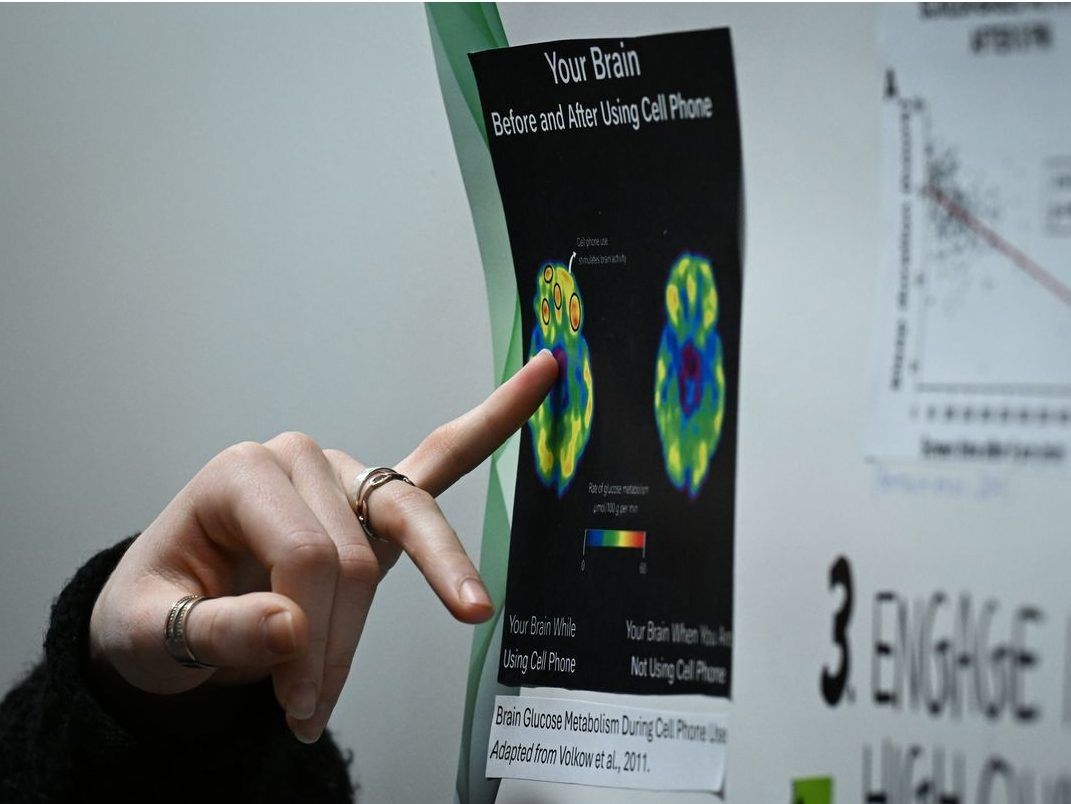
Students take nature walks with Polaroid cameras, practice yoga to recognize posture strain, study brain scans of people using phones, introduce themselves to strangers and play board games.
asserted
Students → take → games
…and 89 more, not listed.
 The Aporia