Photo via Reason

Our Amicus Brief in the First Circuit $100,000 H-1B Visa Fee Case

Read the original at Reason ↗
Cite

Somin, I. (2026, November 14). Our Amicus Brief in the First Circuit $100,000 H-1B Visa Fee Case. Reason. https://reason.com/volokh/2026/11/14/our-amicus-brief-in-the-first-circuit-100000-h-1b-visa-fee-case/

Dated from the outlet's own feed. Check the original for its byline.

Reason · collected 2026-11-14 · by Ilya Somin

Quick Summary

The Cato Institute and its author filed an amicus brief in the First Circuit Court of Appeals on Thursday, supporting states challenging the Trump administration's $100,000 fee for H-1B visa applications. The brief, with support from Stanford Law School Professor Michael McConnell, argues that the executive overstepped its authority by imposing a tax without Congressional approval, referencing the Supreme Court's recent decision in Learning Resources, Inc. v. Trump. The brief contends that the power to regulate immigration does not include the authority to levy taxes and that the fee is a tax, not a mere regulatory fee or penalty.
Written by AI on 2026-11-15, from this article's own text only (the story summary below draws on all the coverage).

AI analysis

Story summary

The Cato Institute and legal scholar Ilya Somin filed an amicus brief on November 9, 2026, in the US Court of Appeals for the First Circuit, supporting California and other states challenging a $100,000 fee imposed by the Trump Administration on H-1B visa applications. The district court had previously invalidated the fee, ruling that the executive branch had illegally usurped Congress' power to impose taxes, relying on the Supreme Court’s decision in Learning Resources, Inc. v. Trump. A second district court later struck down the fee on different grounds. The brief was prepared with assistance from Deno Hemonas and Philip Wilkinson of Wilson Sonsini Goodrich Rosati, and Stanford Law School Professor Michael McConnell, who is a leading expert on executive power and a prominent conservative originalist constitutional law scholar.

Written for “H-1B Visa Fee Case Brief” on 2026-11-15, grounded in this article and the 0 other(s) covering the same event.

Compared with similar articles

This article reads leans strongly left and hedges 12% of its claims. Each row says how that neighbour differs.
Washington Examiner
Hedges 0 of 3 claims Outlet record 67/100
“The articles discuss different legal challenges to Trump's immigration policies in separate courts and do not describe the same specific event.”

Story

H-1B Visa Fee Case Brief
Politics · 1 article(s) covering the same event.
How this article was measured signals, leaning charts, publisher record, byline, topics and claims

Signals How these are calculated →

Claims extracted
24
sentences that state something as happening or true
Uncertain
12%
3 of 24 hedged ("reportedly", "may", "according to")
Leaning
Leans strongly left
of the writing, not the subject · beta estimate
Publisher signals
67/100
Reason's corrections and hedging, across everything collected from it. Not a measure of accuracy.
Outlets on this story
1
Politics
Same framing elsewhere
1
articles that frame the event the way this one does
Analyzed 2026-11-15 · how these are computed

How this is being covered How these are calculated →

Article leaning vs. publisher reliability
Source leaning vs. consistency

Publisher

Reason · 1334 article(s) · 4 correction(s) detected
Running correction rate · 4 correction(s)

Who wrote this

Ilya Somin
38 article(s) here · 1 carrying a prediction
Among other things, it would allow the federal government to suspend the writ of habeas corpus (and thereby detain people - including US citizens - without due process) at any time.
Just months ago, the Supreme Court in Learning Resources applied those fundamental principles to hold that the President may not use a general grant of authority to "regulate … importation" to impose tariffs, because the power to "regulate" is not the power to tax and Congress did not clearly delegate its taxing power.
A few of my own experiences with Posner and his work may shed some small additional light on the man and his achievements.
2026-11-12 · assertive framing · Judge Richard Posner, RIP
The Republicans may be able to effectively bottle up the impeachment in committee for the rest of the current Congress (which ends on January 3, 2027).
2026-11-11 · mixed framing · The Hegseth Impeachment is Far From Over
Even if they don't pass in the narrowly Republican-controlled lame duck Congress, they will almost certainly do so in the incoming Democratic one.
2026-11-09 · assertive framing · Andrew McCarthy on the Hegseth Impeachment
That makes it very likely it will happen.
2026-11-08 · assertive framing · Impeach Pete Hegseth
In each case, he illegally tried to transform relatively narrow delegations to the executive into a blank check to impose tariffs at will.
I address a variety of counterarguments, including claims that voting for a lesser evil makes you morally complicit in that candidate's wrongdoing, arguments that it's better to cast a "protest vote" for a candidate that has no chance of winning, arguments based on the very low probability that your vote will be decisive, and more.
If Section 338 is still valid and does grant the kind of nearly unlimited authority Trump claims, that would violate the constitutional "nondelegation" doctrine, which restricts delegation of legislative power to the executive…
Today, in United States v. Alaska, federal district Judge Sharon Gleason ruled against the Trump administration's lawsuit seeking to block certification of Alaska Senate election results on the grounds that doing so might be necessary to prevent "voter confusion" caused by the presence of two candidates with very similar names on the ballot.
Also by Ilya Somin
Judge Richard Posner, RIP
2026-11-12 · Reason
Nothing else under this byline is closely related to this article, so these are simply their most recent.
All 38 articles by Ilya Somin →

Topics

Congress Learning Resources Learning Resources, Inc. the Cato Institute the Supreme Court

Subjects

Congress ORG · 6× Learning Resources ORG · 3× the Supreme Court ORG · 3× Learning Resources, Inc. ORG · 2× Trump PERSON · 2× California GPE · 1× the Cato Institute ORG · 1× the First Circuit ORG · 1× the Trump Administration's ORG · 1× the US Court of Appeals ORG · 1×

Narrative

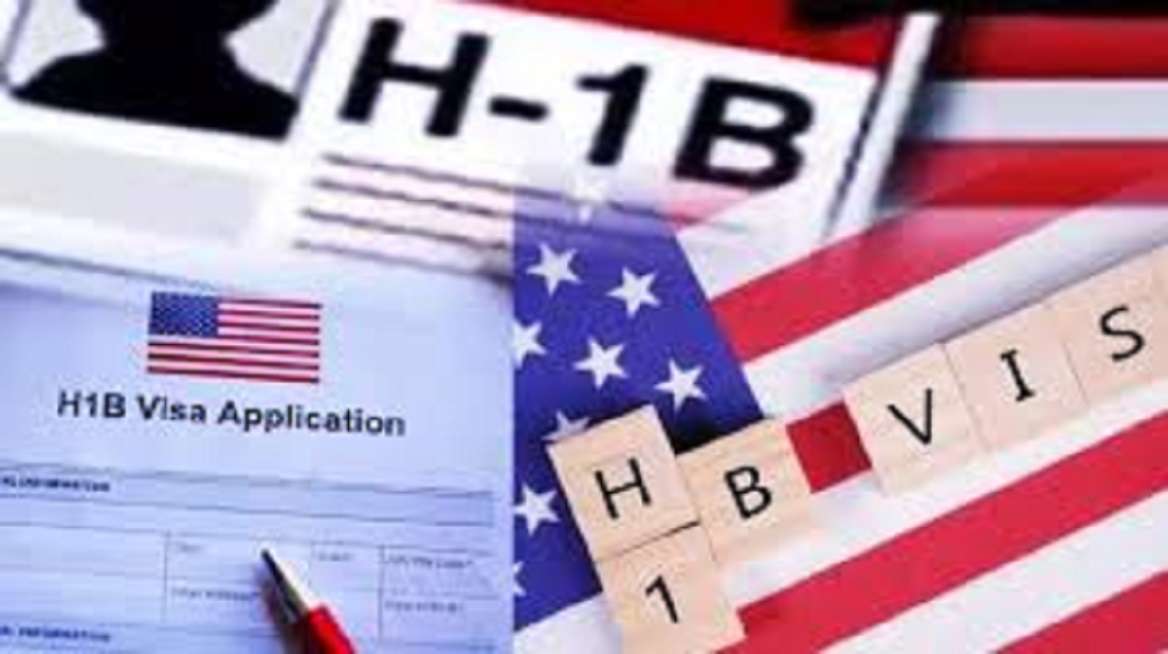
On Thursday, the Cato Institute and I filed an amicus brief in the US Court of Appeals for the First Circuit, in support of California and other states challenging the Trump Administration's imposition of a $100,000 fee on applications for H-1B visas (which are used by tech firms, research institutions, and other organizations to hire immigrant workers and researchers with various specialized skills).
framing: assertive · carried by 1 article(s) · first seen 2026-11-15
Just months ago, the Supreme Court in Learning Resources applied those fundamental principles to hold that the President may not use a general grant of authority to "regulate … importation" to impose tariffs, because the power to "regulate" is not the power to tax and Congress did not clearly delegate its taxing power.
2026-11-15 · Reason
Our Amicus Brief in the First Circuit $100,000 H-1B Visa Fee Case · assertive framing

Claims (24 extracted, 3 hedged)

On Thursday, the Cato Institute and I filed an amicus brief in the US Court of Appeals for the First Circuit, in support of California and other states challenging the Trump Administration's imposition of a $100,000 fee on applications for H-1B visas (which are used by tech firms, research institutions, and other organizations to hire immigrant workers and researchers with various specialized skills). asserted
which → file → skills
The district court ruling in this case invalidated the $100,000 fee on the grounds that the executive had illegally usurped Congress' power to impose taxes. asserted
executive → invalidate → taxes
It relied heavily on the Supreme Court's recent decision in Learning Resources, Inc. v. Trump, the tariff case I helped litigate. asserted
I → rely → Trump
A second federal district court later invalidated the fee on other grounds. asserted
court → invalidate → grounds
We are very grateful to Deno Hemonas and Philip Wilkinson of Wilson Sonsini Goodrich Rosati, who worked with me on the brief, pro bono. asserted
who → work → brief
Stanford Law School Prof. and former federal judge Michael McConnell, also worked with us on the brief. asserted
Prof. → work → brief
He is one of the nation's leading experts on executive power, a prominent conservative originalist constitutional law scholar, and was our lead counsel in the Supreme Court phase of the IEEPA tariff case. asserted
He → lead → case
As the Supreme Court emphasized in its recent decisions striking down Donald Trump's Massive IEEPA tariffs, "the Framers gave Congress alone access to the pockets of the people." asserted
Framers → emphasize → people
The tax power was, as Alexander Hamilton explained, "the most important of the authorities proposed to be conferred upon the Union." asserted
Hamilton → explain → Union
Just months ago, the Supreme Court in Learning Resources applied those fundamental principles to hold that the President may not use a general grant of authority to "regulate … importation" to impose tariffs, because the power to "regulate" is not the power to tax and Congress did not clearly delegate its taxing power. uncertain
Congress → apply → power
This case asks whether the same President—by imposing a tax of his own devising on the entry of noncitizens and calling it a "restriction" on entry—may accomplish by a different label what Learning Resources forbade. uncertain
Resources → ask → what
Its "defining feature" is that it raises revenue. asserted
it → raise → revenue
It is neither a mere fee contributing to the costs of operating the program nor a penalty. asserted
It → contribute → program
The power to "restrict" entry is not the power to "tax" entry. asserted
power → restrict → entry
To limit or qualify entry says nothing about charging for it, and the Government can identify no statute in which the words "restrict" or "restriction" confer tax authority. asserted
restrict → limit → authority
The Immigration and Nationality Act contains express, detailed provisions for fees and payments, setting each amount and specifying how the funds are collected and spent. asserted
funds → contain → amount
This confirms the absence of a generalized, unlimited discretionary presidential taxing power. asserted
This → confirm → power
Congress does not "hide elephants in mouseholes," and this case involves a very large elephant. asserted
case → hide → elephant
In more than a century, no President has used Section 212(f) or Section 215(a) of the INA to raise revenue, a point the Government does not dispute. asserted
Government → use → point
As the Supreme Court held in Learning Resources, that absence is "strong evidence" the power does not exist. asserted
power → hold → Resources
In addition, the government's interpretation of the relevant statutes violates the major questions doctrine, which requires Congress to speak clearly when delegating power over a major economic or political issue to the executive. asserted
which → violate → executive
The power to impose unlimited taxes on any visa holders or immigrants entering into the United States is undoubtedly a major one. asserted
power → impose → States
If, nonetheless, the court concludes that Congress did somehow grant the government the sweeping power it claims, it would violate the constitutional nondelegation doctrine, which constrains delegations of legislative power to the executive. uncertain
which → conclude → executive
I have previously criticized the $100,000 H-1B fee on both legal and policy grounds here, here, and here. asserted
I → criticize → grounds

Give feedback · no sign-in needed

No sign-in needed for now. Your note is sent without a name, so it cannot be answered.

History Support