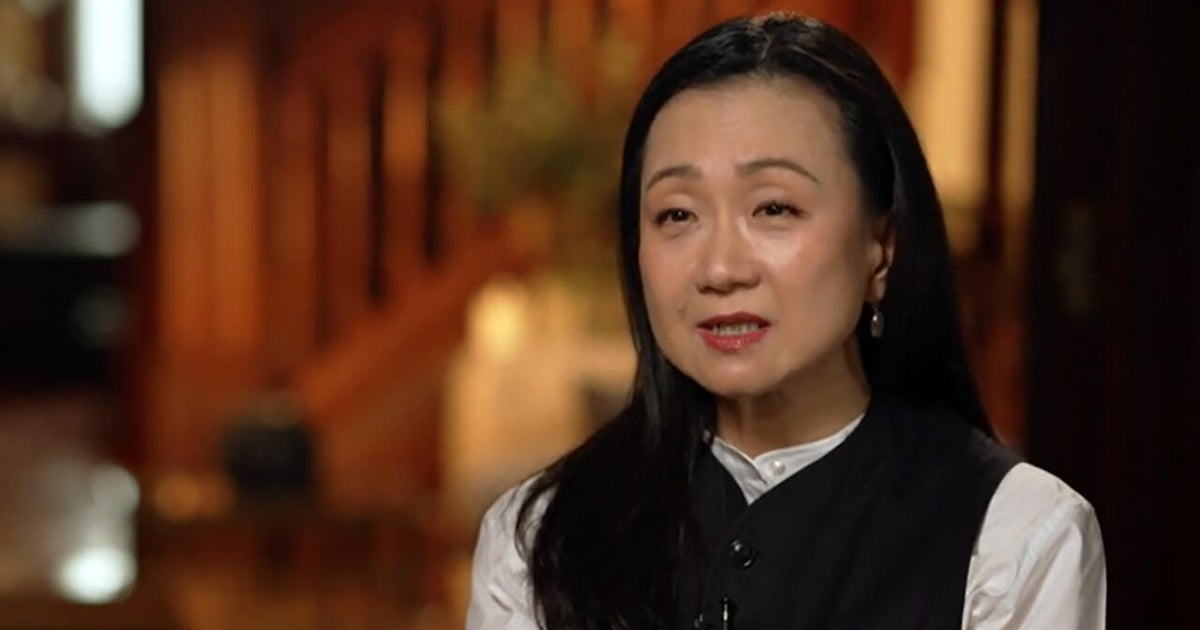
It's been nearly a decade since Min Jin Lee's last book made her a literary phenomenon.
asserted
her → make → ?
"Pachinko," a sweeping historical epic chronicling four generations of a Korean family living in Japan, sold more than two million copies in the United States.
asserted
Pachinko → chronicle → States
It was adapted into a popular series on Apple TV.
asserted
It → adapt → TV
But all that success didn't come easily.
asserted
success → come → ?
"When 'Pachinko' first came out as a hardcover, it was never on the bestseller lists," said Lee.
asserted
Lee → come → lists
"If you look at my hardcover sales, they're abysmal.
asserted
they → look → sales
So, if you start out with failure, it's really easy."
asserted
it → start → failure
Did she consider "Pachinko" at its beginning a failure?
asserted
Pachinko → consider → beginning
"Oh, I think you can ask my publishers!" she laughed.
asserted
she → think → publishers
"They would just say, this didn't sell!"
asserted
this → say → ?
It wasn't until The New York Times named it one of the best books of the year, and it was selected as a National Book Award finalist, that "Pachinko" took off.
asserted
Pachinko → name → finalist
Lee's latest novel, "American Hagwon" (published by Cardinal), is the third in a series she calls "The Diaspora Quartet," chronicling the migration of Koreans around the world.
asserted
she → publish → world
"Every industrial revolution had people leaving the farm to go to the city," Lee said.
asserted
Lee → have → city
"And now we have environmental diaspora, where people don't have water in their communities anymore.
asserted
people → have → communities
You have economic diaspora, where certain jobs don't exist anymore, like manufacturing.
asserted
jobs → have → manufacturing
I'm focusing on Koreans, because those are the people that I know about.
asserted
I → focus → that
But I'm really writing about this modern condition."
asserted
I → write → condition
She came to America in 1976, when she was seven years old.
asserted
she → come → 1976
The middle of three girls, her family moved to Elmhurst, Queens, where she grew up in a very blue-collar neighborhood.
asserted
she → move → neighborhood
Her parents, a marketing executive and piano teacher in Korea, opened a newspaper stand and, later, a jewelry shop.
asserted
parents → open → stand
"As a little kid, I was so unbearably shy," Lee said.
asserted
Lee → say → kid
"I didn't really speak or interact with my peers very well.
asserted
I → speak → peers
But she tested into a highly-competitive public high school, where she found friends – and her footing.
asserted
she → test → friends
From there it was on to the Ivy League, where she discovered something important was missing: Yale did not offer Korean language or Korean history courses – which, Lee says, was ignoring the full story.
asserted
Lee → discover → story
"I think because of the Cold War and because of the Korean War in American history, I do think this is a rational thing to ask for," she said.
asserted
she → think → history
So, Lee organized a letter-writing campaign, and convinced the university to start a Korean Studies program.
asserted
Lee → organize → program
"I think that it really helped the school," she said.
asserted
she → think → school
"My mom has this whole theory that wherever you go, you should make it better than when you found it."
asserted
you → have → it
While at Yale, Lee was also struggling with a serious liver condition.
asserted
Lee → struggle → condition
"I learned that I would get liver cancer in my 20s or 30s; that's what the doctor said to me," she said.
asserted
she → learn → me
"I was like, 'Oh, if I have until 35, what do I want to do?'
asserted
I → have → what
So, it gave me this sort of courage that I don't think normally I would have had."
asserted
I → give → courage
Lee went to law school, then to a big firm.
asserted
Lee → go → firm
But before long, the hours and the stress caused her liver disease to flare up, and she decided to take a leap.
asserted
she → cause → leap
"I thought, if I walk away from money and status and power, at least I'll find tremendous enrichment for me," she said.
asserted
she → think → me
Lee found that by writing what she describes as "social novels": "I think it's to write realistic fiction that reflects on society today, saying, this is what I think and this is the way things should be," she said.
asserted
she → find → what
Lee conducted thousands of interviews with people of Korean descent.
asserted
Lee → conduct → descent
In her conversations, one topic came up more than any other.
asserted
topic → come → other
And so, in "American Hagwon," she takes on education.
asserted
she → take → education
"A hagwon is a for-profit learning center," Lee said.
asserted
Lee → say → profit
…and 23 more, not listed.
 The Aporia