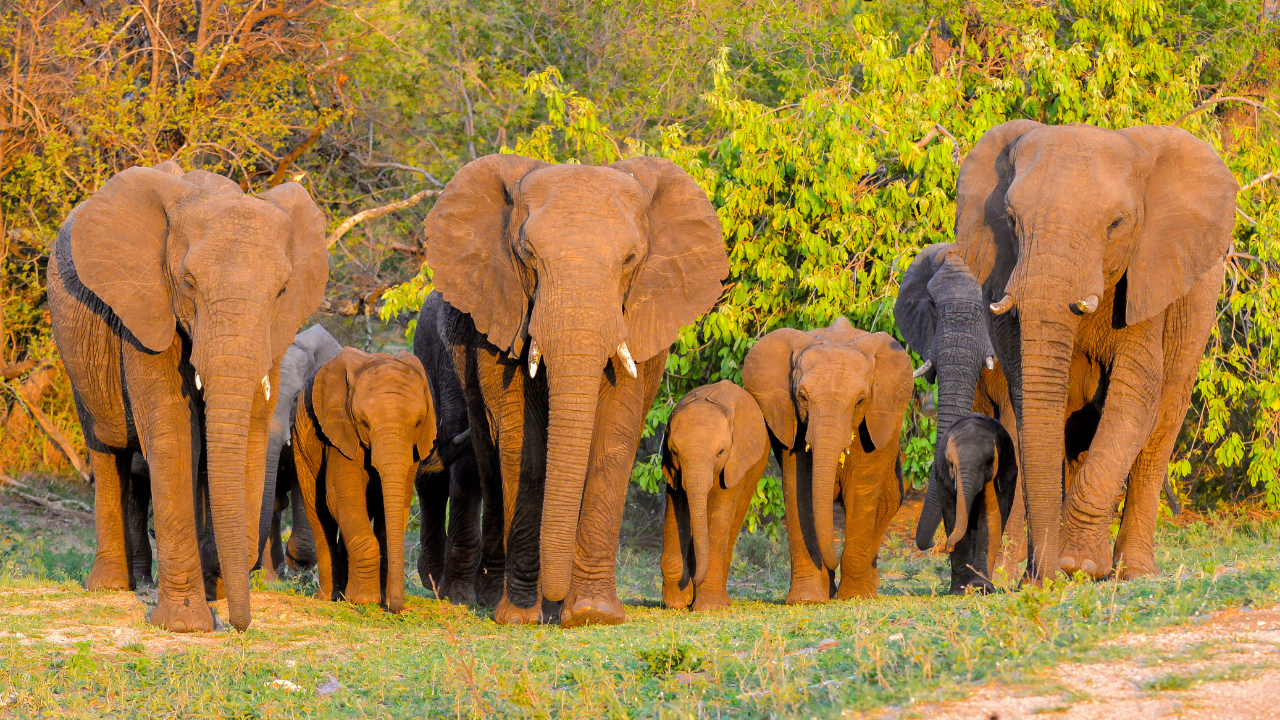
Photo via Times of India

12-year study finds declining elephant numbers lead to fragmented social networks

Read the original at Times of India ↗
Cite

TOI Science Desk. (2026, November 15). 12-year study finds declining elephant numbers lead to fragmented social networks. Times of India. https://timesofindia.indiatimes.com/science/wildlife/after-tracking-more-than-440-female-asian-elephants-in-sri-lanka-for-12-years-us-researchers-found-that-population-losses-were-followed-by-a-sudden-breakdown-in-social-networks-leaving-smaller-and-more-isolated-groups/articleshow/135798317.cms

Dated from the outlet's own feed. Check the original for its byline.

Share
Times of India · collected 2026-11-15 · by TOI Science Desk

Quick Summary

A 12-year study published in the journal Science on November 12, 2026, led by researchers at the University of California San Diego, found that declining elephant populations in Sri Lanka's Udawalawe National Park have led to sudden fragmentation in the animals' social networks. The study, which examined more than 440 female Asian elephants, revealed that as individual elephants disappeared due to deaths or departures, the remaining elephants formed smaller, more isolated groups, indicating a critical tipping point in social structure. Postdoctoral researcher Anastasia Madsen noted that the loss of key individuals disrupts essential social connections that are vital for the elephants' survival and well-being.
Written by AI on 2026-11-15, from this article's own text only (the story summary below draws on all the coverage).

AI analysis

Story summary

A 12-year study published in the journal Science on November 12, 2026, reveals that declining elephant populations in Sri Lanka are leading to fragmented social networks. Researchers from the University of California San Diego (UC San Diego) found that the gradual loss of individual elephants can trigger a sudden breakdown in social structures, leaving surviving elephants in smaller, more isolated communities. The study, led by scientists and published by Mario Aguilera, examined the social relationships of 443 female Asian elephants in Udawalawe National Park. The findings suggest that the elephant population has crossed a social tipping point, making once closely connected communities increasingly fragmented due to years of demographic changes. This research highlights the critical impact of population decline on the complex social bonds that are fundamental to elephant societies.

Written for “Elephant Social Networks Declining” on 2026-11-16, grounded in this article and the 0 other(s) covering the same event.

Compared with similar articles

Nothing to compare against. No article is close enough to this one for the pipeline to have linked or judged the pair.

Story

Elephant Social Networks Declining
Science · 1 article(s) covering the same event.
How this article was measured signals, leaning charts, publisher record, byline, topics and claims

Signals How these are calculated →

Claims extracted
32
sentences that state something as happening or true
Uncertain
19%
6 of 32 hedged ("reportedly", "may", "according to")
Leaning
not political
takes no side on a contested political question
Publisher signals
59/100
Times of India's corrections and hedging, across everything collected from it. Not a measure of accuracy.
Outlets on this story
1
Science
Same framing elsewhere
1
articles that frame the event the way this one does
Analyzed 2026-11-15 · how these are computed

How this is being covered How these are calculated →

Article leaning vs. publisher reliability
Source leaning vs. consistency

Publisher

Times of India · 5037 article(s) · 5 correction(s) detected
Running correction rate · 5 correction(s)

Who wrote this

TOI Science Desk
322 article(s) here · 1 carrying a prediction
Elephants are known for their strong family bonds and complex social relationships, but declining populations may be putting these connections at risk.
Individually, such objects might seem small; together, they provide strong evidence that the outpost was active during the Sui period.
Who knew one animal could change an entire landscape?
The snakes were temporarily brought to the San Francisco Zoo, where they could give birth in a controlled environment.
Scientists have drawn a treasure map of where fossils of ancient sea life may still be waiting to be found.
The newly excavated channels, along with additional connections to Darby Creek, are expected to improve tidal circulation overall.
We have often wondered what animals might be trying to tell us, whether it is a dog barking at the postman or birds calling out to one another from the trees.
However, the plant, known to botanists as *Centaurea tchihatcheffii*, is now critically endangered, and its survival may depend partly on how and when farmers cultivate the fields where it grows.
One such monument may have been a towering, gilded bronze statue of the emperor riding a horse, which is believed to have once stood in southern Scotland.
The project, which began in February 2024, covers a 290-acre section of the wildlife management area in Cape May County and includes Pond Creek marsh, Davey's Lake and land occupied by a former magnesite manufacturing facility and its associated landfill.
Wire or desk byline, not an individual reporter.
Also by TOI Science Desk
Nothing else under this byline is closely related to this article, so these are simply their most recent.
All 322 articles by TOI Science Desk →

Topics

Asian Sri Lanka UC San Diego the University of California San Diego

Subjects

Asian NORP · 4× UC San Diego ORG · 4× Shermin de Silva PERSON · 2× Sri Lanka GPE · 2× Anastasia Madsen PERSON · 1× Madsen PERSON · 1× Mario Aguilera PERSON · 1× the University of California San Diego ORG · 1×

Narrative

The findings, reported by UC San Diego in a November 12 research announcement by Mario Aguilera, suggest that the population appears to have crossed a social tipping point after years of demographic changes, making its once closely connected communities increasingly fragmented.
framing: assertive · carried by 1 article(s) · first seen 2026-11-15
Elephants are known for their strong family bonds and complex social relationships, but declining populations may be putting these connections at risk.

Claims (32 extracted, 6 hedged)

Elephants are known for their strong family bonds and complex social relationships, but declining populations may be putting these connections at risk. uncertain
populations → know → risk
A 12-year study in Sri Lanka has found that the gradual loss of individual elephants can eventually trigger a sudden breakdown in their social networks, leaving surviving animals in smaller and more isolated communities. asserted
loss → find → communities
The research, led by scientists at the University of California San Diego (UC San Diego) and published in the journal Science on November 12, 2026, examined more than 440 wild female Asian elephants at Udawalawe National Park in Sri Lanka. asserted
research → lead → Lanka
The findings, reported by UC San Diego in a November 12 research announcement by Mario Aguilera, suggest that the population appears to have crossed a social tipping point after years of demographic changes, making its once closely connected communities increasingly fragmented. asserted
communities → report → changes
Population losses preceded social changes The researchers analysed the social relationships of 443 female Asian elephants over 12 years, examining how their associations and community structures changed as individual animals disappeared from the population. asserted
animals → precede → population
Their findings showed that gradual demographic turnover eventually preceded a sudden change in the elephants' social networks. asserted
turnover → show → networks
The population experienced a combination of likely deaths, permanent departures from the area and fewer new individuals joining the community. asserted
population → experience → community
As these losses accumulated, the elephants shifted from larger, densely connected social communities to smaller groups with fewer connections between them. asserted
elephants → accumulate → them
The research was led by postdoctoral researcher Anastasia Madsen, working with Associate Professor Shermin de Silva and other researchers. asserted
research → lead → Silva
Madsen explained that the population was losing individuals at increasing rates without enough new elephants arriving to replace them. asserted
elephants → explain → them
The researchers also found that the changes went beyond simply having fewer elephants. asserted
changes → find → elephants
The surviving animals were altering their relationships with one another, further weakening the overall structure of their social networks. asserted
animals → survive → networks
Why social connections matter to elephants Asian elephants are highly social animals that depend on relationships with other members of their communities for several aspects of their lives. asserted
that → matter → lives
According to the UC San Diego research announcement, these connections help elephants find food, obtain information and raise their young. uncertain
elephants → accord → young
Established relationships also allow individuals to benefit from the knowledge and experience of other elephants. asserted
individuals → establish → elephants
When population numbers decline, the loss of individual animals can therefore affect much more than the size of a herd. asserted
loss → decline → herd
It can also remove important social connections that help communities function. asserted
communities → remove → connections
Shermin de Silva, an associate professor at UC San Diego, explained that maintaining strong social networks requires animals to share space and build relationships throughout their lives. asserted
maintaining → explain → lives
For communities to remain resilient, lost relationships must be replaced over time. asserted
relationships → remain → time
The researchers warned that fewer opportunities to establish new connections could leave surviving elephants increasingly isolated. uncertain
opportunities → warn → elephants
Human activities may worsen the problem The study's findings come against a wider backdrop of threats facing Asian elephants. uncertain
findings → worsen → elephants
Poaching and conflicts with humans have already contributed to elephant deaths in many populations. asserted
Poaching → contribute → populations
The researchers also identified potential pressures affecting the Udawalawe National Park population, including disruptions to habitat connectivity and reduced food availability as ecological conditions change across the park and its surroundings. asserted
conditions → identify → park
Udawalawe National Park covers approximately 119 square miles, and changes in the surrounding landscape can affect how elephants move between areas and maintain contact with other groups. asserted
elephants → cover → groups
However, the study does not attribute every disappearance to a single cause. asserted
study → attribute → cause
Its findings focus on how accumulated population losses and demographic turnover were associated with changes in social organisation. asserted
losses → focus → organisation
Researchers warn of a difficult-to-reverse tipping point One of the most important findings is that social fragmentation may not be easily reversed once a population crosses a critical threshold. uncertain
population → warn → threshold
Madsen warned that gradual changes can build up over time before producing a sudden shift in an animal community's structure. asserted
changes → warn → structure
Once that tipping point is crossed, returning to the previous social organisation can become much harder. asserted
returning → cross → organisation
The researchers said the findings highlight why conservation efforts should consider not only how many animals remain in a population but also how they interact with one another. asserted
they → say → one
The study, titled Increased demographic turnover and isolation precede social fragmentation in Asian elephants, provides evidence that monitoring social relationships could help identify problems in wildlife populations before their consequences become more difficult to address. uncertain
consequences → title → populations
It also highlights the importance of protecting habitats and maintaining conditions that allow elephants to move, form relationships and sustain their communities. asserted
elephants → highlight → communities

Give feedback · no sign-in needed

No sign-in needed for now. Your note is sent without a name, so it cannot be answered.

History Support