With a resounding Election Night victory behind them, Democrats are getting to work by plotting a massive government spending expansion paired with tax adjustments to pay for it.
asserted
Democrats → get → it
In this quest, they may find an unlikely ally in the White House.
uncertain
they → find → House
Though the new crop of Democrats doesn’t take office until early next year, many are already announcing plans to aggressively increase government healthcare expenditures, cut checks directly to voters, restore housing assistance funding and pressure the federal government into repealing cuts to the bureaucracy.
asserted
many → take → bureaucracy
Republicans, increasingly abandoning their once dogmatic opposition to increased social spending, could end up backing some of the measures Democrats seek to enact in their efforts to make life more affordable.
uncertain
life → abandon → efforts
President Donald Trump, for instance, expressed interest in cutting deals with liberal lawmakers on Election Night as it became apparent that the midterms were going to be disastrous for the GOP.
asserted
midterms → express → GOP
Trump and Vice President JD Vance, seen by many as the president's heir apparent, have made it clear that they do not categorically oppose the extension of Affordable Care Act subsidies, one of the marquee items on the Democratic agenda, but signaled that they would like to see increased verification requirements to crack down on alleged fraud.
asserted
they → see → fraud
Both have also signaled an openness to raising taxes on high-earners to help the federal government balance its budget, though estimates regarding how much these new levies would raise generally fall short of the costs that would be incurred if Democrats succeed in actualizing their demands.
asserted
Democrats → signal → demands
When approached by Fox News Digital, the White House kept the door open for compromise with the Democrats, so long as they don't go too far in their proposals.
asserted
they → approach → proposals
"President Trump will continue to enact his commonsense, America First agenda that has delivered the most secure border ever, the largest working-class tax cut in history, the lowest murder rate since 1900, the sharpest drop in prescription drug prices in more than 60 years and a stock market that has hit record-highs," White House spokeswoman Olivia Wales told Fox News Digital.
asserted
Wales → continue → Digital
"As the President said, he is willing to work with anyone who wants to strengthen our economy, lower costs for American families, protect our national security and improve the lives of hardworking Americans.
asserted
who → say → Americans
If Democrats choose to pursue radical-left policies, they are choosing to work against the best interests of the American people," she continued.
asserted
she → choose → people
Even with sizable Democratic majorities in the House and Senate, the party lacks the numbers necessary to override a presidential veto, meaning that liberals will need to work with either congressional Republicans or the White House if they want to enact key portions of their agenda.
asserted
they → lack → agenda
"Republicans did not lose seats because of healthcare," Michael Cannon, the Cato Institute’s director of health policy studies, told Fox News Digital when asked about whether the president should compromise with Democrats by reinstating the subsidies.
asserted
president → lose → subsidies
"Republicans did not lose seats because they let the Obamacare subsidies for the wealthy expire because that's, what those were.
asserted
those → lose → wealthy
When we talk about enhanced subsidies, we're talking about subsidies for people making up to $600,000 per year.
asserted
we → talk → year
That's what Democrats put in place.
asserted
Democrats → put → place
That's what the president rightly let expire.
asserted
president → let → ?
That's not why Republicans lost seats and so the president should not be afraid of standing up to the industry."
asserted
president → lose → industry
The massive proposed spending hikes, if they are successful, would take place as the United States’ annual deficit continues to grow, reaching nearly $2 trillion in fiscal 2026, while the government faces down a looming financial disaster as Social Security's retirement trust fund approaches depletion and Congress confronts difficult choices over taxes and benefits.
asserted
Congress → propose → taxes
Simply paying the interest on America’s debt cost the federal government over $1 trillion during the 2026 fiscal year.
asserted
paying → pay → year
Cannon argued that, if the government spends at unsustainable levels over a long enough time period, eventually bond markets will react negatively, reducing the supply of credit and forcing the government to make steep spending cuts, as has happened in Greece and under fiscally irresponsible nations .
asserted
markets → argue → nations
Some on the left, however, maintain that no such shock would occur as the wealthy can simply be taxed more to reduce the need for borrowing.
asserted
wealthy → maintain → borrowing
Though money is tight in Washington, Democrats have not pared back their spending ambitions
The crown jewel of the Democratic spending agenda is healthcare, specifically restoring Medicaid funding and Affordable Care Act subsidies.
asserted
jewel → par → funding
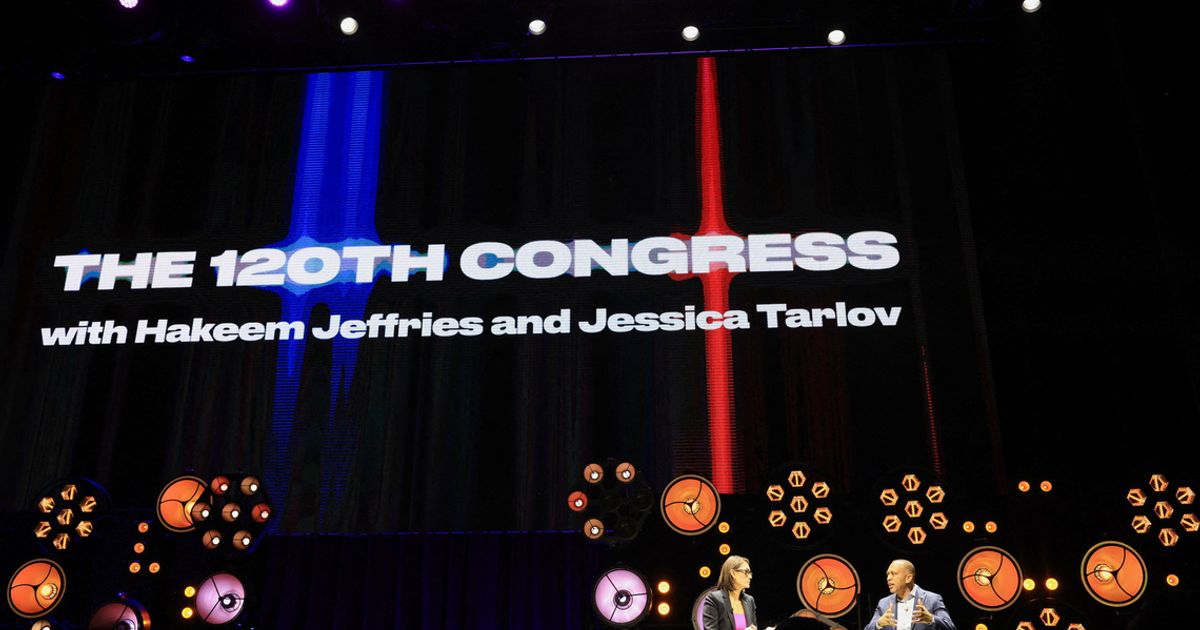
"During the first 100 days, House Democrats must act to reverse the Medicaid cuts, restore SNAP funding, extend the Affordable Care Act tax credits, eradicate the Trump tariffs and stop the reckless war of choice in Iran," House Minority Leader Hakeem Jeffries wrote in a manifesto published Nov. 4.
asserted
Jeffries → act → manifesto
The Congressional Budget Office estimated that the healthcare cuts in the One Big Beautiful Bill Act would reduce federal Medicaid spending by about $1.2 trillion between 2026 and 2035 at the cost of cutting enrollment in the program by about 13 million during that roughly 10-year period.
asserted
cuts → estimate → period
As of publication, approximately 65.7 million people are enrolled in Medicaid.
asserted
people → enrol → Medicaid
Republicans, especially the president, may be reluctant to work with Democrats to repeal parts of the OBBA, given the sheer amount of political capital they burned to get the bill across the finish line.
uncertain
they → work → line
Trump, for instance, said in November 2025 that he would "rather not" extend enhanced ACA tax credits, but conceded that "some kind of extension may be necessary," signaling that he is at least willing to use the subsidies as a bargaining chip during negotiations.
uncertain
he → say → negotiations
Vance, meanwhile, has stated that the subsidies "go to some people deservedly," but argued that they lend themselves to fraud while teasing a healthcare agreement he said with please both parties.
asserted
he → state → parties
Extending the enhanced ACA subsidies would come with a hefty price tag.
asserted
Extending → extend → tag
The Congressional Budget Office estimated that making the expanded tax credits permanent would add roughly $350 billion to federal deficits between 2026 and 2035, while helping approximately 3.8 million more Americans obtain health insurance in 2035.
asserted
Americans → estimate → 2035
The annual impact on the federal deficit would also climb over time, from about $23 billion in 2026 to nearly $44 billion in 2035.
asserted
impact → climb → 2035
And because CBO's estimate only covers a 10-year period, the government would face additional costs beyond that window if the subsidies remained in place.
asserted
subsidies → cover → place
Some healthcare experts argue that the federal government's spending is only part of the picture.
asserted
spending → argue → picture
They contend that pouring more money into insurance subsidies without addressing the underlying cost of medical care can also drive up healthcare prices, potentially leaving taxpayers and consumers paying more over time.
asserted
pouring → contend → time
"If you want to know why healthcare is so expensive in the United States, why we spend more than any other country, why prices are higher, look at what Democrats are doing right now," Cannon told Fox News Digital.
asserted
Cannon → want → Digital
"Government subsidies drive up prices, they drive up healthcare spending ...
asserted
they → drive → spending
the most inefficient healthcare sector in the world is using Democrats in particular, but Republicans too, I don't want to be unfair ... to get the government to keep pumping more and more money into that health sector.
asserted
government → use → sector
Economists generally hold that subsidizing demand for a good by providing subsidies, without increasing the supply of that good, will lead to increased costs across the market.
asserted
subsidizing → hold → market
Proponents of expanded government healthcare often counter that any reductions in efficiency or increases to costs, if such things really occur, are worth enduring to ensure coverage is more equitably distributed.
asserted
coverage → expand → costs
…and 30 more, not listed.
 The Aporia