Photo via Fox News

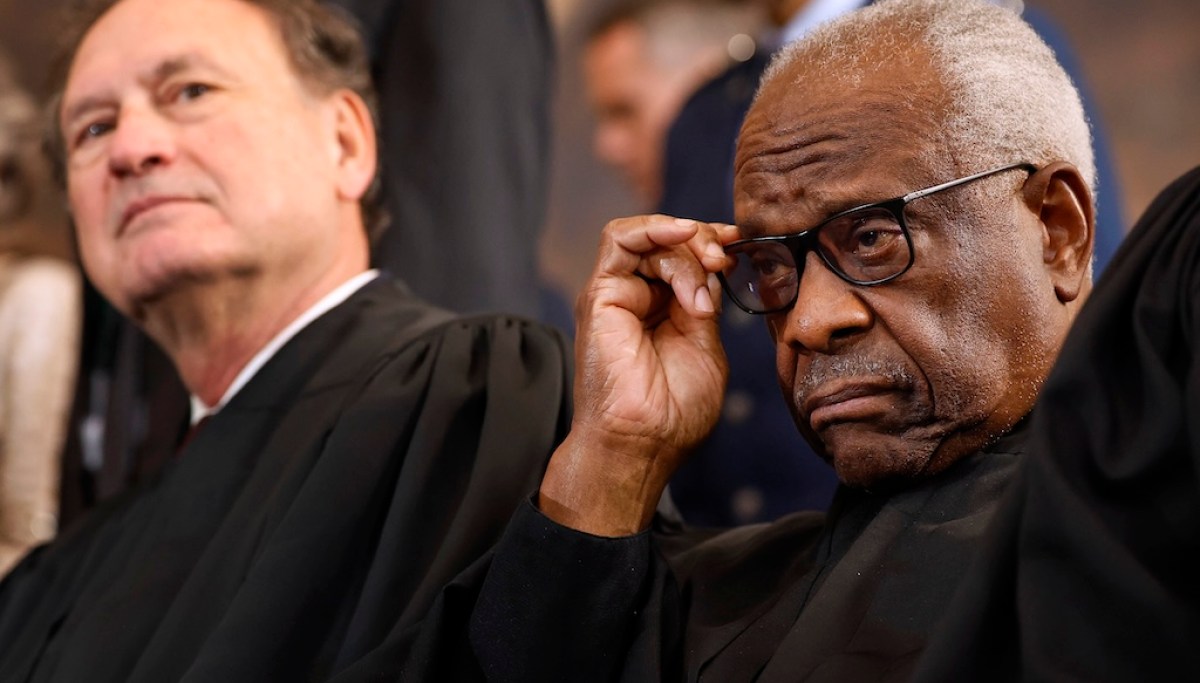
Clarence Thomas calls foul on California ruling he says could turn citizens into government mouthpieces

Read the original at Fox News ↗
Cite

Schmad, R. (2026, November 16). Clarence Thomas calls foul on California ruling he says could turn citizens into government mouthpieces. Fox News. https://www.foxnews.com/politics/clarence-thomas-calls-foul-california-ruling-he-says-could-turn-citizens-government-mouthpieces

Dated from the outlet's own feed. Check the original for its byline.

Fox News · collected 2026-11-16 · by Robert Schmad

Quick Summary

Justice Clarence Thomas has criticized the Supreme Court's decision to not review a case involving a California law that requires physicians to teach about implicit bias in their continuing education courses. In his dissent, Thomas, joined by Justice Samuel Alito, argued that the law could compel private citizens to express viewpoints they disagree with, potentially violating the First Amendment. The case involves Dr. Azadeh Khatibi, who sued California along with a conservative non-profit, claiming the law forces her to deliver a message that she opposes. California maintains that instructors do not need to personally endorse implicit bias theory and can express their disagreement while teaching.
Written by AI on 2026-11-17, from this article's own text only (the story summary below draws on all the coverage).
See how they differ ↓

AI analysis

Story summary

The Supreme Court declined on November 16, 2026, to hear a case challenging California's requirement that doctors complete mandatory "implicit bias training" as part of their continuing education, prompting a dissent from Justices Clarence Thomas and Samuel Alito. The case, Khatibi v. Yip, was brought by Dr. Azadeh Khatibi and another California doctor who argued that the state's mandate forces medical professionals to adopt government-approved viewpoints, violating the First Amendment. Thomas and Alito contended that the requirement compels private instructors to convey a government-favored message, potentially setting a dangerous precedent for other professions. The Ninth Circuit previously upheld the law, claiming that the breadth of the state's regulation transforms any CME course content into government speech. Thomas and Alito disagreed, emphasizing the need for First Amendment protections even under heavy state regulation.

Written for “Justices Thomas and Alito Criticize Court Decisions” on 2026-11-17, grounded in this article and the 2 other(s) covering the same event.

How they differ

3 outlets covered “Justices Thomas and Alito Criticize Court Decisions”.

What each outlet says

One AI summary per outlet of its latest article on this story, written from that article alone and checked against it. Open the article for the outlet's own words.

Fox NewsThis outlet16 Nov

Justice Clarence Thomas has criticized the Supreme Court's decision to not review a case involving a California law that requires physicians to teach about implicit bias in their continuing education courses. In his dissent, Thomas, joined by Justice Samuel Alito, argued that the law could compel private citizens to express viewpoints they disagree with, potentially violating the First Amendment. The case involves…

Clarence Thomas calls foul on California ruling he says could turn citizens into government mouthpieces (this article)
Washington Examiner16 Nov

On Monday, the Supreme Court declined to review a case, Khatibi v. Yip, which challenged California’s requirement for doctors to complete “implicit bias training” as part of their license renewal process. Justice Clarence Thomas, joined by Justices Samuel Alito and Neil Gorsuch, issued a dissent arguing that the mandatory training violates the First Amendment by compelling doctors to adopt certain viewpoints. The…

Justices Thomas and Alito slam high court for rejecting challenge to ‘implicit bias’ training for doctors →
Reason16 Nov

Justices Thomas and Alito disagree with the Ninth Circuit's decision in Khatibi v. Yip, which ruled that California's requirement for continuing medical education (CME) courses to discuss implicit bias does not violate the First Amendment. The justices argue that the CME requirement should be considered private speech, not government speech, and that the Ninth Circuit misapplied the Supreme Court’s Shurtleff v…

Justices Thomas and Alito on State Requirements That Continuing Professional Education Discuss Certain Topics →

Compared with similar articles

This article reads unscored and hedges 22% of its claims. Each row says how that neighbour differs.
Washington Examiner
Hedges 1 of 4 claims Outlet record 67/100
Reason
Leans strongly right Hedges 10 of 77 claims Outlet record 67/100

Story

Justices Thomas and Alito Criticize Court Decisions
Politics · 3 article(s) covering the same event. See how they differ ↑
How this article was measured signals, leaning charts, publisher record, byline, topics and claims

Signals How these are calculated →

Claims extracted
27
sentences that state something as happening or true
Uncertain
22%
6 of 27 hedged ("reportedly", "may", "according to")
Leaning
withheld
no quote in the article backed the model's score
Publisher signals
67/100
Fox News's corrections and hedging, across everything collected from it. Not a measure of accuracy.
Outlets on this story
3
Politics
Same framing elsewhere
1
articles that frame the event the way this one does
Analyzed 2026-11-17 · how these are computed

How this is being covered How these are calculated →

Article leaning vs. publisher reliability
Source leaning vs. consistency

Publisher

Fox News · 7984 article(s) · 15 correction(s) detected
Running correction rate · 15 correction(s)

Who wrote this

Robert Schmad
55 article(s) here · 1 carrying a prediction
Thomas was joined by Justice Samuel Alito in dissenting from the decision, arguing that allowing the law to stand could have implications reaching far beyond the medical field.
In this quest, they may find an unlikely ally in the White House.
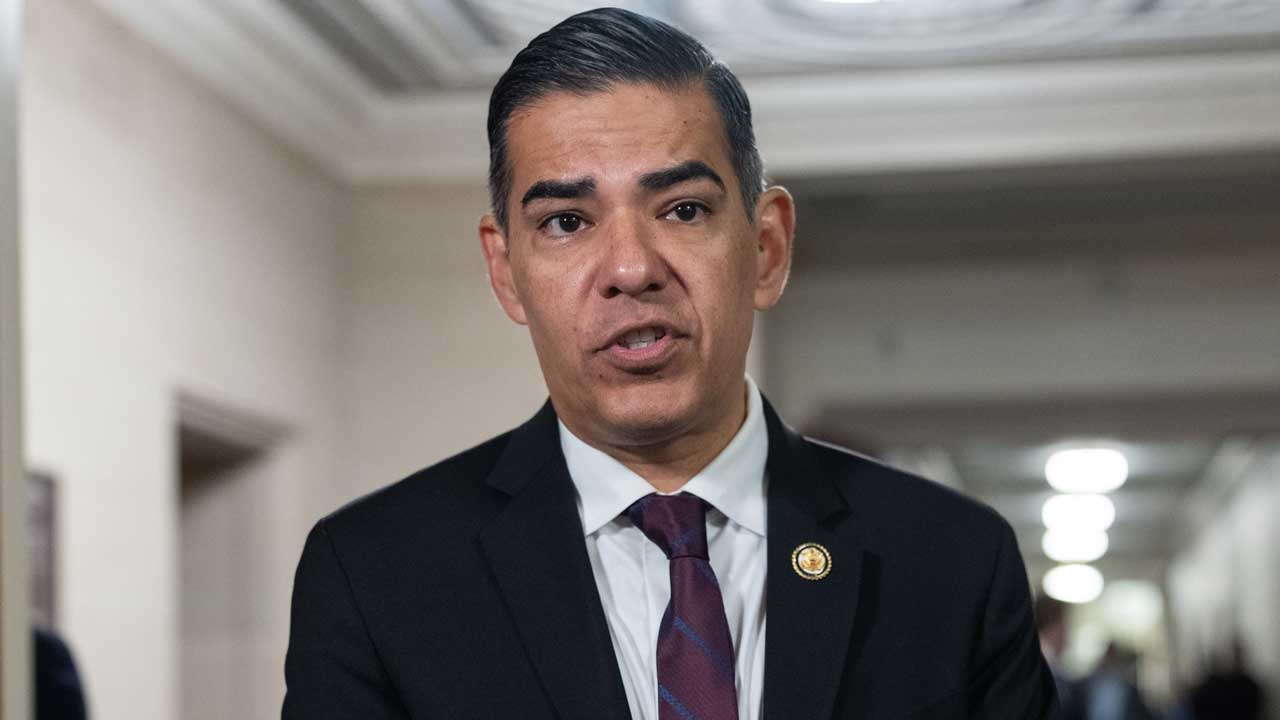
Counsel to the president William Scharf sent a letter to House Committee on Oversight and Government Reform ranking member California Democratic Rep. Robert Garcia Nov. 9, warning Democrats against running afoul of their allotted powers pertaining to investigations and subpoenas.
"They are, for us, a little bit like the air we breathe and the water a fish might swim in.
As Republicans reel from their bruising midterm election losses, Supreme Court Justice Sonia Sotomayor is hoping some of the court's biggest conservative rulings will eventually be overturned.
"The T in LGBTQ+ stands for TRANSGENDER," Annie Andrews, who is set to represent a state President Donald Trump won by roughly 18%, posted in 2023.
As results poured in on election night, however, it became clear that even states that practically nobody thought would be competitive, such as Louisiana and Tennessee, were coming within a razor's edge of going blue.
As results poured in from across the country Tuesday night and a blue wave began to form, United Auto Workers President Shawn Fain told Fox News Digital that Democrats' sweeping midterm victories were no guarantee that working people would stick with the party in 2028.
The Fox News Decision Desk predicts Democrat Amy Acton will defeat Republican Vivek Ramaswamy in Ohio's closely watched gubernatorial race, delivering a major upset in a state that has not elected a Democratic governor in 20 years.
Nard recounted how she had recently spoken to a Black woman who highlighted that her community makes a big deal of going to the polls on Election Day, a point she used to stress that Haley’s endorsement, though late in the cycle, could still influence last-second voters.
Also by Robert Schmad
Nothing else under this byline is closely related to this article, so these are simply their most recent.
All 55 articles by Robert Schmad →

Topics

California Do No Harm First Amendment the First Amendment the Supreme Court

Subjects

California GPE · 14× Thomas PERSON · 5× the Supreme Court ORG · 2× Azadeh Khatibi PERSON · 1× CME ORG · 1× Clarence Thomas PERSON · 1× Do No Harm ORG · 1× Khatibi PERSON · 1× Samuel Alito PERSON · 1× The Ninth Circuit ORG · 1×

Narrative

Dr. Azadeh Khatibi, who teaches a continuing education course in California, sued the state alongside the right-of-center non-profit, Do No Harm, arguing, like Thomas argued, that it compels private instructors to convey a government-favored message in violation of the First Amendment.
framing: mixed · carried by 1 article(s) · first seen 2026-11-17
Thomas was joined by Justice Samuel Alito in dissenting from the decision, arguing that allowing the law to stand could have implications reaching far beyond the medical field.

Claims (27 extracted, 6 hedged)

Justice Clarence Thomas warned Monday that the Supreme Court is leaving the door open for states to compel speech from private citizens by not taking up a challenge to a California law. asserted
states → warn → law
On Monday, the Supreme Court declined a petition to hear a case from a California physician who argued that the state government was forcing her to make statements she disagreed with while teaching a mandatory course for doctors. asserted
she → decline → doctors
Thomas was joined by Justice Samuel Alito in dissenting from the decision, arguing that allowing the law to stand could have implications reaching far beyond the medical field. uncertain
law → join → field
The case stems from California’s requirement that all its licensed physicians complete 50 hours of state-approved continuing education courses every two years. asserted
physicians → stem → courses
California requires continuing medical education courses to include instruction on implicit bias, either through examples of how it affects physicians' treatment decisions and health outcomes or strategies for addressing how those biases may contribute to healthcare disparities. uncertain
biases → require → disparities
"When, as here, the government does not issue its own messages but instead requires private speakers to communicate the government’s viewpoint, the First Amendment applies," Thomas wrote. asserted
Thomas → issue → viewpoint
"A State cannot regulate its way out of First Amendment scrutiny. asserted
State → regulate → scrutiny
We should not permit the government-speech doctrine to be wielded as ‘a cover for censorship’ or a cloak for compelled speech." asserted
doctrine → permit → speech
Dr. Azadeh Khatibi, who teaches a continuing education course in California, sued the state alongside the right-of-center non-profit, Do No Harm, arguing, like Thomas argued, that it compels private instructors to convey a government-favored message in violation of the First Amendment. asserted
it → teach → Amendment
"She does not want to include discussion of implicit bias in her courses. asserted
She → want → courses
It is not relevant to her topics, and it would eat away at the limited time she could use to discuss topics that are relevant," her legal team wrote. uncertain
team → eat → topics
"Dr. Khatibi also disagrees that implicit bias is the primary factor driving disparities in healthcare." asserted
bias → disagree → healthcare
California countered that while instructors must include discussion of implicit bias in their courses, they are not required to personally endorse the theory and may openly disagree with it. uncertain
they → counter → it
"Under the second option, instructors who do not believe that implicit bias exists are free to say so," California wrote in the brief defending its law. asserted
California → believe → law
"Petitioners are also free to inform CME attendees that any discussion of implicit bias is included solely to comply with state requirements." asserted
discussion → inform → requirements
California further argued that states must be given broad authority to determine what doctors must do to retain their licenses. asserted
doctors → argue → licenses
The Ninth Circuit ruled last year that continuing medical education courses constitute government speech because of California's extensive regulation of the medical profession, meaning the state's requirements are not subject to First Amendment free-speech scrutiny. asserted
requirements → rule → scrutiny
Thomas, however, disputed California’s characterization of whether or not it was compelling instructors to take certain positions. asserted
it → dispute → positions
"California’s implicit-bias-training requirement leaves petitioners no choice but to discuss the topic in a way that affirms the State’s view that implicit bias causes ‘disparities in health outcomes," he wrote. asserted
he → leave → outcomes
The justice went on to argue that allowing California’s law to go unchallenged could have implications for Americans working in many fields beyond medicine. uncertain
go → go → medicine
"What of other professions whose members California licenses and regulates? asserted
California → license → members
At the next statewide legal conference at which lectures are offered for continuing legal education, could California require a keynote speaker to oppose racial preferences in law firm hiring?" Thomas wrote. uncertain
Thomas → offer → hiring
"Applying the Ninth Circuit’s logic, enough government regulation of the field would convert the private speaker’s message in each of these hypotheticals into government speech unprotected by the First Amendment. asserted
regulation → apply → Amendment
That result does not follow from this Court’s precedents, and it certainly does not follow from the Constitution. asserted
it → follow → Constitution
Justice Neil Gorsuch also dissented from the court's decision not to hear the case, though he did not sign on to Alito and Thomas’ particular argument. asserted
he → dissent → argument
His rationale for wanting to grant certiorari is not publicly known. asserted
rationale → want → certiorari
The Supreme Court's decision leaves the Ninth Circuit's ruling intact but does not settle whether California's requirement violates the First Amendment. asserted
requirement → leave → Amendment
Give feedback · no sign-in needed

No sign-in needed for now. Your note is sent without a name, so it cannot be answered.

History Support