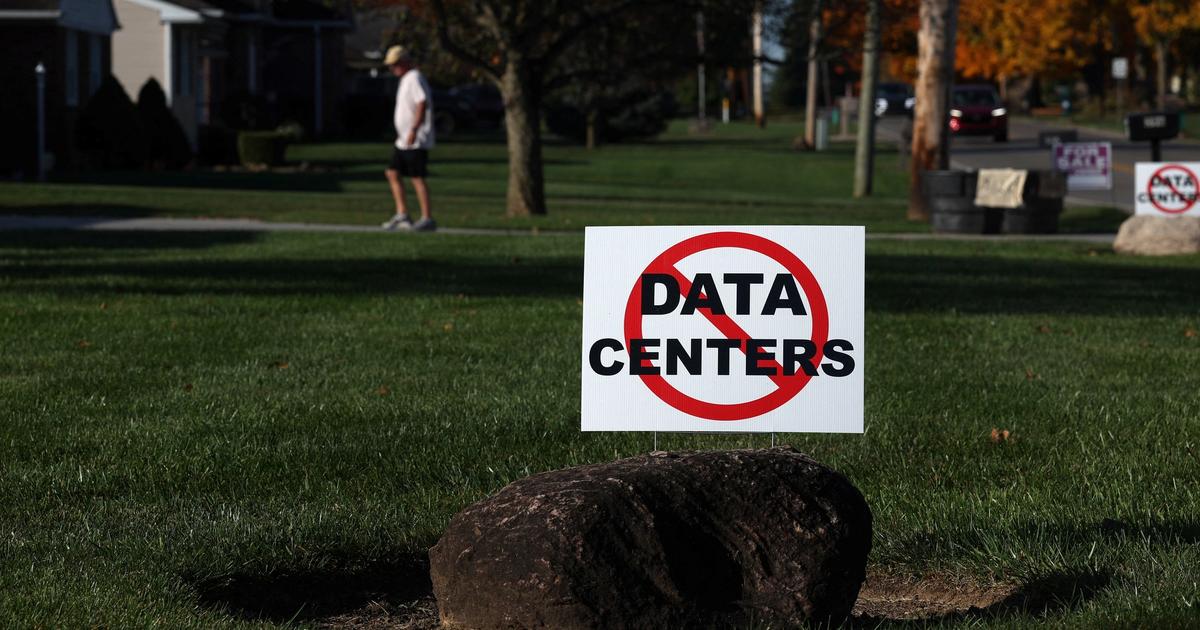
Across the country, voters delivered a clear warning about the rapid expansion of data centers powering artificial intelligence.
asserted
voters → deliver → intelligence
Americans want technological progress, but not at the expense of their communities, electricity bills, water supplies or quality of life.
asserted
Americans → want → life
According to Ballotpedia, 46 of the 47 data-center-related ballot measures decided in 2026 favored greater limits on development.
uncertain
46 → accord → development
The message is unmistakable: The industry is losing public confidence, and political leaders who ignore these concerns do so at their own peril.
asserted
who → lose → peril
America needs more data centers, not fewer, to maintain its AI leadership.
asserted
America → need → leadership
But technology companies cannot expect communities to welcome projects when residents believe they are absorbing the costs while corporations reap the benefits.
asserted
corporations → expect → benefits
We believe there is a better way forward.
asserted
We → believe → ?
In our new report, Beyond the "Wild West" and Moratorium: A Bipartisan Framework for Smart and Responsible Data Center Investment, we outline a practical approach to preserving America's AI leadership while treating host communities fairly.
asserted
we → outline → communities
Our perspectives are bipartisan: Robert Wolf served as an economic adviser to President Barack Obama, while Stephen Moore served as a senior economic adviser to President Donald Trump.
asserted
Moore → serve → Trump
AI is becoming one of this century's defining technologies.
asserted
AI → become → technologies
Data centers support cloud computing, advanced manufacturing, scientific research, national security and future AI applications.
asserted
centers → support → computing
A multitrillion-dollar investment wave also creates opportunities for American workers, skilled tradespeople and domestic manufacturers.
asserted
wave → create → workers
The industry has an opportunity to change course.
asserted
industry → have → course
Developers should treat residents as partners, replace vague promises with measurable commitments and pay the incremental costs their projects create.
asserted
projects → treat → costs
But economic benefits must be measured honestly.
asserted
benefits → measure → ?
Construction jobs can be substantial, while permanent employment at operating facilities is often considerably smaller.
asserted
employment → operate → facilities
Communities deserve transparency about lasting jobs, tax revenues and economic benefits.
asserted
Communities → deserve → jobs
Residents also have legitimate concerns about electricity demand, utility bills, water consumption, noise, traffic, pollution and lost open space.
asserted
Residents → have → demand
These concerns must be addressed, not dismissed.
asserted
concerns → address → ?
Two extremes that won't work
The debate has become divided between two approaches.
asserted
debate → work → approaches
The first is the "Wild West": allowing development with minimal safeguards or community input.
asserted
first → allow → safeguards
While speed matters in the global AI race, dismissing local concerns is creating the political resistance that threatens future investment.
asserted
that → matter → investment
The second is the moratorium approach: pausing or halting construction until stronger regulations are established.
asserted
regulations → pause → construction
Although the concerns are understandable, broad freezes risk delaying investment and innovation without addressing underlying problems.
asserted
freezes → risk → problems
The backlash is growing.
asserted
backlash → grow → ?
New York has pursued pauses on certain data center approvals, California has enacted oversight laws, and Texas has increased scrutiny of the industry's demands on its electric grid.
asserted
Texas → pursue → grid
Public opinion reflects these concerns.
asserted
opinion → reflect → concerns
Pew Research Center found that the share of Americans who believe data centers are mostly bad for the environment increased from 39 percent in January to 54 percent in August 2026.
asserted
centers → find → August
The share believing they are mostly bad for home energy costs rose from 38 percent to 50 percent.
asserted
they → believe → percent
A September Fabrizio, Lee & Associates survey found that nearly 65 percent opposed new data center construction, while 61 percent supported construction with conditions.
asserted
percent → find → conditions
Americans are not necessarily rejecting development.
asserted
Americans → reject → development
They are demanding reasonable protections.
asserted
They → demand → protections
America needs predictable rules that protect consumers and communities while allowing responsible investment.
asserted
that → need → investment
Our report proposes five principles:
1. Protect electricity customers.
asserted
report → propose → customers
Data center developers should pay the full incremental costs of the generation, transmission and distribution infrastructure their projects require.
asserted
projects → pay → infrastructure
Residential customers and small businesses should not subsidize investments primarily serving technology companies.
asserted
customers → subsidize → companies
The bipartisan Ratepayer Protection Act, which passed the House 417–3, demonstrates support for this principle: Those driving new electricity demand should pay their fair share.
asserted
Those → pass → share
Developers should disclose projected electricity demand and demonstrate how projects will affect grid reliability.
asserted
projects → disclose → reliability
Plans should address new generation, dedicated energy resources and storage without shifting costs or risks onto existing customers.
asserted
Plans → address → customers
3. Safeguard water and the environment.
Communities should have access to assessments of water availability, cooling requirements, emissions, noise and environmental impacts before projects are approved.
asserted
projects → safeguard → availability
…and 17 more, not listed.
 The Aporia