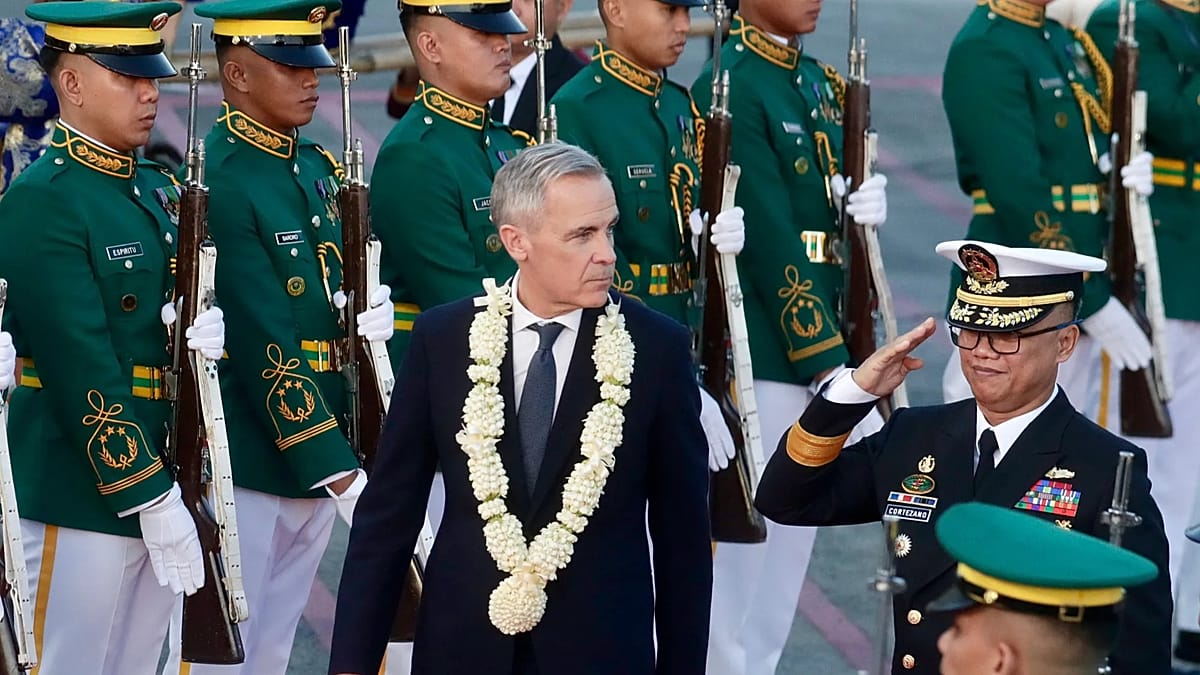
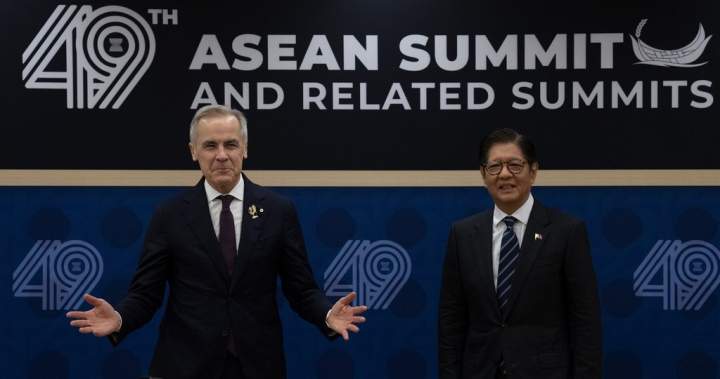
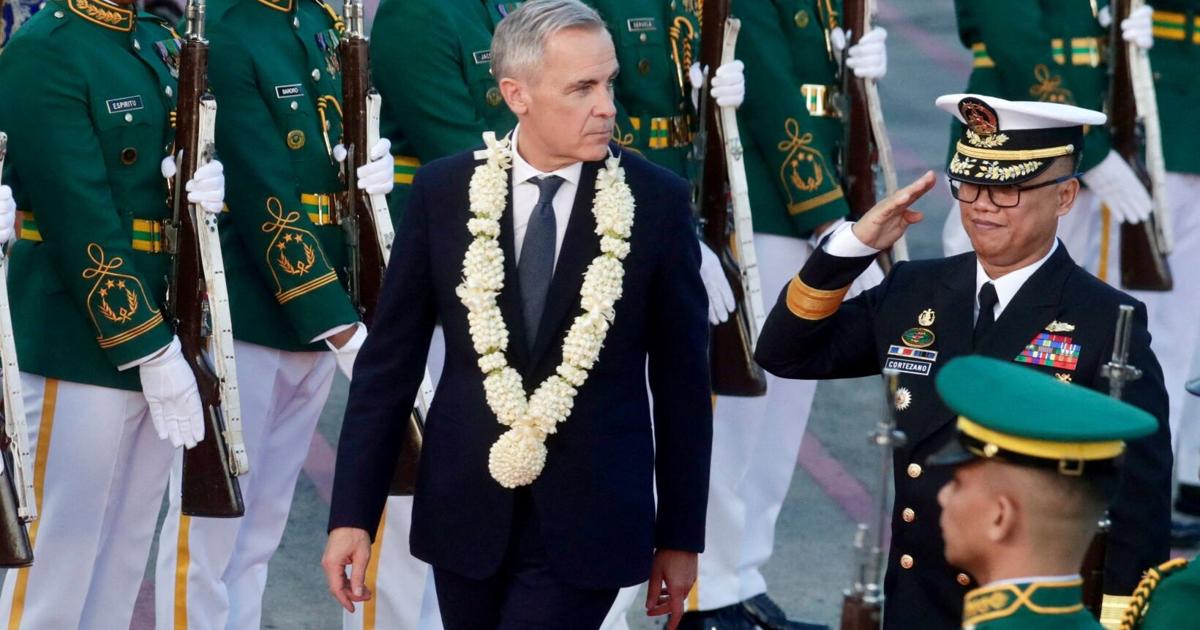
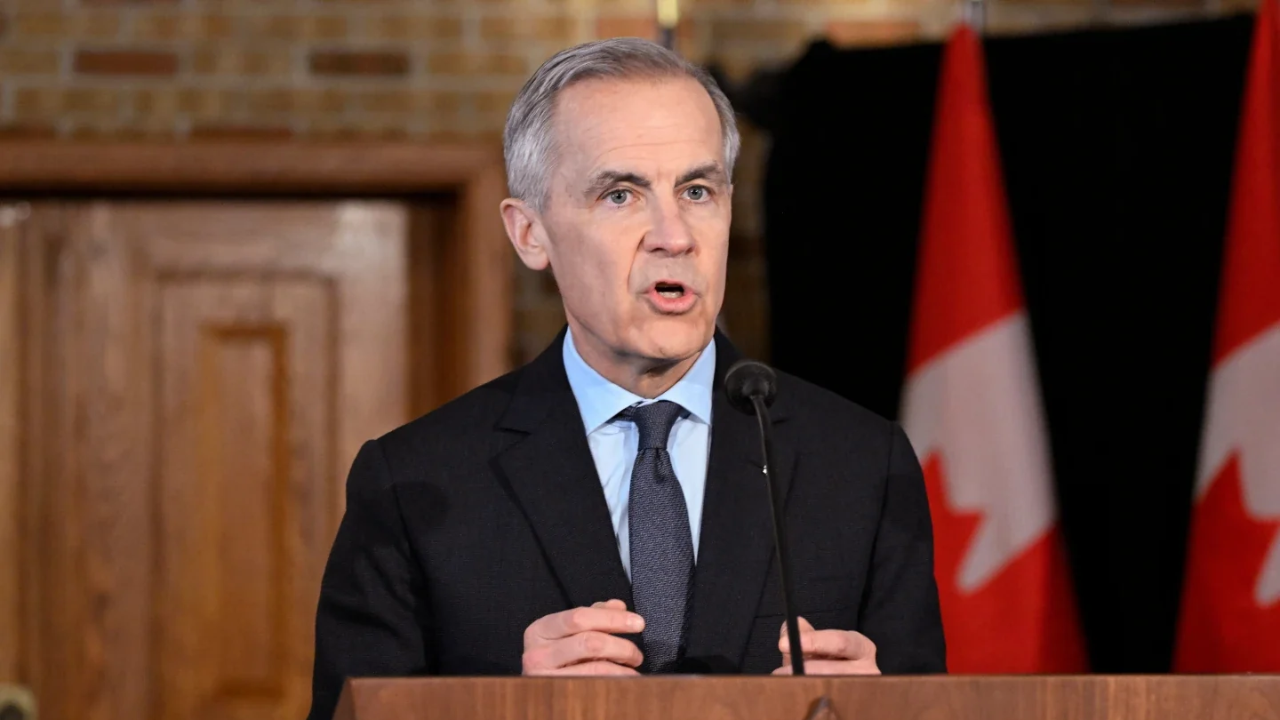
Prime Minister Mark Carney announced in Manila on Saturday that Canada has concluded negotiations on a free trade agreement with the Philippines and has “substantially concluded” talks with the 11-member Association of Southeast Asian Nations (ASEAN).
asserted
Canada → announce → Nations
Carney cast the agreements as a way to reduce Canada’s reliance on the U.S., while telling reporters that talks with Washington, by far Canada’s largest trading partner, are progressing but have not yet produced a deal.
asserted
talks → cast → deal
The two pacts would join free trade agreements the Carney government has signed with Indonesia and Ecuador, both negotiated under the previous Liberal government, and one it concluded with the U.A.E. in July.
asserted
it → join → July
Unlike the strategic partnerships and memorandums of understanding Ottawa has also signed, which Conservative MPs have criticized as non-binding, free trade agreements impose binding obligations on both sides and are given force through implementing legislation in Parliament.
asserted
agreements → sign → Parliament
Carney made the announcements after meeting Philippine President Ferdinand Marcos Jr., whose country is hosting this year’s ASEAN summit in Manila.
asserted
country → make → Manila
The two leaders signed a document formally ending negotiations that restarted just over a year ago, after talks first began in 2015.
asserted
talks → sign → 2015
Ottawa aims to sign the agreement itself next year.
asserted
Ottawa → aim → agreement
The two leaders last met in July in Vancouver, where they announced a strategic partnership.
asserted
they → meet → partnership
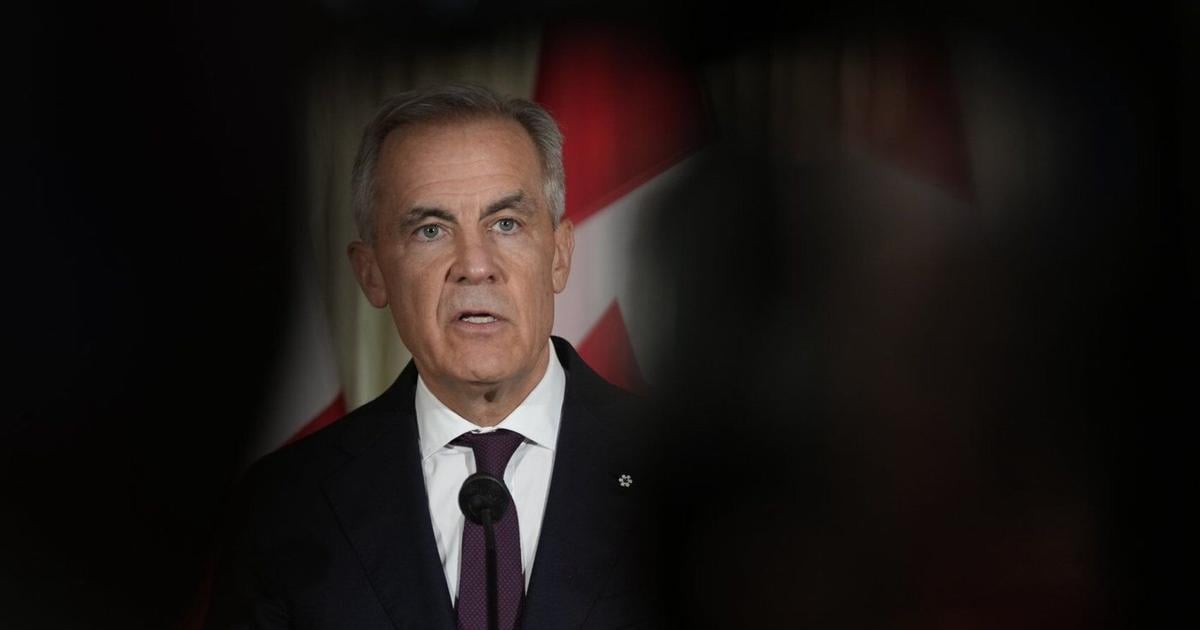
“We are developing a dense web of reliable partners to create more opportunities for our business and more choice for Canadians, while reducing our reliance on the United States,” Carney said in prepared remarks.
asserted
Carney → develop → remarks
Carney said the Philippine agreement covers more than 90 percent of tariff lines and could help triple trade between the two countries to more than $10 billion a year by 2035.
uncertain
agreement → say → 2035
Bilateral merchandise trade totalled $3.4 billion in 2025.
asserted
trade → total → 2025
Canada exported mineral ores, meat, cereals, fertilizers and aircraft, and imported cooking oils, leather and rubber products.
asserted
Canada → export → oils
The prime minister named agriculture, aerospace and artificial intelligence as sectors that stand to gain, and singled out farmers, ranchers and food producers.
asserted
that → name → farmers
“In each of these sectors, Canadian supply is meeting Philippine demand.
asserted
supply → meet → demand
And with our agreement, our producers (and) our companies have a bigger competitive advantage,” Carney said.
asserted
Carney → have → advantage
Ottawa estimates the ASEAN agreement could add nearly $2 billion to Canada’s economy and create almost 14,000 jobs, particularly in agriculture and manufacturing.
uncertain
agreement → estimate → agriculture
Two-way merchandise trade with the bloc reached $52.5 billion in 2025, up 23.7 percent from the year before, according to the Prime Minister’s Office.
uncertain
trade → reach → Office
Officials hope to sign that deal next year.
asserted
Officials → hope → deal
Washington talks show progress, but no deal
Carney said he had a long conversation with U.S. President Donald Trump before leaving on the trip.
asserted
he → show → trip
U.S. Trade Representative Jamieson Greer and White House chief of staff Stephen Miller also joined the call.
asserted
Greer → join → call
“We are making progress,” Carney told reporters, adding that a bilateral deal is possible but not yet in hand.
asserted
deal → make → hand
He said Canada would not accept an agreement that leaves it without a viable auto sector.
asserted
that → say → sector
The talks collapsed in late August, when Carney suspended negotiations over last-minute American demands that included limits on Canada’s ability to strike trade deals with other countries.
asserted
that → collapse → countries
Carney framed that demand as a matter of sovereignty.
asserted
Carney → frame → sovereignty
Washington then imposed 50 percent tariffs on about $20 billion USD in Canadian goods, and Ottawa retaliated in September.
asserted
Ottawa → impose → September
The two sides have since resumed discussions, and Carney said earlier this month that the U.S. had dropped its demands on culture and third-country trade deals.
asserted
U.S. → resume → deals
The bilateral talks sit atop a weakened continental pact.
asserted
talks → sit → pact
In June, Trump announced he would not renew the Canada-United States-Mexico Agreement (CUSMA) ahead of its July 1 review milestone.
asserted
he → announce → milestone
That decision pushes the pact into rolling annual reviews, and he did not rule out withdrawing.
asserted
he → push → reviews
From Manila, Carney travelled to the Francophonie summit in Phnom Penh, Cambodia.
asserted
Carney → travel → Penh
He then heads to Shenzhen, China, for the Asia-Pacific Economic Cooperation leaders’ meeting on Nov. 18 and 19, which Trump and Mexican President Claudia Sheinbaum are also expected to attend.
asserted
Trump → head → which
Asked whether a three-way meeting could help resolve trade disputes, Carney said there is always value in leaders getting together.
uncertain
leaders → ask → disputes
Neither agreement has been signed or implemented, and how quickly Canadian exporters use them remains open.
asserted
exporters → sign → them
The U.S. took 71.7 percent of Canadian merchandise exports in 2025, down from 75.9 percent in 2024.
asserted
U.S. → take → 2024
But that share climbed back above 70 percent in September for the first time in 13 months, as exports to other countries fell for a second straight month after a record high in July.
asserted
exports → climb → July
Carney has pledged to double non-American exports by 2035 and made 26 foreign trips in his first year in office, and continues to travel at similar pace in his second year in office.
asserted
Carney → pledge → office
Market access to the U.S. remains Canada’s main selling point.
asserted
access → remain → U.S.
In June, Canadian officials told Reuters that preferential access to the American market was the main draw for many prospective trading partners.
asserted
access → tell → partners
Drew Fagan, a visiting professor at Yale University and professor at the Munk School of Global Affairs, told The Hub at the time that treating the U.S. and other markets as an either/or choice is mistaken, because more investment depends heavily on Canada’s proximity to its neighbour.
asserted
investment → visit → neighbour
Federal lobbying records showed the same pull earlier this year: Toyota raised the continental pact in 13 of its 14 contacts with the federal government, and Honda in 21 of 27.
asserted
Toyota → show → 27
…and 8 more, not listed.

 The Aporia