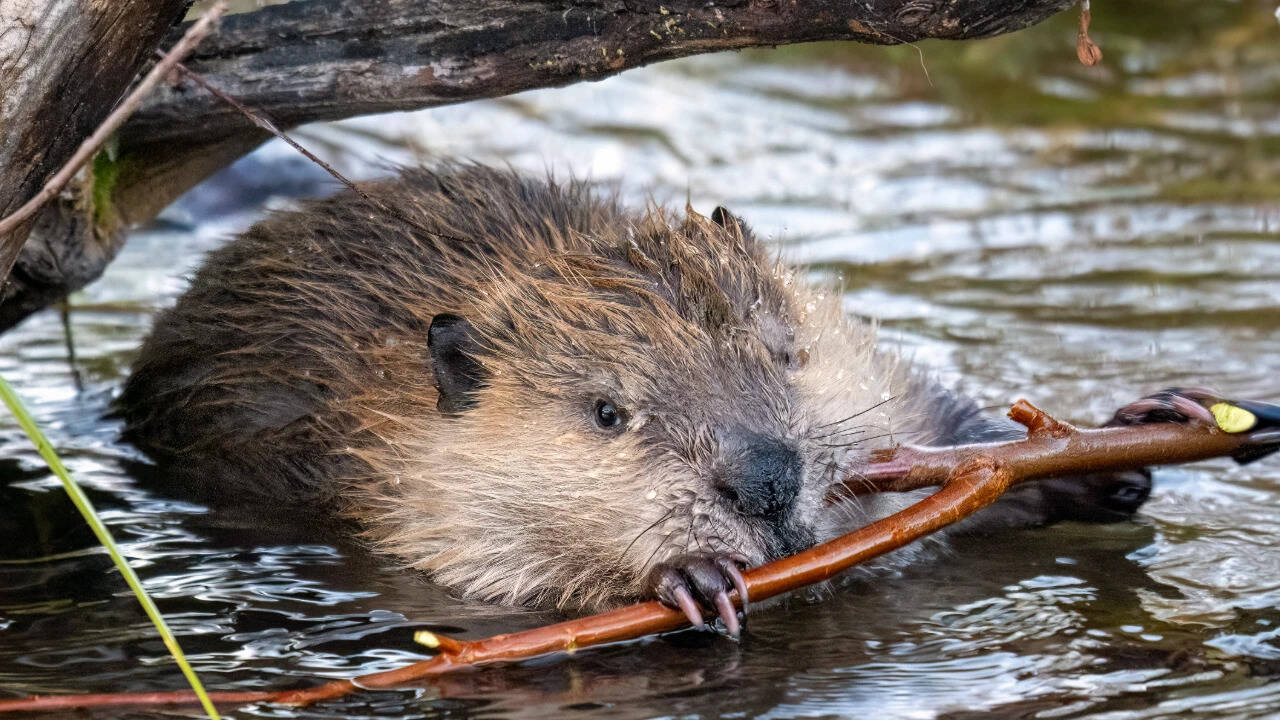
Photo via Times of India

Scotland’s beaver territories more than double since 2018

Read the original at Times of India ↗
Cite

TOI Science Desk. (2026, November 17). Scotland’s beaver territories more than double since 2018. Times of India. https://timesofindia.indiatimes.com/science/wildlife/scotlands-beaver-territories-rise-from-39-in-2012-to-349-in-2026-across-tayside-and-forth-a-new-survey-also-finds-56-possible-territories-highlighting-the-recovery-of-a-mammal-once-hunted-to-extinction-in-the-country/articleshow/135914981.cms

Dated from the outlet's own feed. Check the original for its byline.

Times of India · collected 2026-11-17 · by TOI Science Desk

Quick Summary

A recent survey conducted by the Beaver Trust and the University of Exeter reveals that Scotland's beaver population has more than doubled since 2018. The study, published in NatureScot, found 349 confirmed territories and identified 56 potential ones, totaling up to 405 territories. The survey, covering 2,397 km of waterways, also noted a shift in beaver habitats, with waterside woodland accounting for half of the recorded activity compared to 34% in 2020-2021, while agricultural land use dropped from 41% to 28%.
Written by AI on 2026-11-17, from this article's own text only.

AI analysis

Why this leaning score
This article does not take a side on a contested political question, so it has no leaning score. That is an answer rather than a gap: a match report or a rescue can be warmly or critically written without being left or right, and scoring it anyway is how approval of a subject gets recorded as a political position.
No political leaning scored for article 159674 · logged 2026-11-17

Compared with similar articles

Nothing to compare against. No article is close enough to this one for the pipeline to have linked or judged the pair.
How this article was measured signals, leaning charts, publisher record, byline, topics and claims

Signals How these are calculated →

Claims extracted
30
sentences that state something as happening or true
Uncertain
13%
4 of 30 hedged ("reportedly", "may", "according to")
Leaning
not political
takes no side on a contested political question
Publisher signals
59/100
Times of India's corrections and hedging, across everything collected from it. Not a measure of accuracy.
Outlets on this story
unclustered
not grouped into a story yet
Same framing elsewhere
1
articles that frame the event the way this one does
Analyzed 2026-11-17 · how these are computed

How this is being covered How these are calculated →

Article leaning vs. publisher reliability
Source leaning vs. consistency

Publisher

Times of India · 5161 article(s) · 5 correction(s) detected
Running correction rate · 5 correction(s)

Who wrote this

TOI Science Desk
330 article(s) here · 1 carrying a prediction
The study, conducted by the Beaver Trust and the University of Exeter, confirmed 349 territories and identified 56 more that may be occupied, bringing the total to as many as 405.
Although its external lettered dials could still turn, nobody had managed to find the correct combination since its discovery.
It states that, while they may be small, they are still extremely venomous, and that its experienced reptile team is handling them under the highest safety and care protocols.
Elephants are known for their strong family bonds and complex social relationships, but declining populations may be putting these connections at risk.
Individually, such objects might seem small; together, they provide strong evidence that the outpost was active during the Sui period.
Who knew one animal could change an entire landscape?
The snakes were temporarily brought to the San Francisco Zoo, where they could give birth in a controlled environment.
Scientists have drawn a treasure map of where fossils of ancient sea life may still be waiting to be found.
The newly excavated channels, along with additional connections to Darby Creek, are expected to improve tidal circulation overall.
We have often wondered what animals might be trying to tell us, whether it is a dog barking at the postman or birds calling out to one another from the trees.
Wire or desk byline, not an individual reporter.
Also by TOI Science Desk
Nothing else under this byline is closely related to this article, so these are simply their most recent.
All 330 articles by TOI Science Desk →

Topics

NatureScot Restoration at Beaver Trust Scotland the Beaver Trust the University of Exeter

Subjects

Scotland GPE · 4× NatureScot ORG · 3× Roo Campbell PERSON · 2× the University of Exeter ORG · 2× Alan Puttock PERSON · 1× Restoration at Beaver Trust ORG · 1× Roisin Campbell-Palmer PERSON · 1× the Beaver Trust ORG · 1×

Narrative

The population is expanding and moving into new areas. Beavers are now living and expanding across the Forth and Fife regions, along the shoreline of the Firth of Tay, and in the South Esk and Clyde river catchments. In the Tay and Forth areas, where beavers have been present for longer, experts noted signs of new territories emerging in gaps between previously established ones.
framing: assertive · carried by 1 article(s) · first seen 2026-11-17
The study, conducted by the Beaver Trust and the University of Exeter, confirmed 349 territories and identified 56 more that may be occupied, bringing the total to as many as 405.
2026-11-17 · Times of India
Scotland’s beaver territories more than double since 2018 · assertive framing

Claims (30 extracted, 4 hedged)

The beaver population across Tayside and the Forth continues to expand, according to the largest survey of the species ever carried out in Scotland. uncertain
population → continue → Scotland
The study, conducted by the Beaver Trust and the University of Exeter, confirmed 349 territories and identified 56 more that may be occupied, bringing the total to as many as 405. uncertain
that → conduct → 405
The findings were published today in the journal NatureScot. asserted
findings → publish → NatureScot
Beavers are back in Scotland’s major river catchments Beavers are finally making a comeback in Scotland. asserted
Beavers → make → Scotland
According to the survey, their numbers have increased significantly in recent years. uncertain
numbers → accord → years
In 2012, 39 territories were recorded. asserted
territories → record → 2012
This rose to 114 in 2017–2018 and reached 251 by 2020–2021. asserted
This → rise → 2020–2021
The survey covered a whopping 2,397 km of watercourses, including rivers, burns, lochs and drainage systems, during 2024–2026. asserted
survey → cover → 2024–2026
Experienced beaver surveyors looked for signs of beaver activity on foot and by canoe across the area. asserted
surveyors → look → area
They found 20,853 confirmed signs, including burrows, dams, lodges, scent mounds, canal digging, and evidence of feeding on trees and crops. asserted
They → find → trees
As family groups vary in size from one territory to the next, the survey does not produce a single population figure, but the trend is clear. asserted
trend → vary → figure
The population is expanding and moving into new areas. Beavers are now living and expanding across the Forth and Fife regions, along the shoreline of the Firth of Tay, and in the South Esk and Clyde river catchments. In the Tay and Forth areas, where beavers have been present for longer, experts noted signs of new territories emerging in gaps between previously established ones. asserted
territories → expand → ones
They are moving away from farmland Waterside woodland accounted for half of all recorded activity this time, up from 34 per cent in 2020–2021. asserted
woodland → move → 2020–2021
Agricultural land, which accounted for 41 per cent of activity in the earlier survey, now accounts for 28 per cent. asserted
which → account → cent
Dr Roisin Campbell-Palmer, Head of Restoration at Beaver Trust, said the team had probably carried out the biggest survey of beaver activity ever attempted. asserted
team → say → activity
“We’re proud to have carried out what may be the largest survey of beaver activity ever undertaken. uncertain
what → ’re → activity
Covering 2,397 km of waterways on foot and by canoe during 2024–2025 took an enormous amount of time, effort and dedication from our team. asserted
Covering → cover → team
It’s encouraging to see the population growing and beavers establishing themselves in new areas. asserted
beavers → ’ → areas
At the same time, we are seeing a slowing of population growth compared with previous surveys as the core catchments become more occupied, with natural and human-made barriers limiting movement into some new catchments or sub-catchments.” asserted
catchments → see → catchments
Dr Roo Campbell, NatureScot mammal adviser, explained the crucial role these rodents play in nature. asserted
rodents → explain → nature
“Beavers bring many benefits for nature and people, so it’s great news that this latest survey confirms that the population is continuing to expand into new areas. asserted
population → bring → areas
It’s particularly interesting that more dams were recorded relative to the population size, perhaps an indication of beavers moving into less agriculturally dominated landscapes and smaller burns. asserted
beavers → ’ → landscapes
The wetlands these dams create are important for biodiversity and valuable to us because they can alleviate flood and pollution risks downstream. asserted
they → create → risks
To gain these benefits, we need to adapt to live alongside beavers throughout our waterways,” the adviser said. asserted
adviser → gain → waterways
“We know that beavers can occasionally cause issues, and as the population continues to spread, NatureScot’s Beaver Mitigation Scheme will continue to be available to help land managers as we learn to live alongside beavers in our rivers, lochs and wetlands,” Roo Campbell added. asserted
Campbell → know → rivers
Dr Alan Puttock, from the University of Exeter, said the surveys, taken together, offer a detailed picture of beavers returning to modern landscapes. asserted
surveys → say → landscapes
“By applying a rigorous, systematic approach to surveying Scotland’s largest wild beaver population, this survey, and the surveys that preceded it, give an incredibly valuable insight into the return of beavers to our modern landscapes. asserted
that → apply → landscapes
The extent of these surveys is unprecedented, and we hope the data they contain will encourage coexistence with wild beavers in Scotland and beyond, helping to maximise the benefits and minimise the conflicts associated with this ecosystem engineer.” asserted
they → hope → engineer
The Scottish Beaver Advisory Group has now published an information pack for communities where beavers are arriving for the first time. asserted
beavers → publish → time
It focuses on what residents can expect as the animals move into their area. asserted
animals → focus → area

Give feedback · no sign-in needed

No sign-in needed for now. Your note is sent without a name, so it cannot be answered.

History Support