Canada’s annual inflation rate held at 3.1 percent in October, Statistics Canada reported Monday.
asserted
Canada → hold → October
Pricier gasoline, groceries and clothing were balanced by a year-over-year drop in cellphone plan prices and a slower pace of rent increases.
asserted
gasoline → balance → increases
The reading came in a tick below the 3.2 percent economists had expected, and below the 3.4 percent the Bank of Canada projected for the fourth quarter.
asserted
Bank → come → quarter
Economists said it does little to settle whether the bank will raise rates again on Dec. 9, six weeks after its first hike since July 2023.
asserted
bank → say → July
Headline inflation remains just above the top of the bank’s 1 to 3 percent control range, which is centred on a 2 percent target.
asserted
which → remain → target
On Oct. 28, the bank lifted its policy rate by a quarter point to 2.5 percent.
asserted
bank → lift → percent
It said the move was meant to “reduce the risk that continuing high energy prices spread broadly” to other goods and services.
asserted
prices → say → goods
Gasoline drives the headline, with an asterisk
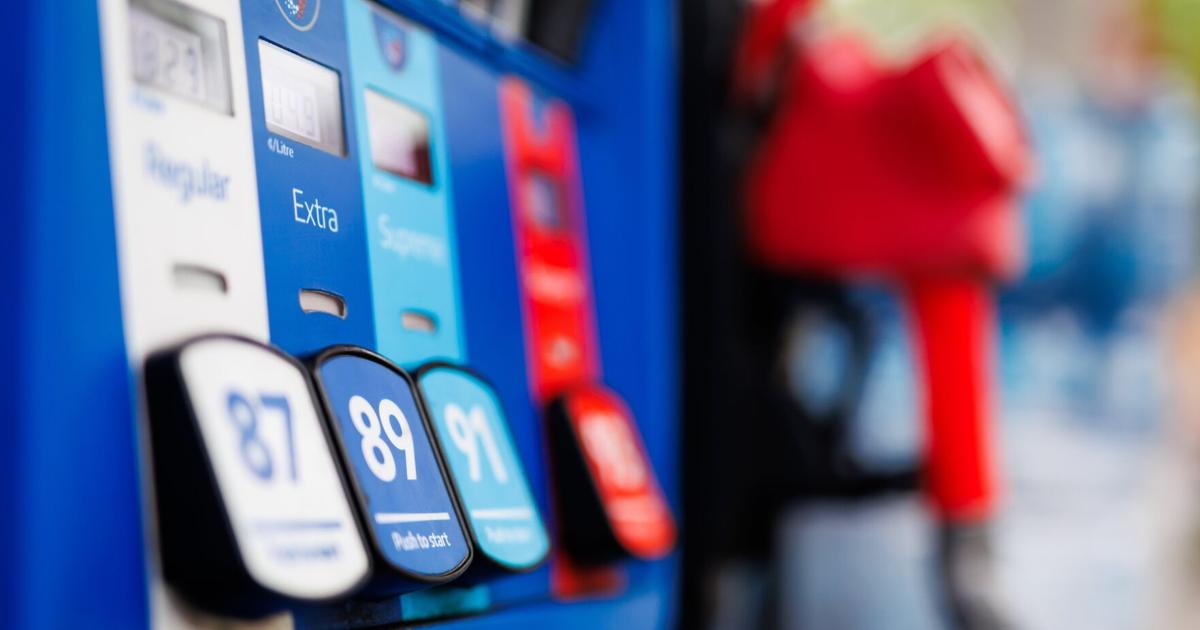
Gasoline prices were 30.9 percent higher than a year earlier, up from a 27.8 percent annual increase in September.
asserted
prices → drive → September
Prices remain elevated amid conflict in the Middle East and Ukraine.
asserted
Prices → remain → East
Pump prices fell 4.8 percent in October 2025 on worries about a crude oversupply, and that drop has now fallen out of the annual comparison.
asserted
drop → fall → comparison
From September to October this year, gasoline prices actually declined 2.5 percent.
asserted
prices → decline → October
The same base-year effect pulled cellphone prices the other way.
asserted
effect → pull → prices
Plan prices were down 6.2 percent from a year earlier, largely because carriers raised them sharply in October 2025.
asserted
carriers → raise → October
Statistics Canada called the upward pressure broad-based, pointing to natural gas, gasoline, groceries and clothing.
asserted
Canada → call → gas
Grocery inflation picked up to 2 percent after four months of slowing.
asserted
inflation → pick → slowing
Clothing prices rose 3.4 percent from September, the largest monthly gain since 2019, which the agency said coincided with higher shipping costs.
asserted
agency → rise → costs
The measures the bank watches most closely are calmer.
asserted
bank → watch → ?
Excluding energy, prices rose 2 percent, down from 2.1 percent in September.
asserted
prices → exclude → September
CPI-median held at 2 percent and CPI-trim eased to 1.8 percent, while CPI-common edged up to 2.5 percent.
asserted
common → hold → percent
No clear signal for December
Benjamin Reitzes, BMO’s managing director of Canadian rates and macro strategy, told The Canadian Press that nothing in the data “really screams rate hike for the Bank of Canada.”
asserted
nothing → tell → Canada
He noted the bank has been hawkish in recent weeks and signalled in October that more tightening could be needed.
uncertain
tightening → note → October
“There’s no clearcut case here either way,” he said.
asserted
he → ’ → ?
Abbey Xu, an economist at Royal Bank of Canada, called December’s decision “finely balanced.”
asserted
Xu → call → decision
She pointed to three straight months of job losses, softer-than-expected third-quarter growth and easing gasoline prices as arguments for patience.
asserted
She → point → patience
The risk lies in how long fuel stays expensive.
asserted
fuel → lie → ?
“The longer energy prices remain elevated, the more cost pressures will filter through to consumer prices with a lag,” Xu wrote in a client note.
asserted
Xu → remain → note
“The path of energy prices also remains highly uncertain despite the decline in gasoline prices so far in November.”
asserted
path → remain → November
She added that RBC’s diffusion index still shows unusually strong price growth confined to a relatively narrow slice of the consumer basket.
asserted
index → add → basket
November has brought some relief.
asserted
November → bring → relief
Kalibrate data showed regular gasoline up 11.3 percent from a year earlier as of Nov. 13.
asserted
gasoline → show → Nov.
Brent crude fell 16 percent in the first week of November, its steepest weekly drop since the start of the pandemic.
asserted
crude → fall → pandemic
Energy costs and the wider economy
The energy backdrop has shifted sharply over the past year.
asserted
backdrop → shift → year
Writing in The Hub, Edward Ngai, a research assistant at Arbuthnot Labs, noted the consensus view in December 2025.
asserted
Ngai → write → December
Brent crude was expected to average roughly $60 USD a barrel through 2026, supporting forecasts of easing inflation and even an interest rate cut.
asserted
crude → expect → inflation
The effective closure of the Strait of Hormuz on Feb. 28 upended that baseline.
asserted
closure → upend → baseline
The OECD’s March interim outlook projected a 2026 average of $90 USD a barrel if the disruption eased by mid-summer.
asserted
disruption → project → summer
Fitch Ratings estimated prices could average$120 USD under a prolonged closure.
uncertain
prices → estimate → closure
At $90 USD a barrel, University of Calgary economist Trevor Tombe estimated in The Hub the average household would spend an extra $500 on gasoline.
asserted
household → estimate → gasoline
It would spend a further $500 on food, air travel and other goods with energy costs built into their supply chains.
asserted
costs → spend → chains
Ngai argued that for an export-oriented manufacturing economy, high oil prices act less as a windfall than as a drag, which Alberta and Saskatchewan only partly offset for the rest of the country.
asserted
Alberta → argue → country
…and 9 more, not listed.

 The Aporia