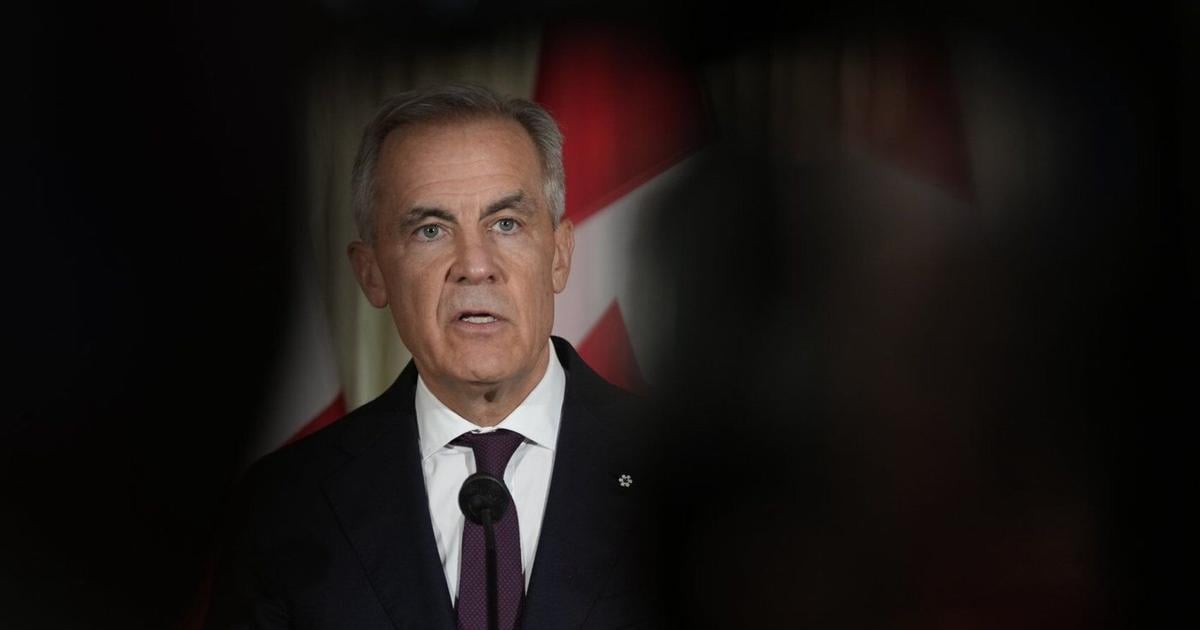
Photo via The Hub

Carney ties Chinese auto investment to outcome of U.S. tariff talks

Read the original at The Hub ↗
Cite

The Hub Staff. (2026, November 17). Carney ties Chinese auto investment to outcome of U.S. tariff talks. The Hub. https://thehub.ca/2026/11/17/carney-ties-chinese-auto-investment-to-outcome-of-u-s-tariff-talks/

Dated from the outlet's own feed. Check the original for its byline.

The Hub · collected 2026-11-17 · by The Hub Staff commentary

Quick Summary

Prime Minister Mark Carney stated that Canada's openness to Chinese investment in the automotive sector will depend on the outcome of ongoing tariff negotiations with the United States. Speaking in Phnom Penh, Cambodia, Carney outlined conditions for Chinese automakers, including substantial manufacturing in Canada, adherence to labour standards, and development of local supply chains, particularly for electric vehicle critical minerals. Carney emphasized that Canada will move forward with these options regardless of U.S. trade actions, but denied using the prospect of Chinese investment as leverage against the U.S.
Written by AI on 2026-11-17, from this article's own text only (the story summary below draws on all the coverage).
See how they differ ↓

AI analysis

Story summary

Prime Minister Mark Carney of Canada met with Chinese President Xi Jinping on November 17, 2026, in Shenzhen, during the Asia-Pacific Economic Cooperation (APEC) summit, to discuss and deepen economic ties. Carney had earlier warned in Cambodia that Canada could build relationships with Chinese automakers if trade talks with the U.S. failed, particularly in the auto industry. During the meeting, China agreed to reduce tariffs on approximately 400 million Canadian dollars ($280 million) worth of Canadian exports, including frozen pork and seafood, while Canada expanded tariff relief on steel and aluminum products from China. This move aims to decrease Canada's economic reliance on the U.S. in light of President Donald Trump's tariffs.

Written for “China Canada Trade Talks Expand” on 2026-11-18, grounded in this article and the 26 other(s) covering the same event.

How they differ

14 outlets covered “China Canada Trade Talks Expand”.

What each outlet says

One AI summary per outlet of its latest article on this story, written from that article alone and checked against it. Open the article for the outlet's own words.

The HubThis outlet17 Nov

Prime Minister Mark Carney stated that Canada's openness to Chinese investment in the automotive sector will depend on the outcome of ongoing tariff negotiations with the United States. Speaking in Phnom Penh, Cambodia, Carney outlined conditions for Chinese automakers, including substantial manufacturing in Canada, adherence to labour standards, and development of local supply chains, particularly for electric…

Carney ties Chinese auto investment to outcome of U.S. tariff talks (this article)
Toronto Star17 Nov

Chinese President Xi Jinping and Canadian Prime Minister met in Shenzhen ahead of the Asia-Pacific Economic Cooperation leaders’ summit to discuss deepening ties between their countries. Both leaders highlighted the strategic partnership they established this year and emphasized the importance of strengthening economic relations as Canada seeks to diversify its trade beyond the United States.

Xi and Carney call for deeper ties as Canada looks beyond US for trade →6 articles from Toronto Star on this story
CBC17 Nov

Prime Minister Mark Carney has secured a new trade deal with China during the APEC summit in Shenzhen, aiming to alleviate issues caused by tariffs and red tape for Canadian sectors. However, the deal has raised concerns among China hawks who point to past incidents like the detention of Canadians during the Meng Wanzhou affair and the 2024 foreign interference inquiry that identified China as the most active…

Carney secures another China trade deal — but at what cost? →5 articles from CBC on this story
Global News17 Nov

Prime Minister Mark Carney and President Xi Jinping announced on Tuesday that Canada will grant greater access to Chinese steel and aluminum products in exchange for China reducing tariffs on certain Canadian agricultural exports, which are valued at approximately $400 million annually. This move is seen as an attempt to balance Canadian producers' concerns about unfair competition with the economic benefits of…

What could more Chinese steel and aluminum mean for Canadians? →3 articles from Global News on this story
The Hindu17 Nov

On November 17, 2026, Chinese President Xi Jinping and Canadian Prime Minister Mark Carney met to discuss deepening economic ties amid strained relations between Canada and the United States. The leaders emphasized the strategic partnership they agreed to earlier in the year, focusing on a tariff reduction agreement that allows up to 49,000 Chinese electric vehicles into Canada annually, with reduced tariffs from…

Xi, Carney call for deeper ties as Canada looks beyond U.S. for trade →2 articles from The Hindu on this story
The Straits Times16 Nov

Mark Carney, Canada's Prime Minister, will meet with Chinese President Xi Jinping on Tuesday in Shenzhen to discuss deepening ties in food, energy, and financial services. This is Carney's third meeting with Xi since taking office, reflecting his strategy to diversify Canada's economic relationships beyond the United States. Carney's visit also addresses concerns about Canadian security and the implications of…

Carney to meet Xi on Tuesday to talk food, energy and financial services →2 articles from The Straits Times on this story
Show 8 more outlets
The Guardian16 Nov

Mark Carney, the prime minister of Canada, stated that the country might collaborate with Chinese automakers if negotiations with the US fail to preserve the North American auto industry's integration. Carney made these comments in Cambodia before a meeting with Chinese leader Xi Jinping, where auto manufacturing could be discussed. He emphasized that Canada would prioritize negotiations with the US but could…

Canada could work with Chinese automakers if US trade talks fail, says Carney →
Just the News16 Nov

Canadian Prime Minister Mark Carney stated that Canada may develop relationships with Chinese automakers if U.S. trade talks fail, as reported by the Associated Press. Carney made this statement in Cambodia on Monday, ahead of a meeting with Chinese President Xi Jinping in Shenzhen, where they previously agreed to reduce tariffs on electric vehicles from China. Carney emphasized that maintaining a viable auto…

Carney says Canada could build relationships with Chinese automakers if U.S. trade talks fail →
Toronto Sun16 Nov

Prime Minister Mark Carney warns that U.S. President Donald Trump’s tariffs could force Canada to consider partnerships with Chinese automakers if North American auto integration deteriorates. Carney made these remarks ahead of a meeting with Chinese President Xi Jinping at the APEC summit. While preferring to maintain ties with the U.S., Carney emphasized that Canada will explore European and Asian options if…

U.S. tariffs could drive Canada to Chinese automakers: PM →
ABC News (US)17 Nov

Chinese President Xi Jinping and Canadian Prime Minister Mark Carney met in Shenzhen to discuss deepening economic ties between their countries, amid tensions between Canada and the United States. The leaders emphasized the strategic partnership between China and Canada, highlighting recent tariff reductions on Chinese electric vehicles entering Canada and Canadian agricultural products entering China. The meeting…

Xi and Carney call for deeper ties as Canada looks beyond US for trade →
Semafor17 Nov

Canadian Prime Minister Mark Carney, aiming to reduce trade reliance on the United States, secured an agreement with China to lower tariffs on some Canadian imports. This move comes after meetings between Carney and Chinese leader Xi Jinping, where they discussed enhancing predictability and stability in their trade relationship. Despite Carney’s efforts, Canada’s exports to the US have actually risen recently…

China agrees to cut some Canada tariffs →
The Globe and Mail17 Nov

Prime Minister Mark Carney gave brief opening remarks before meeting with Chinese President Xi Jinping in Shenzhen, China. The article does not provide details about the content of the remarks or the meeting itself.

Carney speaks ahead of meeting with President Xi →
BBC17 Nov

Prime Minister Mark Carney is exploring opportunities for Canada's struggling auto sector during his visit to China for the Apec summit. Carney suggested that Canada could attract European and Asian car manufacturers, including Chinese companies, if a favorable trade deal with the US cannot be secured. He met with Chinese President Xi Jinping, and although vehicles were not specifically mentioned in their…

Carney eyes 'other options' for embattled Canadian auto sector on China trip →
Al Jazeera17 Nov

Canadian Prime Minister Mark Carney and Chinese President Xi Jinping met on the sidelines of the APEC summit in Shenzhen, where they agreed to expand tariff relief between their countries. China will reduce tariffs on approximately 400 million Canadian dollars (about $280 million) worth of Canadian goods, such as frozen pork and seafood. In return, Canada will extend tariff exemptions for specific Chinese steel and…

China, Canada expand tariff relief after Carney-Xi meeting →

Where they agree and split

Agreed

Reported by outlets on both sides of the middle

“We have the best auto workers in the world, and we want them fully deployed, full opportunity, in an integrated North American market,” Mr. Carney told reporters in Cambodia.

5 outlets
Show 3 more

“That market has become less integrated because of U.S. trade actions.”

4 outlets

The deal drew criticism from Ontario Premier Doug Ford, whose province is the centre of Canada's auto industry.

4 outlets

During the APEC summit, U.S. President Donald Trump is set to meet President Xi and Russian President Vladimir Putin.

4 outlets

Framing

How the first headlines put it

Attributed to a source3
Stated as fact2
The headlines (5)

Carney says Canada could turn to Chinese automakers if Trump trade talks fail Toronto Star · attributed to a source

Carney says Canada could turn to Chinese automakers if Trump trade talks fail The Hindu · attributed to a source

Canada could work with Chinese automakers if US trade talks fail, says Carney The Guardian · attributed to a source

Carney sets out to deepen ties with China. Has the threat landscape changed? CBC · stated as fact

Canada Prime Minister Carney eyes auto partners beyond US as meeting with China President Xi looms The Straits Times · stated as fact

The full story: what happened, how it changed, and all 27 articles →

Compared with similar articles

This article reads unscored and hedges 6% of its claims. Each row says how that neighbour differs.
Toronto Star
Hedges 1 of 3 claims Outlet record 64/100
CBC News
Hedges 3 of 24 claims Outlet record 72/100
The Hindu
Hedges 3 of 23 claims Outlet record 78/100
The Guardian
Hedges 3 of 23 claims Outlet record 65/100
Just The News
Hedges 1 of 3 claims Outlet record 59/100
The Globe and Mail
Hedges 2 of 32 claims Outlet record 51/100
“The articles describe different events: one is about wrapping up trade negotiations with the Philippines, and the other is about conditions for Chinese auto investment tied to U.S. tariff talks.”
Toronto Star
Hedges 0 of 3 claims Outlet record 64/100
“The articles discuss different aspects of Canadian trade policy with the U.S. and China, occurring on different dates and in different contexts.”
The Hub
Hedges 6 of 48 claims
“The articles discuss different aspects of Prime Minister Carney's diplomatic engagements but describe distinct meetings and announcements.”
CBC News
Hedges 5 of 43 claims Outlet record 72/100
“The articles describe different specific events: Article A covers Carney's arrival and the start of meetings in Shenzhen, while Article B discusses Carney's conditions for Chinese auto investment and mentions the meeting the next day.”
Global News
Leans left Hedges 2 of 21 claims Outlet record 63/100
“Article A describes the meeting between Carney and Xi in Shenzhen, while Article B describes Carney's statements before the meeting about conditions for Chinese auto investment, which occurred in a different location (Phnom Penh).”

Story

China Canada Trade Talks Expand
Economy/Business · 27 article(s) covering the same event. Compare every outlet's account →
How this article was measured signals, leaning charts, publisher record, byline, topics and claims

Signals How these are calculated →

Claims extracted
49
sentences that state something as happening or true
Uncertain
6%
3 of 49 hedged ("reportedly", "may", "according to")
Leaning
withheld
no quote in the article backed the model's score
Publisher signals
not measured
these signals count newsroom corrections; Commentary has none to count
Outlets on this story
27
Economy/Business
Same framing elsewhere
1
articles that frame the event the way this one does
Analyzed 2026-11-17 · how these are computed

How this is being covered How these are calculated →

Article leaning vs. publisher reliability
Source leaning vs. consistency

Publisher

The Hub · 64 article(s) · 0 correction(s) detected
No corrections detected for this publisher. That may mean careful reporting, or simply that nothing has been checked.

Who wrote this

The Hub Staff
26 article(s) here · 1 carrying a prediction
How could they spend so much to achieve so little?” — Pierre Poilievre, Conservative MP for Battle River—Crowfoot Government defends budget as investment “They can laugh as much as they want, but Canadians know that confident countries invest in themselves.
2026-11-17 · assertive framing · Lines that landed: Question Period for November 17
Called the Alberta Growth Connector, the 48-inch line would run west to east, linking growing Western Canadian gas supply with oilsands operations in the province’s northeast.
The amendment on the table Monday would have added the parliamentary secretary to the minister of finance.
The reading came in a tick below the 3.2 percent economists had expected, and below the 3.4 percent the Bank of Canada projected for the fourth quarter.
The first, No. 13, would amend the Income Tax Act and the Income Tax Regulations.
Prime Minister Mark Carney says how far Canada opens its auto sector to Chinese investment will depend on where tariff talks with Washington land.
(Is the Finance Minister proud to tell his workers who lost their jobs, “it’s no big deal, I gave 560 million dollars of your money to Brazil to save trees”?)” — Gérard Deltell, Conservative MP for Louis-Saint-Laurent—Akiawenhrahk Budget praise from conservative premiers “Let’s listen to Scott Moe, for example, the Premier of Saskatchewan, and I quote, I would say it’s probably the best budget we have seen in a decade, Mr. Speaker.
2026-11-16 · assertive framing · Lines that landed: Question Period for November 16
Alberta will offer new oilsands projects and expansions a guaranteed 10-year royalty schedule starting at 2 percent, a bid to attract the investment needed to fill the Pacific Link pipeline to the West Coast.
The trend may now be running the wrong way.
The two pacts would join free trade agreements the Carney government has signed with Indonesia and Ecuador, both negotiated under the previous Liberal government, and one it concluded with the U.A.E. in July.
Wire or desk byline, not an individual reporter.
Also by The Hub Staff
Nothing else under this byline is closely related to this article, so these are simply their most recent.
All 26 articles by The Hub Staff →

Topics

Canada Canadian Chinese U.S. Washington

Subjects

Canadian NORP · 10× Carney PERSON · 8× Chinese NORP · 8× Canada GPE · 7× China GPE · 5× U.S. GPE · 5× Ottawa GPE · 4× Beijing GPE · 3× Washington GPE · 3× Shenzhen GPE · 2×

Narrative

Any Chinese automaker would have to do substantial manufacturing in Canada, meet proper labour standards and build domestic supply chains that grow over time, including Canadian critical minerals for electric vehicles, he said.
framing: assertive · carried by 1 article(s) · first seen 2026-11-17
Prime Minister Mark Carney says how far Canada opens its auto sector to Chinese investment will depend on where tariff talks with Washington land.
2026-11-17 · The Hub
Carney ties Chinese auto investment to outcome of U.S. tariff talks · assertive framing

Claims (49 extracted, 3 hedged)

Prime Minister Mark Carney says how far Canada opens its auto sector to Chinese investment will depend on where tariff talks with Washington land. asserted
talks → say → Washington
He set out conditions for Chinese automakers a day before meeting President Xi Jinping in Shenzhen, where the two leaders agreed Tuesday on new tariff cuts. asserted
leaders → set → cuts
Speaking to reporters Monday in Phnom Penh, Cambodia, where he attended the Francophonie summit, Carney said an integrated North American industry remains his first choice. asserted
industry → speak → summit
“We have the best auto workers in the world, and we want them fully deployed, full opportunity, in an integrated North American market,” he said. asserted
he → have → market
“That market has become less integrated because of U.S. trade actions.” asserted
market → become → actions
Whether Canadian plants stay integrated with U.S. production is part of the negotiations with Washington, Carney said. asserted
Carney → stay → Washington
“Depending on where that settles, and it’s part of the trade negotiations…there’ll be other options: European options; Asian options, of course—Chinese, Japanese.” asserted
it → depend → course
Any Chinese automaker would have to do substantial manufacturing in Canada, meet proper labour standards and build domestic supply chains that grow over time, including Canadian critical minerals for electric vehicles, he said. asserted
he → have → vehicles
Ottawa remains opposed to “kit cars,” vehicles shipped as sets of parts to be assembled locally. asserted
Ottawa → remain → parts
“It’s not just about kit cars,” Carney said. asserted
Carney → ’ → cars
Asked whether the prospect of Chinese investment was meant as leverage against Washington, he replied: “It’s not leverage. asserted
It → ask → Washington
He added: “Canada is going to move forward either way.” asserted
Canada → add → ?
Carney did not attach figures to any of the conditions. asserted
Carney → attach → conditions
A 50 percent deadline Canadian-built vehicles face a 25 percent U.S. tariff under Section 232. asserted
vehicles → build → Section
For models that meet CUSMA’s rules of origin, the duty excludes the value of U.S.-made parts. asserted
duty → meet → parts
After talks collapsed in August, U.S. President Donald Trump said the rate on Canadian vehicles, auto parts and steel would rise to 50 percent on Jan. 1, 2027. asserted
rate → collapse → Jan.
According to the Prime Minister’s Office, more than 90 percent of Canadian-made vehicles are exported to the U.S. uncertain
percent → accord → U.S.
In Manila on Nov. 14, Carney said: “This government will not settle for a deal with the United States that is not consistent with a viable Canadian auto sector.” asserted
that → say → sector
His comments in Phnom Penh drew a sharp response from Trump trade adviser Peter Navarro. asserted
comments → draw → Navarro
“Are u [sic] really threatening to play China off the U.S,” Navarro posted on X. asserted
Navarro → threaten → X.
What came out of Shenzhen Carney and Xi met for about 25 minutes Tuesday, ahead of the Asia-Pacific Economic Cooperation leaders’ meeting, which runs Wednesday and Thursday. asserted
which → come → meeting
China agreed to lift its 25 percent tariff on Canadian frozen pork cuts and frozen cold-water shrimp, covering about $400 million in annual exports, according to Carney’s spokesperson. uncertain
China → agree → spokesperson
Beijing also extended tariff relief on certain Canadian products until at least Dec. 31, 2028. asserted
Beijing → extend → Dec.
In return, Canada will extend by two years remission measures on some Chinese steel and aluminum products that were set to expire at the end of 2026. asserted
that → extend → 2026
Before the meeting, The Globe and Mail reported, citing a person familiar with the negotiations, that Beijing was insisting any tariff cut be matched dollar for dollar by Ottawa. asserted
cut → report → Ottawa
Since Carney’s January visit to Beijing, Canadian exports to China have risen 40 percent, led by oil, canola and peas, The Canadian Press reported. asserted
Press → rise → oil
Guardrails and the January deal That January agreement, which launched what Ottawa calls a strategic partnership, cut Canada’s 100 percent tariff on Chinese electric vehicles to 6.1 percent for up to 49,000 vehicles a year. asserted
Ottawa → launch → vehicles
In exchange, China lowered tariffs on Canadian canola. asserted
China → lower → canola
At the time, the government said it expected significant Chinese auto investment in Canada “within three years.” asserted
it → say → years
In June, Industry Minister Mélanie Joly met with BYD, Chery, Geely and Shanghai Launch Automotive Technology in China about building electric vehicles in Canada. asserted
Joly → meet → Canada
Ottawa has already ruled out kit-car assembly as an option for the shuttered Stellantis plant in Brampton, Ont. asserted
Ottawa → rule → Brampton
Carney said “guardrails” still restrict Chinese investment in some sectors. asserted
guardrails → say → sectors
He has previously identified those as defence-related industries, artificial intelligence and critical minerals. asserted
He → identify → industries
He sees room for more agricultural and energy exports, “some elements of financial services” and clean-energy partnerships. asserted
He → see → services
The weight of the U.S. market As The Hub reported in June, Trump said he would not renew CUSMA ahead of its July 1 review milestone, leaving the pact subject to rolling annual reviews. asserted
he → report → reviews
The U.S. still accounted for close to 70 percent of Canadian exports at the time, according to RBC. uncertain
U.S. → account → RBC
Toyota and Honda together build more than 75 percent of vehicles made in Canada. asserted
Toyota → build → Canada
Federal lobbying records show both companies raised CUSMA in most of their contacts with Ottawa in the first half of the year. asserted
companies → show → year
The case for patience, revisited Writing in The Hub in August 2025, the Macdonald-Laurier Institute’s Tim Sargent argued that Canada had reason to play for time rather than concede early. asserted
Canada → revisit → time
Canadian-built vehicles typically contain about 50 percent U.S. content, he noted, so disrupting continental supply chains would raise costs on both sides of the border. asserted
disrupting → build → border
…and 9 more, not listed.
Give feedback · no sign-in needed

No sign-in needed for now. Your note is sent without a name, so it cannot be answered.

History Support