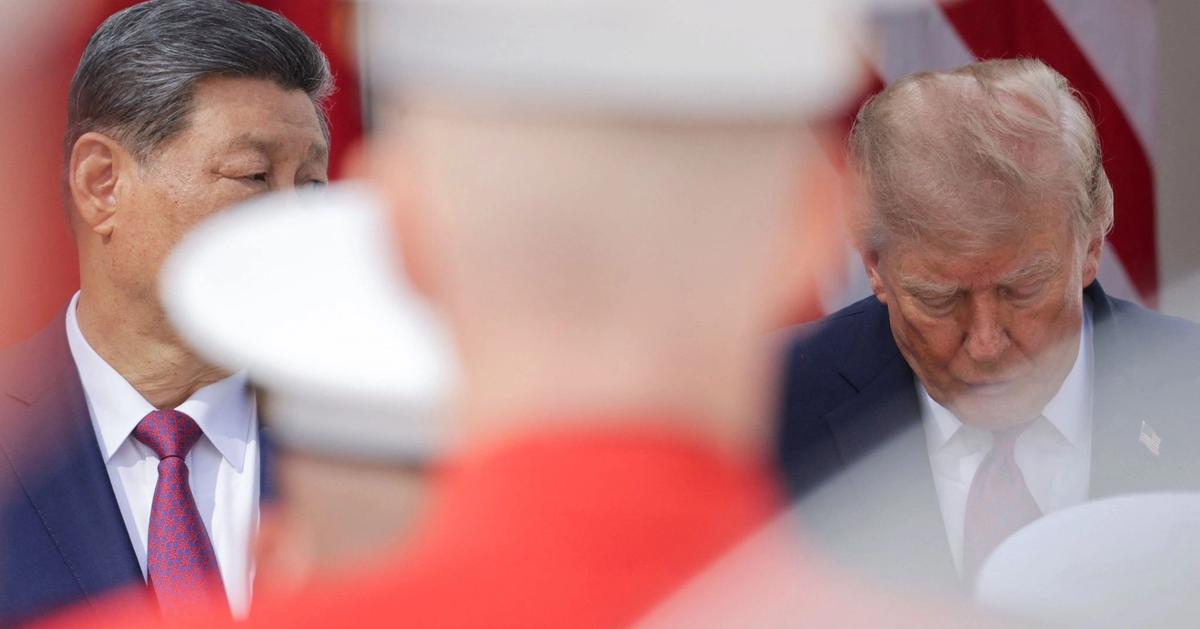
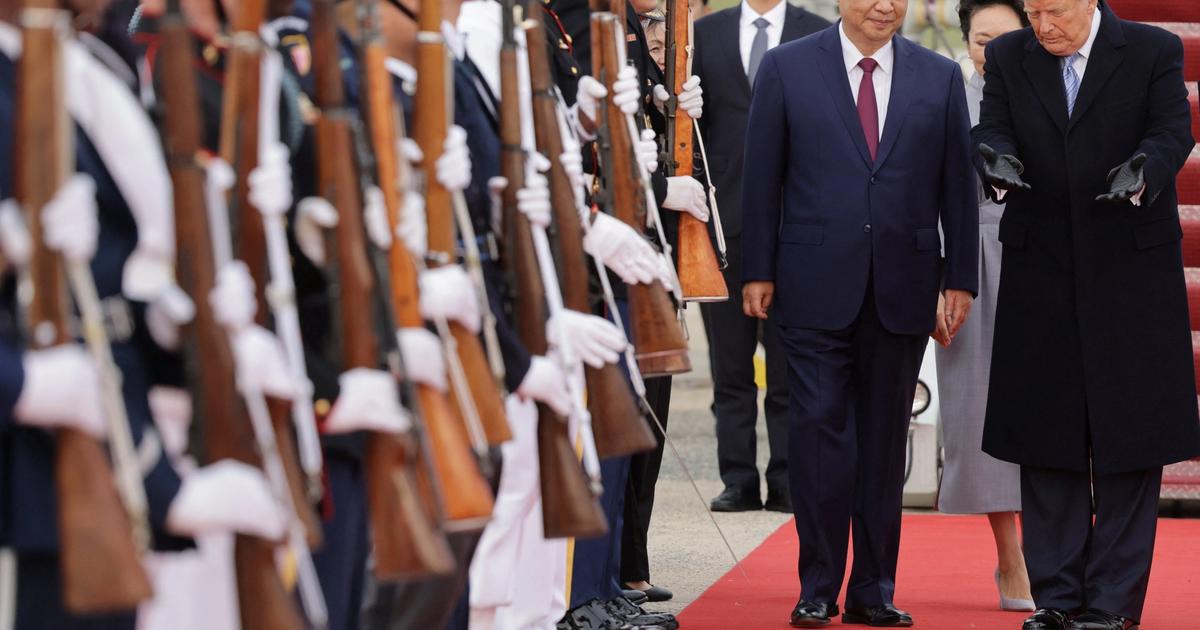
Photo via Semafor

A dovish détente gives way to geopolitical gravity

Read the original at Semafor ↗
Cite

Browne, A. (2026, November 17). A dovish détente gives way to geopolitical gravity. Semafor. https://www.semafor.com/article/11/17/2026/a-dovish-dtente-gives-way-to-geopolitical-gravity

Dated from the outlet's own feed. Check the original for its byline.

Semafor · collected 2026-11-17 · by Andy Browne

Quick Summary

The article discusses the shift from a period of relaxed trade relations between the United States and China, particularly regarding high-end chip sales by Nvidia CEO Jensen Huang and former US President Donald Trump, to a more confrontational stance on technological and AI development. It highlights how this détente ended abruptly with Huang's forced resignation amid allegations of connections to Chinese intelligence. The piece explores the strategic implications of this change, emphasizing the intensifying technological rivalry between the two superpowers and the potential economic impacts on both nations.
Written by AI on 2026-11-17, from this article's own text only (the story summary below draws on all the coverage).

AI analysis

Story summary

The former Nvidia CEO Jensen Huang, a proponent of closer Sino-US relations, was involved in a trade scheme that sent powerful Nvidia chips to China both legally and illegally through Chinese-funded companies in Southeast Asia. This scheme reportedly included a company, Megaspeed, allegedly set up by a suspected Chinese intelligence asset with whom Huang had a relationship. The arrangement, which aimed to increase Nvidia's market share and generate profits for the US government, reached its peak under former President Donald Trump. However, the geopolitical reality of US-China strategic competition has now brought this détente to an end, highlighting the structural nature of their rivalry, especially in the realm of technology and AI.

Written for “Geopolitical Tensions Rise” on 2026-11-18, grounded in this article and the 0 other(s) covering the same event.

Compared with similar articles

This article reads leans right and hedges 12% of its claims. Each row says how that neighbour differs.
The Straits Times
Hedges 8 of 31 claims Outlet record 64/100
“The articles describe different time periods and contexts related to Nvidia and its dealings with China, not the same specific incident.”
freebeacon
Leans strongly right further right than this Hedges 3 of 39 claims Outlet record 95/100
“The articles discuss different aspects of Jensen Huang's involvement with China and Nvidia, but do not describe the same specific incident or occurrence.”
Los Angeles Times
Leans right Hedges 4 of 50 claims Outlet record 95/100
“The articles describe different aspects of the relationship between the US and China regarding AI and chip sales, but they do not describe the same specific incident or occurrence.”
The Hindu
Leans strongly left further left than this Hedges 0 of 8 claims Outlet record 78/100
“The articles describe different stages of Sino-US relations, with Article A focusing on a past détente and Article B on current restrictions imposed by the U.S.”
The Bulwark
Leans strongly left further left than this Hedges 7 of 101 claims
“While both articles mention Trump's relationship with China and Nvidia, they describe different aspects and contexts, not the same specific incident.”
Semafor
Leans right Hedges 3 of 4 claims Outlet record 65/100
“The articles discuss different aspects of Jensen Huang's involvement with China and Nvidia, spanning a period and not focusing on the same specific incident.”
Dawn
Hedges 4 of 30 claims Outlet record 67/100
“The articles discuss different aspects of Jensen Huang's relationship with China and US policies, but do not describe the same specific incident or occurrence.”
Fox News
Leans right Hedges 15 of 58 claims Outlet record 67/100
“The articles discuss different aspects of relations between China, Nvidia, and the US without clearly describing the same specific incident.”
The Straits Times
Leans right Hedges 0 of 9 claims Outlet record 64/100
“The articles discuss different aspects of US-China relations regarding AI chips, but do not describe the same specific event or incident occurring at the same time and place.”
The Bulwark
Leans strongly left further left than this Hedges 0 of 11 claims
“The articles discuss different aspects of U.S.-China relations and business dealings, without clearly referring to the same specific incident or timeframe.”

Story

Geopolitical Tensions Rise
Politics · 1 article(s) covering the same event.
How this article was measured signals, leaning charts, publisher record, byline, topics and claims

Signals How these are calculated →

Claims extracted
25
sentences that state something as happening or true
Uncertain
12%
3 of 25 hedged ("reportedly", "may", "according to")
Leaning
Leans right
of the writing, not the subject · beta estimate
Publisher signals
65/100
Semafor's corrections and hedging, across everything collected from it. Not a measure of accuracy.
Outlets on this story
1
Politics
Same framing elsewhere
1
articles that frame the event the way this one does
Analyzed 2026-11-17 · how these are computed

How this is being covered How these are calculated →

Article leaning vs. publisher reliability
Source leaning vs. consistency

Publisher

Semafor · 1852 article(s) · 6 correction(s) detected
Running correction rate · 6 correction(s)

Who wrote this

Andy Browne
9 article(s) here · 1 carrying a prediction
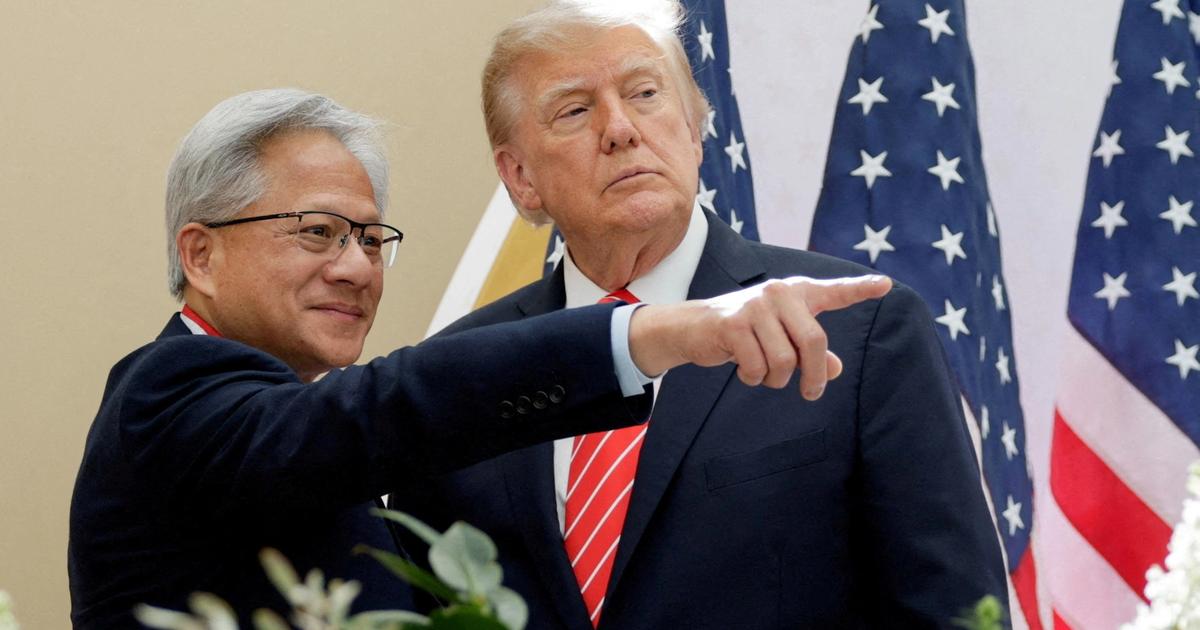
In May, Trump scrambled Huang onto Air Force One at the last minute to join his business entourage in Beijing at a Sino-US summit, reportedly despite knowing that his intelligence services were aware of the Nvidia CEO’s potential links to a suspected Chinese intelligence asset.
2026-11-17 · assertive framing · A dovish détente gives way to geopolitical gravity
Cutting off sales to America’s chief strategic rival, he cautioned, only encouraged Beijing to speed up development of its own AI technologies that would, over time, become the global default.
2026-11-10 · assertive framing · Jensen Huang has lost the debate on China chip sales
I wouldn’t count on it.
2026-11-03 · assertive framing · The US-China thaw may not outlive the Trump era
I think the European side will consider this as a down payment.
Doshi’s take on the arrival ceremony, which also included a 21-gun salute and a flyover by B-1B bombers — far exceeding courtesies extended to Trump in Beijing in May — has been that China believes “they’ve basically tamed the United States.”
2026-09-26 · assertive framing · The US-China tectonic plates have shifted
But Trump could just as easily flip, perhaps if Republicans are routed in November’s midterms, as he did at the end of his first term when he blamed China and COVID-19 — “kung-flu” — for his election defeat.
2026-09-21 · assertive framing · The summit won’t break the US-China stalemate
In Kyrgyzstan last month, Xi inked agreements to integrate the economy of western China more closely with Central Asia, advancing an inter-bank payment system, border-crossing infrastructure, and a freight railway link that will require the construction of 50 bridges and 29 tunnels.
2026-09-15 · assertive framing · Xi’s bid to remake global governance
The late Henry Kissinger initially made his name as an academic writing about nuclear arms control during the Cold War, and latterly forged his reputation as the architect of US-China detente. In his final years, however, Kissinger was fixated on what he believed to be an even greater danger: For the first time in human history, he observed, a technology — self-learning machines — could potentially target anything, anywhere, with any kind of destruction, making the world “100% vulnerable.” He had become an AI doomer.
Their backgrounds and personalities could hardly be more different: Wang is a self-described “tech supremacist”; Hui came up through gritty factory jobs.
2026-08-25 · assertive framing · A tale of two tycoons
Also by Andy Browne
Nothing else under this byline is closely related to this article, so these are simply their most recent.
All 9 articles by Andy Browne →

Topics

Beijing China Chinese Nvidia Washington

Subjects

China GPE · 12× Huang PERSON · 10× Trump PERSON · 5× Chinese NORP · 4× Nvidia ORG · 4× Beijing GPE · 3× Washington GPE · 3× Sino NORP · 2× Donald Trump PERSON · 1× Jensen Huang PERSON · 1×

Narrative

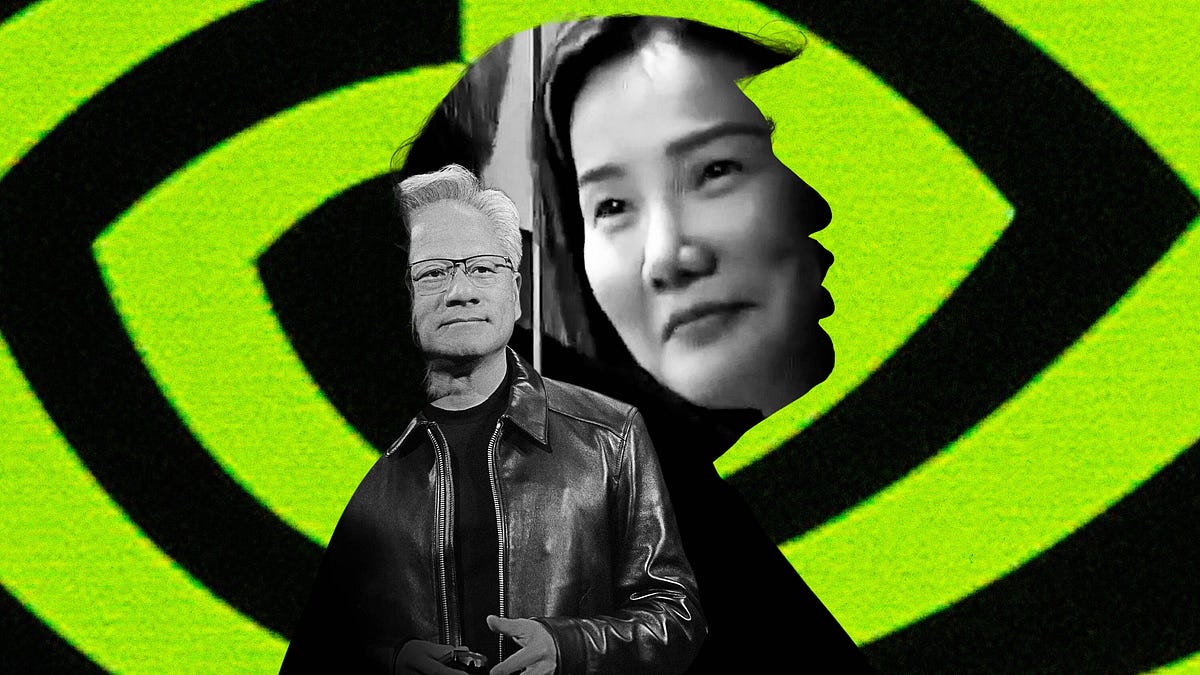
A trade that not only sent powerful chips into China via legal channels, but also billions of dollars of hardware illicitly through Chinese-funded companies in Southeast Asia — one of the most active, Megaspeed, set up by a suspected Chinese intelligence asset with whom Huang was having an affair — has run headlong into the hard realities of US-China strategic competition.
framing: assertive · carried by 1 article(s) · first seen 2026-11-17
In May, Trump scrambled Huang onto Air Force One at the last minute to join his business entourage in Beijing at a Sino-US summit, reportedly despite knowing that his intelligence services were aware of the Nvidia CEO’s potential links to a suspected Chinese intelligence asset.
2026-11-17 · Semafor
A dovish détente gives way to geopolitical gravity · assertive framing

Claims (25 extracted, 3 hedged)

To be a China “hawk,” Jensen Huang declared last year, is a “badge of shame.” asserted
Huang → declare → shame
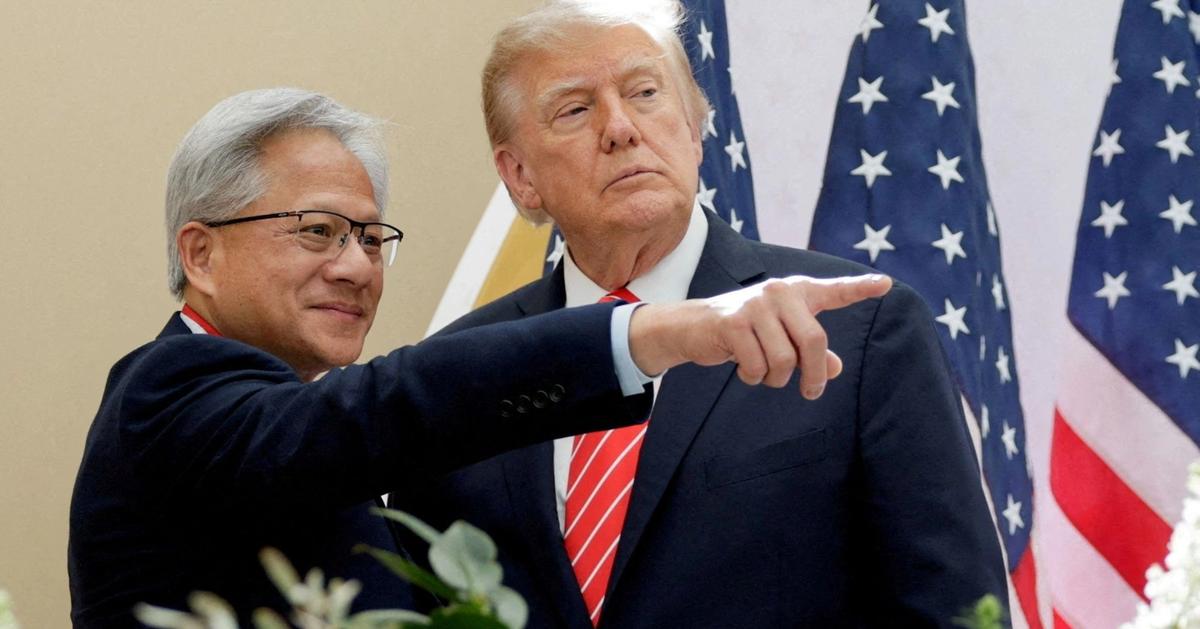
The former Nvidia CEO was a proud dove, one who found a dovish partner in US President Donald Trump — quite literally, in a business sense. asserted
who → find → sense
Together, they formed an enterprise that aimed to sell high-end Nvidia chips to China, with the US government taking a cut of the profits. asserted
government → form → profits
Their alliance represented the high-water mark of a Sino-US détente — peak dovishness, where a prime consideration in the White House was expanding Nvidia’s market share, not blocking China’s AI ambitions. asserted
consideration → represent → ambitions
Asked on CNN if it mattered who won the AI superpower race, Huang replied “I don’t think it does.” asserted
it → ask → race
That moment has come and gone. asserted
moment → come → ?
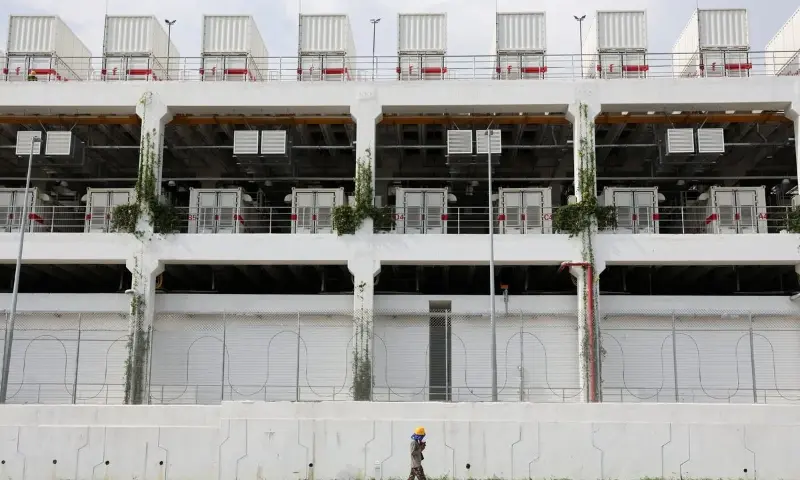
A trade that not only sent powerful chips into China via legal channels, but also billions of dollars of hardware illicitly through Chinese-funded companies in Southeast Asia — one of the most active, Megaspeed, set up by a suspected Chinese intelligence asset with whom Huang was having an affair — has run headlong into the hard realities of US-China strategic competition. asserted
Huang → send → competition
Its main focus is technology and, whatever Huang says, AI has made the struggle existential. asserted
struggle → say → whatever
At times, Trump has seemed confused about the geostrategic stakes. asserted
Trump → seem → stakes
In arguing for a let-it-rip approach to frontier AI model development, he has several times invoked the China bogeyman by insisting that “Whoever wins AI, wins.” asserted
wins → argue → AI
Yet he pushed Huang and chip sales to China into the forefront of his diplomacy with Beijing. asserted
he → push → Beijing
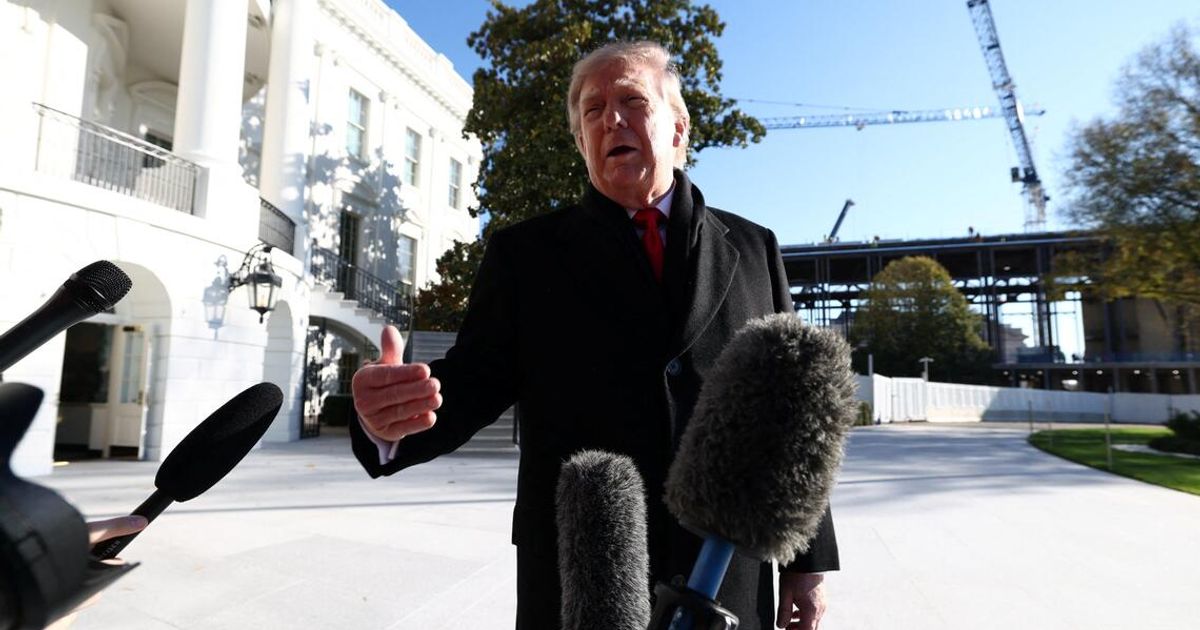
In May, Trump scrambled Huang onto Air Force One at the last minute to join his business entourage in Beijing at a Sino-US summit, reportedly despite knowing that his intelligence services were aware of the Nvidia CEO’s potential links to a suspected Chinese intelligence asset. uncertain
services → scramble → asset
Huang would likely be with Trump in Shenzhen this week at a meeting of Asia-Pacific leaders if he hadn’t been forced to resign. asserted
he → force → leaders
Instead, the prospect of the US Congress ratcheting up tech sanctions against China will hang over Trump’s third meeting this year with Xi, and could endanger their fragile trade truce. uncertain
Congress → ratchet → truce
Although over the longer term Huang’s spectacular fall may hold back US innovation and economic dynamism — a plus for China — the short-term consequences of a tightening embargo on semiconductors and chipmaking equipment would be immensely damaging. uncertain
consequences → hold → semiconductors
For all its advances in critical industries, China remains heavily dependent on American IP. asserted
China → remain → IP
In retrospect, as my colleague Reed Albergotti argued, Huang’s mistake was to get mixed up in politics in Washington, where he had a target on his back. asserted
he → argue → back
His defenders see a conspiracy involving the US intelligence services to bring down America’s foremost business supporter of engagement with China. asserted
defenders → see → China
Elon Musk posted on X that he would sign a petition reinstating Huang. asserted
he → post → Huang
Epic Games founder Tim Sweeney said his exit showed an “Apple firing Steve Jobs level of idiocy.” asserted
exit → say → idiocy
The broader question is the appropriate role for US business leaders in forging a relationship between rival superpowers whose economies are nevertheless deeply entwined through innovation networks, finance channels, and human talent. asserted
economies → forge → networks
US strategy, writes Julian Gewirtz, a scholar at Columbia University’s School of International and Public Affairs, “has come to depend, to an extraordinary degree, on powerful private-sector actors whose incentives the government cannot simply assume will align with the national interest.” asserted
government → write → interest
In Trump’s lame-duck presidency, that issue will be taken up by an incensed Congress pushing bipartisan bills aimed at China. asserted
issue → take → China
The doves have had their time to shape the US-China agenda. asserted
doves → have → agenda
Now, geopolitical gravity takes over. asserted
gravity → take → ?

Give feedback · no sign-in needed

No sign-in needed for now. Your note is sent without a name, so it cannot be answered.

History Support