All eyes are on the AI sector this week with technology stocks slipping, Nvidia set to report quarterly earnings amid its CEO’s suspected spy affair scandal and Anthropic expected to go public — as well as the International Monetary Fund (IMF) head raising new concerns about the AI economy
asserted
Anthropic → slip → economy
“We have a world economy that is standing on one leg on the AI leg.
asserted
that → have → leg
If this leg wobbles, that can lead to financial stability troubles,” said IMF director Kristalina Georgieva in an interview with CNBC at a summit in the Philippines on Monday.
asserted
Georgieva → wobble → Monday
Georgieva also warned that investors piling onto AI stocks may be pressuring tech companies to build faster in a race to the top.
uncertain
investors → warn → top
“We tend to rush ahead,” she said, adding: “some corrections” may result.
uncertain
corrections → tend → ?
Her comments comes just weeks after the IMF issued a warning in its Global Financial Stability Report in October that there are three major threats to global economies: an AI market correction, spiking government bond yields and cyberattacks.
asserted
IMF → come → economies
“Weaker or less durable AI investments and profitability could be a shock that triggers a market correction,” the report said with Athanasios Vamvakidis, deputy director in the IMF’s Monetary and Capital Markets Department, cautioning at a press briefing in Bangkok that “an AI market correction will affect the real economy.”
uncertain
correction → trigger → economy
A market correction happens when a stock falls sharply, and typically by about 10 per cent from a recent high point.
asserted
stock → happen → point
These corrections can happen once markets determine a stock is overvalued.
asserted
stock → happen → ?
But a large-scale AI market correction could be akin to a bursting bubble and with trillions of dollars tied up in the industry, that could have massive ripple effects across global economies.
uncertain
that → burst → economies
Avery Shenfeld, chief economist at CIBC, said in a note to investors last week that AI investment has been more like the hare than the tortoise in the old children’s story.
“
asserted
investment → say → story
In the classic children’s tale, the slow but steady tortoise ends up winning the race against a quick footed, but overconfident hare.
asserted
tortoise → end → hare
For various reasons, the moral of that story, that a faster start is not always better, might hold lessons for those involved in the race to build out the infrastructure needed to bring AI to full fruition,” said Shenfeld.
uncertain
Shenfeld → hold → fruition
Shenfeld explains that because investors and companies themselves have been pouring money into developing AI’s capabilities and construction of data centres, the profits may take a while to catch up.
uncertain
profits → explain → while
“In the race to be the first, the aggregate level of spending by all the players could exceed the returns available,” said Shenfeld.
uncertain
Shenfeld → spend → returns
“The concerns have been seen when the revenue numbers aren’t growing fast enough.
asserted
numbers → see → ?
Suppliers of chips and computing power have been punished when the growth rate for their sales to AI players don’t measure up to ultra-lofty expectations.
asserted
rate → punish → expectations
”
There are also safety concerns circling AI’s capabilities, including so-called rogue agents that have been found to breach digital security networks and act independently.
asserted
that → be → networks
Get weekly money news
These concerns have prompted world leaders to weigh more AI security guardrails and safeguards, which could require a collaborative effort to slow down AI’s development and still haven’t yielded concrete regulatory changes in many jurisdictions.
uncertain
which → get → jurisdictions
Shenfeld says this may pour cold water on an overheated AI sector, but that could end up benefiting investors over the long term by slowing down the AI buildout.
uncertain
that → say → buildout
“Some in the industry have advocated for regulatory restrictions that would ‘pace’ the roll out of new models as a safety measure, lest we unleash dangerous agents on the world,” said Shenfeld.
asserted
Shenfeld → advocate → world
“Investor returns could end up benefiting if slowing down the hare when it comes to new product launches reduces the financial risks associated with those that do more harm than good.”
uncertain
that → end → harm
The impact of the U.S. midterms
Tech investors rode a rollercoaster after the U.S. midterm elections as fears mounted about what the blue wave, which has Democrats poised to take control of the U.S. Congress in January, could mean for the growth of AI, especially power and resource hungry data centres that have faced fierce push back from local communities, including in Canada.
uncertain
that → ride → Canada
Many investors sold off AI stocks after the U.S. midterms for fear that they may lose money if those changes lead to stricter regulation.
uncertain
changes → sell → regulation
On Nov. 5, the tech-heavy Nasdaq 100 stock index fell more than six per cent, which erased $2.3 trillion of market value.
asserted
which → fall → value
“The blue tidal wave, I mean, they send some nervousness across tech because it’s anti-AI, anti-data centre, and I think that continues to be the sort of tug of war that we see in DC,” says Dan Ives, an analyst and partner at Yorkville Ives.
asserted
Ives → mean → Ives
“It comes down to politics versus reality, and now it’s sort of like investors, that’s what the tech sector is trying to figure out.
asserted
sector → come → what
Texas is ground zero, because 30 per cent of data centres are going to be built there and the new governor is really going to be key to that.”
asserted
governor → go → that
Although tech and AI stocks have since mostly recovered from the post-midterm election rout, a lot may be riding on what comes this week, with European shares dropping more than one per cent on Tuesday, led by technology stocks, as investors cut risk ahead of Nvidia’s results following a string of selloffs in artificial intelligence stocks.
Nvidia and Anthropic on deck
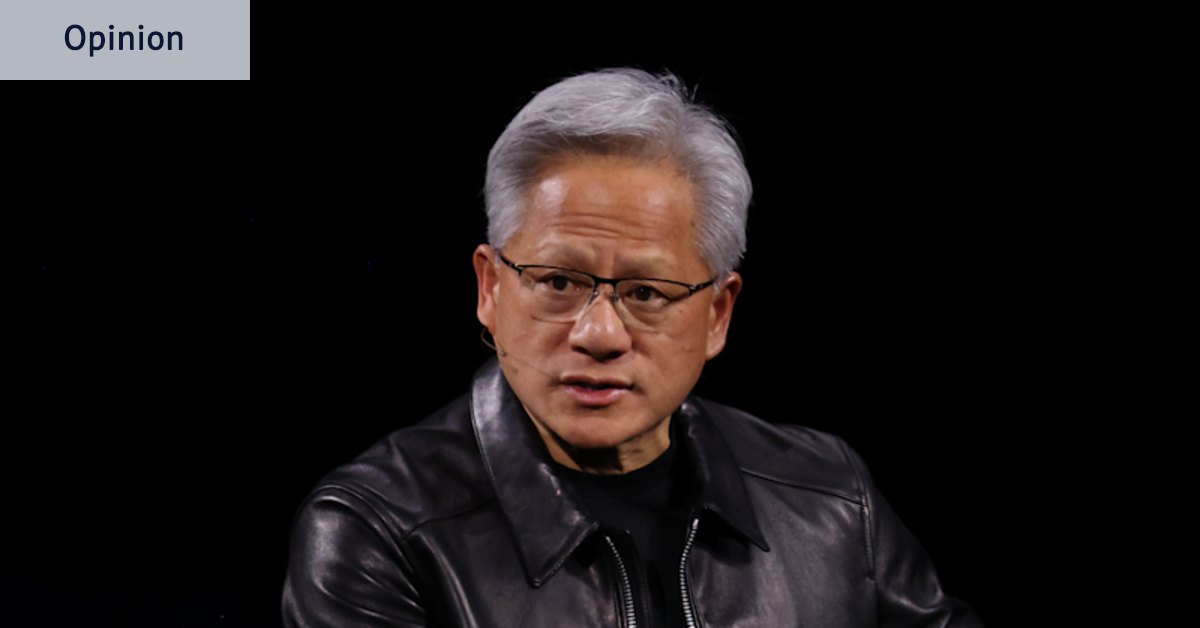
Nvidia is set to report quarterly earnings on Tuesday afternoon, and in the fallout of a controversial scandal involving the former CEO Jensen Huang and national security concerns over chip sales to China.
uncertain
Nvidia → recover → China
Nvidia is currently worth a market valuation of about $3.75 trillion, but has lost roughly $2 trillion since early October.
asserted
Nvidia → lose → October
The company became one of the most valuable in the world in recent years because of demand for its semiconductor chips and data centre components that act as the engines for AI tools like ChatGPT and Claude.
asserted
that → become → ChatGPT
On Tuesday, Huang agreed to appear for transcribed interviews with U.S. lawmakers as the company faces intensifying national scrutiny over sales of its advanced computer chips to China, which is heavily limited by U.S. regulators.
asserted
which → agree → regulators
Huang announced his resignation as CEO after admitting to having an affair with a woman who U.S. intelligence suspects was allegedly a Chinese spy.
uncertain
intelligence → announce → woman
Huang was also suspected of having a second affair with one of his executives, as reported by The New York Times.
asserted
Huang → suspect → Times
Amid the controversies surrounding Nvidia, those investors still holding or considering buying its stock may be on the edge of their seats awaiting Tuesday’s earnings results.
“Nvidia caught in a global firestorm has cast a dark cloud over the tech sector this week, with investors worried about the ramifications and derivative impacts for the sector and the AI Revolution of an Nvidia without Jensen as CEO,” said Ives in a note to investors on Monday.
uncertain
Ives → surround → Monday
“Nvidia remains the clear leader in GPU chips for the AI Revolution, well ahead of the nearest competitor, and the demand trajectory over the next few years is not changing because Jensen is gone.
asserted
Jensen → remain → years
Meanwhile, Anthropic, the maker of Claude AI is set to go public later this week, which means investors can own shares as early as Thursday.
asserted
investors → set → Thursday
The company is reportedly aiming for a stock valuation of roughly $1.3 trillion, which would make it one of the most valuable initial public offerings ever.
uncertain
it → aim → offerings
But that price tag may see some adjustment amid so much uncertainty about the AI space, and as Anthropic may be entering already choppy waters on public stock markets.
uncertain
Anthropic → see → markets
“The strong demand (for Anthropic IPO) suggests investors have not lost faith in the technology’s long-term potential, but the recent market correction demonstrates that they are becoming more selective about the price they are willing to pay,” said Daniela Hathorn, senior market analyst at Capital.com.
uncertain
Hathorn → suggest → Capital.com
 The Aporia