After years on ice, Canada seeks trade-based reset with China: Minister
asserted
Canada → seek → China
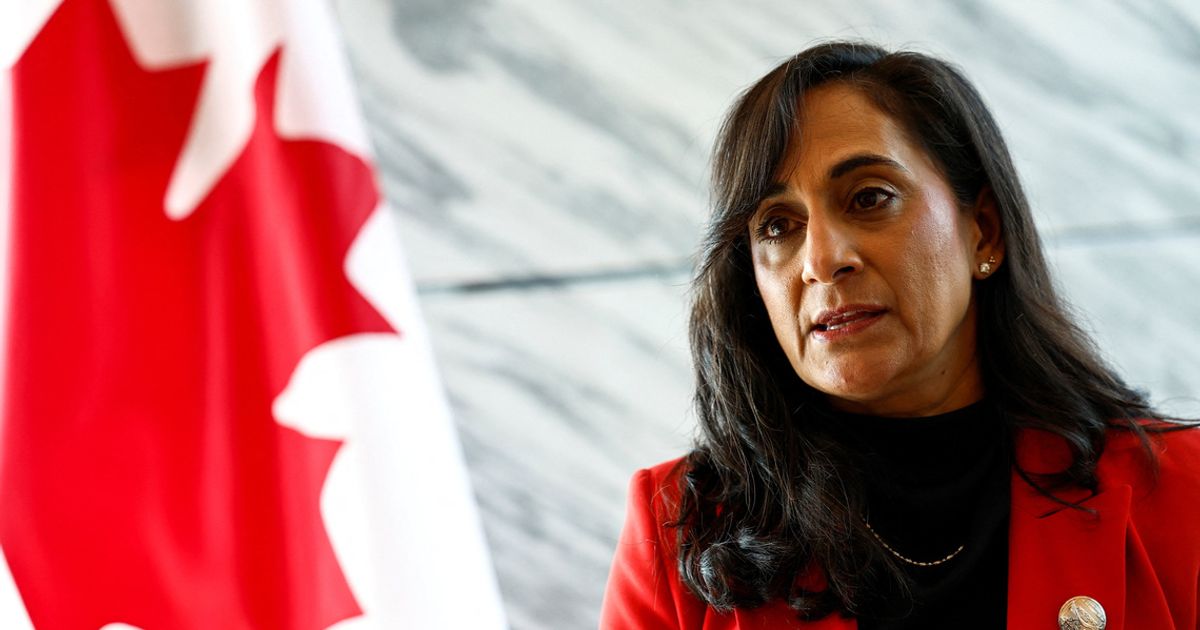
Canada is taking a “step-by-step” approach to re-engaging with China after years of strained relations, Foreign Minister Anita Anand told Reuters, as Ottawa looks to the world’s second largest economy to reduce its reliance on the US.
asserted
Ottawa → take → US
“We were serious when we said we wanted to diversify trade away from one single partner,” Anand said on Nov 18 on the sidelines of the Asia-Pacific Economic Cooperation (APEC) forum in the southern Chinese technology hub of Shenzhen.
asserted
Anand → say → Shenzhen
Her China stop was the last leg of an Asia tour that has also taken her to the Philippines and Cambodia.
asserted
that → take → Philippines
“This trip, including here in China, is very much about trade diversification: from resolving trade tensions with China to ensuring the completion of a free trade agreement with the Philippines, to substantially concluding negotiations on an FTA with the Association of Southeast Asian Nations.
asserted
trip → include → Nations
Since taking office in 2025, Prime Minister Mark Carney has pivoted towards China, a relationship that soured under his predecessor, Justin Trudeau.
asserted
that → take → predecessor
The relationship hit rock bottom in late 2018 after Beijing detained two Canadians and accused them of spying, soon after an executive of China’s Huawei Technologies was arrested in Canada on a US warrant.
asserted
executive → hit → warrant
The three were released in sync in September 2021.
asserted
three → release → September
“It’s very much a step-by-step approach, recognising the risks and the benefit of further engagement,” Anand said, when asked whether China was now safe for Canadian nationals.
asserted
China → recognise → nationals
Carney and Chinese leader Xi Jinping agreed during talks on Nov 17 to expand exchanges between business people and students.
asserted
Carney → agree → people
Carney’s sharp about-turn has drawn the ire of the White House and of some Canadian opposition lawmakers, who have also accused Beijing of meddling in Canada’s elections.
asserted
who → draw → elections
While China’s US$20 trillion (S$25.79 trillion) economy is central to Carney’s push to offset the impact of US President Donald Trump’s tariffs through new trade deals, he has ruled out a full free trade agreement with Beijing.
asserted
he → offset → Beijing
Canada has implemented a cap on Chinese-made electric vehicle imports, in a bid to protect its auto sector from being undercut by state-subsidised Chinese brands.
asserted
Canada → implement → brands
Beijing, meanwhile, has cut but not fully lifted tariffs on Canadian canola, pork and seafood.
asserted
Beijing → cut → canola
Anand said Canada’s “first priority” is keeping its auto manufacturing system in place and “robust”, noting that the sector is deeply intertwined with the US industry and is also being hit by Trump’s tariffs.
asserted
sector → say → tariffs
“We will always protect our national interests and ensure that there are guardrails in place,” she added, when asked about the prospect of Chinese automakers stepping up investment in production plants in Canada as well as in the North American country’s energy sector.
asserted
automakers → protect → sector
Anand said the priority was smoothing Canadian car exports’ passage to the US and easing tariff and supply chain tensions with the Trump administration.
asserted
priority → say → administration
“That’s our priority, and we are working with China on other trade tensions, resolving those, ensuring a limited number of those EVs come,” she added.
asserted
she → ’ → EVs
Big power competition
Canada, like many other so-called middle powers, is adjusting to a new era of great power competition, ushered in by Trump’s return to the White House and Russian President Vladimir Putin’s invasion of Ukraine.
asserted
Canada → call → Ukraine
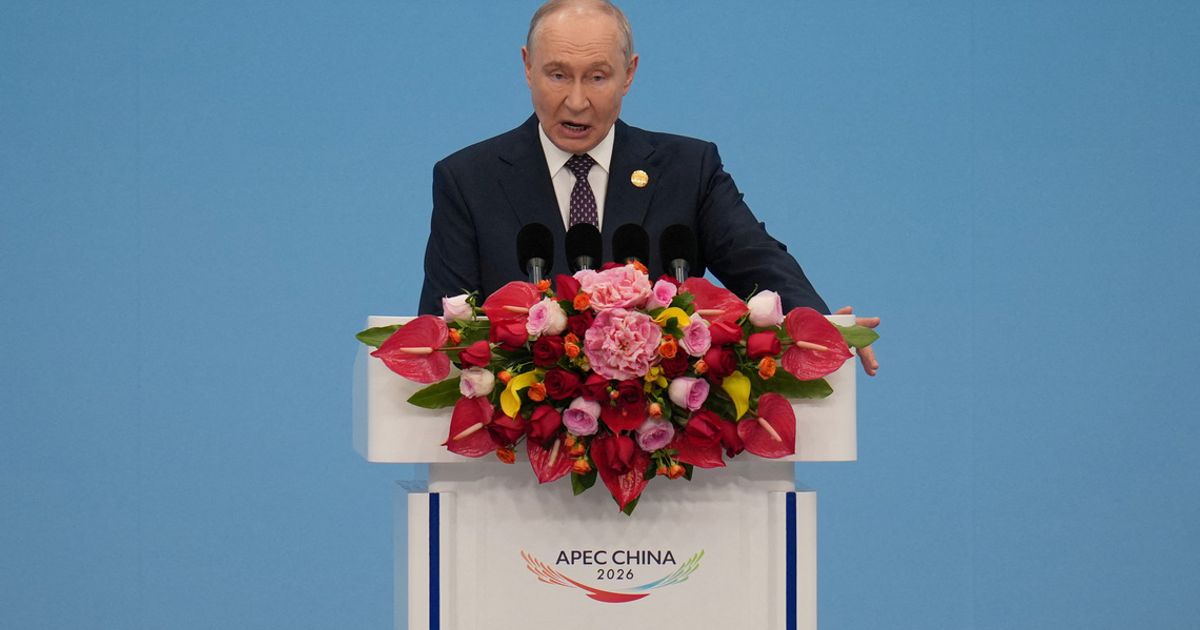
Anand would not be drawn on whether the Canadian delegation would meet Russian officials on the sidelines of the APEC summit, but she denounced Moscow’s decision to send military aircraft into the airspace of fellow APEC members Taiwan and Japan on Nov 17, just ahead of the summit's leaders’ meeting.
asserted
she → draw → meeting
A meeting between Putin, Xi and Trump would be welcome, Anand said, “to the extent that a meeting of that sort could resolve international conflict and make substantial progress to greater peace and security”, pointing to the wars in Ukraine and Iran.
uncertain
meeting → say → Ukraine
“The ceasefire, with security guarantees that could be gained by a meeting among those three people, ensuring that President Zelensky is part of that conversation, and Ukraine’s interests are protected would be welcome,” she said.
uncertain
she → gain → conversation
“We need the repressive regime in Iran to be addressed, and perhaps a meeting between those three could further contribute to that issue.”
uncertain
meeting → need → issue
 The Aporia