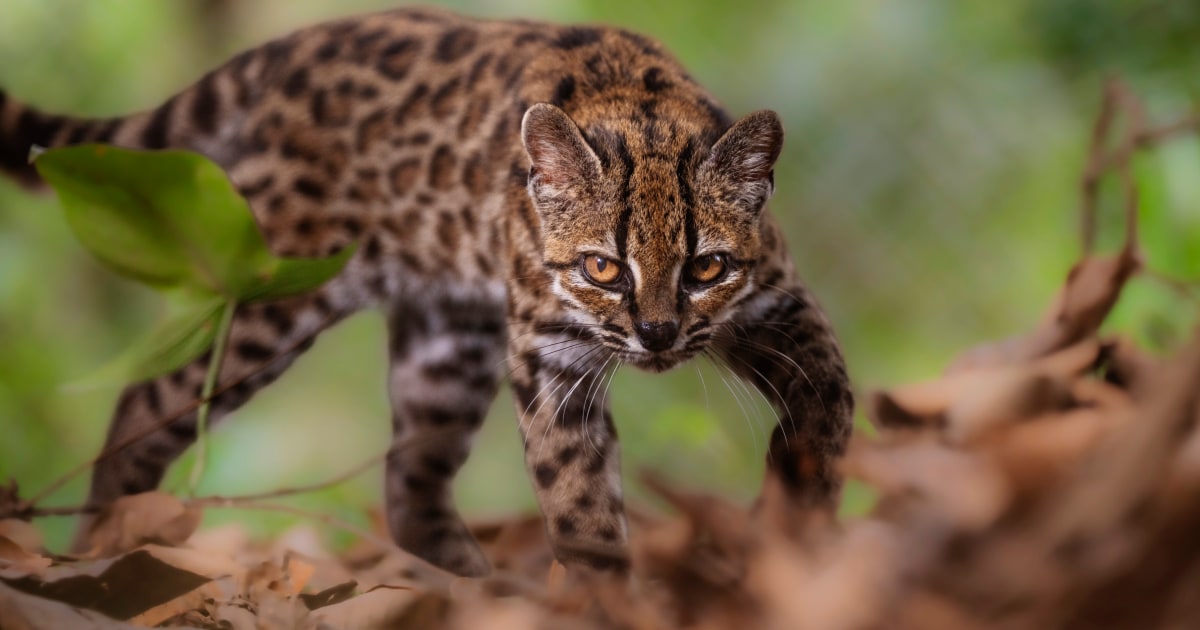
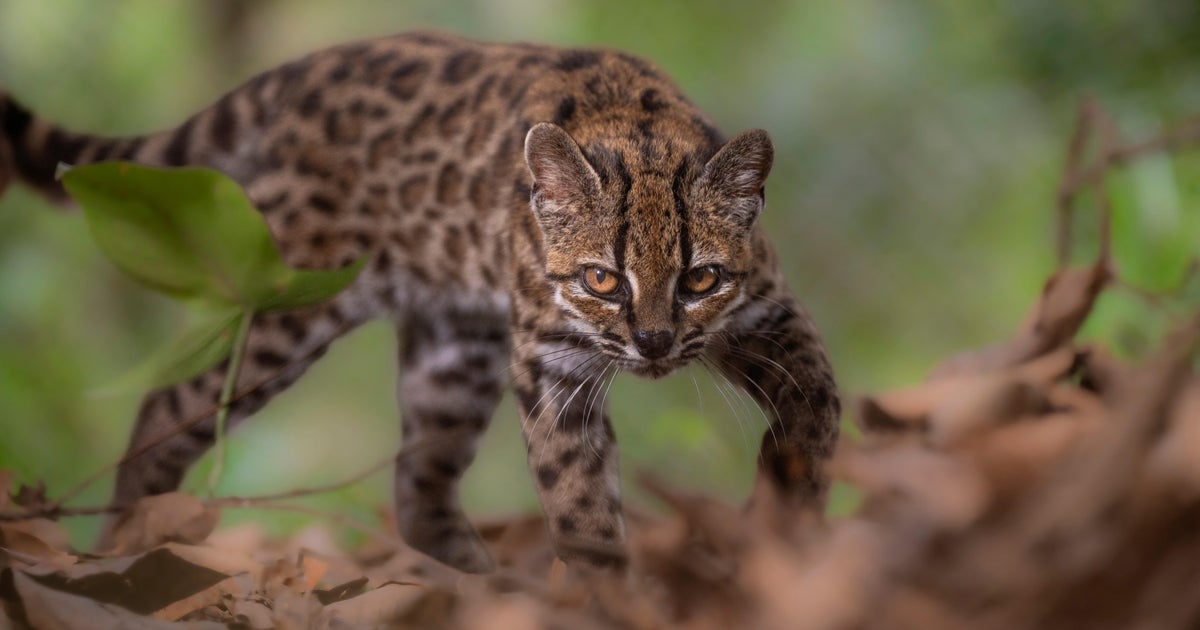
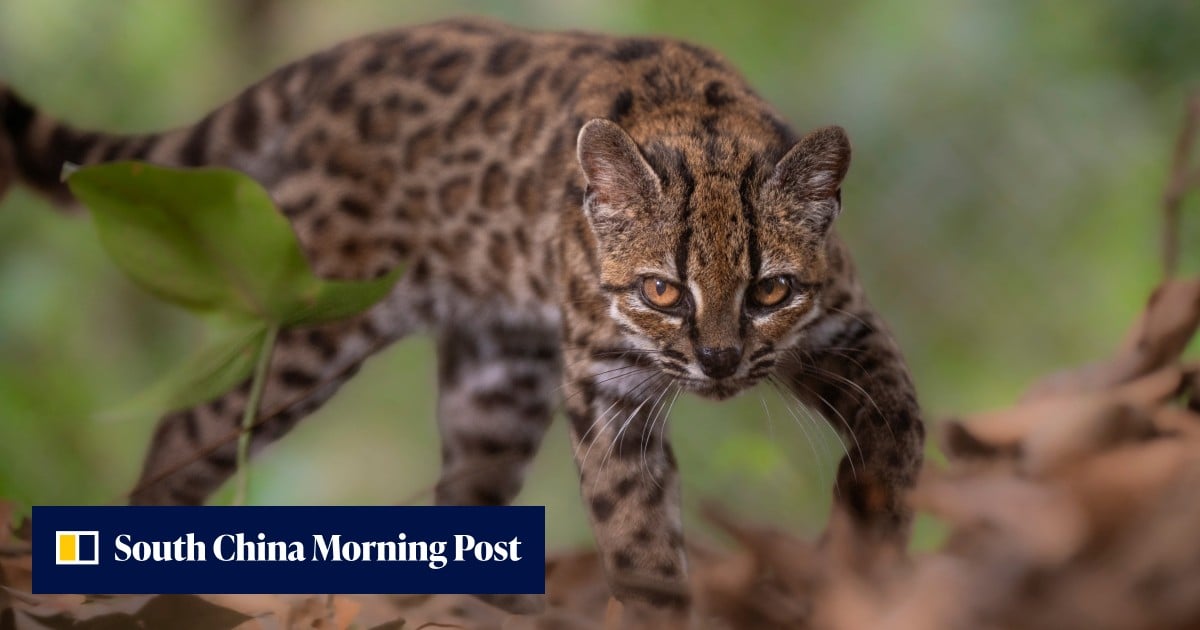
Photo via NBC News

New wild cat species is identified for first time in 100 years, researchers say

Read the original at NBC News ↗
Cite

Bush, E. (2026, September 17). New wild cat species is identified for first time in 100 years, researchers say. NBC News. https://www.nbcnews.com/science/environment/new-wild-cat-species-identified-rcna598113

Dated when The Aporia collected the article, usually within hours of publication. Check the original for its exact date and byline.

NBC News · collected 2026-09-17 · by Evan Bush

Quick Summary

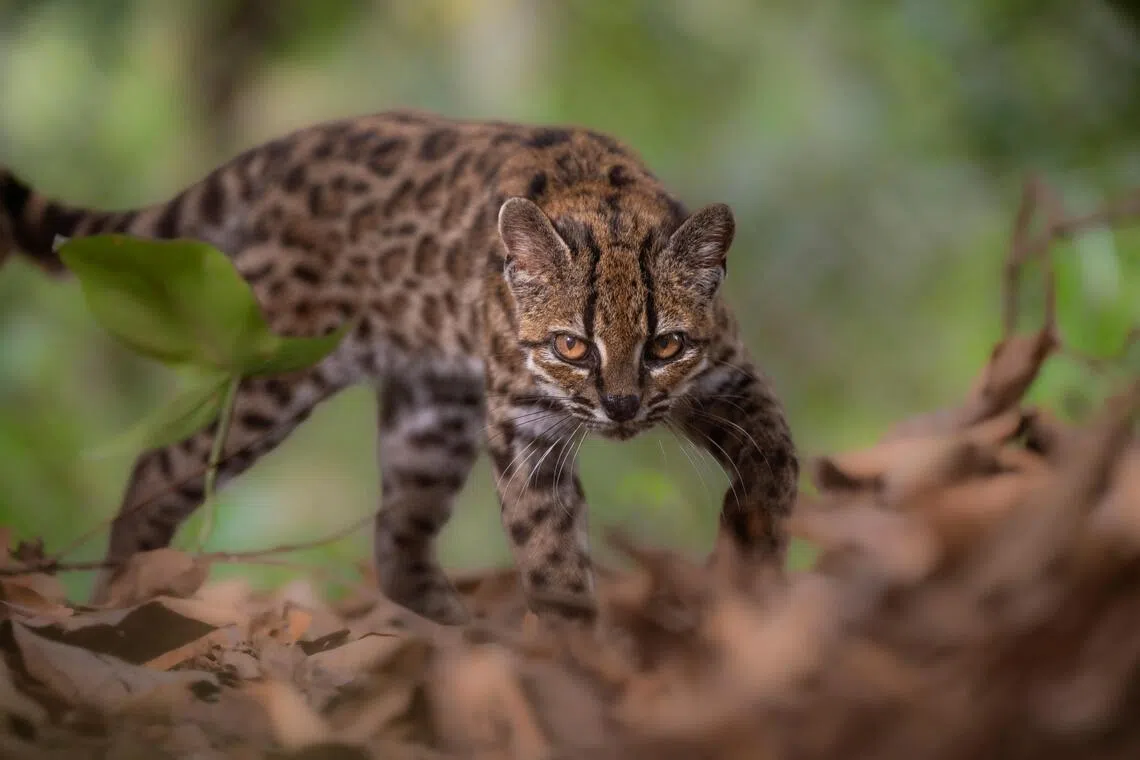
Researchers have identified a new species of wild cat, Leopardus tilcayo or the Tilcayo tiger cat, for the first time in 100 years. This small, slender spotted cat was discovered in the Bolivian Yungas cloud forest where the Andes meet the Amazon basin. Paola Nogales-Ascarrunz, a conservationist from Bolivia's Programa de Investigación de Félidos Bolivia, led the study published in Current Biology, noting that further research is needed to determine its population size and ensure its survival amid habitat loss.
Written by AI on 2026-09-21, from this article's own text only (the story summary below draws on all the coverage).

AI analysis

Story summary

Summary of New Feline Species Discovery

Additional Insights

Written for “New Cat Species Bolivia” on 2026-11-02, grounded in this article and the 16 other(s) covering the same event.

Story

📰 New Cat Species Bolivia
Science · 17 article(s) covering the same event. Compare every outlet's account →

Compared with similar articles

This article reads unscored and hedges 12% of its claims. Each row says how that neighbour differs.
CBC News
Hedges 7 of 28 claims Outlet record 74/100
CBS News
Hedges 1 of 11 claims Outlet record 66/100
Al Jazeera
Hedges 4 of 15 claims Outlet record 60/100
New York Post
Hedges 2 of 17 claims Outlet record 66/100
South China Morning Post
Hedges 1 of 4 claims Outlet record 63/100
Times of India
Hedges 3 of 24 claims Outlet record 59/100
BBC News
Hedges 3 of 24 claims Outlet record 68/100
The Straits Times
Hedges 6 of 28 claims Outlet record 66/100
The Dispatch
Hedges 0 of 3 claims Outlet record 61/100
How this article was measured signals, leaning charts, publisher record, byline, topics and claims

Signals How these are calculated →

Claims extracted
40
sentences that state something as happening or true
Uncertain
12%
5 of 40 hedged ("reportedly", "may", "according to")
Leaning
not political
takes no side on a contested political question
Publisher signals
60/100
NBC News's corrections and hedging, across everything collected from it. Not a measure of accuracy.
Outlets on this story
17
Science
Same framing elsewhere
1
articles that frame the event the way this one does
Analyzed 2026-09-21 · how these are computed

How this is being covered How these are calculated →

Article leaning vs. publisher reliability
Source leaning vs. consistency

Publisher

NBC News · 1987 article(s) · 1 correction(s) detected
Running correction rate · 1 correction(s)

Who wrote this

Evan Bush
6 article(s) here · 1 carrying a prediction
🔮 Stormy, wet weather is expected to hammer the central U.S. on Election Day, with the spiciest forecasts for states with some of the hottest races — including Texas, Kansas and Iowa.
🔮 The low-producing wells the rollback would affect (also called stripper wells) produce about 7% to 8% of U.S. natural gas, but they could account for about 50% of the methane that leaks into the atmosphere, research suggests.
🔮 The children’s aid organization UNICEF on Tuesday said its analysis suggests hundreds of millions of children could be exposed to dangerous conditions as a result of the climate pattern, which raises the risk of intense precipitation in some areas and drought in others.
🔮 “Calls came in faster than dispatch could manage or assign them.”
🔮 Leopardus tilcayo might have continued to escape notice if not for Nogales-Ascarrunz’s sharp eyes.
🔮 The Environmental Protection Agency announced Monday that it will roll back emissions limits on coal- and gas-fired power plants — one of the Trump administration’s most significant moves yet to undo the climate policies enacted under Presidents Joe Biden and Barack Obama.
Also by Evan Bush
Nothing else under this byline is closely related to this article, so these are simply their most recent.
All 6 articles by Evan Bush →

Topics

Bolivian Felid Research and Conservation Program Brazil Current Biology La Paz the Programa de Investigación de Félidos Bolivia

Subjects

Nogales-Ascarrunz PERSON · 6× Brazil GPE · 2× La Paz GPE · 2× Bolivian Felid Research and Conservation Program ORG · 1× Current Biology ORG · 1× National Geographic ORG · 1× Paola Nogales-Ascarrunz PERSON · 1× Tadeu de Oliveira PERSON · 1× the Programa de Investigación de Félidos Bolivia ORG · 1× the State University of Maranhão ORG · 1×

Narrative

It’s rare to find a new, relatively large mammal — unsurprisingly, most new animal species discovered are small in size, said Paola Nogales-Ascarrunz, who co-authored the study and leads a wild cat conservation program called the Programa de Investigación de Félidos Bolivia (Bolivian Felid Research and Conservation Program).
framing: assertive · carried by 1 article(s) · first seen 2026-09-21
🔮 Leopardus tilcayo might have continued to escape notice if not for Nogales-Ascarrunz’s sharp eyes.

Claims (40 extracted, 5 hedged)

For the first time in a century, researchers say they’ve identified a new species of wild cat previously unknown to science. asserted
they → say → science
It is smaller than a typical house cat and lives in the Bolivian Yungas, the cloud forest where the Andes mountains meet the Amazon basin. asserted
mountains → live → basin
The species was described for the first time in the journal Current Biology on Thursday. asserted
species → describe → Thursday
It’s rare to find a new, relatively large mammal — unsurprisingly, most new animal species discovered are small in size, said Paola Nogales-Ascarrunz, who co-authored the study and leads a wild cat conservation program called the Programa de Investigación de Félidos Bolivia (Bolivian Felid Research and Conservation Program). asserted
who → ’ → Bolivia
“This time, it’s a cat. asserted
it → ’ → ?
That’s really novel. asserted
That → ’ → ?
And it hasn’t happened in 100 years,” she said. asserted
she → happen → years
“No one else had named it. asserted
one → name → it
No one else had described it.” asserted
one → describe → it
“We really don’t know how many cats are still in the wild,” said Nogales-Ascarrunz, whose work as a conservationist is funded by National Geographic. asserted
work → know → Geographic
“We need science, we need more studies to answer this question, which is actually critical for its conservation.” asserted
which → need → conservation
Tiger cats — small, wild cats native to South and Central America in the Leopardus genus — face stiff conservation challenges as development and agriculture expand. asserted
development → face → challenges
The new study says there are five tiger cat species in South America. asserted
study → say → America
“All of them are in habitats that are vanishing fast,” said Tadeu de Oliveira, another coauthor of the study and an ecologist at the State University of Maranhão in Brazil. asserted
Oliveira → vanish → Brazil
Leopardus tilcayo might have continued to escape notice if not for Nogales-Ascarrunz’s sharp eyes. uncertain
tilcayo → continue → eyes
She volunteers at a wildlife rehabilitation center near La Paz called the Senda Verde Wildlife Sanctuary. asserted
She → volunteer → Paz
“I saw this cat, it was really, really small, and I couldn’t believe how small it was,” Nogales-Ascarrunz said. asserted
Ascarrunz → see → cat
“I thought it was a kitten.” asserted
it → think → ?
The cat had been brought in by a man living in a community in the forest near La Paz, who had mistaken the cat for a domestic kitten, according to details recorded by the sanctuary. uncertain
who → bring → sanctuary
He had fed the animal noodles, rice and eggs, only to realize it was wild and that he could not take care of it. uncertain
he → feed → it
So he brought it to the sanctuary. asserted
he → bring → sanctuary
Initially, colleagues at the sanctuary thought the animal might be a known tiger cat species from Brazil, but Nogales-Ascarrunz wasn’t convinced. uncertain
Ascarrunz → think → Brazil
“If you look at the spots or the tail, they really don’t match,” she said. asserted
she → look → spots
Nogales-Ascarrunz did genetic testing, using tissue from the tiger cat and a second animal that also turned up at Senda Verde. asserted
that → do → Verde
The results from those specimens revealed that the two cats were unique and from the same species, which had diverged from other tiger cat lineages about 1.4 million years ago. asserted
which → reveal → lineages
That’s enough genetic distance to consider it a new species. asserted
it → ’ → ?
Nogales-Ascarrunz said, however, that local communities in Bolivia have been aware of the species’ presence for generations. asserted
communities → say → generations
“This cat, they call it Tilcayo. asserted
they → call → it
And when you ask, ‘Does it have some meaning in Quechua or Almyra and other indigenous languages?’ they say, ‘No, my grandpa told me that’s the Tilcayo,’” Nogales-Ascarrunz said. asserted
Ascarrunz → ask → me
“This is a traditional knowledge that they have in the community. asserted
they → have → community
We want to preserve that knowledge and we didn’t want to give it another name.” asserted
we → want → name
It’s not rare for scientists to add a mammal species to the taxonomy — they do so about 65 times a year, according to a study released last year. uncertain
they → ’ → study
But many of those new species — including some recently named wild cats — are the results of a split. asserted
many → include → split
That’s when scientists realize what was once a single species has sufficient genetic distinctions to become two. asserted
was → ’ → distinctions
For example, the Sunda clouded leopard found on the island of Borneo — called Neofelis diardi — was first recognized in 2006 when its genome was distinguished from its mainland counterparts. asserted
genome → find → counterparts
“We didn’t have specimens in museums,” de Oliveira said. asserted
Oliveira → have → museums
“It had never been collected before.” asserted
It → collect → ?
Nogales-Ascarrunz said this new species is likely in danger. asserted
species → say → danger
She views the discovery as yet another argument in favor of conservation. asserted
She → view → conservation
“It’s a new reason to protect the world,” she said. asserted
she → ’ → world

💬Give feedback
🕘History 🎫Support