Photo via The Straits Times

NASA Voyager 1 probe believed to have reached 'light-day' milestone

Read the original at The Straits Times ↗
Cite

The Straits Times. (2026, November 18). NASA Voyager 1 probe believed to have reached 'light-day' milestone. The Straits Times. https://www.straitstimes.com/world/nasa-voyager-1-probe-believed-to-have-reached-light-day-milestone

Dated from the outlet's own feed. Check the original for its byline.

The Straits Times · collected 2026-11-18 · by The Straits Times

Quick Summary

NASA's Voyager 1 probe is believed to have reached a distance of one light-day from Earth, approximately 16 billion miles, on November 18. Launched in 1977, Voyager 1 entered interstellar space in 2012 and continues to gather scientific data, including measurements of magnetic fields, cosmic rays, and plasma waves. Officials at NASA's Jet Propulsion Laboratory will confirm the milestone once they receive a signal from the probe, expected around a day later.
Written by AI on 2026-11-18, from this article's own text only.

AI analysis

Why this leaning score
This article does not take a side on a contested political question, so it has no leaning score. That is an answer rather than a gap: a match report or a rescue can be warmly or critically written without being left or right, and scoring it anyway is how approval of a subject gets recorded as a political position.
No political leaning scored for article 163221 · logged 2026-11-18

Compared with similar articles

This article reads unscored and hedges 18% of its claims. Each row says how that neighbour differs.
Toronto Star
Hedges 2 of 32 claims Outlet record 64/100
“The articles refer to different stages of Voyager 1's journey; Article A reports on the actual achievement of the light-day milestone, while Article B describes the spacecraft approaching that milestone.”
How this article was measured signals, leaning charts, publisher record, byline, topics and claims

Signals How these are calculated →

Claims extracted
22
sentences that state something as happening or true
Uncertain
18%
4 of 22 hedged ("reportedly", "may", "according to")
Leaning
not political
takes no side on a contested political question
Publisher signals
64/100
The Straits Times's corrections and hedging, across everything collected from it. Not a measure of accuracy.
Outlets on this story
unclustered
not grouped into a story yet
Same framing elsewhere
1
articles that frame the event the way this one does
Analyzed 2026-11-18 · how these are computed

How this is being covered How these are calculated →

Article leaning vs. publisher reliability
Source leaning vs. consistency

Publisher

The Straits Times · 5439 article(s) · 7 correction(s) detected
Running correction rate · 7 correction(s)

Who wrote this

The Straits Times
3780 article(s) here · 1 carrying a prediction
French justice minister says hard-left leader Melenchon could win presidential election
Officials at NASA's Jet Propulsion Laboratory in California will have to wait about a day to get a signal from the probe, confirming it has reached this distance.
China will provide additional tariff relief for around C$400 million in Canadian exports, including frozen pork cuts and fish and seafood.
Reuters could not independently verify the reports.
While it didn't regain much territory, it thwarted part of Russia's pincer advance on the "fortress belt" of eastern cities that could be critical to the war's outcome.
“We will always protect our national interests and ensure that there are guardrails in place,” she added, when asked about the prospect of Chinese automakers stepping up investment in production plants in Canada as well as in the North American country’s energy sector.
Trump calls Venezuela an ‘acquisition,’ hails US energy supply AI generated MANILA – US President Donald Trump referred to Venezuela as an “acquisition” while touting an increasing supply of US energy he said will benefit American allies including the Philippines.
Trump then pointed to Takaichi, saying, “And she may be even tougher.”
Rubio says no imminent threat to Washington after report of possible Iranian dirty bomb plot AI generated MANILA/ WASHINGTON – US Secretary of State Marco Rubio said on Nov 18 he did not think there was any imminent threat to the US capital, when asked about a CNN report citing US intelligence assessments on the possibility that Iran may be planning an attack involving a so-called dirty bomb in Washington.
Instantly recognisable for the red spots it generates on an infected person’s body, measles also causes fever, respiratory symptoms, and in some cases more serious complications such as pneumonia and brain inflammation, which can lead to severe long-term health problems or even death. ‘The worst illness’ Jones said measles patients are usually “extremely miserable”, adding “it is often the worst illness the child will have ever gone through in their life”.
Also by The Straits Times
Nothing else under this byline is closely related to this article, so these are simply their most recent.
All 3780 articles by The Straits Times →

Topics

Jet Propulsion Laboratory NASA Voyager Voyager 1 the Deep Space Network

Subjects

NASA ORG · 5× Dodd PERSON · 3× Jet Propulsion Laboratory ORG · 2× the Deep Space Network ORG · 2× California GPE · 1× JPL ORG · 1× REUTERS ORG · 1× Suzanne Dodd PERSON · 1× WASHINGTON GPE · 1×

Narrative

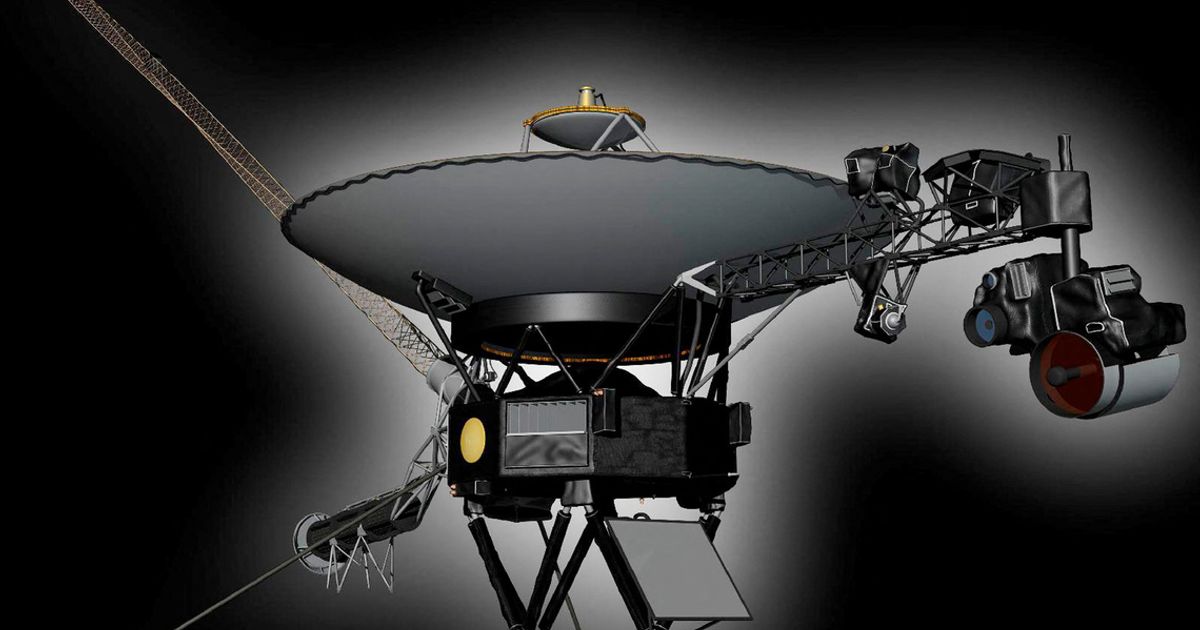
NASA's Voyager 1 probe is believed to have now hit a distance milestone accomplished by no other spacecraft from Earth, based on advance computations by the US space agency, as the probe ventures through the near-emptiness of interstellar space.
framing: assertive · carried by 1 article(s) · first seen 2026-11-18
Officials at NASA's Jet Propulsion Laboratory in California will have to wait about a day to get a signal from the probe, confirming it has reached this distance.
2026-11-18 · The Straits Times
NASA Voyager 1 probe believed to have reached 'light-day' milestone · assertive framing

Claims (22 extracted, 4 hedged)

NASA Voyager 1 probe believed to have reached 'light-day' milestone WASHINGTON, Nov 18 - asserted
probe → believe → milestone
NASA's Voyager 1 probe is believed to have now hit a distance milestone accomplished by no other spacecraft from Earth, based on advance computations by the US space agency, as the probe ventures through the near-emptiness of interstellar space. asserted
probe → believe → space
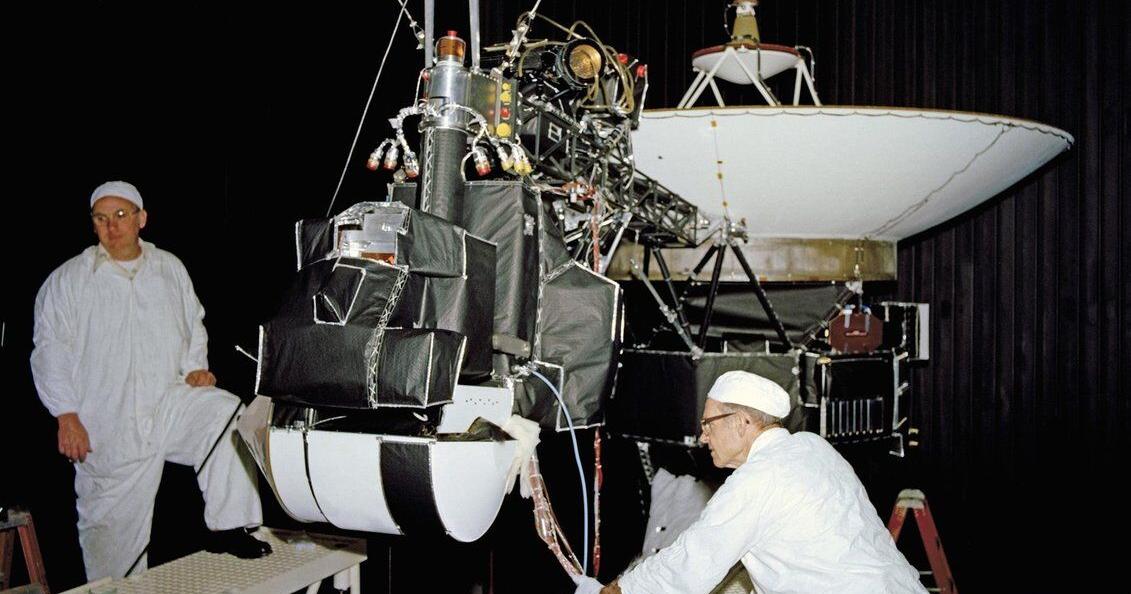
The robotic probe, launched in 1977, was calculated by NASA to have reached a light-day from Earth, the distance that light travels in 24 hours — about 16 billion miles (26 billion km) — on Wednesday at 5:16 a.m. ET (1016 GMT). asserted
light → launch → a.m.
Officials at NASA's Jet Propulsion Laboratory in California will have to wait about a day to get a signal from the probe, confirming it has reached this distance. asserted
it → have → distance
They have scheduled an event for Thursday to discuss the milestone. asserted
They → schedule → milestone
"Reaching one light-day is an astounding feat, one that I never expected to see," Voyager project manager Suzanne Dodd said. asserted
Dodd → reach → that
Voyager 1, the most distant human-made object, is flying at almost 38,000 miles per hour (61,000 kph). asserted
Voyager → make → hour
It crossed the outer edge of the heliosphere, a protective bubble of particles and magnetic fields produced by the sun, to enter interstellar space in 2012. asserted
It → cross → 2012
Its twin, Voyager 2, was also launched in 1977 and entered interstellar space in 2018. asserted
twin → launch → 2018
A Jet Propulsion Laboratory representative said recent power-saving measures could give the two Voyager spacecraft enough power to stay in communication with Earth for three to four more years. uncertain
measures → say → years
"But the goal of the mission is to do science, and there is enough power to keep the current suite of instruments going through the 50th launch anniversary next year. asserted
goal → do → anniversary
Beyond that is hard to predict, and of course these are nearly 50-year-old spacecraft, and there are always things the team cannot anticipate that might happen," the JPL representative said. uncertain
representative → predict → course
Voyager 1 journeyed past Jupiter and Saturn, the solar system's two largest planets, earlier in its mission. asserted
Voyager → journey → mission
It continues to gather scientific data. asserted
It → continue → data
For instance, its instruments have detected the faint monotonous hum caused by the constant vibrations of the small amounts of gas present in interstellar space. asserted
instruments → detect → space
"Voyager is sending back continuous measurements of magnetic fields, cosmic rays and of plasma waves that we receive on Earth whenever the Deep Space Network points its antenna at Voyager," Dodd said. asserted
Dodd → send → Voyager
The Deep Space Network is NASA's international array of giant radio antennas supporting interplanetary spacecraft missions. asserted
Network → support → missions
"After the heliopause crossing, the magnetic field direction did not rotate into the interstellar direction as expected, but has maintained the direction it had when both Voyagers crossed the heliopause, a direction governed by our sun. asserted
Voyagers → rotate → sun
We are watching to see when that rotation might occur," Dodd said. uncertain
Dodd → watch → ?
"We also are still observing effects from our sun, including strong solar storms like coronal mass ejections, that generate shocks and pressure fronts that reach as far away as Voyager 1 and beyond," Dodd said. asserted
Dodd → observe → Voyager
"Where does the sun's influence end and pristine interstellar space begin? asserted
space → end → ?
Perhaps Voyager may last long enough to answer that question." uncertain
Voyager → last → question

Give feedback · no sign-in needed

No sign-in needed for now. Your note is sent without a name, so it cannot be answered.

History Support